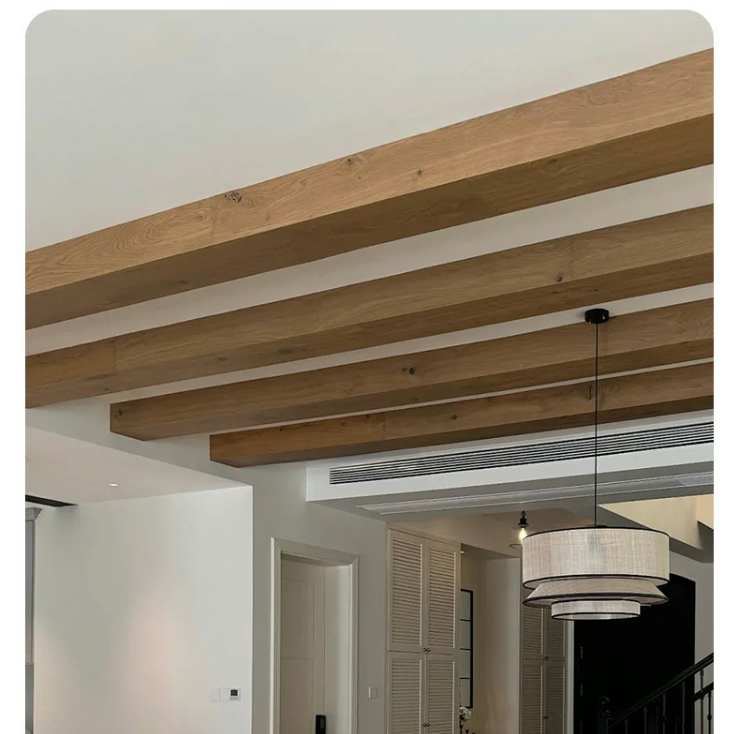
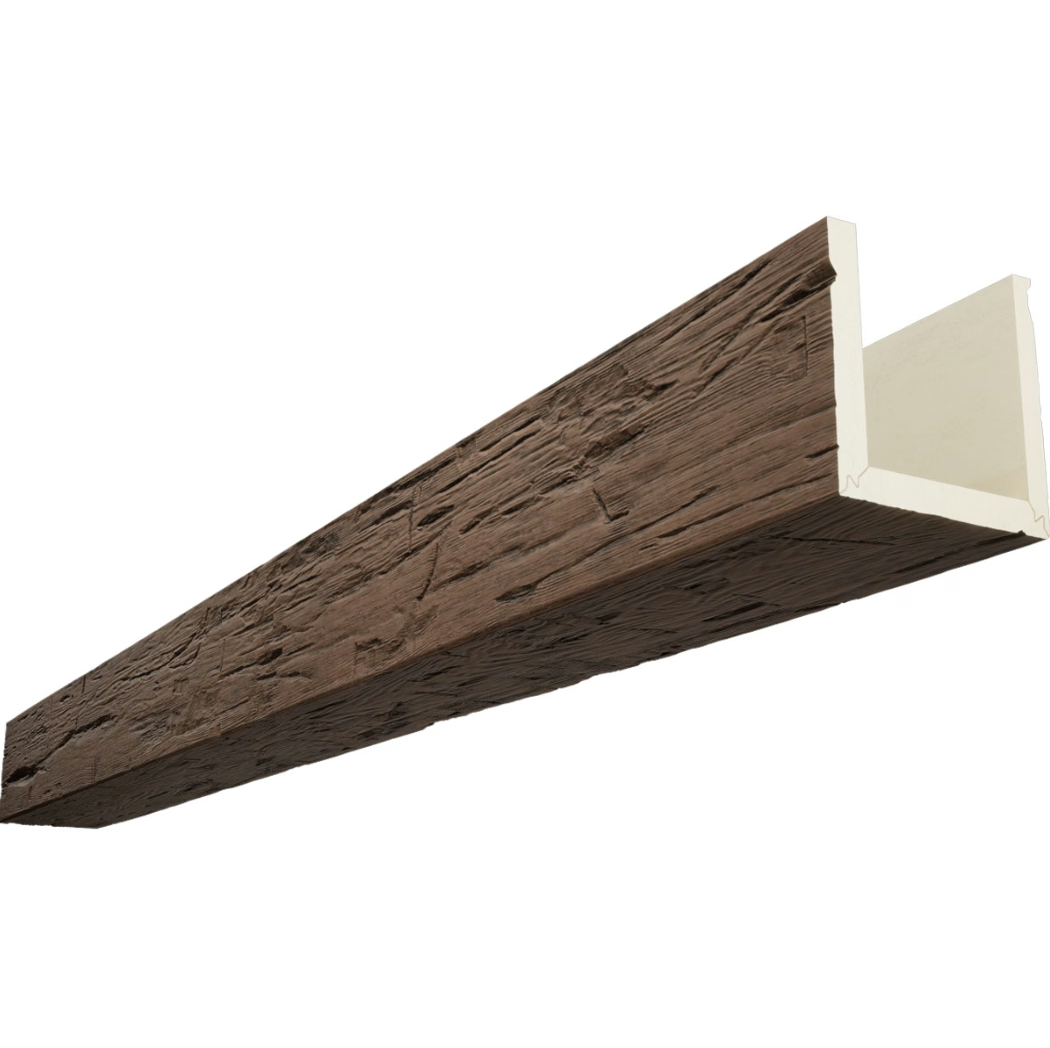
Polyurethane faux wood beam projects benefit significantly from expert consultation during specification and procurement phases, yet many buyers—whether first-time homeowners or experienced contractors—approach purchasing without leveraging the technical expertise that manufacturers and specialized distributors have developed through countless similar projects. Custom inquiry services bridge this knowledge gap, providing personalized guidance that matches beam specifications to actual project requirements while identifying opportunities for cost optimization and installation efficiency that uninformed purchasing cannot achieve.
The value of custom inquiry extends beyond simple product selection into project planning territory that affects overall construction success. Beam sizing relative to room proportions, finish coordination with existing architectural elements, mounting system selection for specific ceiling conditions, and logistics planning for delivery and handling all represent knowledge areas where supplier expertise improves outcomes. Buyers who engage these services typically achieve better results while spending less time on research and fewer resources on corrections for specification errors.
Professional inquiry services have become standard offerings among serious faux wood beam suppliers, recognizing that informed customers become satisfied customers who provide repeat business and referrals. The consultation is typically free, obligation-free, and conducted by personnel with hands-on experience across diverse project types. This accessibility makes expert guidance available to all buyer categories regardless of project scale or buyer sophistication.
What Information to Prepare Before Inquiry
Effective consultation requires providing detailed project information that enables accurate recommendation development. Room dimensions—including ceiling height, beam span requirements, and any architectural obstructions—establish baseline parameters for size selection. Existing finish materials—flooring species, trim colors, wall paint specifications—inform finish coordination recommendations that ensure cohesive aesthetic outcomes. Installation environment—whether new construction, renovation, or retrofit—affects mounting system options and installation approach recommendations.
Project timeline information allows suppliers to identify production and delivery constraints that affect scheduling. Standard catalog products typically ship within days or weeks, while custom specifications may require longer production periods. Projects with construction schedules to maintain benefit from early consultation that identifies timeline requirements before commitment. Revealing schedule pressure during ordering rather than during consultation limits the supplier's ability to propose creative solutions.
Budget parameters, even approximate ones, enable suppliers to recommend optimal value configurations rather than either over-specifying products that exceed requirements or under-specifying products that disappoint. A budget range rather than a strict ceiling provides flexibility for creative solutions that may achieve objectives at lower cost than initially anticipated approaches. Suppliers accustomed to budget conversations navigate these discussions professionally, using financial information as a tool for better matching rather than as a basis for upselling.
Common Consultation Topics and Expert Guidance
Beam sizing and proportion represents the most frequently discussed consultation topic, as buyers often struggle to visualize how specific beam dimensions will appear in their spaces. Suppliers address this challenge through accumulated experience with similar projects, photographic examples showing comparable installations, and proportional guidelines that predict acceptable sizing ranges for given ceiling heights and room dimensions. This guidance prevents both underwhelming undersized beams and overwhelming oversized installations that create spatial discomfort.
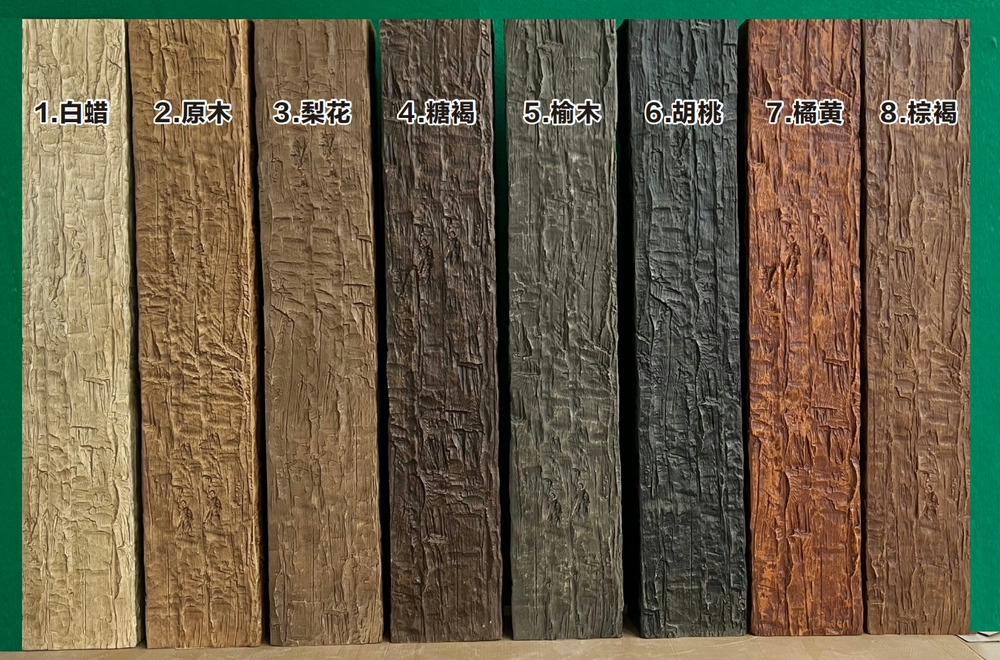
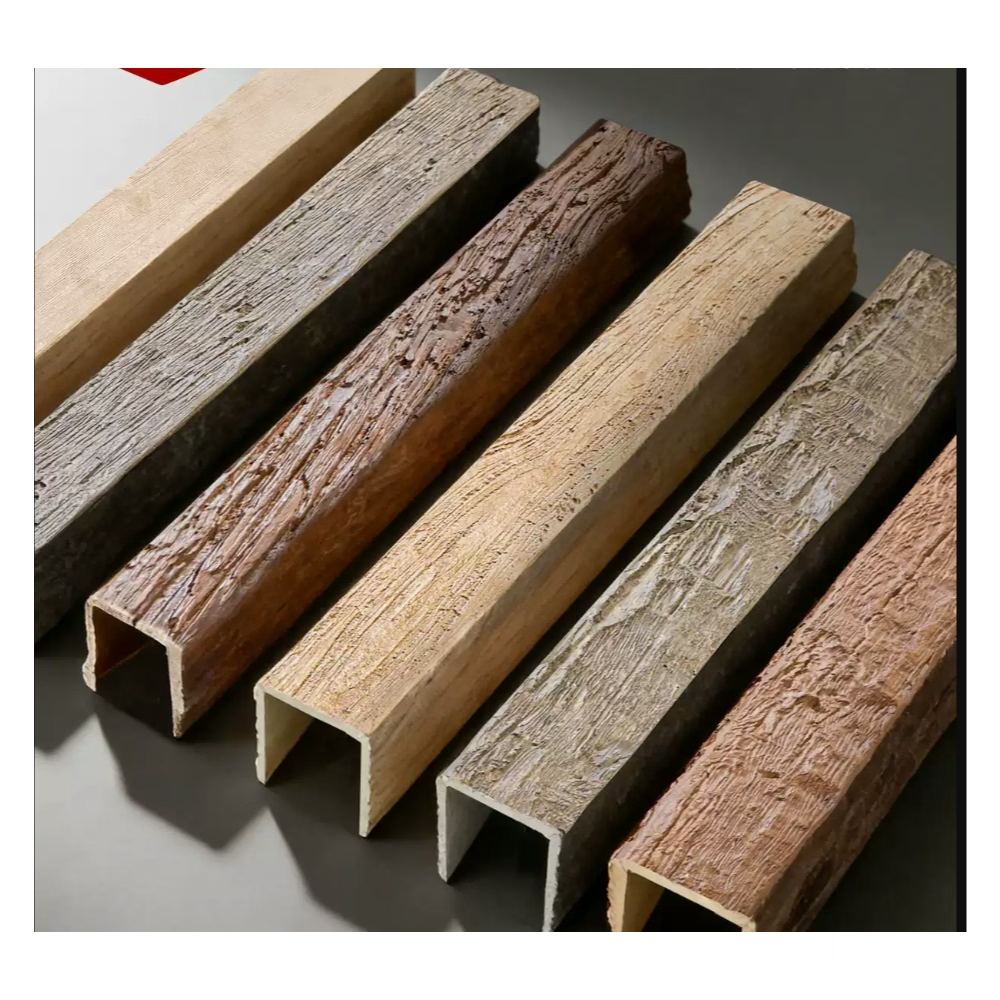
Finish selection benefits substantially from expert consultation, as the range of available options exceeds what most buyers discover through initial research. Suppliers explain how different finish types—stained, painted, natural, weathered—interact with various lighting conditions and surrounding materials. Recommendations consider not just initial appearance but aging behavior, maintenance requirements, and touch-up feasibility that affect long-term satisfaction. Physical sample access, either through mail-order sample programs or local distribution points, allows evaluation in actual project lighting rather than showroom conditions.
Mounting system selection depends heavily on specific ceiling conditions that vary across installations. Wooden joist ceilings, engineered I-joist constructions, concrete slabs, and steel beam structures each require different mounting approaches with distinct hardware, techniques, and weight limitations. Consultation identifies the appropriate mounting category for specific conditions and recommends specific products or approaches that ensure reliable performance. This guidance prevents both insufficient mounting that risks beam failure and over-engineered solutions that waste money on unnecessary hardware.

Custom Specification and Manufacturing Options
Projects requiring specifications beyond catalog offerings benefit from custom manufacturing consultation that explores possibility and feasibility. Custom dimensions, unusual profiles, specialized finishes, and non-standard lengths all represent options that custom inquiry services evaluate against production capabilities and cost parameters. Not every customization is equally feasible—some modifications challenge manufacturing processes while others represent simple adjustments—but consultation identifies realistic options rather than promising impossible outcomes.
Custom finish matching against existing materials represents a common customization request that experienced suppliers handle routinely. Providing existing material samples enables color matching against actual references rather than approximate descriptions. The matching process may involve factory color mixing, custom stain development, or paint formulation to achieve required coordination. Suppliers explain the process timeline and cost implications for custom finish work, enabling informed decisions about whether the additional investment achieves objectives worth pursuing.
Prototype development for major commercial projects may involve sample beam fabrication before full production commitment. This sampling process allows architectural visualization, installation practice, and client approval before manufacturing resources commit to final production. Suppliers offering prototype services explain the process, timeline, and cost implications, enabling project planning that incorporates appropriate review periods before production begins.
Post-Consultation Support and Relationship Building
Professional inquiry services extend beyond initial specification into order support that ensures smooth transaction execution. Order confirmation review verifies that specifications are correctly interpreted before production begins, catching potential errors before resources are committed. Production updates for longer-lead custom orders maintain buyer confidence and enable schedule coordination. Shipping coordination ensures that delivery timing aligns with project readiness, avoiding storage complications or installation delays.
Relationship building with reliable suppliers creates ongoing project support that improves across multiple engagements. Repeat buyers receive increasingly personalized service as suppliers learn preferences, project types, and communication styles. Future projects benefit from institutional memory that eliminates repetitive information provision. Professional contractors establishing supplier relationships develop reliable sources that simplify procurement across multiple job sites and project types.
The inquiry relationship also provides access to industry knowledge beyond specific product transactions. Market trends, emerging products, pricing movements, and application innovations flow to engaged customers through supplier relationships that casual transactions cannot establish. Buyers who invest in consultation relationships develop broader market awareness that improves decision quality across all construction and renovation decisions, not just faux beam applications.
Technical References
ASTM standards cited in every specification
Test Data
Lab results from internal testing program
Updated 2026
Reviewed against current product specs