The vocabulary of architectural ornament includes elements whose names have faded from common knowledge even as the elements themselves continue appearing in designed environments. Decorative bosses—sculptural ornamentation applied at junctions, centers, or focal points—represent one such element. These carved or molded details add refined visual interest where beam intersections converge or where attention naturally concentrates.
Understanding the traditional role of bosses helps guide appropriate contemporary application. In historic architecture, bosses appeared at vault intersections, beam crossings, and anywhere that structural or decorative lines converged. The ornamental emphasis at these points acknowledged the visual importance of junction locations while adding craft detail that rewarded close observation. Contemporary application should honor this tradition while adapting to current design vocabularies.
Polyurethane manufacturing enables decorative boss production at price points and consistency levels that traditional carved or cast alternatives cannot match. The material accepts fine detail while maintaining dimensional stability. Consistency across multiple pieces ensures that installations present unified appearance. These practical advantages make ornate boss application economically viable across project types.
Boss Design and Selection Criteria
Traditional boss profiles draw from centuries of architectural development, with forms refined through generations of craftspeople. Bell-shaped, lobed, floral, and geometric bosses each suit different architectural contexts. Traditional profiles work best in historically appropriate settings where authentic detail serves restoration or revival goals. The traditional vocabulary offers proven visual solutions for established design approaches.
Contemporary boss interpretations might simplify traditional forms or develop entirely novel approaches. Geometric shapes, abstract forms, and minimalist treatments suit modern interiors where historical ornamentation might feel incongruous. Contemporary bosses can reference traditional precedents while expressing current aesthetic sensibilities through updated interpretation.
Scale relationships between bosses and supporting beams determine visual balance. Oversized bosses overwhelm beam elements while undersized bosses disappear at junction points. Appropriate scaling creates proportional relationships where boss and beam appear as unified compositions rather than mismatched elements. Scale selection should consider both beam dimensions and viewing distance.
Detail complexity should align with overall design richness. Highly detailed bosses in minimally decorated environments might appear precious or excessive while simple bosses in elaborate settings might seem insufficient. The boss detail level should contribute to overall design coherence rather than standing out as inconsistent with surrounding decoration.
Installation Applications and Techniques
Beam intersection treatment represents the most common application for decorative bosses. Cross-beam junctions, T-intersections, and multi-beam convergences all present opportunities for boss installation. The boss draws attention to these visually important locations while adding craft detail that plain intersections lack. Installation at each intersection creates visual rhythm that unifies beam installations.
Center-mount application places bosses at beam spans rather than intersections. These span bosses create focal points that organize visual attention independent of intersection locations. Center-mounting works particularly well with single beam runs or where beams terminate without reaching intersections. The boss replaces intersection emphasis with mid-span focal interest.
Ceiling medallion integration combines boss elements with larger decorative ceiling treatments. Traditional medallions surround light fixture locations while contemporary interpretations might mark other ceiling focal points. Boss integration with medallion designs creates layered decoration that combines different detail scales. The relationship between boss and medallion should feel unified rather than arbitrary.
Corbel intersection application places bosses at corbel-beam junctions where these supporting elements meet. The boss adds sculptural interest at junctions that might otherwise appear abrupt. Multiple boss placement at each corbel-beam intersection creates consistent detail that reinforces visual rhythm throughout installations.
Finishing Considerations for Boss Elements
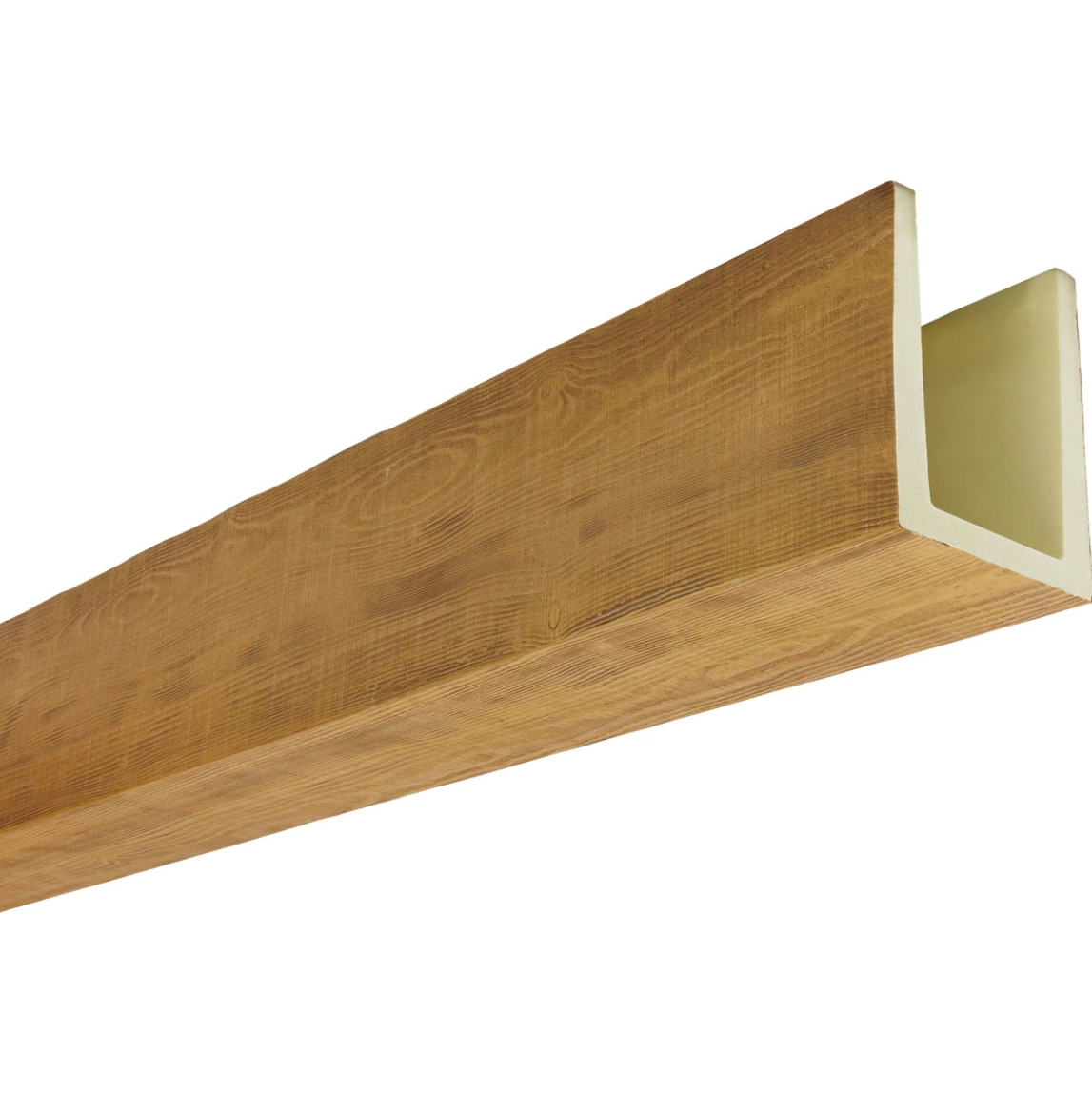
Color matching between bosses and beams ensures unified appearance throughout installations. If beams receive stain or paint treatment, bosses should match precisely. Custom color matching services develop formulations that achieve acceptable coordination across different materials and profiles. The color relationship significantly influences overall installation perception.
Finish texture coordination addresses surface quality differences between bosses and beams. Polished bosses paired with textured beam surfaces might appear incongruous while smooth bosses might disappear against smooth beams. The texture relationship should complement rather than conflict with beam surface qualities.
Hand-finishing techniques often prove necessary for achieving quality results with ornate boss elements. Spray application may not adequately coat recessed details, requiring brush application or other targeted techniques. The finishing investment distinguishes quality installations from rushed applications that fail to honor boss detail.
Protective coating application over finished bosses ensures long-term appearance maintenance. Clear topcoats protect delicate details from handling, cleaning, and environmental exposure. The coating should not alter boss appearance while providing necessary protection for extended service life.
Design Coordination and Application Planning
Coordination with other ornamental elements ensures boss application contributes to unified design compositions. When beams include corbels, end caps, or other decorative elements, boss selection should complement these related treatments. The boss should feel like a member of the decorative family rather than an unrelated addition.
Spacing consistency across multiple boss installations creates visual rhythm that unifies beam installations. Bosses at regular intervals—whether at every intersection or every second intersection—establish predictable pattern that the eye can follow. Inconsistent spacing creates visual uncertainty that undermines installation quality.
Lighting consideration affects boss selection and placement. Directional lighting that grazes boss surfaces reveals sculptural detail while flat lighting might flatten three-dimensional interest. Consider how available or planned lighting will interact with boss elements during specification. The lighting relationship determines whether boss detail will read effectively.
Sample installation verification before committing to full application helps identify potential issues. Temporary boss placement at representative intersections reveals scale relationships, color coordination, and installation challenges that drawings cannot fully anticipate. This verification investment prevents costly full-installation surprises.
Ornate polyurethane decorative accent bosses for faux beam styling add refined detail that elevates beam installations beyond ordinary specification. When boss selection, placement, and finishing receive appropriate attention, these sculptural elements contribute craft quality that rewards observation and enriches designed environments through accumulated small details.
Technical References
ASTM standards cited in every specification
Test Data
Lab results from internal testing program
Updated 2026
Reviewed against current product specs


