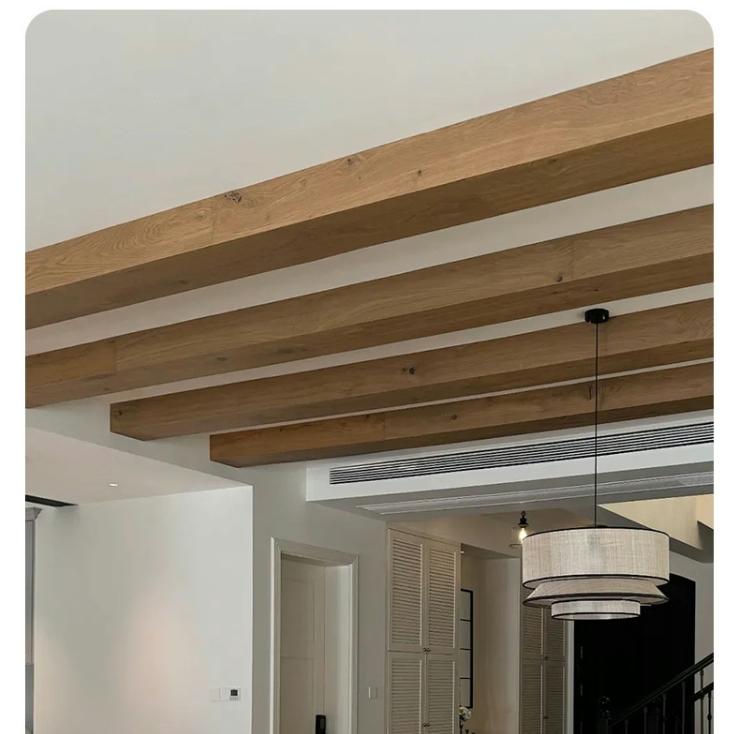
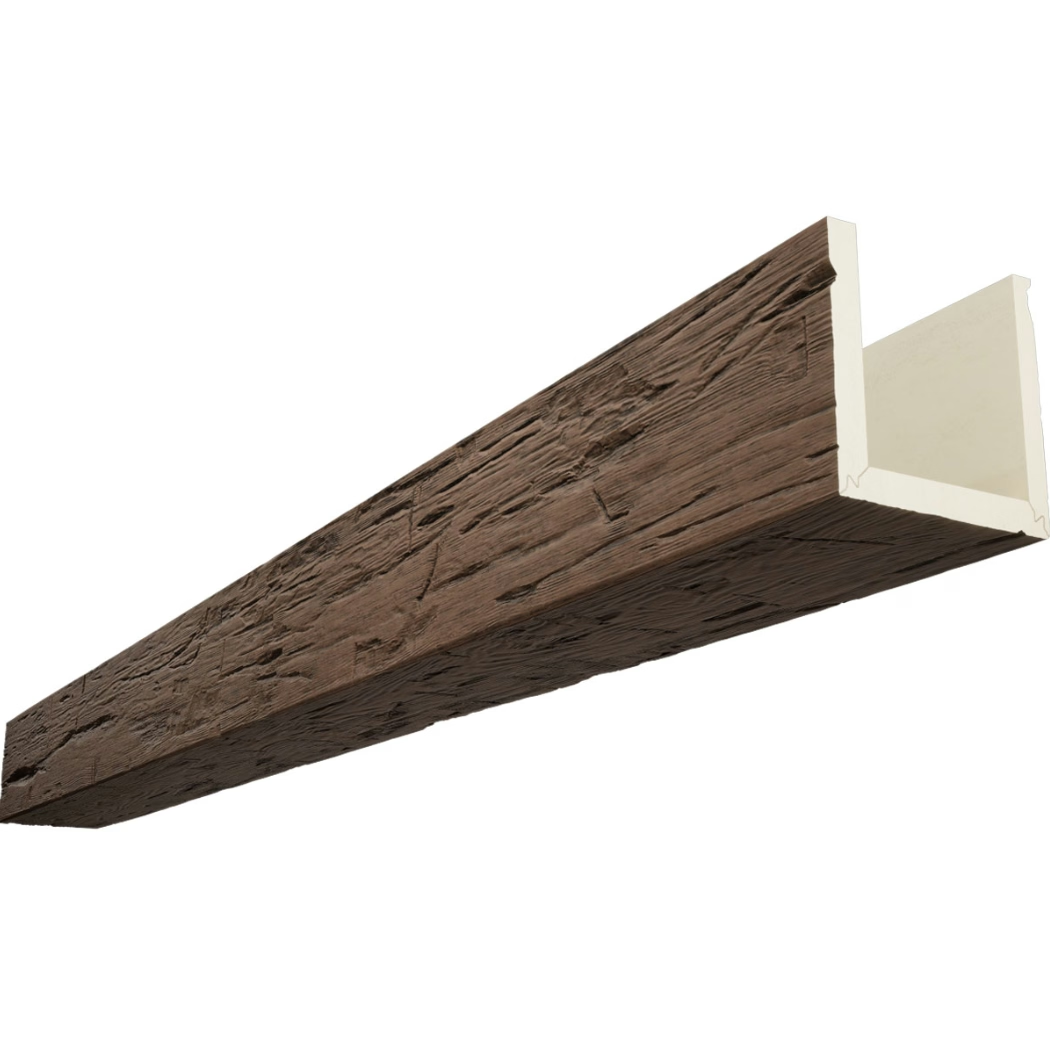
Government construction represents a substantial market segment where material specifications carry particular weight. Public projects funded by taxpayer dollars demand accountability that private construction need not address, creating procurement requirements that test supplier capabilities and product compliance. For polyurethane decorative beam manufacturers seeking government project participation, understanding tender requirements, specification standards, and documentation expectations determines market access success.
The regulatory environment surrounding government construction varies significantly across jurisdictions, creating complexity that uniform product standards cannot entirely resolve. Federal, state, provincial, and municipal authorities each establish procurement frameworks that interact with building codes, environmental regulations, and public contracting statutes. Navigating this regulatory landscape requires supplier investment in compliance infrastructure that smaller market participants cannot justify, creating market advantages for established manufacturers who serve government clients systematically.
Understanding Tender Documentation Requirements
Government construction tenders typically require extensive documentation that private sector RFQs do not demand. Product data sheets, material safety specifications, manufacturing process descriptions, and quality control documentation must accompany bid submissions, demonstrating compliance with requirements that may not explicitly appear in specification text. Suppliers unfamiliar with tender documentation expectations often find themselves disqualified for administrative deficiencies rather than product quality concerns.
Technical specification compliance verification requires understanding how standards referenced in tender documents apply to specific products. Fire ratings, structural load capacities, dimensional tolerances, and finish durability specifications all require documented evidence that products meet or exceed required thresholds. Quality manufacturers maintain comprehensive testing documentation that demonstrates compliance, enabling tender submissions that satisfy technical requirements without ambiguity.
Lead time requirements in government tenders often exceed commercial project expectations due to approval processes, funding authorization delays, and coordination requirements between public agencies. Suppliers must anticipate these extended timelines in production scheduling and inventory planning, ensuring that awarded contracts can be fulfilled within required timeframes. This operational capacity consideration influences which government opportunities suppliers can realistically pursue.
Performance Standards and Testing Requirements
Fire performance certification represents a near-universal requirement for materials installed in public buildings. Polyurethane decorative beams must demonstrate flame spread ratings, smoke development indices, and fire resistive capabilities that applicable building codes specify. Testing through recognized laboratories—organizations whose testing protocols carry legal acceptance in the relevant jurisdiction—provides the documentation that government specifiers require.
Structural loading requirements may apply when decorative beams serve any functional purpose beyond purely aesthetic installation. Canopy supports, overhang installations, or beams spanning occupied spaces face load requirements that decorative-only elements avoid. Understanding which load cases apply to specific tender specifications requires careful specification review and, sometimes, engineering consultation to interpret requirements correctly.
Environmental certifications increasingly influence government procurement decisions as public agencies pursue sustainability objectives. Low-VOC materials, recycled content documentation, regional manufacturing, and end-of-life recyclability may appear as specification requirements or preference criteria that influence bid evaluation. Suppliers whose products satisfy these environmental requirements access tender opportunities that non-compliant alternatives cannot pursue.
Quality Assurance and Documentation Systems
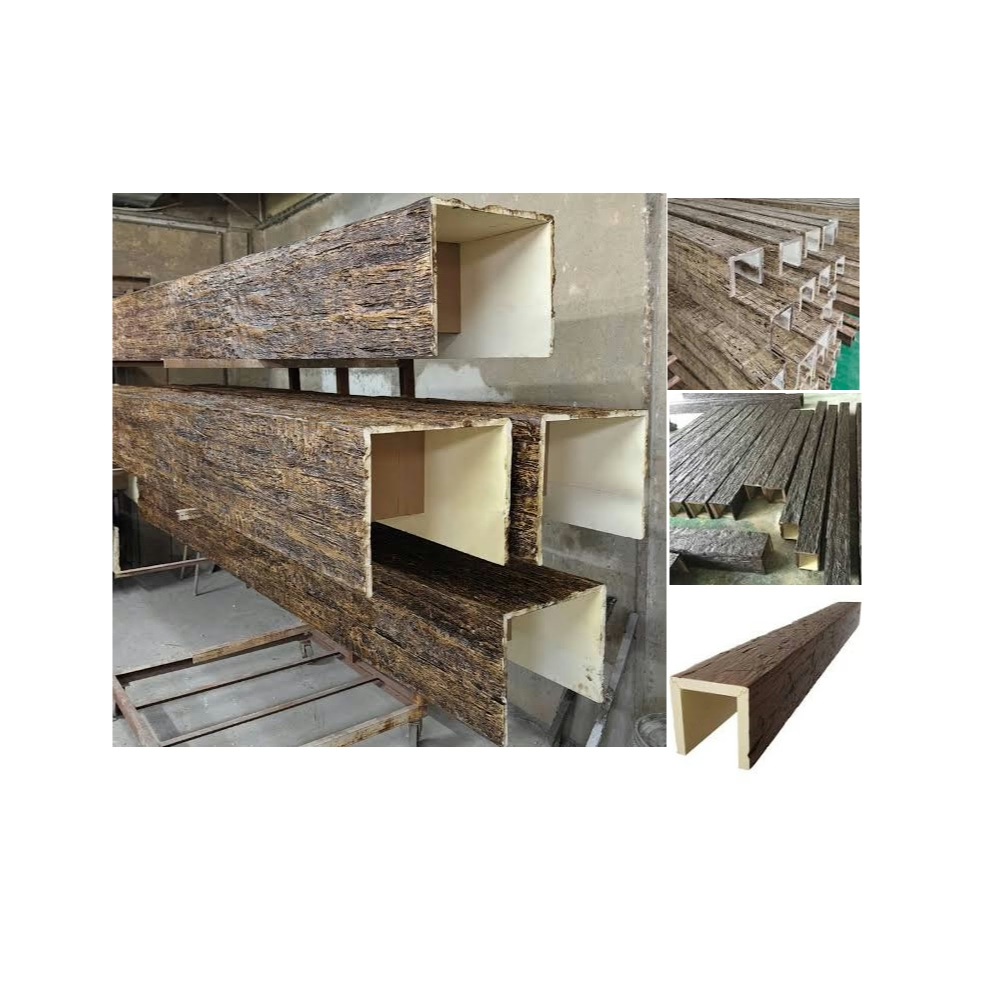
Government projects typically require quality assurance programs that exceed commercial project expectations. Inspection points, testing frequency, and documentation requirements must satisfy both contractor quality control and owner acceptance verification. The integrated quality assurance approach that government projects demand requires supplier systems capable of supporting these requirements throughout project execution.
Submittal requirements for government projects often include samples, mockups, and verification testing that commercial clients handle more informally. Pre-installation submittals must demonstrate that supplied materials match specifications before procurement commitment, preventing installation of non-compliant materials. Mockup requirements establish appearance standards that completed installations must match, creating dispute resolution references when questions arise about finished quality.
Warranty requirements in government construction typically exceed commercial project terms, reflecting public accountability expectations. Multi-year warranties on materials and installation, with clear remedies for non-compliance, protect public investment while imposing obligations on suppliers who may lack experience with government contract terms. Understanding these warranty implications influences pricing decisions and contract acceptance.
Navigating Procurement Processes
Registration requirements, prequalification processes, and approved vendor lists gate access to many government procurement opportunities. Suppliers interested in government market participation must complete registration processes, submit qualification documentation, and maintain active status on vendor lists relevant to their product categories. These administrative requirements demand ongoing attention and resource allocation that smaller suppliers may find disproportionate to opportunity values.
Bid bond and performance bond requirements create financial obligations that affect which projects suppliers can realistically pursue. Government contracts typically require bid bonds guaranteeing bid withdrawal consequences while requiring performance bonds securing contract completion. Suppliers without access to bonding capacity cannot pursue bonded opportunities regardless of product quality or competitive pricing.
Small business preference programs, local sourcing requirements, and disadvantaged business enterprise considerations influence competition in government procurement. Suppliers who qualify for these preference categories access advantages that non-qualifying competitors cannot match, creating market segments where preference-eligible suppliers face reduced competition. Understanding these preference programs helps suppliers identify opportunities where their qualifications create competitive advantages.

Government construction tenders represent market opportunities that patient suppliers can successfully pursue through systematic preparation and compliant execution. The initial investment in understanding tender requirements, developing compliant documentation, and establishing quality systems that government projects demand creates capabilities that improve performance across all project types. This capability development represents business investment that generates returns far beyond individual government contract values.
The relationship between government procurement requirements and product quality creates market differentiation that benefits sophisticated suppliers. Projects requiring fire ratings, structural testing, and quality documentation naturally favor manufacturers who maintain these capabilities, creating barriers that simpler market approaches cannot penetrate. Suppliers who invest in these capabilities position themselves for sustainable government market participation.
Long-term government market success depends on reputation development that takes years to establish and moments to destroy. Suppliers who consistently deliver compliant materials, meet project schedules, and address warranty issues professionally build contractor relationships that generate ongoing project invitations. This reputation capital represents valuable asset that competitive pressures cannot easily replicate, rewarding suppliers who approach government market participation as relationship development rather than transaction pursuit.

Technical References
ASTM standards cited in every specification
Test Data
Lab results from internal testing program
Updated 2026
Reviewed against current product specs