The grand public buildings of previous centuries communicated power, culture, and permanence through architectural ornament that contemporary construction often abandons. Coffered ceilings, ornate cornices, sculptural corbels, and rhythmic beam patterns created spatial experiences that visitors remembered long after departing. While budget constraints and changing aesthetics have reduced ornamentation in many building types, the desire for architectural richness persists, finding expression through polyurethane decorative mouldings and faux beams that make traditional ornamentation accessible again.
Material selection significantly influences what ornamentation approaches projects can pursue. Stone carving that exceeded ancient budgets remains beyond modern budgets for most applications. Hand-carved woodwork requires artisan skills that contemporary craft shortages cannot supply. Polyurethane manufacturing bridges this capability gap, producing ornamentation elements through processes that achieve consistent quality at scales traditional methods cannot match. The democratization of architectural richness through manufactured ornament represents significant industry achievement.
The Grammar of Architectural Ornament
Classical architecture developed systematic ornamentation vocabulary that informed building design for centuries. Moulding profiles—ovolo, cavetto, cyma reversa, astragal—combined in compositions that created visual interest while expressing cultural values. Understanding this vocabulary enables design professionals to specify ornamentation that communicates intentionally rather than randomly, creating coherent visual languages that buildings express to observant viewers.
Scale relationships between ornamentation and surrounding elements determine whether details enhance or overwhelm spatial experience. Overscaled mouldings dwarf human figures while underscaled trim disappears into backgrounds without contributing to visual richness. Achieving appropriate scale requires both design judgment and practical understanding of how detail elements read at different viewing distances and lighting conditions.
Rhythm and repetition create visual patterns that organize complex facades into comprehensible compositions. Beam spacings that relate mathematically to room dimensions create harmonies that observers feel without consciously analyzing. This rhythmic organization extends from individual moulding profiles through beam arrangements to entire building compositions, creating architectural coherence that sophisticated design achieves.
Coordinating Mouldings with Faux Beams
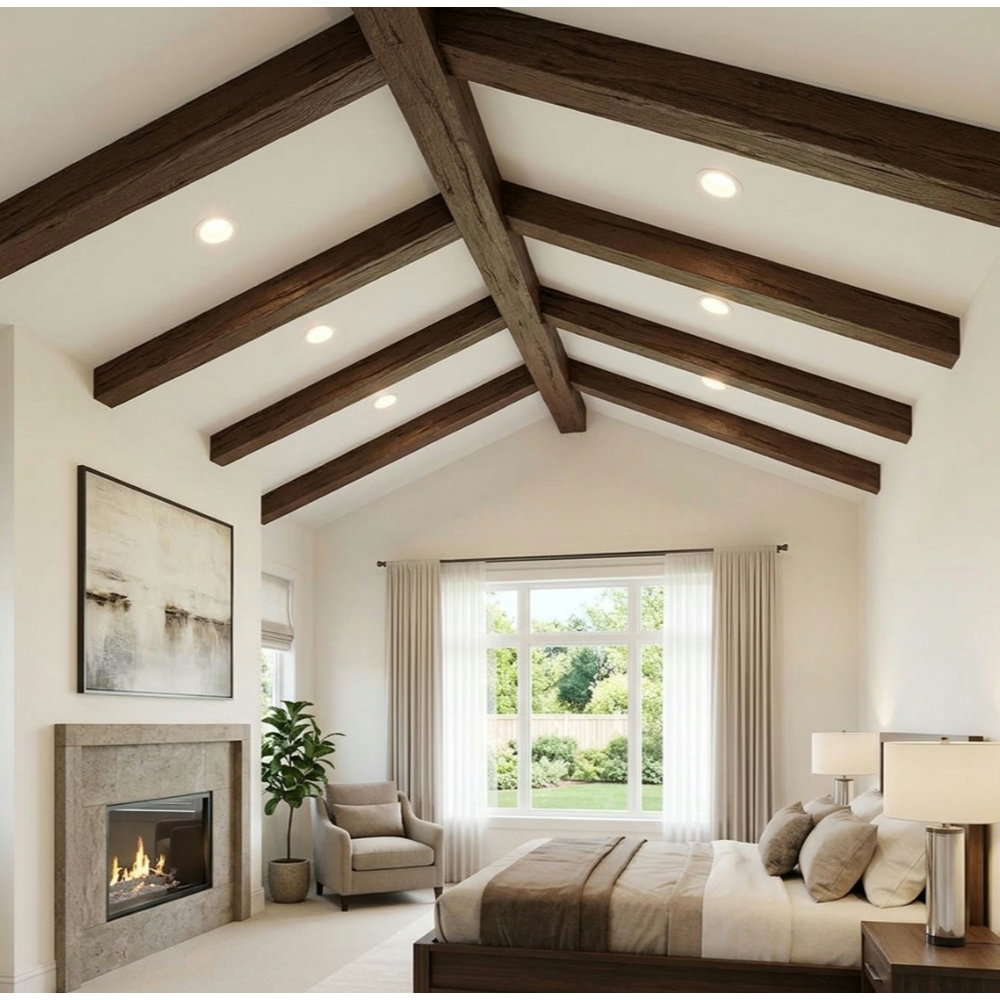
Successful ornamental installations coordinate multiple element types into unified compositions. Faux beams, crown mouldings, ceiling medallions, and wall trim each contribute distinctive elements to overall spatial experience while requiring integration that prevents visual confusion. This coordination work represents design challenge that isolated element specification cannot address.
Unified finish treatment across different ornamentation elements creates visual coherence that mismatched finishes disrupt. While individual element authenticity might suggest different finish approaches—glossier highlights on beams, flatter surfaces on wall trim—overall composition success favors consistent treatment that presents ornamentation as designed system rather than accumulated collection. This finish coordination requires advance planning during specification phases.
Profile relationships between beams and mouldings deserve attention during design development. Sharp geometric transitions between rectangular beam profiles and curved moulding profiles can feel jarring unless transitional elements—frieze boards, dental courses, or corbel details—bridge the visual discontinuity. These coordination decisions require both drawing review and three-dimensional visualization that surface-level specification cannot support.
Installation Approaches for Ornamental Success
Surface preparation for ornamental installation determines finished quality more than ornamental element quality itself. Irregular wall surfaces telegraph through mouldings that follow those irregularities, creating wavy lines that eye catches immediately. Plaster patching, shimming, and strategic fastener placement address these substrate issues before ornamental elements conceal them permanently. This preparation investment rewards attention it receives.
Alignment precision across extended ornamental runs separates professional installations from amateur efforts. Moulding miters must cut precisely and fit tightly, with hairline joints that disappear under paint rather than gaping seams that demand caulking. Beam installations must align perfectly with ceiling planes while maintaining consistent spacing between parallel runs. This installation precision requires skilled craftspeople whose abilities exceed commodity installation expectations.
Protection during construction phases preserves ornamental installations through busy job site conditions. Painted or finished ornamentation requires masking during adjacent trade work while unfinished elements need protection from damage and soiling. These protection protocols require coordination between trades that affects scheduling and budget in ways that surface-level project planning overlooks.
Historical Period Interpretations
Victorian architecture developed elaborate ornamental vocabularies that polyurethane manufacturers have revived through reproduction catalogues. Plasterwork patterns, woodwork profiles, and ironwork designs from nineteenth-century buildings now emerge from polyurethane molds with accuracy that original materials cannot match. This historical interpretation enables renovation projects that restore original ornamental programs without the expense of artisan reproduction.
Craftsman period ornamentation offers simpler vocabularies that suit contemporary preferences for clean-lined spaces. Built-in casework, beamed ceilings, and geometric trim details present less ornate alternatives to Victorian complexity while providing substantial visual improvement over unornamented construction. Polyurethane interpretation of these styles makes craftsman aesthetics accessible at budget levels that custom millwork cannot achieve.
Mid-century modern design presents different ornamentation challenges where authenticity and reproduction intersect awkwardly. Original mid-century details often employed materials—laminated plastics, exotic veneers, aluminum extrusions—that contemporary manufacturers reproduce in polyurethane for consistency and durability. This material substitution requires design judgment about when substitution enhances or compromises authentic character.

The return of architectural ornament to mainstream construction reflects cultural appreciation that previous decades devalued. Polyurethane decorative mouldings and faux beams enable this revival by making traditional vocabularies economically accessible while meeting contemporary performance expectations. The transformation of historical craft knowledge into manufactured products represents cultural preservation as much as commercial product development.
Design professionals who master ornamental vocabulary gain capabilities that distinguish their work from competitors offering generic solutions. The ability to specify appropriate moulding profiles, coordinate ornamental elements, and detail connections that appear effortless creates value that clients recognize and compensate accordingly. This expertise development requires study and practice, but rewards investment with differentiation that commodity-focused competitors cannot replicate.
The integration of traditional ornamentation with contemporary construction methods creates hybrid approaches that neither purely historical nor purely modern design achieves. Polyurethane elements installed using concealed fasteners, structural adhesives, and engineered backing create reliable connections that traditional fastening methods cannot match. This technical evolution supports ornamental ambition that construction realities might otherwise limit.

Technical References
ASTM standards cited in every specification
Test Data
Lab results from internal testing program
Updated 2026
Reviewed against current product specs


