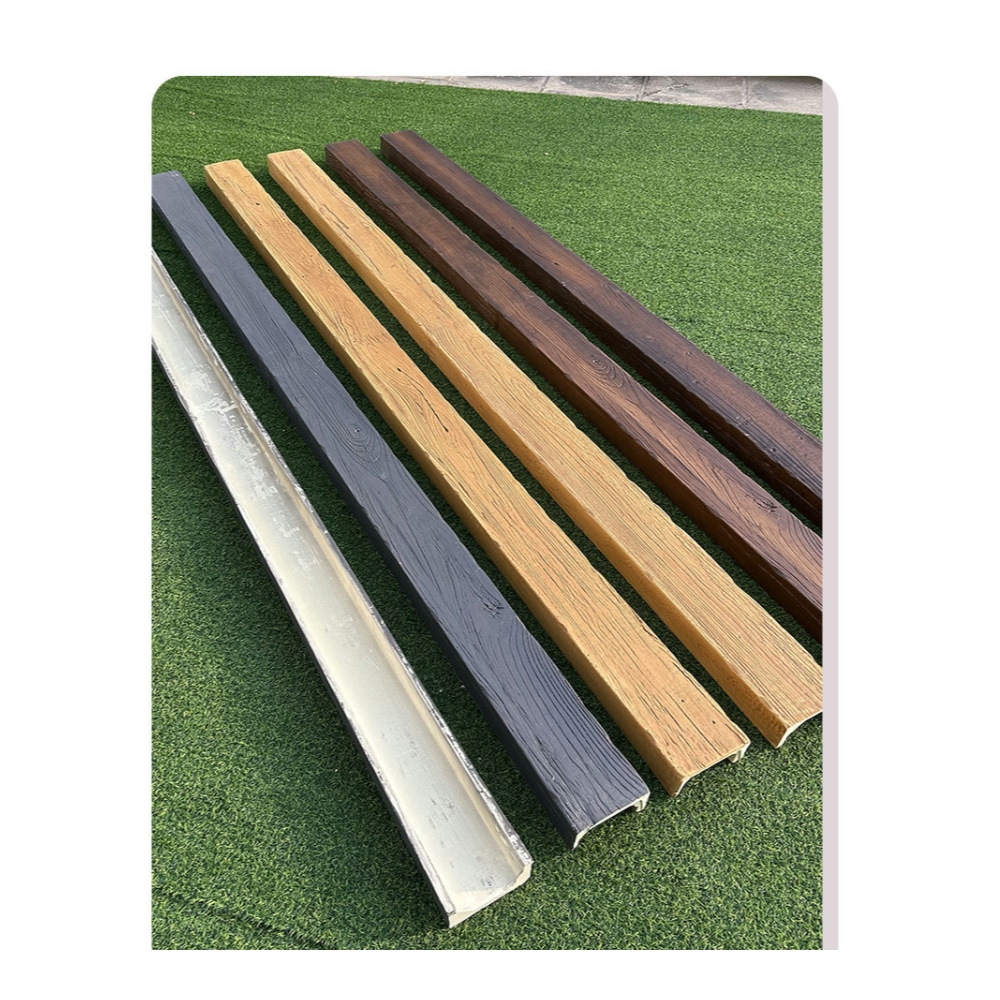
The gap between a great looking beam design and a finished installation has always contained a surprising amount of detail work—measuring miter angles, cutting corner joints, sourcing matching end caps, and gathering the correct fasteners. Pre-assembled component sets collapse that gap by bringing everything needed for a complete beam installation into a single package, ready to mount directly to the ceiling structure. For contractors managing multiple installations or homeowners tackling their first beam project, these kits change the equation from a multi-day project with multiple component sourcing challenges to a streamlined single-day installation.
The core value proposition centers on eliminating labor that would otherwise happen on the job site. Cutting a clean 45-degree miter on a hollow polyurethane beam requires the right blade, the right technique, and some experience to avoid tear-out on the textured surface. Pre-assembled corner joints arrive with factory-cut angles that match precisely, eliminating that variable entirely. The result is cleaner joints with no visible gaps, and the installation time drops accordingly.
Most component sets begin with the main beam sections that will span the ceiling. Depending on the configuration, these might be full-length beams or shorter sections designed to meet at corner joints. The corner joint components themselves—the actual connectors that join two beams at 90-degree or other angles—arrive as molded or fabricated pieces that slide over or into the beam ends, creating a seamless appearance at the joint. These connectors often include built-in mounting flanges that accept screws directly, simplifying the attachment process.

End caps complete the visual termination of beams that do not continue into another beam or corner. Rather than showing a hollow cross-section or requiring a custom-cut cap, the kit provides matching end pieces that snap or slide into place, creating the appearance of a solid, finished beam end. The color and texture match the beam surfaces precisely because the components come from the same production run, something that is very difficult to achieve when sourcing accessories separately.
Mounting hardware in quality kits includes more than just generic screws. The packages typically contain structural screws appropriate for the beam material, often with countersunk heads that disappear into the mounting surface. Some kits include specialized adapters for different ceiling types—drywall, plaster, wood, or concrete. The mounting brackets that provide the primary load-bearing connection point also arrive in the kit, usually designed to accept the structural screws while providing a wide bearing surface against the ceiling structure.
Installation proceeds by first mounting the corner joints or mounting brackets to the ceiling according to the layout plan. The beams themselves then lift into place, engaging with the pre-installed connectors or sliding into position against the mounting brackets. With the beams temporarily supported, final adjustments ensure proper alignment and spacing. Adhesive applied to the contact surfaces creates the permanent bond, while the mechanical fasteners provide immediate holding strength during the curing period.

The time savings translate directly into labor cost reduction. A typical room installation that might require four to six hours of work including cutting, fitting, and finishing can often complete in two to three hours using a pre-assembled kit. For contractors bidding on installation work, this efficiency improvement can mean the difference between a profitable job and one that runs over budget on labor alone.
Homeowners benefit equally from the kit approach, particularly those without extensive carpentry experience. The reduced skill requirement means more homeowners can successfully complete beam installations, expanding the market for this product category. The confidence that comes from opening a complete kit with all necessary components clearly labeled and matched also reduces the anxiety that can accompany complex renovation projects.
When evaluating pre-assembled kits, pay attention to the beam lengths included and whether they match your room dimensions or will require cutting. Some kits ship with standard lengths meant to be trimmed to fit, while others offer custom-length beams as part of the kit configuration. The latter approach, while slightly more expensive, eliminates all cutting and produces a perfect fit from the start. Understanding these options before ordering helps set appropriate expectations for the installation process and final result.
Technical References
ASTM standards cited in every specification
Test Data
Lab results from internal testing program
Updated 2026
Reviewed against current product specs