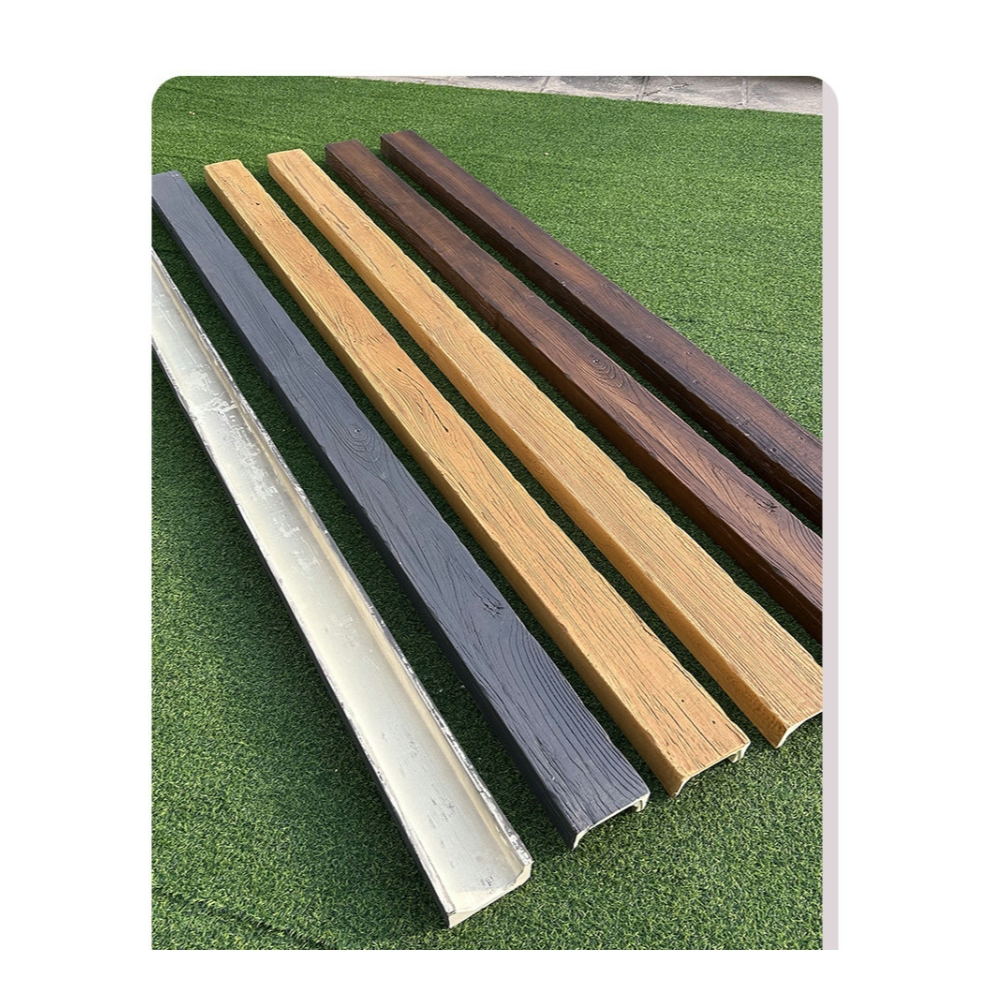
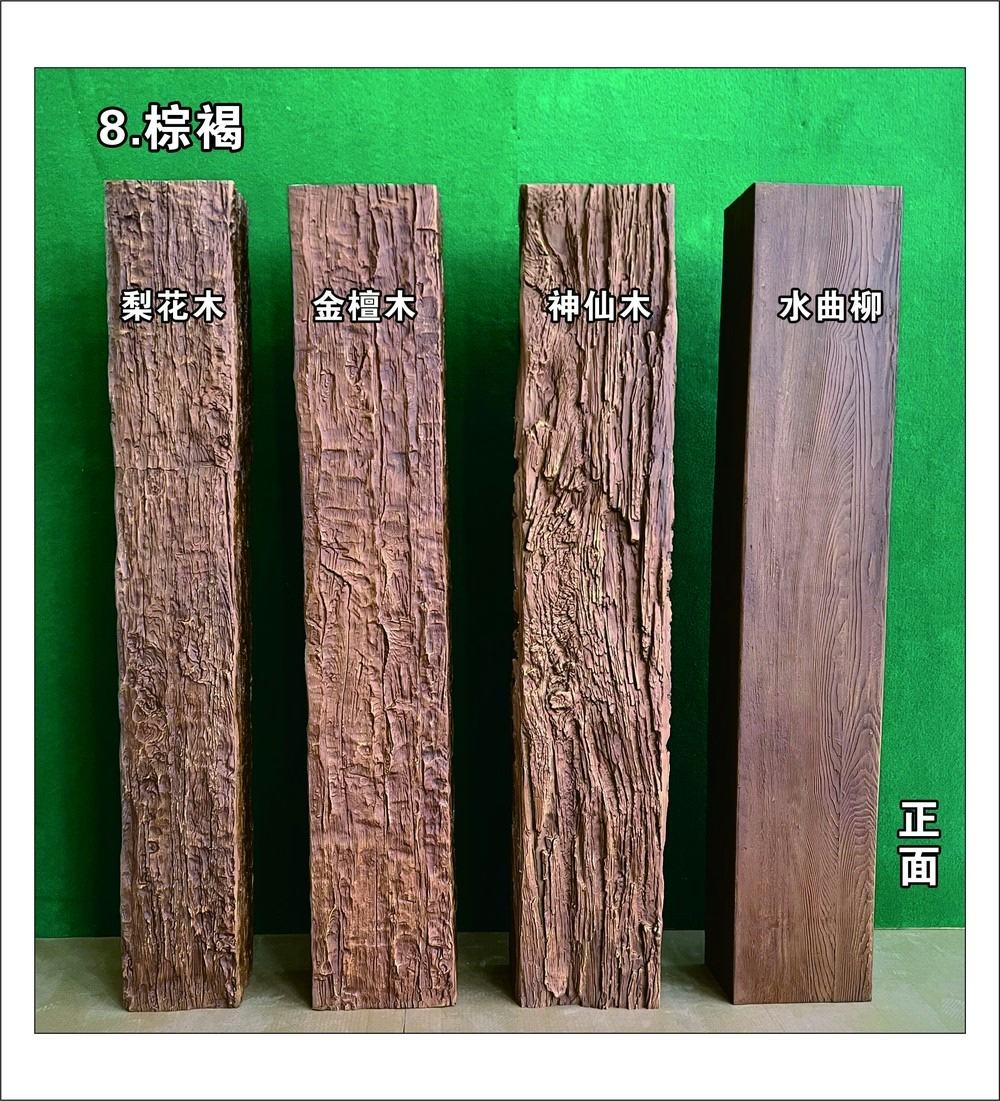
Construction schedules rarely accommodate the luxury of extended finishing periods. When ceiling beams are specified late in project timelines or schedule compression demands accelerate completion, pre-colored ready-to-use PU faux ceiling beams offer compelling solutions. These products arrive at job sites with factory-applied color already in place, eliminating weeks of finishing work that traditional wood elements would require. The ready-to-install convenience has made these beams increasingly popular among contractors seeking to meet aggressive completion dates without compromising design quality.
The transition from design specification to completed installation shortens dramatically with pre-colored products. Traditional wood beams require delivery, priming, color application, drying time, and additional finish coats before achieving final appearance. Each step introduces potential delays from weather, labor availability, or drying conditions. Pre-colored beams compress this sequence dramatically, with installation occurring immediately upon delivery while maintaining finish quality that satisfies demanding clients.
Color Technology in Factory Application
Factory color application for ceiling beams employs sophisticated technology that achieves results site finishing cannot match consistently. Industrial spray equipment delivers coating materials at controlled pressures and temperatures, creating atomized particles that settle uniformly across complex beam surfaces. The resulting coverage eliminates brush marks, roller texture, and uneven application that plague site finishing. Each beam emerges from the finishing line with consistent color saturation regardless of its position in the production sequence.
Pigment selection for factory-applied colors prioritizes both aesthetic quality and long-term stability. Modern colorants resist UV degradation that would cause fading in sun-exposed installations, maintaining original appearance for years beyond what site-applied paints could achieve. The chemical bonding between pigment and polyurethane substrate differs from paint adhesion to wood, creating longer-lasting color that resists chipping and peeling. This durability translates into reduced maintenance requirements that building owners appreciate.
Color matching services extend factory finishing capabilities to project-specific requirements. When designers specify colors from architectural palettes or require coordination with existing finishes, manufacturers can produce custom-matched beams that integrate seamlessly with surrounding elements. This capability removes the limitation that pre-colored products might not match specific design requirements, opening possibilities for broader specification across diverse project types.
Handling and Storage Considerations
Pre-colored beams require handling practices that protect factory finishes during transport and storage. Protective wrapping shields visible surfaces from scratches and abrasions that would require touch-up before installation. Corner protection prevents impact damage at vulnerable edges where finish coverage might be thinner. These packaging investments reflect manufacturer understanding that finished appearance must remain pristine through the logistics chain to deliver promised value.
Site storage for pre-colored beams should maintain protection until installation time. Covered, climate-controlled storage prevents condensation that might affect finish adhesion while avoiding temperature extremes that could cause dimensional changes affecting fit. Stacking practices should separate beams to prevent finish damage from contact pressure. Professional contractors understand these storage requirements and coordinate delivery timing to minimize site storage duration.
Installation crews should plan their approach to preserve finish quality during mounting. Lifting hardware and mounting brackets should position to avoid visible mounting points after installation. Crew members handling finished beams should use clean gloves to prevent skin oils from accumulating on visible surfaces. These precautions might seem excessive but ensure that finish quality matches what the factory delivered, maintaining the value proposition that justifies pre-colored product pricing.
Coordinating Installation Sequence
Successful pre-colored beam installation integrates smoothly with surrounding construction activities. Coordination with painters should schedule beam installation before final wall painting to avoid damage from masking operations or accidental overspray. Coordination with ceiling fixture installers should plan bracket and junction box locations to align with beam positioning. This coordination requires advance planning that pays dividends through efficient installation and clean finished appearance.
The sequencing advantage of pre-colored beams becomes most apparent in renovation projects where occupied spaces cannot tolerate extended finishing work. Restaurants, retail stores, and office buildings undergoing renovation can receive beam installations that complete in days rather than the weeks finishing operations would require. This schedule benefit translates directly into reduced business interruption and earlier return to normal operations, an economic benefit that often exceeds the material cost premium for pre-finished products.
Completion inspection for pre-colored installations focuses on mounting quality rather than finish condition. Installers verify that beams sit flush against mounting surfaces, that joints align properly, and that mounting hardware remains concealed. The absence of finish work means punch list items relate only to installation quality, streamlining the acceptance process for architects and building owners who might otherwise wait for touch-up work before final sign-off.
Cost Analysis Beyond Material Pricing
Comparing pre-colored beam costs against traditional finishing alternatives requires examining total project economics rather than unit pricing alone. Material costs for pre-colored products do exceed unfinished alternatives, but finishing labor, finishing materials, and finishing-related schedule costs disappear from the calculation. When these eliminated costs are considered, pre-colored products often prove economically competitive or advantageous.
Schedule-related cost savings often exceed finishing cost elimination. Construction financing carries interest expenses that multiply with project duration. When pre-colored beams reduce finishing periods by weeks, interest savings alone might justify premium material pricing. Additionally, earlier project completion enables faster occupancy or tenant turnover, creating revenue benefits that dwarf finishing cost differences in commercial applications.
Quality-related risk reduction represents another economic advantage difficult to quantify but genuinely valuable. Finish failures requiring remediation cost far more than prevention through pre-finished products. Client dissatisfaction from finish quality problems creates soft costs through redesign, rework, and relationship damage. Pre-colored products eliminate this risk category entirely, delivering consistent factory quality that meets expectations reliably.


Pre-colored ready-to-use PU faux ceiling beams represent practical solutions for modern construction challenges where time and quality both matter. By leveraging factory capabilities to deliver finished appearance, these products enable project schedules that traditional finishing cannot support. As construction industry pressures continue favoring speed and predictability, pre-finished beams will increasingly become default specifications rather than premium options.
Technical References
ASTM standards cited in every specification
Test Data
Lab results from internal testing program
Updated 2026
Reviewed against current product specs