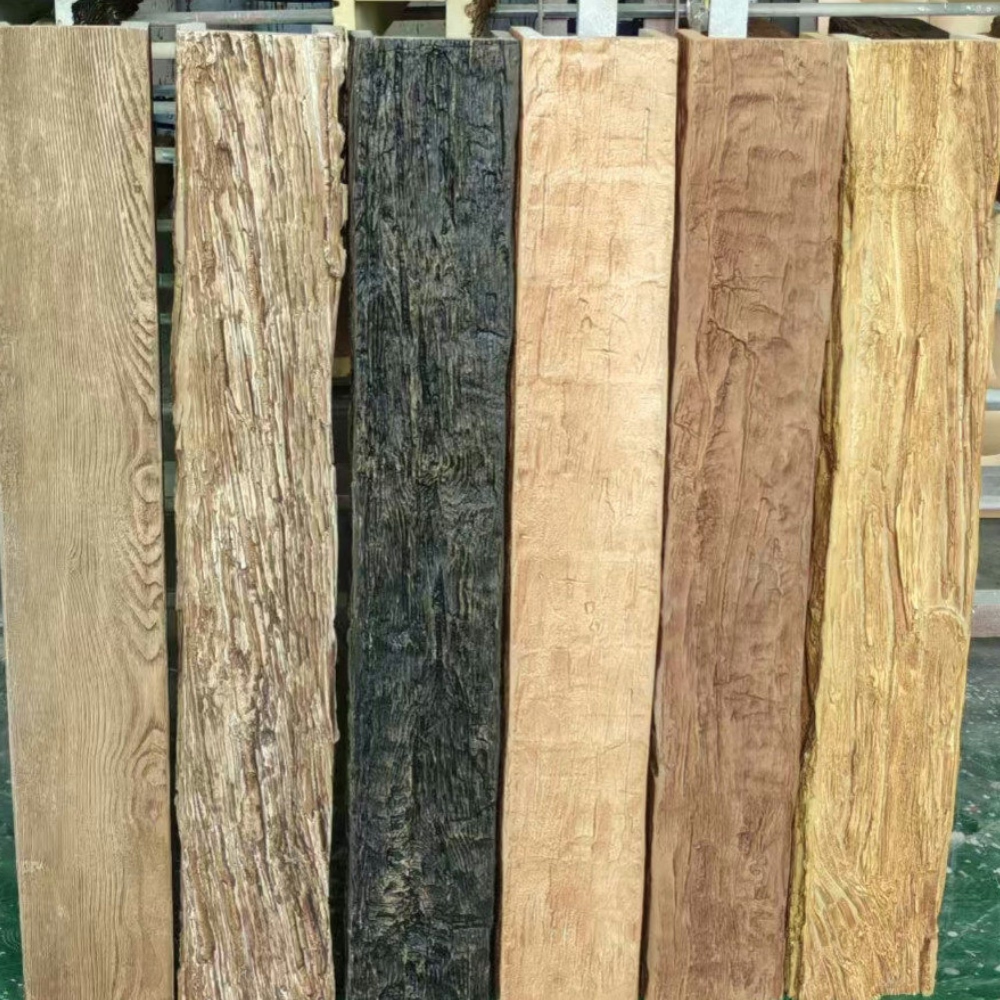
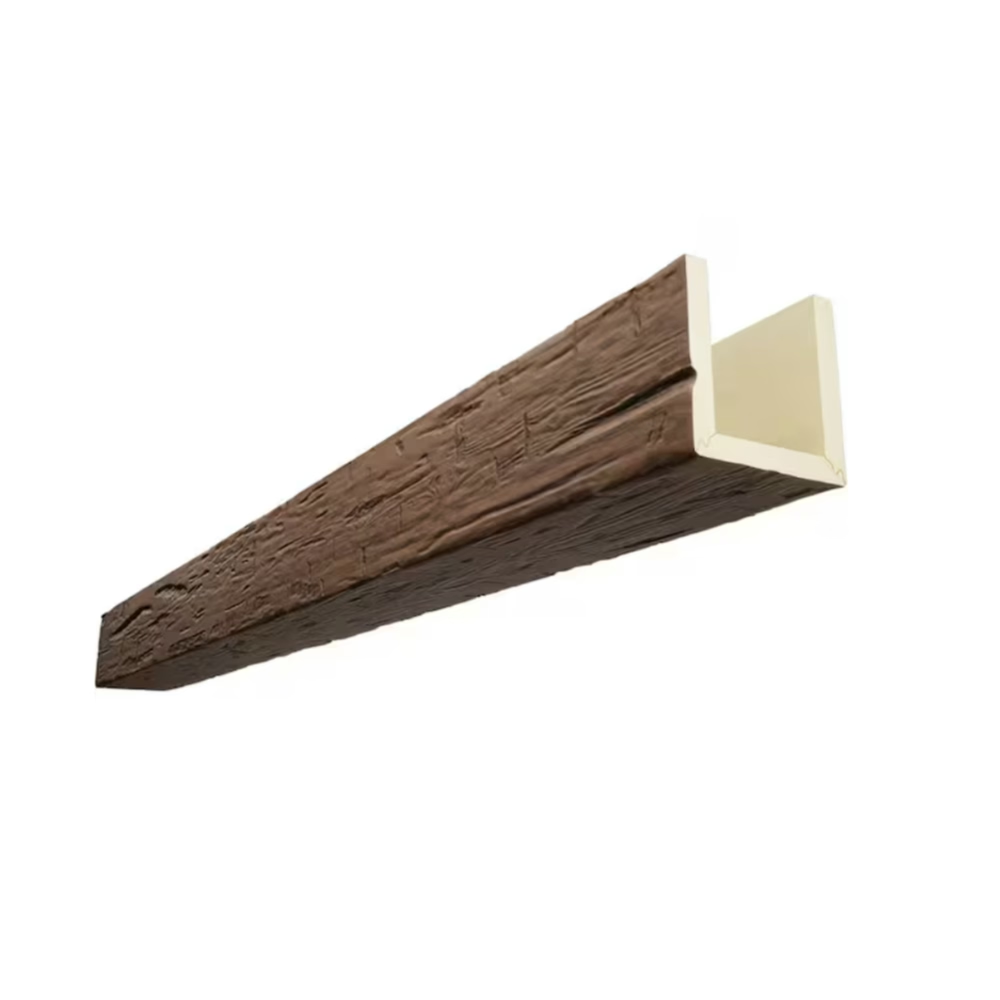
Design decisions made on paper often diverge dramatically from outcomes achieved in built environments. Color swatches that appear warm in studio lighting look different under construction-site illumination. Material proportions that seemed balanced on drawings feel overwhelming or insignificant when actual scale enters the equation. For polyurethane faux timber beam projects, pre-construction physical mockup services provide reality checks that prevent costly errors while building client confidence in design direction.
The mockup process creates physical representations of proposed beam installations before commitment to full-scale production. These mockups range from simple finish samples mounted on boards to elaborate ceiling sections incorporating multiple beam types with lighting scenarios matching intended installation conditions. The investment in mockup creation pays dividends through informed decision-making that eliminates the revision costs and schedule delays that result from post-installation dissatisfaction.
Mockup Development Process
Effective mockups begin with clear understanding of decision objectives and evaluation criteria. Designers and clients collaboratively identify which aspects of beam appearance require verification—color accuracy, texture character, scale relationship, or integration with surrounding materials. This clarification focuses mockup effort on information gaps rather than redundant representation, making the process efficient while addressing genuine uncertainty.
Sample fabrication for mockups employs production techniques that replicate final product characteristics as closely as possible. Finish application on mockup specimens should match factory processes used for production beams, ensuring that mockup appearance accurately predicts installation outcomes. When mockup finishes differ from production processes, the resulting appearance differences undermine the mockup's value as a decision-making tool. Reputable mockup services maintain process consistency that produces trustworthy representations.
Mounting mockup specimens on movable substrates enables flexible positioning that supports evaluation under varying conditions. Panels that can shift between locations reveal how beams appear in different lighting conditions and against different background materials. Full-scale mockup sections can incorporate temporary mounting systems that simulate production installation methods, revealing not only appearance but also how installation approach affects final positioning and alignment.
Scale Considerations in Mockup Design
True-to-scale mockups provide the most valuable information for beam selection decisions. When mockup specimens represent actual beam dimensions, designers and clients can evaluate not only surface appearance but also how beam scale relates to room proportions. A finish that appears beautiful on a small sample might seem overwrought when applied to full-scale beams dominating ceiling areas. Conversely, subtle textures that seem flat in miniature gain dimension and interest at actual scale.
Lighting simulation during mockup evaluation reveals how beam appearance changes throughout the day as natural light shifts. North-facing rooms receive different light quality than south-facing spaces, affecting how beam textures read and how colors appear. Mockup evaluation should include observation times throughout the day to capture these variations and ensure that beam selection remains appropriate across lighting conditions. Artificial lighting scenarios should also be evaluated, as many beam installations operate primarily under electric illumination.
Contextual mockup elements help evaluation teams visualize complete installations rather than isolated components. Including adjacent ceiling areas, wall surfaces, and lighting fixtures within mockup displays reveals how beams integrate with complete ceiling compositions. This holistic evaluation prevents component selection that looks beautiful in isolation but creates visual discord when combined with other design elements.
Client Presentation Benefits
Physical mockups create powerful client presentation opportunities that digital representations cannot match. Clients can touch surfaces, observe how light plays across textures, and examine details at their own pace during presentations. This sensory engagement builds understanding and confidence that translates into faster approval decisions. The tangibility of physical mockups also creates accountability—clients know precisely what they're approving, reducing the post-approval dissatisfaction that arises when expectations diverge from delivered results.
Mockup presentations to client groups benefit from guided walkthrough experiences that direct attention to decision-relevant aspects. Trained presenters can highlight features that clients might overlook, explain trade-offs between options, and answer questions that arise during examination. This guided engagement transforms passive review into active evaluation that produces more informed decisions and greater client satisfaction with selection outcomes.
Documentation of client reactions during mockup presentations creates valuable records for future reference. Photographs capture selected options and noted concerns, providing clear direction for production specifications. Sign-off procedures that record client approval of mockup specimens establish baseline expectations that protect both designers and clients if questions arise about approved appearance standards. This documentation infrastructure supports professional practice while building client relationships based on clear communication.
Cost and Schedule Implications
Mockup service costs vary based on complexity and specimen requirements but typically represent small percentages of total beam project budgets. A few hundred dollars invested in representative mockups can prevent thousands in revision costs if post-installation dissatisfaction requires rework. This cost-benefit analysis strongly favors mockup investment for projects where beam appearance significantly influences design success.
Schedule impacts from mockup processes require consideration during project planning. Mockup fabrication requires lead time that might extend overall design duration if not anticipated. For time-sensitive projects, compressed mockup services with faster turnaround might be available at premium pricing. Weighing the schedule cost against mockup benefits should occur early in project planning to ensure appropriate time allocation.
The schedule efficiency of mockup-driven decision-making often offsets time invested in the process. When clients approve mockups confidently, production can proceed without revision cycles that would extend timelines more significantly than original mockup duration. The clarity that mockups provide eliminates the back-and-forth communication that consumes time when specifications remain ambiguous.
Evaluating Multiple Design Options
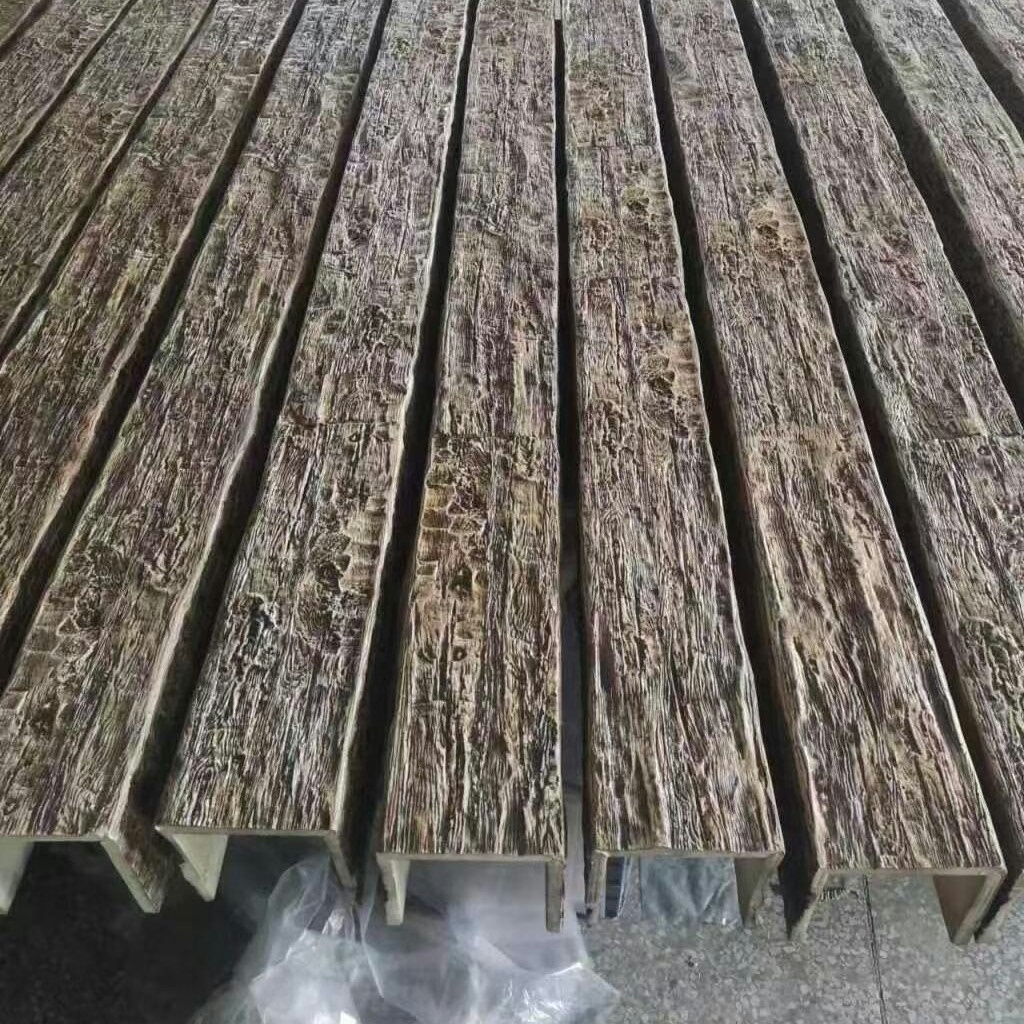
Mockup services excel when projects involve multiple beam options requiring comparison. Presenting alternatives side-by-side enables direct evaluation that isolated samples cannot support. Clients comparing finishes, textures, or beam profiles in direct proximity develop nuanced understanding of differences that书面 descriptions cannot convey. This comparative evaluation produces more considered decisions than sequential viewing of isolated options.
Controlled comparison environments ensure that option evaluation occurs fairly without environmental variables influencing perceptions. Lighting intensity, background contrast, and viewing angle should remain consistent across compared options to prevent artificial advantage for options viewed under more favorable conditions. Professional mockup services understand these requirements and design comparison layouts that support objective evaluation.
Selection frameworks developed before mockup evaluation provide structure for decision processes.预先确定的选择标准,如颜色偏好、纹理偏好、预算限制等,有助于引导客户做出符合项目总体目标的选择。这些框架防止决策过程陷入无关细节的困扰,确保最终选择支持整体设计愿景。 </think>
The selection framework developed before mockup evaluation provides structure for decision-making processes. Pre-established selection criteria such as color preferences, texture preferences, and budget constraints help guide clients toward choices that align with overall project objectives. These frameworks prevent decision processes from becoming bogged down in irrelevant details while ensuring final selections support the overall design vision.
Physical mockup specimens provide permanent records that outlast decision-making sessions. Filed samples serve as production reference throughout manufacturing, ensuring that approved characteristics are maintained across all production beams. Without physical references, production teams must rely on written specifications that inevitably prove ambiguous when actual appearance decisions arise. This permanent reference value makes mockup specimens worth preserving long after selection decisions have been made.
The psychological value of mockup-driven selection deserves recognition beyond practical considerations. Clients participating in tangible evaluation processes develop ownership of design decisions that virtual selection cannot create. This psychological investment in selection outcomes builds client satisfaction even when actual installations face challenges or modifications. The engagement created through physical mockup processes strengthens relationships between designers, clients, and the built results they collaboratively create.


Pre-construction physical mockup services transform polyurethane faux timber beam selection from abstract specification into informed decision-making grounded in tangible reality. By creating physical representations before commitment, these services reduce risk, build confidence, and improve outcomes across the full range of beam projects. The modest investment in mockups generates returns through eliminated revisions, accelerated approvals, and enhanced client satisfaction that reputations are built upon.
Technical References
ASTM standards cited in every specification
Test Data
Lab results from internal testing program
Updated 2026
Reviewed against current product specs