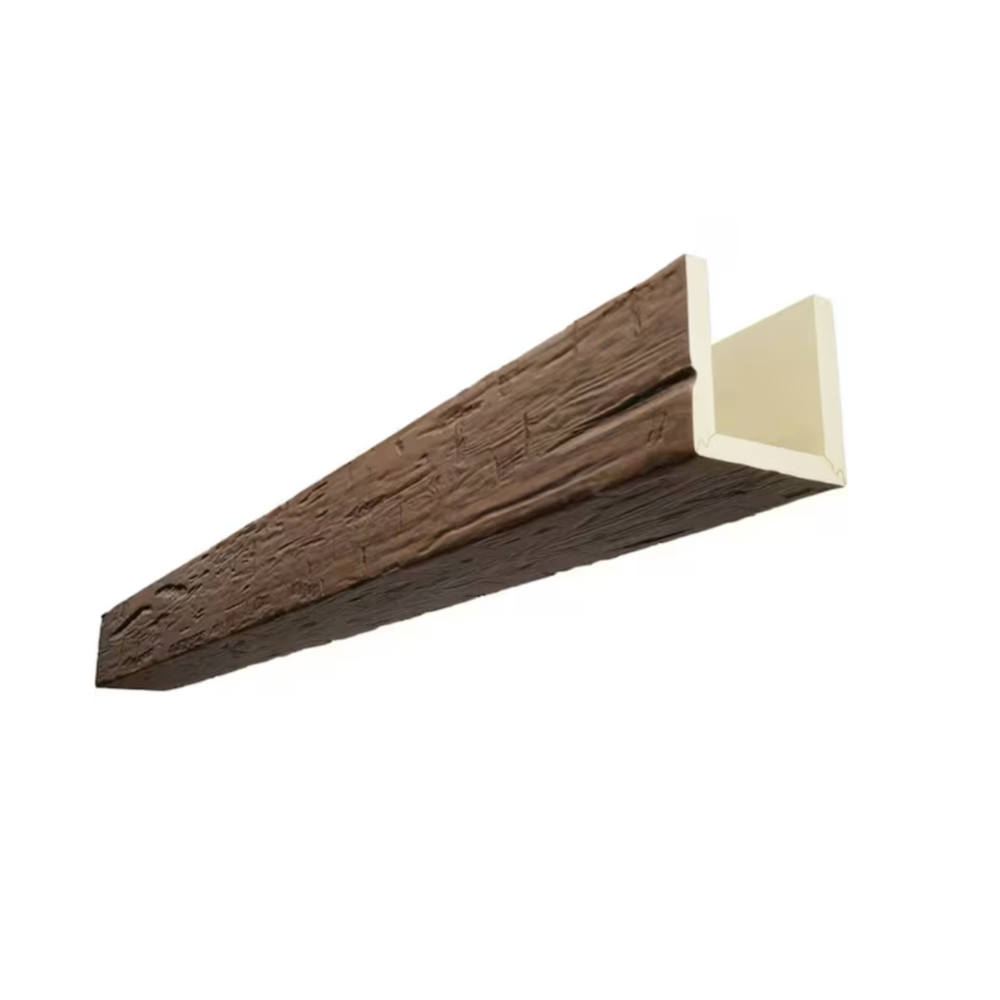
The intersection of wood warmth and lighting precision creates some of the most compelling ceiling compositions in contemporary interior design. When directional fixtures must illuminate specific features or zones, integrating these fixtures with faux wood beams presents challenges that pre-cut spotlight cutout solutions address elegantly. These specialized beam products arrive from manufacturing with precisely positioned openings designed specifically for adjustable spotlight fixtures.
Spotlight integration differs fundamentally from general downlight accommodation. Directional fixtures must aim toward targets while remaining concealed within beam cavities. The adjustment mechanisms required for aiming create dimensional requirements that simple recessed lighting doesn't impose. Pre-cut specifications account for these specialized requirements, producing openings that accommodate fixture adjustment while maintaining the clean appearance that wood beam aesthetics demand.
Fixture Geometry and Opening Requirements
Adjustable spotlight fixtures include various mechanisms that affect opening specifications. Gimbal-style fixtures use ball joints that allow rotation in multiple directions, requiring cylindrical opening clearance that accommodates pivot movement. Eyeball fixtures feature spherical adjustment elements that seat in mounting rings, requiring circular openings sized for both housing and adjustment clearance. Pre-cut specifications should reference specific fixture geometry being specified.
Housing depth for adjustable fixtures typically exceeds fixed recessed options because adjustment mechanisms add vertical dimension. The pivot point must be positioned within beam cavities, requiring adequate depth for both mechanism housing and lamp positioning. Pre-cut beam depth specifications should accommodate fixture housing height, ensuring that trim seats properly against beam surfaces without visible gaps or forcing.
The relationship between opening position and beam surface affects how fixtures appear when viewed from different angles. Openings positioned at beam bottoms present fixtures directly overhead, while side-positioned openings create different viewing angles. Pre-cut design should consider typical viewing positions, ensuring that fixture appearance remains acceptable across expected viewing angles rather than only in default positions.
Trim and Finish Coordination
Visible trim elements from adjustable fixtures interact with wood beam surfaces in ways that affect overall appearance. The material, color, and finish of trim components should coordinate with beam aesthetics, either matching subtly or contrasting deliberately based on design intent. Pre-cut specification should include trim selection guidance that ensures appropriate coordination between fixture and beam finishes.
Edge treatment for pre-cut openings affects how fixture trims integrate with beam surfaces. Clean, square edges create formal transitions appropriate for contemporary designs. Beveled or routed edges provide more traditional detailing that complements classic beam profiles. The edge treatment specification should align with overall beam design language, producing unified rather than discordant appearances.
Finishing around pre-cut openings should match beam surface treatment precisely. Factory-finished beams with pre-cut openings receive the same surface treatment across opening edges as exposed surfaces, creating consistency that site finishing cannot match. When custom finishing is required, careful attention to edge treatment ensures that openings integrate seamlessly with surrounding beam appearance.
Integration with Lighting Design Intent
Accent lighting schemes depend on precise fixture positioning that pre-cut openings enable. The relationship between opening positions and illumination targets determines whether spotlights achieve intended effects or miss their marks. Pre-cut specifications should be developed from lighting design drawings that establish fixture positions relative to beam layout, ensuring that manufactured openings align with design intentions.
Beam orientation relative to illumination targets affects how light strikes surfaces and reveals texture. Light grazing across wood grain creates different effects than perpendicular illumination. The interplay between beam orientation and fixture aiming should be considered during design, using both elements together to achieve intended visual results. Pre-cut specification that accounts for these relationships produces integrated lighting that enhances rather than competes with beam aesthetics.
Dynamic lighting designs that shift emphasis between different zones require fixture positioning that accommodates changing priorities. Pre-cut opening positions should anticipate potential reconfiguration requirements, potentially including additional openings for future flexibility. This forward planning prevents situations where beam installations cannot accommodate evolving lighting needs without modification.
Service and Maintenance Considerations
Adjustable fixtures require periodic re-aiming that service access should accommodate. The frequency of re-aiming depends on application requirements, with retail merchandising environments requiring more frequent adjustment than residential accent lighting. Pre-cut opening positions should enable fixture access without beam removal, using positions that allow manipulation through opening perimeters.
Lamp replacement accessibility varies by fixture design and beam positioning. Some fixtures allow lamp replacement from below without tools, while others require access through fixture housings that beam positioning might obstruct. Pre-cut specifications should consider typical maintenance requirements, ensuring that opening positions enable efficient service without unusual difficulty.
Maintenance scheduling should account for the interaction between beams and fixtures during service operations. Technicians accessing fixtures might need to move or protect beam surfaces to prevent damage during lamp replacement or fixture adjustment. Pre-cut design that considers maintenance workflows prevents situations where routine service creates damage requiring repair.

Construction Coordination Requirements
Electrical rough-in should position junction boxes and wiring runs to align with pre-cut opening locations. Coordination between electrical contractors and beam installers ensures that fixture positions match electrical provisions. This coordination prevents the misalignment that independent positioning by different trades inevitably creates.
Ceiling coordinate systems should reference beam positions consistently to enable accurate fixture placement. The datum points used for beam positioning should also apply to fixture specification, ensuring that coordinates align across different specification documents. This coordination consistency prevents errors from inconsistent reference systems.
Timing coordination between beam installation and fixture installation affects both work quality and scheduling. Beams should be installed and secured before fixtures are mounted, preventing fixture damage during beam work. Fixture installation should occur after ceiling finishing is complete, when the environment is clean and stable. Pre-cut specification should include guidance on appropriate sequencing.
Quality Outcomes Through Precision Manufacturing
The precision of factory-cut openings produces quality outcomes that site modification cannot match consistently. Computer-controlled cutting creates openings with exact dimensions and smooth edges regardless of production volume. This consistency ensures that every beam in an installation receives identical treatment, producing unified appearance across multi-beam projects.
Dimensional accuracy in pre-cut openings ensures that fixtures seat properly without gaps or forcing. The clearance between fixture housing and opening perimeter should be adequate for installation without being so excessive that trim rings cannot bridge gaps effectively. Factory specifications calibrated to specific fixture dimensions achieve this balance reliably.
Edge quality from factory cutting requires no refinement before fixture installation. The cut surfaces are clean and properly finished, eliminating the preparation work that site cutting would require. This preparation elimination accelerates installation while ensuring that opening appearance matches beam surface quality throughout.
The synthesis of wood warmth and lighting precision creates ceiling environments that reward attention to detail and craftsmanship. Pre-cut spotlight cutout faux wood beams enable this synthesis by providing the manufacturing precision that integrated lighting requires. The resulting spaces demonstrate how technical solutions support aesthetic achievement, creating interiors where light and material enhance rather than compromise each other.


Pre-cut spotlight cutout faux wood beams demonstrate how specialized manufacturing enables design intentions that traditional approaches cannot achieve reliably. By providing openings engineered for specific fixture types, these products eliminate the compromises and quality variations that site modification introduces. The ceiling compositions this approach enables represent the best of contemporary design: precise, integrated, and beautiful.

Technical References
ASTM standards cited in every specification
Test Data
Lab results from internal testing program
Updated 2026
Reviewed against current product specs