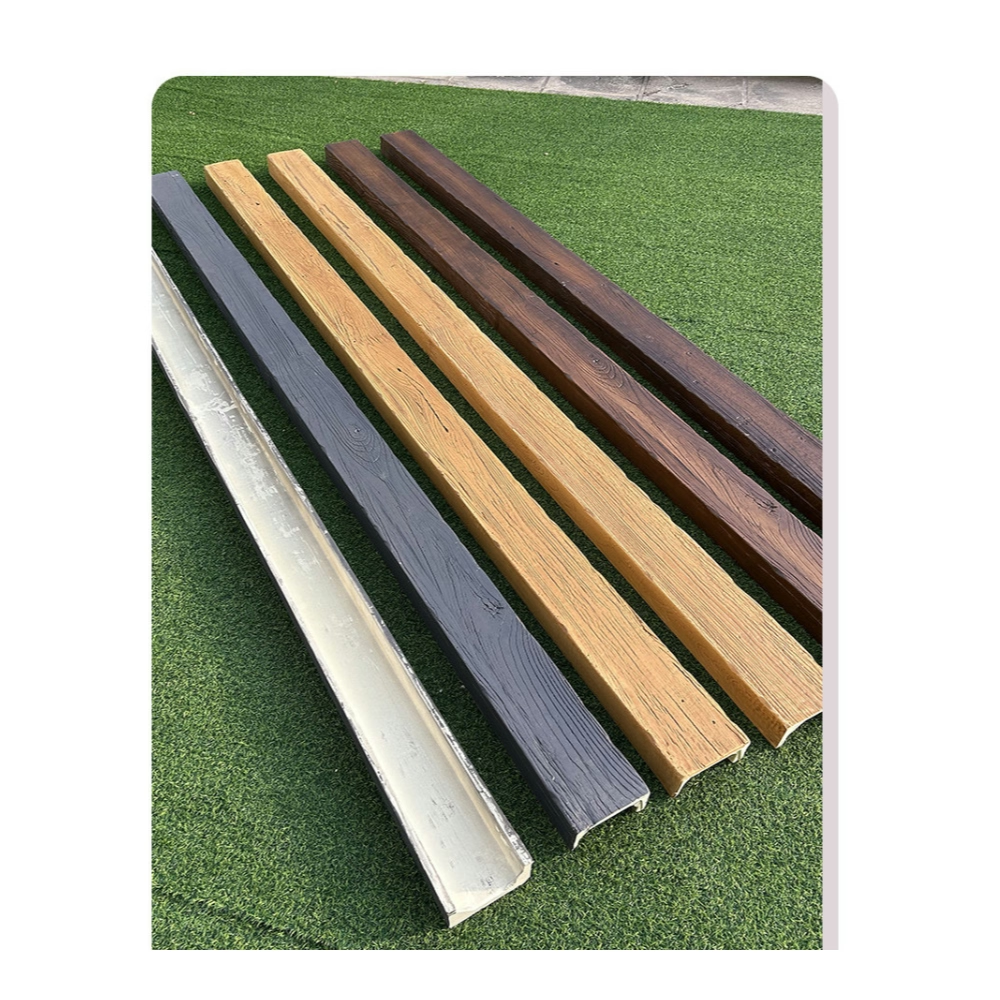
The difference between efficient and frustrating beam mounting often comes down to preparation quality. When installers must measure, mark, and verify mounting positions on each beam, the process becomes time-consuming and prone to errors. Pre-drilled hole design PU faux beams eliminate this preparation burden through factory-positioned mounting points that arrive ready for immediate attachment. This manufacturing precision transforms beam mounting from measurement-dependent process to straightforward installation.
Factory hole positioning ensures consistency that field marking cannot match. Every beam in an installation receives identical hole placement, eliminating the variations that accumulate when positions are marked individually. This consistency produces aligned mounting points across multi-beam installations, creating the visual order that design intentions require.
Factory Hole Positioning Accuracy
CNC drilling equipment positions holes with tolerances measured in fractions of millimeters, far exceeding what manual marking can achieve. This precision ensures that mounting brackets seat properly in every beam without forcing or adjustment. The consistency of factory positioning also enables mass production of matching mounting hardware optimized for specific hole patterns.
Hole patterns are engineered based on load analysis that determines optimal fastener spacing and positioning. The engineering considers beam span, anticipated loads, and structural requirements to establish hole positions that provide secure attachment. This engineering-backed positioning provides assurance that field-determined holes might lack, ensuring that mounting meets structural requirements.
Depth control during factory drilling ensures that holes penetrate appropriately without breakthrough that would compromise beam appearance. Blind holes of precise depth can be produced consistently, with entry quality matching surface finish standards. This depth control is particularly valuable for finish-quality visible surfaces where through-drilling would create appearance problems.
Hole Specifications for Different Applications
Ceiling mounting applications typically use hole patterns optimized for overhead load conditions. The forces on ceiling-mounted beams act downward, requiring attachment points positioned to resist these loads securely. Pre-drilled specifications for ceiling applications account for this loading direction, providing attachment configurations that perform reliably in the orientation that ceiling installations require.
Wall mounting applications involve different loading conditions that influence hole positioning. Beams mounted on walls experience different force directions than ceiling installations, potentially requiring different attachment patterns. Pre-drilled specifications should reference the intended mounting orientation, ensuring that hole patterns match application requirements.
Structural support applications with heavy loads may require reinforced hole patterns or larger fastener specifications. The pre-drilled approach can accommodate these requirements through thicker material sections or additional attachment points where loads demand. Factory production can implement these variations consistently, providing appropriate solutions for different load conditions.
Mounting Bracket Compatibility
Pre-drilled hole patterns are designed to accept specific mounting bracket systems that ensure proper attachment. These bracket systems are included with beam orders or specified separately, providing complete solutions rather than holes requiring custom bracket fabrication. The matched relationship between holes and brackets ensures that attachment hardware works together without modification.
Bracket styles vary based on mounting surface conditions and load requirements. Wood-framed mounting typically uses brackets designed for joist or rafter attachment. Steel-frame mounting requires brackets compatible with welding or self-tapping screw attachment. Concrete and masonry mounting involves anchor systems that differ entirely from frame attachment approaches. Pre-drilled specifications should match the mounting conditions encountered in specific projects.
Adjustable bracket systems allow field compensation for construction variations while maintaining pre-drilled hole positioning as reference points. These hybrid approaches combine factory precision with field flexibility, providing mounting solutions that accommodate real-world construction tolerances. Understanding how adjustable systems work with pre-drilled holes helps installers achieve proper attachment despite site conditions that might not perfectly match ideal assumptions.
Installation Sequence with Pre-Drilled Beams
Proper installation sequence maximizes the efficiency advantages that pre-drilled holes provide. The typical sequence begins with mounting bracket installation on building structure, followed by beam positioning that aligns pre-drilled holes with installed brackets. This sequence allows bracket attachment to proceed without beam handling complications that simultaneous work would create.
Beam positioning should verify hole alignment before attempting attachment. Slight positional adjustments might be necessary if construction variations create minor misalignments between bracket positions and pre-drilled hole locations. These adjustments are typically within the adjustment range of mounting brackets, allowing final alignment without compromising attachment security.
Fastener installation proceeds once alignment is confirmed, using hardware specified for the pre-drilled hole and bracket system. The fastener seating should be checked to verify proper engagement, ensuring that threads engage fully and bearing surfaces seat against bracket materials. This verification confirms that the designed attachment is actually achieved.
Quality Assurance Through Factory Production
Factory quality control verifies hole positioning accuracy before beams ship to installation sites. Dimensional inspection confirms that hole locations match specifications within tolerance limits. This inspection provides assurance that beams arriving on site are properly prepared, eliminating field verification that would otherwise be required.
Hole edge quality receives attention during factory production, ensuring that drilled edges meet appearance standards appropriate for visible applications. Deburring removes sharp edges that might interfere with hardware seating while improving edge appearance. This finishing ensures that pre-drilled holes contribute to rather than detract from finished installation quality.
Material integrity around pre-drilled holes is verified through testing that confirms structural performance. Pull-out testing validates that fastener holding capacity meets specifications despite material removal for holes. This testing provides data supporting load recommendations that installers use during specification and installation.
Benefits Across Project Stakeholders
Contractors benefit from pre-drilled holes through reduced installation time and simplified training requirements. Crews can learn pre-drilled mounting procedures quickly, reducing skill requirements compared to custom marking approaches. The time savings from eliminated measuring and marking translate directly into labor cost reductions that improve project economics.
Designers benefit from pre-drilled beams through confidence that mounting will match design intentions precisely. Hole positioning that appears on drawings corresponds exactly to holes in installed beams, eliminating discrepancies between design and construction. This correspondence ensures that design quality survives translation into built form.
Building owners benefit from pre-drilled mounting through reliable performance that custom approaches might not achieve consistently. The engineering behind pre-drilled specifications ensures that attachment performs adequately for intended loads. This reliability provides assurance that ceiling beams will remain secure throughout the building's service life.
Pre-drilled hole design in PU faux beams exemplifies how manufacturing precision benefits construction processes. By moving measuring and marking to controlled factory environments, these products eliminate the variability and errors that field marking introduces. The resulting installations demonstrate the value of this approach through consistent quality that satisfies all project stakeholders.


The construction industry continues recognizing that preparation quality determines installation outcomes. Pre-drilled hole design PU faux beams embody this principle by providing preparation precision that site work cannot match. As manufacturing capabilities expand, expect increasingly sophisticated pre-prepared solutions that further simplify construction while improving quality.
Technical References
ASTM standards cited in every specification
Test Data
Lab results from internal testing program
Updated 2026
Reviewed against current product specs