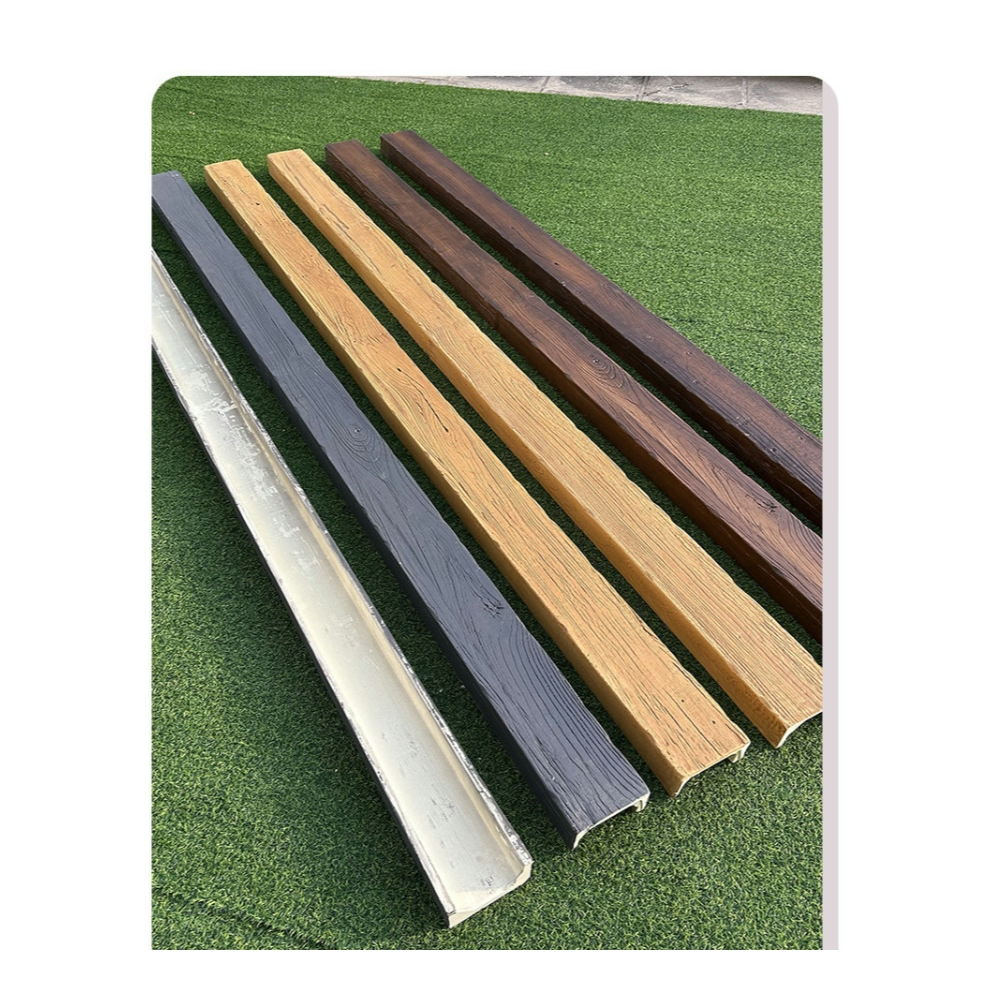
Anyone who has attempted to create clean, professional-looking corners with traditional wood beams understands the frustration of achieving precise miter cuts, managing grain matching at joints, and ensuring that finished connections appear seamless to the casual observer. Pre-notched PU faux beams address these challenges directly, providing factory-precision cuts that transform what was once specialized carpentry work into straightforward assembly tasks achievable by anyone.
The concept behind pre-notching proves remarkably simple yet profoundly effective. Rather than requiring installers to measure, mark, and cut beams on-site—often working at heights with limited visibility and awkward positioning—pre-notched beams arrive with corner joints, beam-to-beam connections, and transition points already cut to exact specifications. This approach eliminates the variables that compromise installation quality while dramatically reducing the time required to complete beam installations.
The Engineering Behind Pre-Notched Beams
Factory pre-notching relies on precision manufacturing equipment capable of producing identical cuts across multiple beam units. Computer-controlled cutting systems follow exact templates, ensuring that corresponding joints from different beams align perfectly during installation. This consistency proves impossible to replicate consistently through manual cutting methods, regardless of installer skill level.
The notch profiles themselves have been refined through extensive testing and real-world feedback from professional installers. Standard configurations include square corner joints for perpendicular intersections, angled miter cuts for decorative applications, and stepped notch patterns that allow beams to meet cleanly at varying heights. Each profile accommodates the expansion and contraction characteristics of polyurethane while maintaining visual continuity at joints.
Material preparation before notching ensures clean cuts that don't expose raw polyurethane in visible locations. Quality manufacturers apply finishing treatments before cutting operations, sealing exposed surfaces and ensuring that cut edges integrate seamlessly with the rest of the beam's appearance. This attention to detail distinguishes premium pre-notched products from budget alternatives that may show visible seams or color mismatches at joints.

Installation Efficiency Gains
Time studies conducted by professional installation teams consistently demonstrate substantial efficiency improvements when using pre-notched components. Complex multi-beam configurations that might require half a day of careful measurement and cutting with traditional materials can often be completed in an hour or two using pre-notched systems. This acceleration proves particularly valuable in commercial contexts where labor costs significantly impact project budgets.
The simplified assembly process also reduces errors that require rework or replacement parts. When installers must cut beams on-site, measurement mistakes, blade deflection, and simple human error inevitably produce some percentage of unusable pieces. Pre-notched components arrive ready for assembly, eliminating these error sources and ensuring that every piece contributes to the finished installation rather than becoming waste material.
Handling and transport considerations also favor pre-notched systems. Without the need to accommodate cutting equipment and waste material on-site, installation teams can work more efficiently in confined spaces. Residential installations in furnished homes benefit from reduced disruption, as pre-notched assembly generates minimal debris and requires fewer tools that might damage existing finishes.
Planning for Pre-Notched Installations
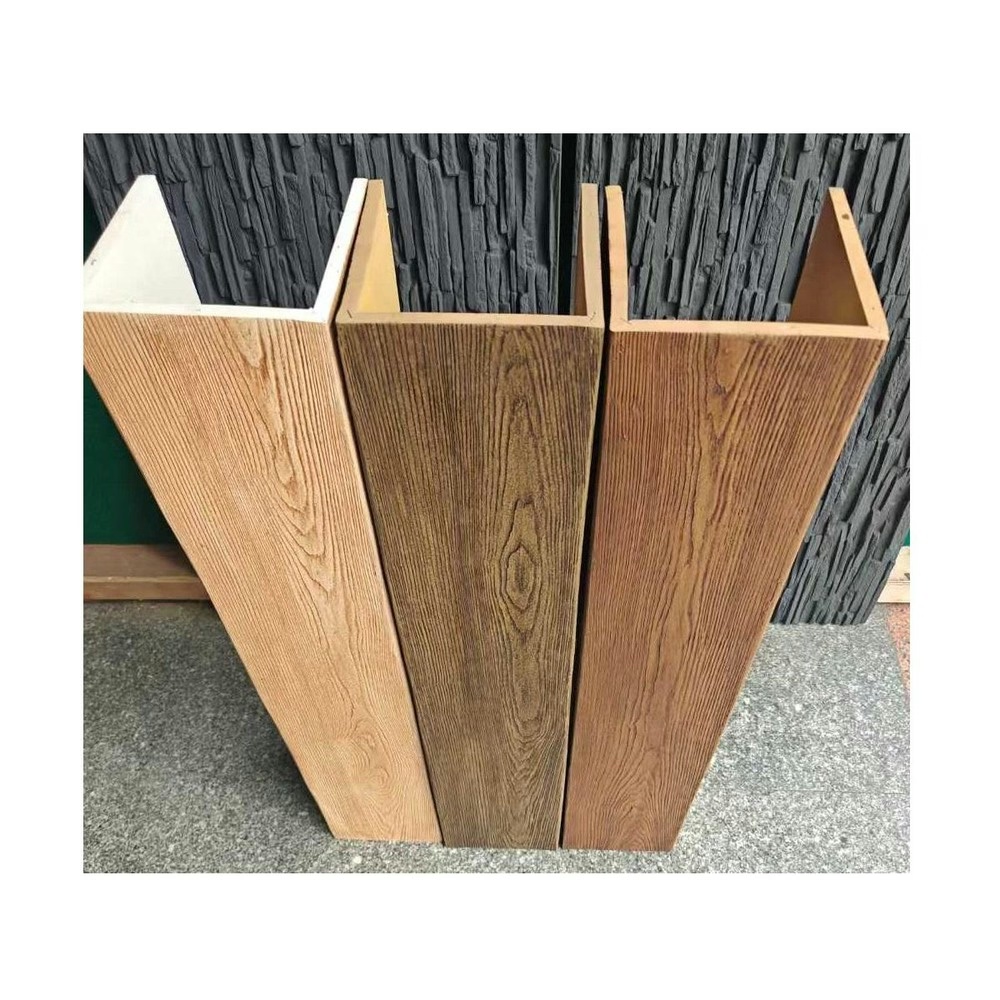
Successful pre-notched beam installations begin with accurate measurement and clear communication with suppliers. Installation plans should specify exact dimensions, corner configurations, and any custom requirements unique to the project. Most manufacturers offer standard pre-notched configurations suitable for common installations while maintaining flexibility for custom applications.
Understanding the specific pre-notched options available helps with planning and design. Some systems provide full corner assemblies including both beams cut to specification, while others notch only one beam in a connection, requiring complementary cutting on-site for the second piece. Reviewing manufacturer documentation and consulting with technical representatives ensures that ordered components will work together as intended.
Structural planning remains essential regardless of the installation method chosen. Pre-notched beams still require appropriate mounting hardware and structural support. The efficiency gains from pre-notching apply to visible assembly work, not to the underlying structural considerations that ensure safe, lasting installations.
Common Pre-Notched Configurations
The most frequently specified pre-notched configuration involves standard corner joints where two beams meet at perpendicular angles. These assemblies typically feature mitered cuts at forty-five degrees, allowing beams to form clean exterior corners when viewed from any angle. Interior corners may use different profiles depending on the desired visual effect and how much of the beam ends remain visible after installation.
Beam-to-beam splices address longer spans that require multiple beam sections. These connections often employ scarf joints cut at shallow angles that become nearly invisible once installed and aligned properly. Pre-notched scarf joints ensure consistent angle matching across splice locations, producing professional results even in extensive beam runs.
T-configuration intersections occur when beams meet along their lengths rather than at endpoints. Pre-notched options for these scenarios include full dados that accept perpendicular beams and partial notches that create the appearance of beams passing through intersections. Each approach suits different aesthetic goals, with full dados creating stronger visual connections between beams and partial notches suggesting independent installation of crossing elements.
Finishing Pre-Notched Installations
While pre-notching eliminates most cutting work, some finishing remains necessary to achieve truly seamless appearances. Joint areas typically benefit from careful application of paintable caulk or wood filler designed for polyurethane materials. These products fill microscopic gaps that might remain visible under certain lighting conditions, creating unified surfaces that read as continuous wood grain.
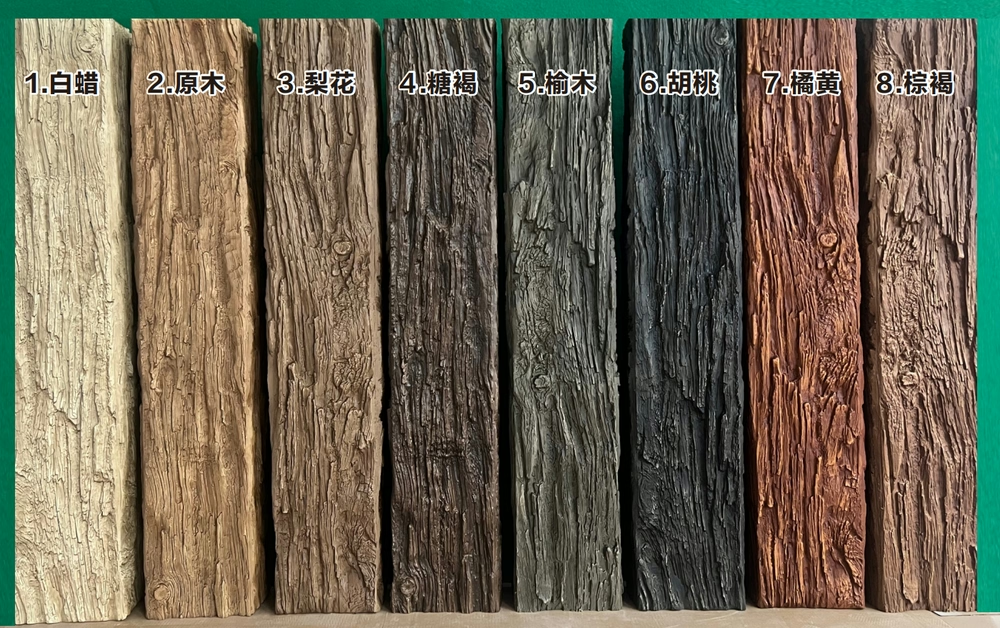
Color matching between adjacent beam sections requires attention even with pre-notched components. Variations in finish application, differences in UV exposure during storage, and subtle batch-to-batch color differences can create visible boundaries between pieces. Touch-up finishing kits provided by manufacturers offer the best approach, allowing installers to blend adjacent surfaces convincingly.
The lightweight nature of PU beams simplifies finishing work considerably. Unlike natural timber that requires awkward handling during painting or staining operations, polyurethane beams can be positioned for easy access to all surfaces. This accessibility improves finish quality while reducing the labor time required for application and detail work.
Professional and DIY Applications
Pre-notched PU faux beams serve both professional contractors seeking installation efficiency and homeowners pursuing do-it-yourself beam projects. The learning curve for working with pre-notched components proves minimal compared to traditional beam installation methods. Basic handyman skills and standard tools suffice for most residential installations, opening beam-based design to audiences that might otherwise avoid these projects.
Professional installers appreciate the consistency that pre-notched systems provide, particularly when completing multiple similar installations. Batch ordering of pre-notched components ensures that crews develop familiarity with specific products, building expertise that improves quality and reduces installation times across project portfolios. This consistency proves valuable for design-build firms and contractors offering beam installation as a recurring service offering.
For anyone considering beam installation projects, pre-notched PU faux beams represent the most accessible path to professional-quality results. The combination of factory precision, simplified assembly, and reduced on-site requirements creates opportunities for beautiful beam installations that might otherwise remain beyond reach due to complexity or cost constraints.
Technical References
ASTM standards cited in every specification
Test Data
Lab results from internal testing program
Updated 2026
Reviewed against current product specs