Contemporary architectural design increasingly embraces curved forms, flowing lines, and organic shapes that reject the rigid geometries of earlier modernist traditions. This aesthetic evolution has created demand for building materials that accommodate curved installations, including structural and decorative beams. Pre-stained ready-to-finish curved polyurethane faux wood beams address this need directly, providing the visual warmth of natural wood with manufacturing flexibility that enables virtually any curvature requirement.
Traditional building materials present significant challenges when curved installations are required. Solid wood beams resist curving without extensive steam treatment, specialized equipment, and skilled craftsmanship. Steel beams can be curved but require expensive fabrication and lose the wood appearance that many designs seek. Concrete cannot achieve smooth curves without elaborate formwork. Polyurethane's workability enables curved manufacturing that these materials cannot match economically or practically.
Manufacturing Curved Polyurethane Beams
The process of creating curved polyurethane beams begins with precision mold engineering that defines the beam's curved profile. Molds must account for the specific radius requirements of each installation, with tight tolerances that ensure consistent results across production quantities. Complex curves may require segmented molds that join at precise locations to create continuous curved surfaces.
The polyurethane casting process itself adapts readily to curved configurations. Liquid material flows into molds, filling complex shapes without the voids or inconsistencies that can plague other manufacturing approaches. This flow characteristic proves particularly valuable for beams with compound curves or irregular cross-sectional profiles that would challenge other production methods.
Post-curing and finishing processes complete the manufacturing sequence. Temperature-controlled curing ensures complete material polymerization, creating consistent density and surface characteristics throughout each beam. Surface preparation addresses any minor imperfections before pre-staining application begins.

Benefits of Pre-Staining
Pre-stained beams arrive from the factory with base color coats already applied, requiring only final topcoat treatment before installation. This approach offers substantial advantages over raw or field-stained alternatives. Factory application occurs under controlled conditions that ensure consistent coverage and color development. The controlled environment eliminates weather variables, dust contamination, and temperature fluctuations that complicate on-site staining.
The pre-staining approach also reduces labor requirements significantly. Field staining curved surfaces presents particular challenges, as achieving consistent color across irregular profiles requires significant skill and time. Professional finishers command premium rates for this specialized work. Pre-stained beams eliminate this expense, requiring only straightforward topcoat application that most installers can complete efficiently.
Material waste decreases with pre-stained products as well. Field staining requires more stain than factory application due to absorption variations and overspray losses. Factory finishing optimizes material usage while ensuring complete coverage across all surfaces, including those difficult-to-reach areas that often receive inadequate attention during on-site application.
Installation Considerations for Curved Beams
Curved beam installation requires attention to both structural support and aesthetic positioning. Structural support must follow the beam's curvature precisely, with mounting surfaces that accommodate the curved profile without gaps or stress concentrations. This often requires custom-fabricated support brackets or backing structures that match beam curvature exactly.
Positioning curved beams demands careful alignment to ensure that the installation reads correctly from primary viewing locations. Even small positioning errors become more apparent on curved installations, where the eye naturally follows the beam's profile. Installation professionals often use templates or reference lines to ensure accurate placement throughout the curved length.
Expansion and contraction considerations differ for curved beams compared to straight configurations. The curved geometry introduces additional stress points that must be accommodated in mounting systems. Quality manufacturers provide installation guidelines specific to curved products, including recommended fastener spacing, adhesive requirements, and movement accommodation strategies.
Design Applications
Vaulted ceilings represent the most common application for curved beams, where sweeping curves follow the roof structure while adding visual warmth and architectural interest. Curved beams can follow the ceiling's curve precisely, creating the appearance of structural timber integrated into the architecture. This approach works equally well in new construction and renovation projects.
Arched openings and portals provide another application area where curved beams add character and definition. Framing doorways, windows, or pass-through openings with curved beams establishes visual boundaries while maintaining openness. The organic curves soften what might otherwise feel like harsh geometric transitions between spaces.
Feature walls and room dividers incorporate curved beams to create dynamic visual elements. A wall of parallel curved beams, for example, can divide spaces while allowing light and sightlines to pass through. The repeating curved forms create rhythm and movement that flat surfaces cannot achieve.
Finishing Customization Options
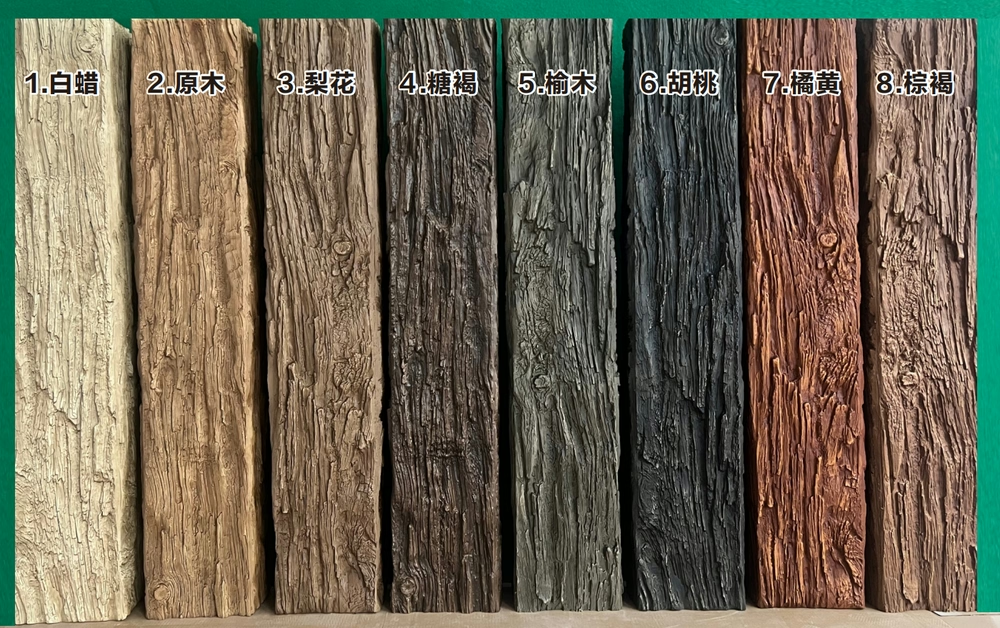
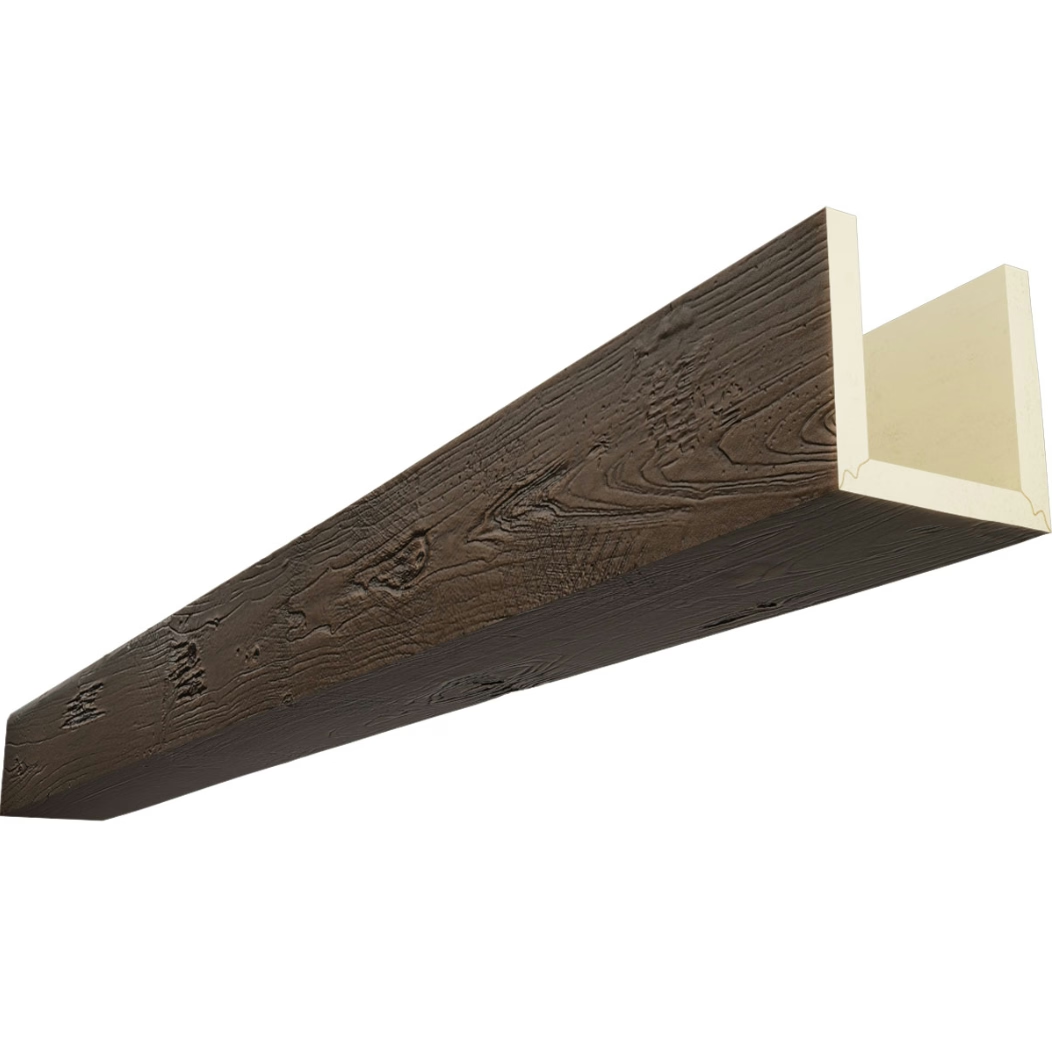
Pre-stained beams serve as excellent foundations for further customization. While the factory-applied base stain provides consistent color development, final topcoats can adjust tone, add protective properties, or introduce special effects. Matte finishes create understated elegance, while satin or semi-gloss topcoats add depth and luminosity to wood grain patterns.
Custom staining allows further refinement of the pre-stained base. Tinting, glazing, and layered finishing techniques create effects that pure factory finishing cannot achieve economically. Skilled finishers can transform pre-stained beams to match specific wood species appearances, replicate aged patinas, or create entirely unique effects that distinguish installations from typical offerings.
Integration with adjacent materials often requires additional finishing attention. When curved beams meet walls, ceilings, or other beams, the junction should appear natural and intentional. Color matching at these intersections ensures that beams look like integral architectural features rather than applied decorations.
Selecting Curved Beam Products
Not all manufacturers offer curved beam capabilities, making product selection somewhat more limited than straight beam options. Manufacturers with casting expertise and mold-making capabilities can produce curves to specification, while others offer only standard curved profiles that may not meet specific project requirements. Confirming manufacturing capabilities before committing to orders prevents misunderstandings.
Minimum radius limitations affect which curved designs prove practical. Very tight curves may require unrealistic mold configurations or produce beams that cannot be installed without damage. Understanding these limitations early in design development prevents costly late-stage redesigns when curved installations prove impractical.
Engineering review proves advisable for structural applications where beams bear loads beyond their own weight. While decorative curved beams encounter few structural demands, beams supporting fixtures, lighting, or other suspended elements require calculation to ensure adequate strength. Manufacturers can advise on load capacities and mounting requirements for specific applications.
Pre-stained ready-to-finish curved polyurethane faux wood beams expand the design possibilities for architects and designers seeking curved forms with wood aesthetics. By combining manufacturing flexibility with finishing convenience, these products enable installations that would otherwise require prohibitive expense or craftsmanship to achieve.
Technical References
ASTM standards cited in every specification
Test Data
Lab results from internal testing program
Updated 2026
Reviewed against current product specs


