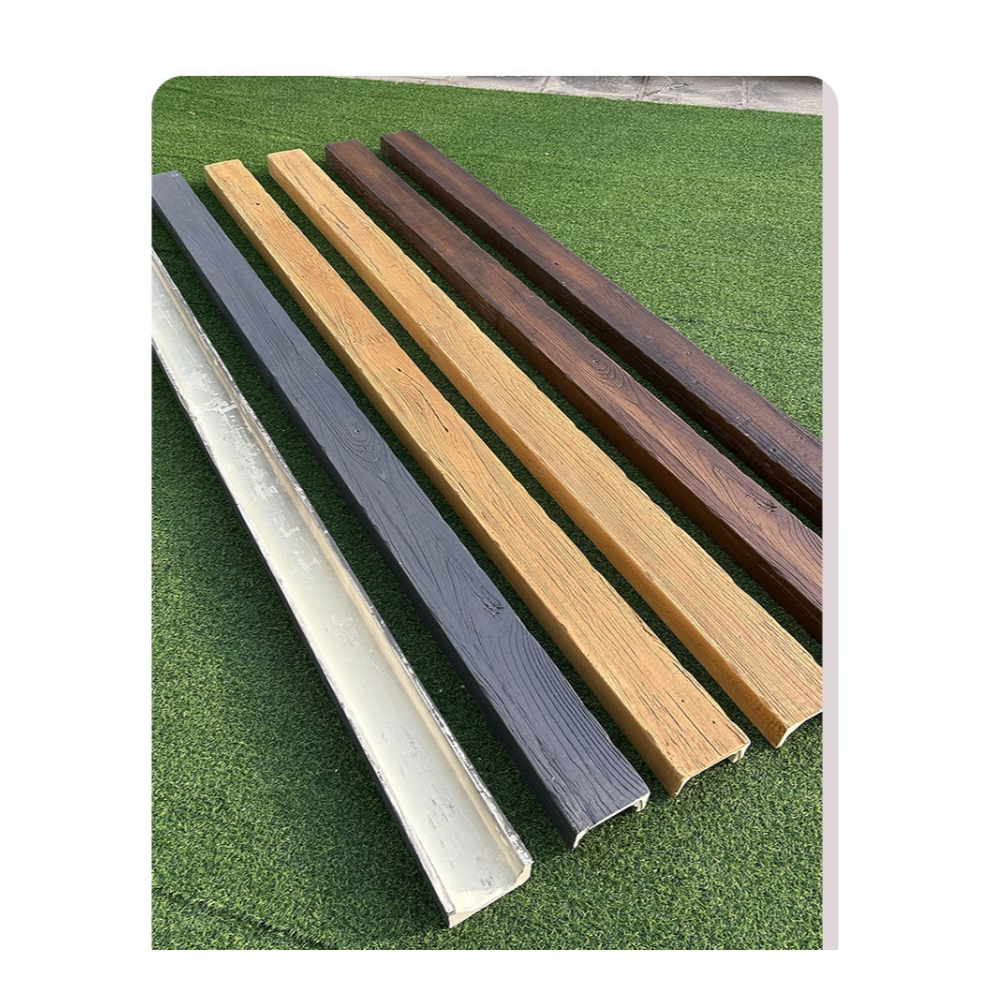
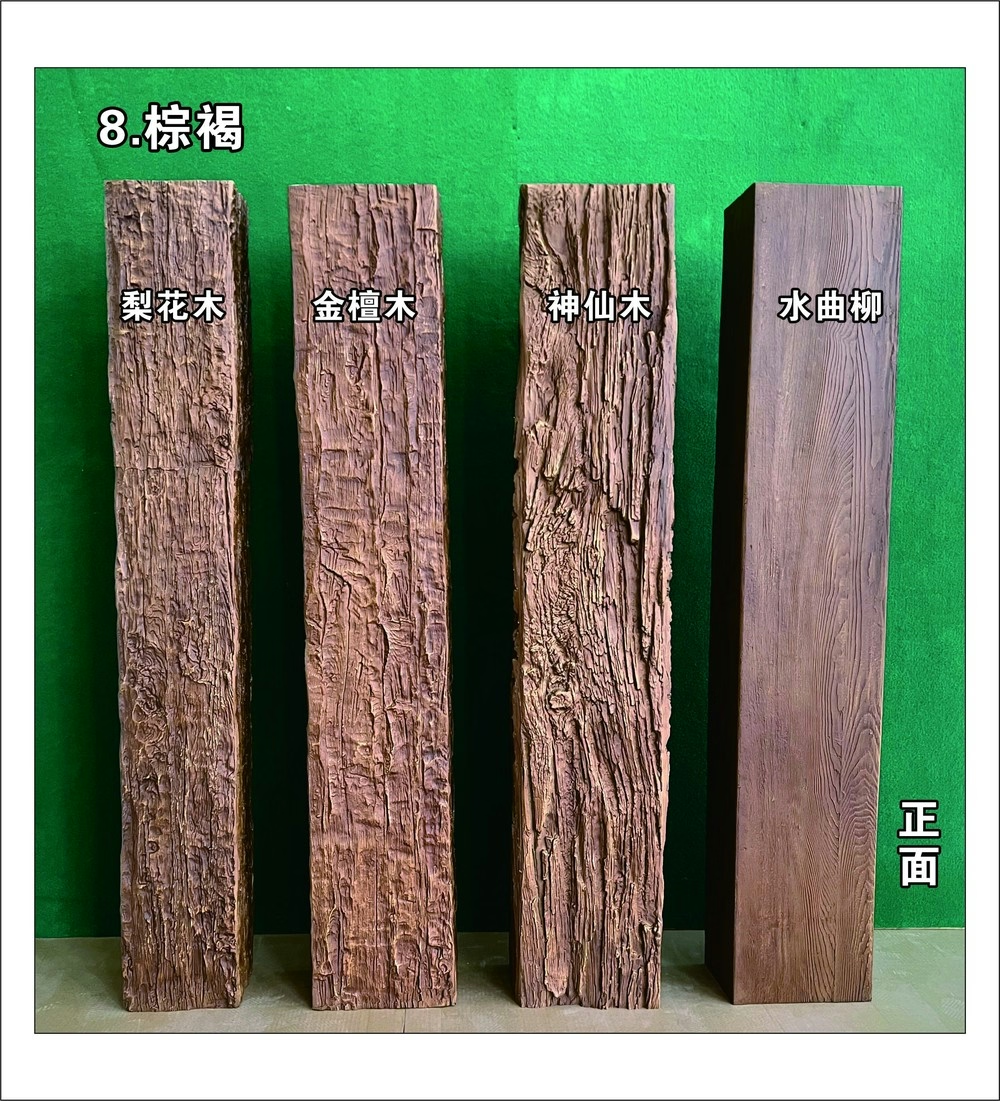
The pursuit of seamless corner joints in beam installations has challenged craftsmen since the advent of decorative millwork. Traditional approaches demanded exceptional carpentry skill to cut and fit mitered joints that appeared continuous from all viewing angles. Even skilled craftspeople achieved mixed results, with some joints opening over time as wood movement stressed the glued connections. Miter corner sleeves emerged as a practical solution to these persistent challenges, providing pre-manufactured transitions that achieve perfect appearance with reliable long-term performance.
The innovation behind corner sleeves lies in their ability to distribute stress across larger surfaces while maintaining visual continuity. Rather than relying on two cut surfaces meeting at a single line, corner sleeves create graduated transitions that blend the meeting beams smoothly. This stress distribution reduces the likelihood of joint failure while providing forgiving tolerances that accommodate minor installation variations.
Modern polyurethane manufacturing enables corner sleeve production with surface qualities matching premium faux beams. The same molding processes that create realistic wood grain on beam surfaces apply to corner sleeves, ensuring consistent appearance throughout the installation. This consistency eliminates the visual discontinuity that plagued earlier joint solutions made from dissimilar materials or finishes.
Engineering Behind Corner Sleeve Design
Effective corner sleeves balance multiple engineering requirements simultaneously. The sleeve must provide structural connection between beams while remaining invisible after installation. It must accommodate the dimensional tolerances of both the sleeve and beams without creating gaps or bulges. It must maintain surface texture and color matching despite its different geometric configuration.
Structural design typically employs a split configuration where the sleeve wraps around both beams at the corner. Each half of the sleeve matches one beam's cross-sectional profile, creating continuous surfaces from beam into sleeve and from sleeve back to beam. The split design also simplifies installation, allowing each half to be positioned and secured independently before completing the corner.
Profile matching requires precise dimensional control throughout the sleeve geometry. The transition from beam width to corner geometry occurs through carefully designed curves and chamfers that read as natural wood elements rather than manufactured connectors. This design complexity adds to manufacturing cost but delivers the seamless appearance that justifies corner sleeve specification.
Installation Preparation
Successful corner sleeve installation requires methodical preparation that addresses both the sleeve components and the beams they will join. Begin by verifying that both beams are securely mounted in their final positions, as sleeve installation cannot correct misalignment that would be visible after completion. Check that beam ends meet at the intended corner location with appropriate clearance for sleeve insertion.
Beam end preparation involves trimming any excess material and ensuring square, clean cuts where the sleeve will mate. The cutting surface should be smooth and perpendicular to the beam's length axis, as any irregularity transfers directly to the sleeve joint. Some installers lightly sand the cut surface to remove any router marks or surface irregularities from beam manufacturing.
Dry fitting the sleeve components reveals any fit issues before adhesive application. Position both sleeve halves against their respective beams, checking for uniform contact around the perimeter. Gaps exceeding a paper thickness indicate problems requiring correction, either through beam adjustment or sleeve selection. This verification step prevents frustration and ensures successful final installation.
Adhesive Selection and Application
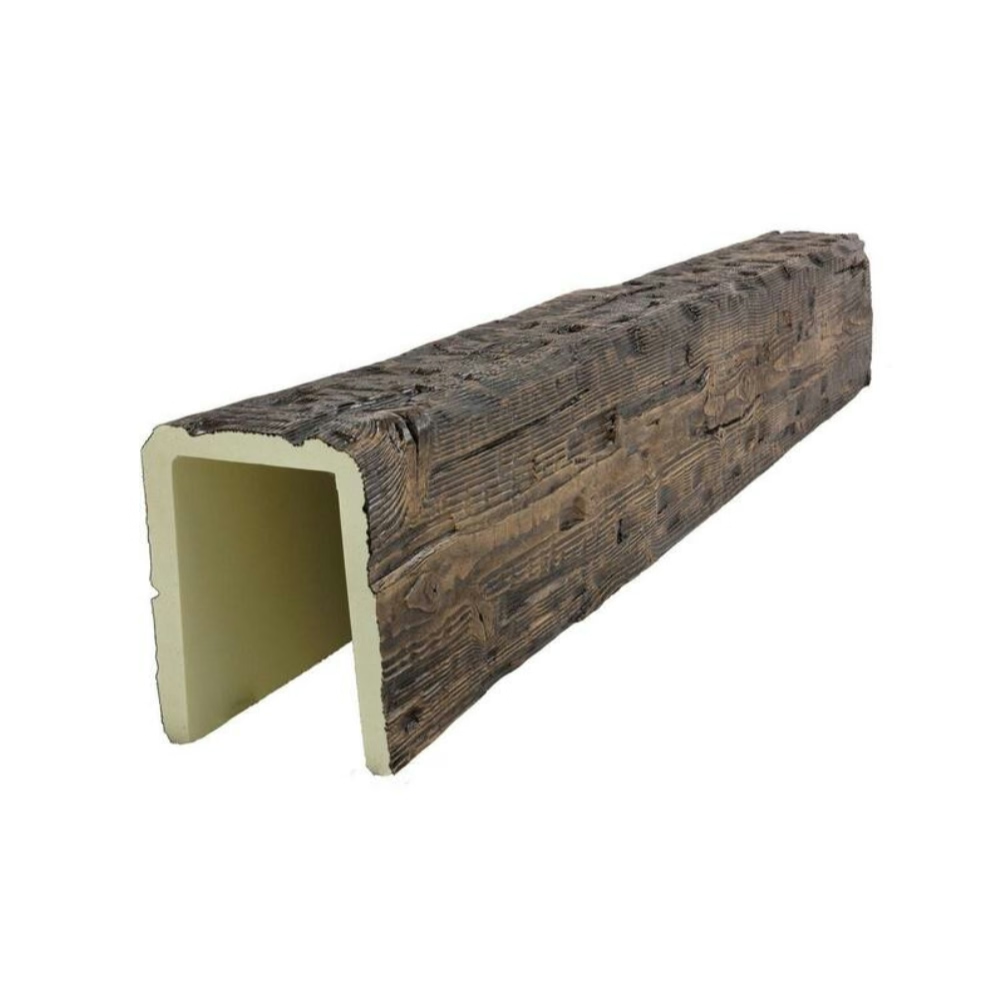
Polyurethane construction adhesive remains the standard choice for sleeve installation, providing strong bonds compatible with both the sleeve material and the beams. However, some sleeve manufacturers specify particular adhesive products optimized for their designs. Following manufacturer recommendations eliminates variables that might compromise bond quality.
Application technique significantly affects joint strength and appearance. Apply adhesive to both the sleeve interior and the beam end surface, ensuring complete coverage without excessive material that might squeeze out during assembly. The adhesive should form a continuous film across all bonding surfaces, filling any microscopic irregularities that might create stress concentrations.
Assembly proceeds by sliding the first sleeve half onto its beam until seated against the stop position. Apply pressure across the bonding surface to ensure complete contact, then secure with clamps positioned to maintain pressure throughout cure. Install the second sleeve half similarly, ensuring that both halves meet cleanly at the corner without gaps or misalignment.
Achieving Invisible Joints
The ultimate measure of corner sleeve success is invisibility. When properly installed, observers should perceive a continuous wood grain flowing around the corner without any visual interruption. Achieving this standard requires attention to grain matching, color blending, and surface texture continuity throughout the joint area.
Grain matching often presents the greatest challenge, as the sleeve's grain pattern may not align with the beams' patterns at the joint lines. Some installers rotate the sleeve slightly during installation to achieve better grain alignment, trading perfect geometric positioning for improved visual continuity. The acceptable trade-off depends on viewing distances and critical angles in the specific installation.
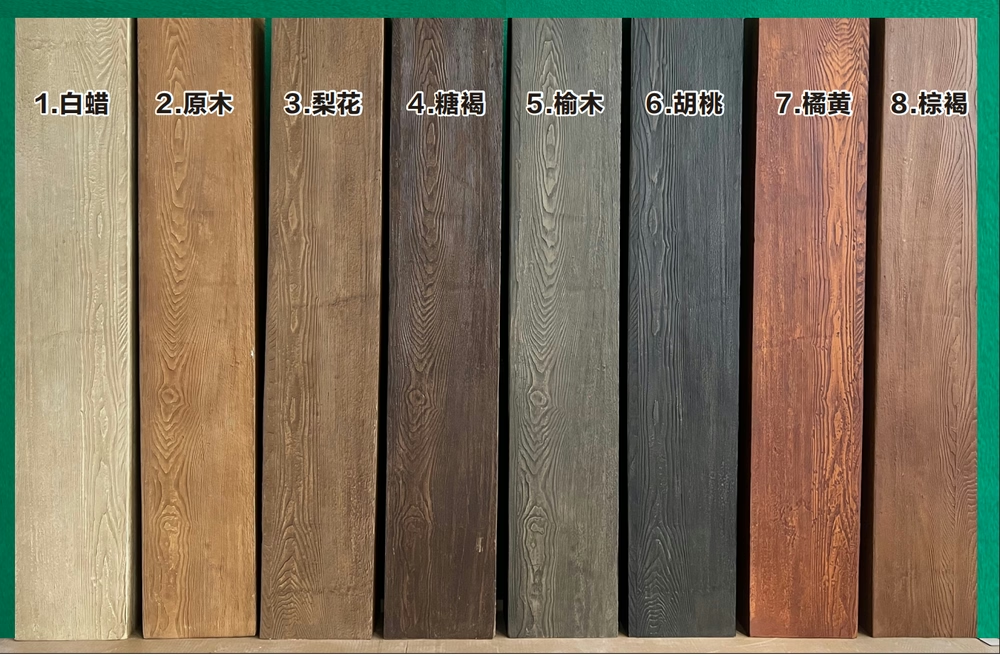
Color blending addresses variations between sleeve and beam finishes that might otherwise create visible seams. Even matched products from the same manufacturer may exhibit slight color variations between batches. Touch-up finishing with artist brushes and appropriate stains blends these variations effectively when executed carefully.
Common Installation Challenges
Gaps appearing after adhesive cure indicate insufficient adhesive coverage, surface contamination, or movement during cure. Addressing these issues requires re-installation with corrected procedures. Small gaps may respond to injection filling with caulking compound, but larger separations typically require complete removal and reinstallation.
Sleeve slippage during cure causes misalignment that becomes permanent once adhesive sets. Preventing this problem requires adequate clamping that resists the sleeve's weight and any vibration or movement in the building. Some installers brace sleeve halves during cure to ensure they maintain position regardless of building activity.
Surface damage from clamp marks or adhesive squeeze-out requires careful repair. Immediate cleanup with damp cloth removes fresh adhesive before cure, but cured adhesive may require careful scraping or sanding. Matching the damaged finish requires skill and appropriate materials, making prevention preferable to repair.
Long-Term Performance
Quality corner sleeve installations maintain their appearance and structural integrity for decades without special maintenance. The polyurethane materials resist the environmental cycling that stresses natural wood joints, eliminating the seasonal adjustments that natural wood installations sometimes require. This stability represents a significant advantage over traditional joinery methods.
Moisture exposure tests demonstrate the resilience of properly installed corner sleeves. Joints that might separate in natural wood after humidity exposure remain intact when constructed with appropriate adhesives and proper surface preparation. This moisture resistance proves particularly valuable in kitchens, bathrooms, and other high-humidity environments.
Thermal cycling presents less concern than with natural wood because polyurethane's thermal expansion coefficient differs from that of wood. The sleeve and beam respond similarly to temperature changes, maintaining their relative positions without the differential movement that causes traditional joints to open over time.
Design Applications
Corner sleeves appear in numerous residential and commercial applications where continuous beam appearance adds value. Vaulted ceiling designs benefit particularly from these accessories, as the corners occur at visually prominent locations that draw attention. Consistent corner treatment throughout vaulted installations creates the intentional design language that distinguishes premium interiors.
Multiple corner configurations including L-shaped, T-shaped, and multi-beam intersections each present unique challenges that corner sleeves address. Manufacturers produce specialized sleeve configurations for each junction type, ensuring that installers have appropriate solutions regardless of beam arrangement complexity.
Exterior applications introduce additional performance requirements that quality corner sleeves satisfy. UV exposure, precipitation, and temperature extremes require materials and finishes rated for exterior service. Specifying exterior-rated components ensures long-term performance in covered porch, pergola, and outdoor living space installations.
Cost Considerations
Corner sleeves add measurable cost to beam installations, but this expense delivers corresponding value in reduced labor and superior results. Calculating the true cost requires comparing sleeve prices against the skilled labor costs for traditional mitering plus the repair expenses when traditional joints fail. In most cases, sleeve solutions prove more economical when all factors are considered.
The installation efficiency advantage compounds on larger projects with numerous corners. Each corner that would otherwise require extensive fitting and finishing work instead receives a pre-manufactured solution that installs quickly and consistently. This efficiency becomes increasingly valuable as corner counts increase.
Premium sleeve products from established manufacturers command higher prices but deliver corresponding quality improvements. The investment difference often proves negligible compared to the project total while providing meaningful improvements in appearance and longevity. Property owners investing in quality faux beams should extend that quality investment to their joint solutions.
Technical References
ASTM standards cited in every specification
Test Data
Lab results from internal testing program
Updated 2026
Reviewed against current product specs