Contemporary architecture increasingly embraces complex geometries that challenge conventional building materials. Angled ceilings, irregular room shapes, and intentional asymmetry create spaces that feel dynamic and designed rather than merely functional. Supporting these architectural ambitions requires building materials that accommodate precision customization without the limitations natural materials impose. Custom miter-cut polyurethane beams provide the solution architects and builders increasingly specify for projects demanding both geometric flexibility and warm wood aesthetics.
The mitering process itself involves cutting beam ends at precisely calculated angles so that adjacent beams meet forming continuous planes. Standard miter cuts assume forty-five-degree angles for perpendicular intersections, but architectural designs frequently require non-standard angles that vary from this baseline. Custom miter-cut beams accommodate any angle specification, enabling designs that would be impossible or prohibitively expensive with stock components.
Precision distinguishes acceptable miter cuts from exceptional ones. Minor angular errors accumulate across multi-beam installations, eventually creating visible misalignment that undermines the intended design. Professional miter work achieves tolerances measured in fractions of degrees, ensuring that joints remain tight throughout even the most ambitious installations. This precision results from careful setup, appropriate tooling, and thorough verification at each production stage.
Understanding Miter Angle Calculations
Accurate miter cuts begin with precise angle calculations that translate architectural drawings into machine instructions. The fundamental geometry distinguishes between miter angles describing the cut orientation and spring angles describing how the finished beam relates to vertical and horizontal planes. Confusing these measurements leads to joints that appear misaligned from normal viewing angles even when technically accurate.
For perpendicular corner intersections, a simple forty-five-degree miter produces acceptable results from directly facing the corner. However, this single-angle approach creates visible gaps when viewing the joint from adjacent positions. True precision requires calculating compound angles that account for viewing position, which becomes critical in rooms with multiple viewing angles or in commercial spaces where customers approach from varied directions.
The mathematical relationships governing miter angles derive from basic geometry but become complex when applied to three-dimensional space. Beams meeting at non-perpendicular angles require calculations that vary based on whether the beam runs horizontal, sloped, or vertical. Professional fabricators use computer-aided design systems that automatically calculate these relationships, eliminating calculation errors and ensuring accuracy across all components.
Manufacturing Precision Requirements
Producing miter cuts to professional tolerances demands equipment calibrated to fractions of degree accuracy. Beam saws equipped with digital angle displays and precision guides maintain consistency throughout production runs, whether manufacturing single custom pieces or dozens of identical components. Regular calibration verification ensures that tolerance drift does not compromise accuracy over time.
Material handling affects cut accuracy significantly. Beams must be positioned consistently against fence guides, with any variation translating directly to angular error. Vacuum holding systems that secure beams during cutting eliminate movement that might compromise precision. Some manufacturers use automated positioning systems that achieve consistency impossible through manual positioning.
The cutting tool itself influences cut quality beyond mere angular accuracy. Saw blade selection affects surface finish at the cut, with appropriate blade selection minimizing the sanding or finishing required after cutting. Polyurethane's composition requires different blade specifications than natural wood, with carbide-tipped blades maintaining sharpness through the abrasive material.

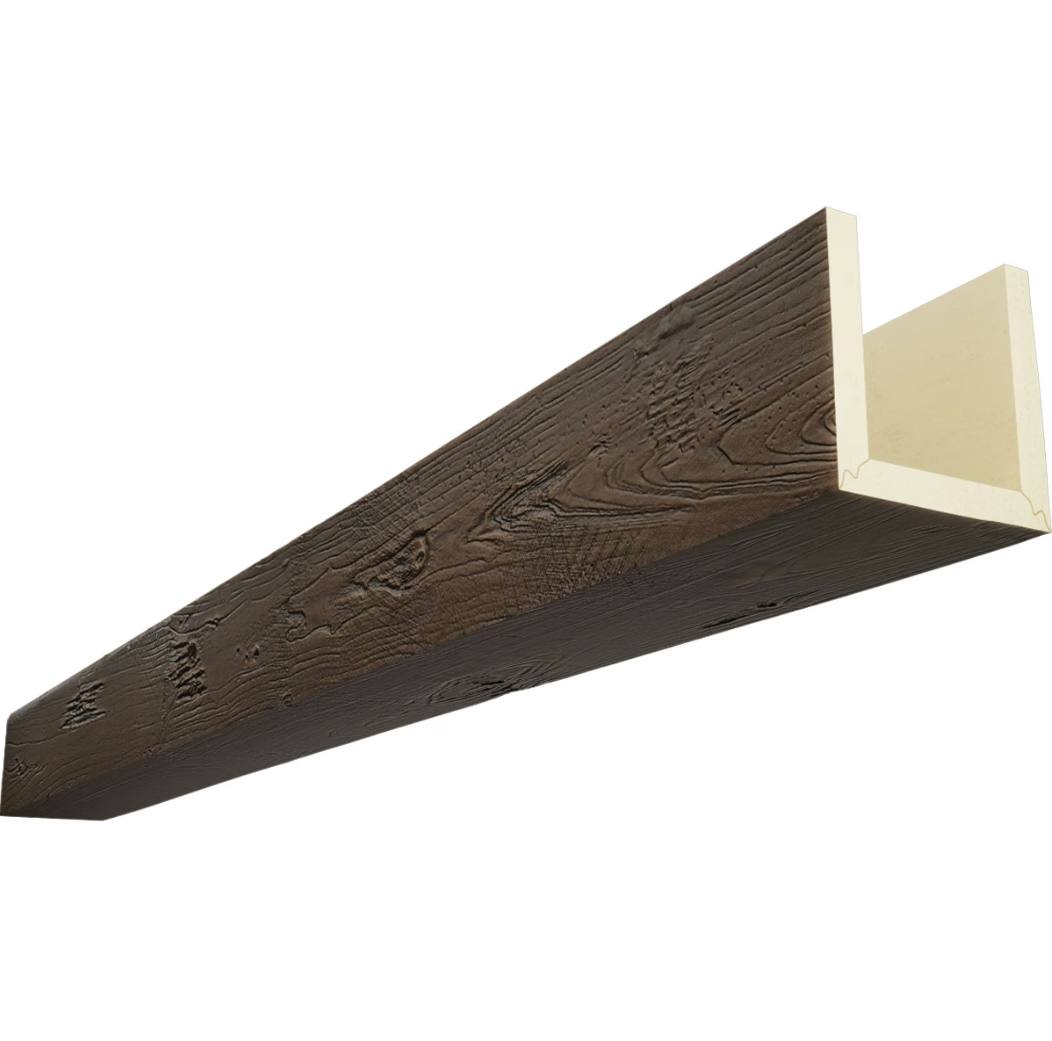
Design Applications Requiring Custom Mitering
Cathedral ceilings with ridge beams meeting sloped rafters present classic applications for custom miter work. The transition from horizontal ridge to angled rafter requires compound miter cuts that match both the angular relationship between members and the surface planes where they meet. Custom fabrication ensures that these complex intersections appear seamless from all normal viewing positions.
Geometric ceiling patterns including hexagons, diamonds, and complex polygons demand miter cuts at dozens of different angles throughout the installation. Pre-calculated custom cuts ensure that all components arrive at the jobsite ready for installation, eliminating the fitting challenges that would otherwise extend installation timelines significantly.
Sketchup designs incorporating beams at varying heights require mitered ends that transition smoothly between different levels. The aesthetic success of these stepped or terraced designs depends entirely on joints that appear continuous despite the level changes. Custom fabrication provides the precision these designs demand.
Template and Sample Development
Complex miter installations benefit from physical templates that verify calculations and identify potential issues before full production begins. Creating templates from the actual beam profile material confirms that calculations translate correctly to the physical world. Template development often reveals considerations that two-dimensional drawings might not capture.
Sample joints demonstrate how the finished installation will appear, allowing stakeholders to approve appearance before committing to full production. These samples also verify that finishing techniques produce acceptable results on cut surfaces, which may have different texture or color absorption than molded surfaces.
Revision flexibility during template development prevents costly errors in full production. Discovering an angle error on a sample joint costs relatively little compared to discovering it after installing dozens of beams. Quality-conscious fabricators build this verification into their standard process regardless of project complexity.
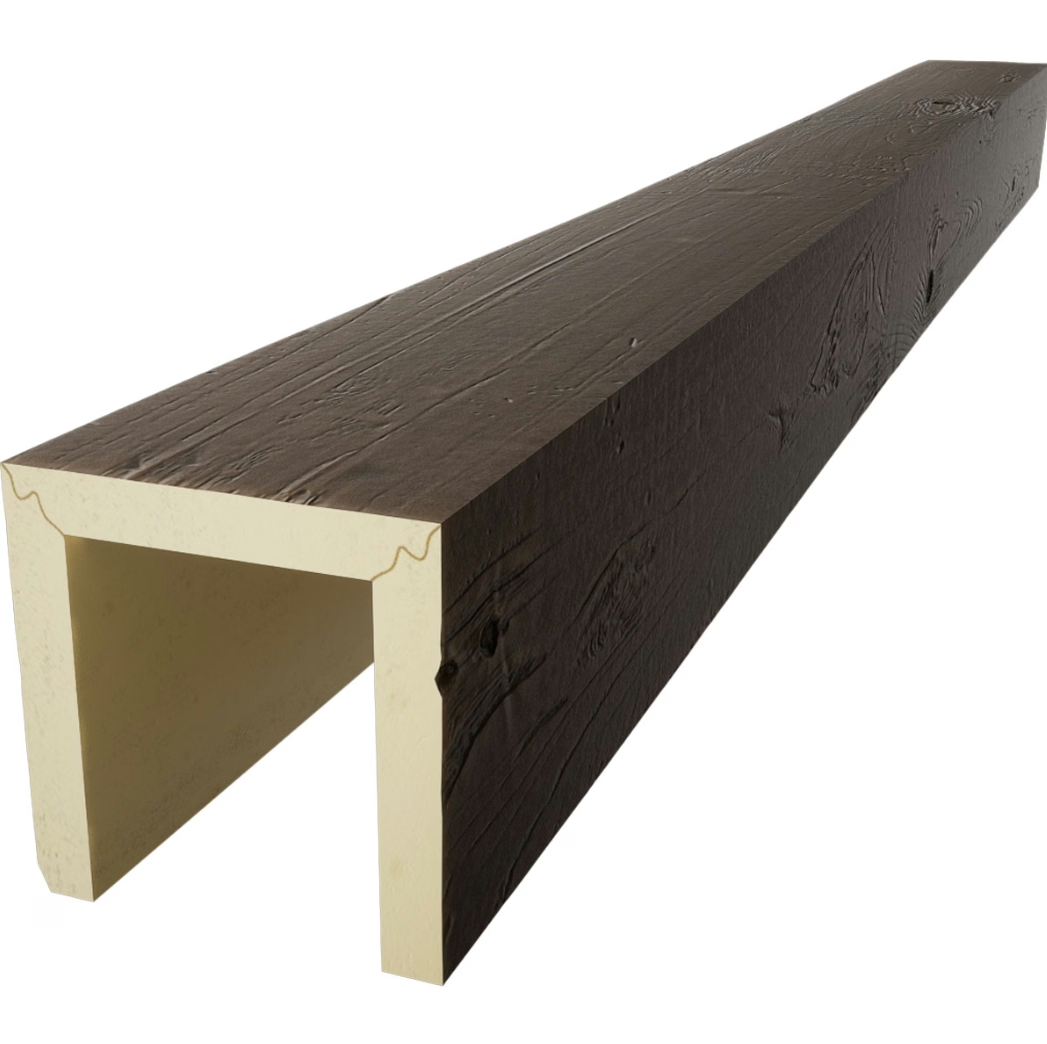
Installation Considerations for Custom Mitered Beams
Jobsite handling preserves the precision achieved during manufacturing. Beams should remain protected from impacts and contamination that might damage finished surfaces or cut edges. Custom-mitered beams require careful orientation during transport and storage, as improper handling might chip cut edges or cause other damage that compromises joint quality.
Installation sequencing for complex miter configurations requires planning that accounts for access requirements and temporary support needs. Beams must be positioned to allow reaching joints for adhesive application and clamping, which may require different sequences than simple beam installations. Pre-planning this sequencing prevents situations where completed beams block access to joints requiring attention.
Adjustment capabilities on-site remain limited compared to the controlled factory environment. While minor fitting adjustments are sometimes possible, significant corrections typically require replacement components. Thorough verification before shipping custom-mitered beams prevents this costly scenario while respecting project timelines.
Finishing Cut Surfaces
The cut surfaces of mitered beams require finishing attention to achieve seamless joints. Unlike molded surfaces that arrive ready for installation, cut surfaces may exhibit different texture or color absorption. Testing finishing products on scrap material from the same production batch confirms compatibility before application to visible joints.
Stain matching on cut surfaces may reveal color differences from the original finish. Adjusting stain formulations or applying additional tones achieves color continuity between cut and molded surfaces. This color matching requires skill and patience, but the results justify the effort invested.
Clear topcoats seal the finished surface while providing appropriate sheen levels. The same topcoat products used on molded surfaces generally perform adequately on cut surfaces, though application technique may require adjustment to avoid lap marks or uneven coverage around the joint perimeter.
Quality Verification Procedures
Professional fabricators implement verification procedures that catch errors before beams leave the facility. Each miter cut undergoes measurement verification against specifications, with any deviation beyond tolerance triggering remaking rather than shipping. This quality gate ensures consistent accuracy regardless of production volume.
Photographic documentation of critical joints provides reference material for installation teams while creating accountability records for the fabrication process. These records prove valuable when installation questions arise, allowing verification that beams met specifications when shipped.
Installation feedback loops inform continuous improvement in fabrication processes. Comments from installers about fit, handling, or finishing characteristics drive refinements that benefit subsequent projects. Quality fabricators value this feedback and actively solicit it from installation partners.
Lead Time and Cost Factors
Custom miter-cut fabrication requires longer lead times than standard stock items, with complexity determining the specific duration. Simple custom cuts might require only additional days beyond standard lead times, while highly complex configurations could need weeks for template development, sample approval, and production scheduling. Project planning must account for these extended timelines.
The cost structure for custom mitered beams differs from stock pricing in ways beyond simple material multiplication. Setup time for custom configurations represents a significant portion of production cost, making small quantities relatively expensive per unit compared to larger production runs. Spreading setup costs across more pieces reduces per-unit pricing for larger projects.
Despite premium pricing, custom miter-cut beams often prove more economical than alternative approaches when total project costs are considered. The labor savings from ready-to-install precision components frequently exceed the material premium, particularly when installation complications from imprecise cuts would extend schedules and require skilled adjustment work.
Technical References
ASTM standards cited in every specification
Test Data
Lab results from internal testing program
Updated 2026
Reviewed against current product specs


