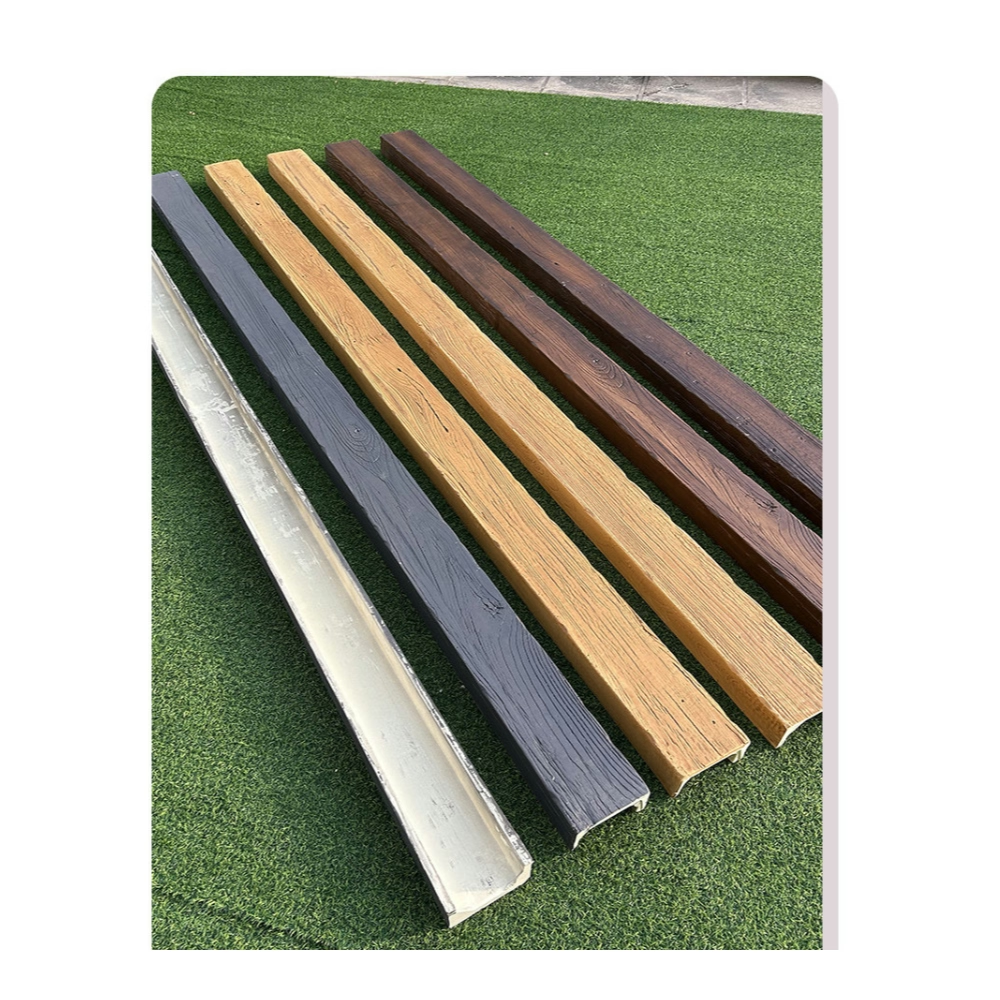
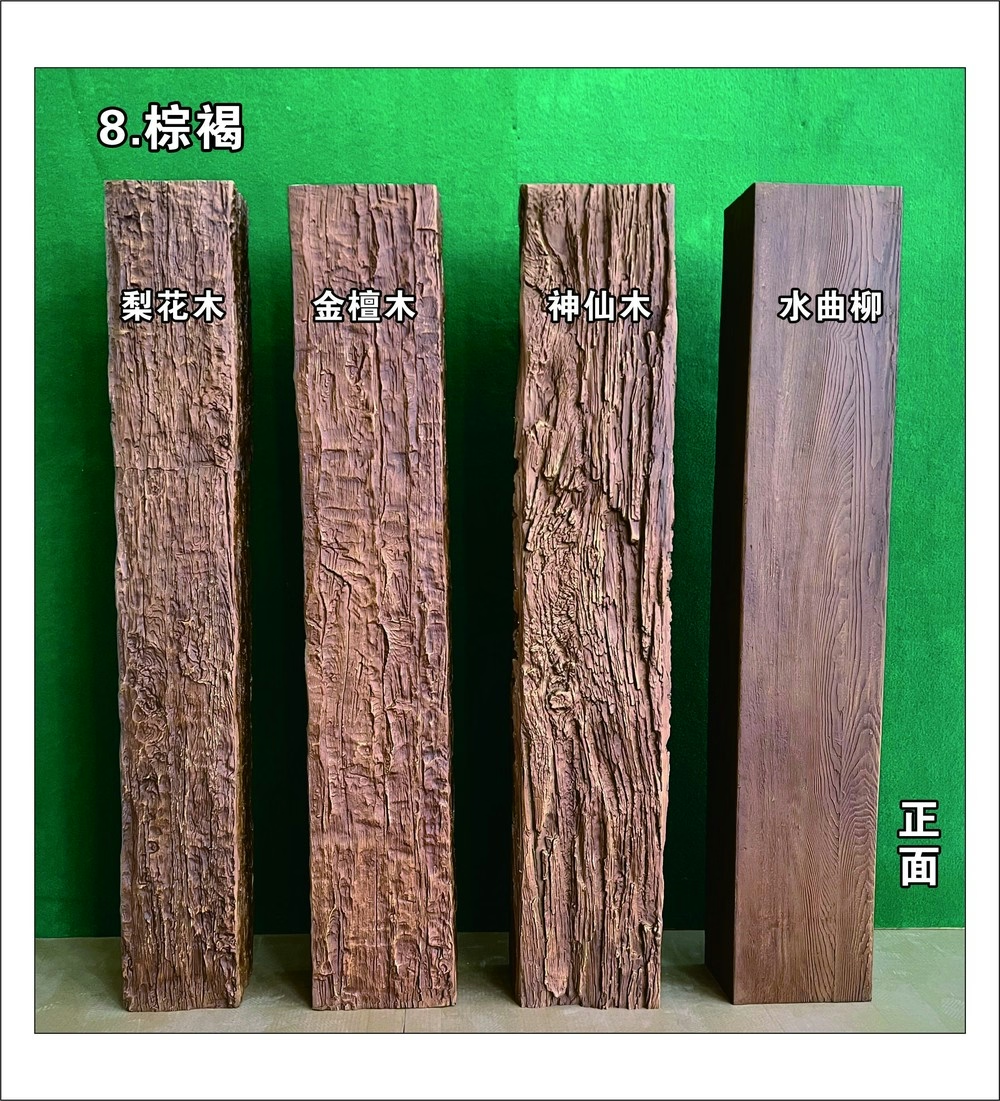
The intersection of beams with walls at corners creates installation challenges that straight runs never present. At these junctions, the beam must transition smoothly from its ceiling attachment to its wall termination while maintaining the continuous appearance that defines quality work. Without appropriate corner pieces, installers struggle to achieve the clean lines that clients expect, often settling for compromises that detract from the overall installation quality.
Beam-to-wall corner pieces address these challenges through pre-engineered components that bridge the geometric transition between beam and wall. These pieces incorporate the miter cuts, profile transitions, and return details that would otherwise require extensive field fabrication. The result is faster installation producing better results than improvised approaches could achieve.
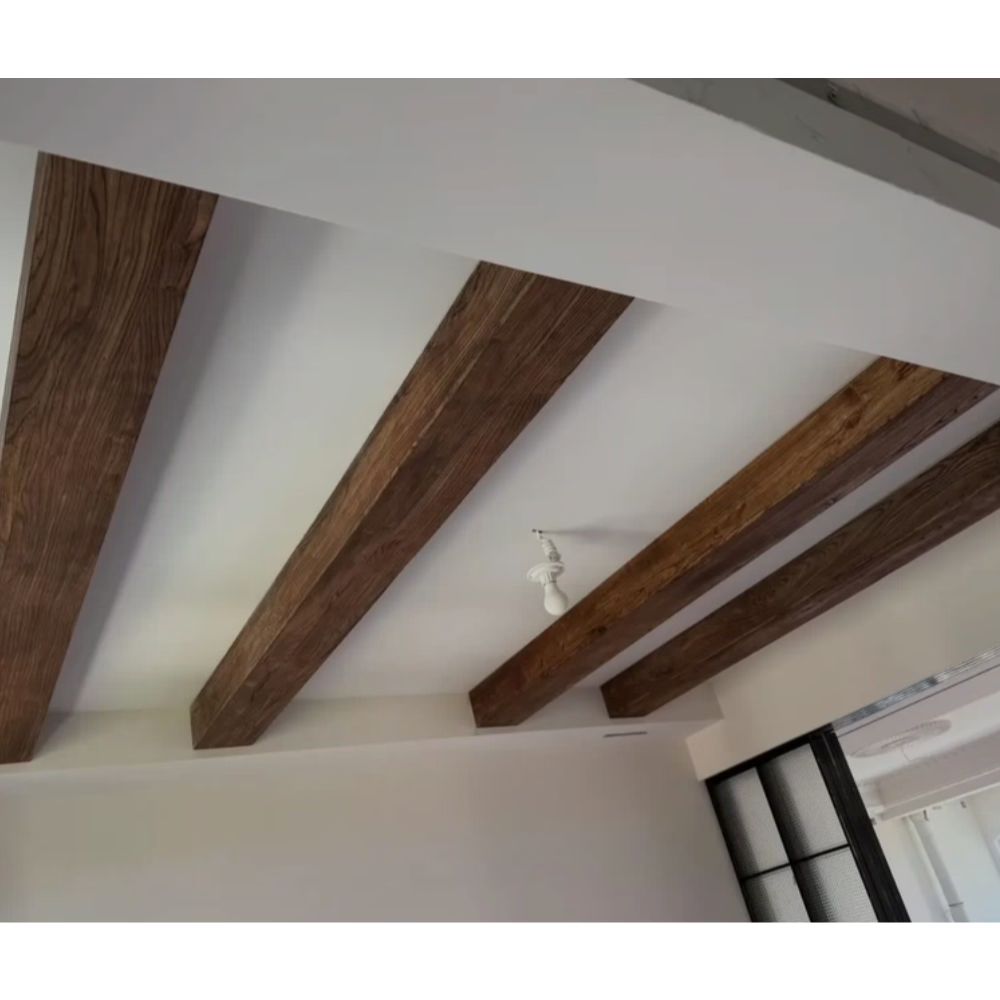
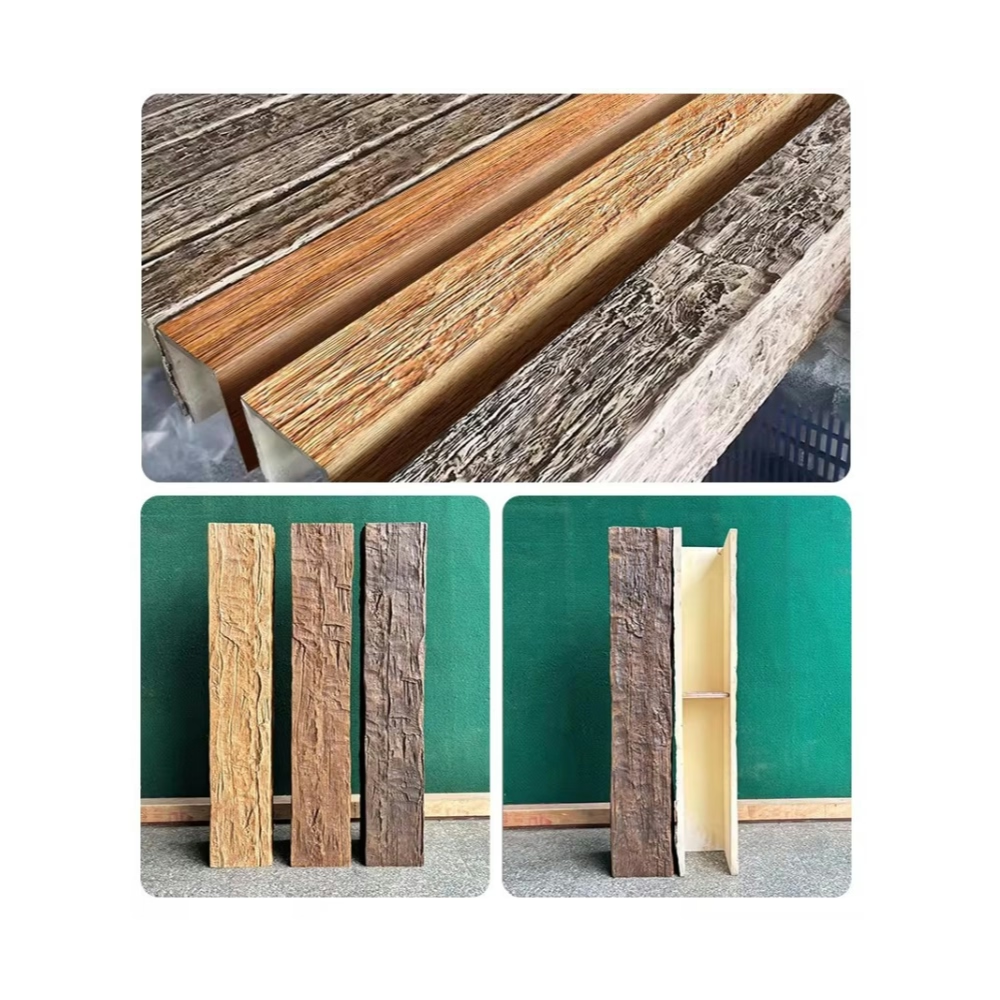
Modern polyurethane corner pieces capture the authentic wood appearance that these trim elements require. Unlike simple functional hardware, corner pieces are visible elements that contribute to the overall aesthetic. Quality polyurethane products match the beam textures and finishes they accompany, creating the seamless appearance that distinguishes professional installations.
Understanding Corner Geometry
Beam-to-wall corners involve the intersection of two perpendicular planes: the ceiling plane where the beam runs and the wall plane where it terminates. The beam's cross-sectional profile must transition smoothly across this intersection without creating awkward angles or visible gaps. This geometric challenge intensifies when beams have complex profiles featuring multiple planes, bevels, or decorative moldings.
The viewing angle significantly affects how corner geometry appears. From directly facing the corner, observers see the beam end and the wall surface behind it. From adjacent angles, they see the beam profile extending toward the wall while simultaneously seeing the wall surface and the beam's wall-attachment area. Corner pieces must address all these viewing positions simultaneously.
Non-perpendicular corners, common in older buildings and intentional in contemporary architecture, complicate corner geometry further. The beam may approach the wall at any angle, requiring corner pieces cut to match rather than standard ninety-degree components. Custom fabrication or flexible corner solutions address these situations.
Corner Piece Functions
Corner pieces serve multiple functions beyond their visible contribution to appearance. They provide structural support that helps beams maintain position under stress from handling, building movement, or accumulated weight. This support proves particularly valuable during the adhesive cure period when beams might shift if not adequately restrained.
Gap coverage represents another essential function, as wall surfaces rarely present the perfectly flat, continuous surfaces that would allow tight beam attachment. Corner pieces span gaps between beam and wall, creating clean transitions that hide surface irregularities. This coverage eliminates the visible cracks and openings that characterize inadequate trim work.
Edge protection extends the installation's service life by shielding beam edges from impact damage. The vulnerable corners where beams terminate receive protection from corner pieces that absorb incidental contact. This protection proves particularly valuable in high-traffic areas or locations where furniture moving might otherwise damage beam corners.
Design Variations
Simple corner pieces feature L-shaped profiles that mount to both beam end and wall surface, creating clean transitions without additional complexity. These pieces suit contemporary installations where minimal detail defines the aesthetic. The simple geometry also simplifies installation, reducing fitting requirements and potential error points.
Ornate corner pieces incorporate decorative profiles that complement traditional or transitional design styles. These pieces may include carved details, molded patterns, or layered profiles that add visual interest to the corner junction. The increased complexity requires more careful installation but delivers correspondingly richer appearance.
Return-style corner pieces wrap around the beam end, presenting the same profile from all viewing angles. This configuration suits beams terminating in prominent positions where single-face visibility would create awkward appearance. The return adds material cost and installation complexity but produces superior appearance in appropriate applications.
Installation Methodology
Proper corner piece installation begins with beam positioning verification before any adhesive application. The beam must be exactly positioned, leveled, and secured before corner piece installation, as adjustment becomes difficult or impossible after the corner piece bonds. This sequencing prevents the frustration of discovering positioning errors after corner piece attachment.
Dry fitting the corner piece confirms that selected components match beam and wall geometry accurately. Any gaps, misalignments, or fit problems should be addressed before committing with adhesive. This verification step takes only moments but prevents the significant complications that fit errors create after bonding.
Adhesive application follows principles similar to beam installation, with complete coverage ensuring strong bonds throughout. Some installers prefer to apply adhesive to both the corner piece and the mating surfaces, while others apply only to one surface. The appropriate technique depends on adhesive open time and specific product recommendations.
Finishing the Corner
The joint between corner piece and beam requires attention during finishing to create seamless appearance. Any gaps or imperfections should be filled with appropriate products that match the beam finish. Multiple thin applications typically produce better results than heavy single applications that might sag or crack.
Sanding must be performed carefully at corner junctions to avoid rounding crisp edges that define the corner geometry. Fine-grit sandpaper removes surface imperfections without altering the precise dimensions that proper installation achieved. This finishing step requires patience and attention to preserve the professional appearance.
Stain and finish application may require touch-up work where cut surfaces differ from original factory finishes. Having appropriate touch-up products available before beginning installation simplifies this process. Professional touch-up technique produces results invisible to casual observation.
Problem Prevention
Moisture infiltration at corners causes problems including adhesive failure and finish deterioration over time. Sealing gaps between corner pieces and adjacent surfaces prevents moisture intrusion that would compromise the installation. This sealing should be completed as part of installation rather than deferred as optional maintenance.
Thermal movement creates stress at corner junctions that may loosen poorly secured components. Using flexible adhesives that accommodate movement without cracking maintains secure bonds through thermal cycles. Rigid adhesives may fail as building temperature variations stress the joint.
Impact damage at corners may break corner pieces if they are not adequately supported by underlying structure. Ensuring solid backing behind corner piece locations provides the support that resists impact damage. This backing also improves the feel of solidity when the installation is complete.
Maintenance Considerations
Regular inspection of corner pieces identifies developing problems before they progress to significant repairs. Checking for gaps, loosening, or damage allows early intervention that maintains appearance and prevents more extensive problems. This inspection should occur at least annually, with more frequent checks in high-traffic or high-humidity environments.
Cleaning corner pieces follows the protocols used for beam surfaces, with gentle cleaning products appropriate for the specific finish type. Abrasive cleaners or harsh chemicals may damage finishes, requiring touch-up or refinishing. Regular gentle cleaning maintains appearance without risking damage.
Damage repair for corner pieces depends on damage severity and finish type. Minor scratches may respond to touch-up finishing, while significant damage may require piece replacement. Having replacement pieces available before beginning installation simplifies repair if damage occurs during or after installation.
Technical References
ASTM standards cited in every specification
Test Data
Lab results from internal testing program
Updated 2026
Reviewed against current product specs