The commercial interior fit-out industry operates under pressures that residential design rarely encounters. Project timelines compress aggressively, budgets face constant scrutiny, and end results must satisfy not only immediate clients but also their customers, guests, or employees who will experience the spaces daily. Materials selected for commercial applications must perform reliably across these demanding criteria while maintaining the aesthetic standards that distinguish premium venues from ordinary spaces.
Polyurethane timber parts have earned significant market position in commercial fit-out applications through systematic addressing of these requirements. The consistency that manufacturing provides eliminates the variable quality that natural wood presents, ensuring that what is specified is what arrives. The durability that polyurethane offers handles the heavy use commercial spaces encounter without the maintenance demands that natural wood requires.
Beyond these practical advantages, polyurethane timber parts enable design possibilities that natural materials cannot practically achieve. Large-scale installations that would require massive support structures for genuine timber become feasible with lightweight polyurethane. Complex geometries that would challenge natural wood fabrication emerge cleanly from precision molds. These capabilities expand the design vocabulary available to commercial interior designers.
Performance Requirements in Commercial Settings
Commercial building codes impose fire safety requirements that residential construction typically does not address. Polyurethane timber parts manufactured with fire-retardant formulations achieve ratings that satisfy even stringent commercial code requirements. This fire performance occurs within the material itself rather than through surface coatings that might wear away, providing lasting protection throughout the product's service life.
Durability requirements in commercial applications exceed residential standards significantly. Furniture bumping, cleaning equipment contact, and general wear and tear subject commercial installations to stresses that residential installations rarely encounter. Polyurethane's impact resistance handles these contacts better than natural wood, maintaining appearance despite the abuse that commercial spaces deliver.
Maintenance demands in commercial environments focus on efficiency and consistency rather than the careful attention residential owners might provide. Polyurethane timber parts respond to commercial cleaning protocols without the specialized care that natural wood would require. This maintenance compatibility reduces ongoing operational costs while maintaining appearance quality.
Specification Considerations
Fire rating specification requires attention to local code requirements, which may vary between jurisdictions. Products rated for some applications may not satisfy requirements for other occupancy types or building classifications. Verifying that specified products meet the actual code requirements for the specific project prevents costly substitutions after installation begins.
Load requirements for commercial timber parts depend on installation location and intended use. Suspended installations, wall-mounted elements, and ceiling applications each present different load considerations. Engineering verification ensures that mounting systems and attachment methods provide adequate support for the specific installation conditions.
Finish specification for commercial applications must consider both appearance requirements and performance needs. High-traffic areas may require more durable finishes than low-traffic locations, while brand environments may demand specific color or texture specifications. Matching finish capabilities to application requirements ensures satisfactory long-term performance.
Project Planning and Coordination
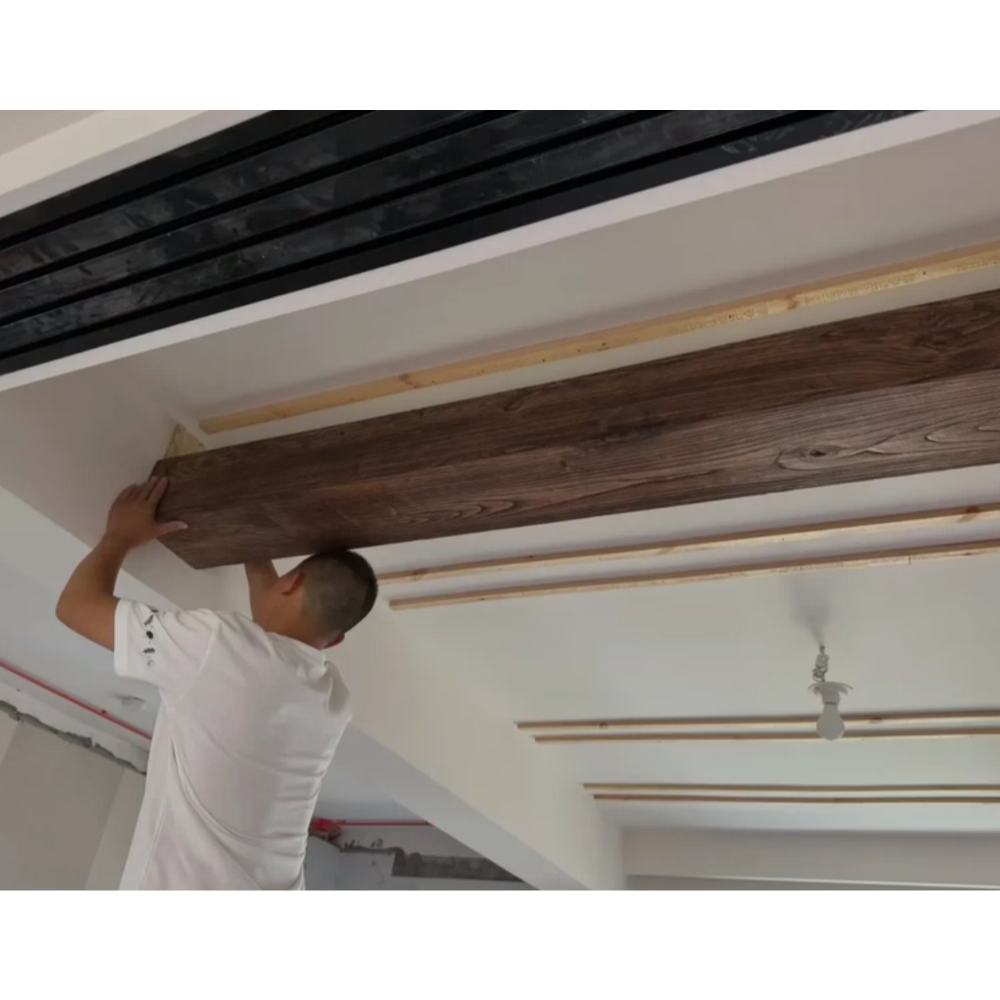
Commercial fit-out projects typically involve multiple contractor trades working in sequence or parallel. Polyurethane timber part installation must coordinate with electrical, mechanical, and other trades whose work may intersect with timber elements. This coordination prevents interference that might require modification or re-ordering of custom components.
Sequence planning should position timber part installation after major mechanical rough-ins are complete but before final finishing of adjacent surfaces. This positioning allows coordination with other trades while protecting timber parts from the dust and debris that final finishing generates. Clear communication with other trades prevents conflicts that might damage installed timber elements.
Inspection planning should include timber part installation in relevant quality control checkpoints. Verifying that installation meets specifications before surrounding elements obscure the work enables correction of any problems while access remains available. Deferred inspection may hide defects that become apparent only after surrounding work makes access difficult.
Installation Best Practices
Commercial installation often involves work crews with varying experience levels, making installation procedures that produce consistent results essential. Pre-installation briefings ensure that all crew members understand requirements and techniques. Checklists help ensure that critical steps are not overlooked regardless of who performs the work.
Quality verification during installation catches problems early when correction remains straightforward. Checking alignment, level, and secure attachment as installation proceeds identifies issues before they compound into significant problems. This ongoing verification requires discipline but prevents the callbacks that post-installation correction would require.
Documentation of installation conditions including mounting methods, adhesive products, and any deviations from specifications provides valuable reference for future maintenance or modification. This documentation should include photographs that capture the installed condition before surrounding work obscures access to junction points and attachment details.
Commercial Application Examples
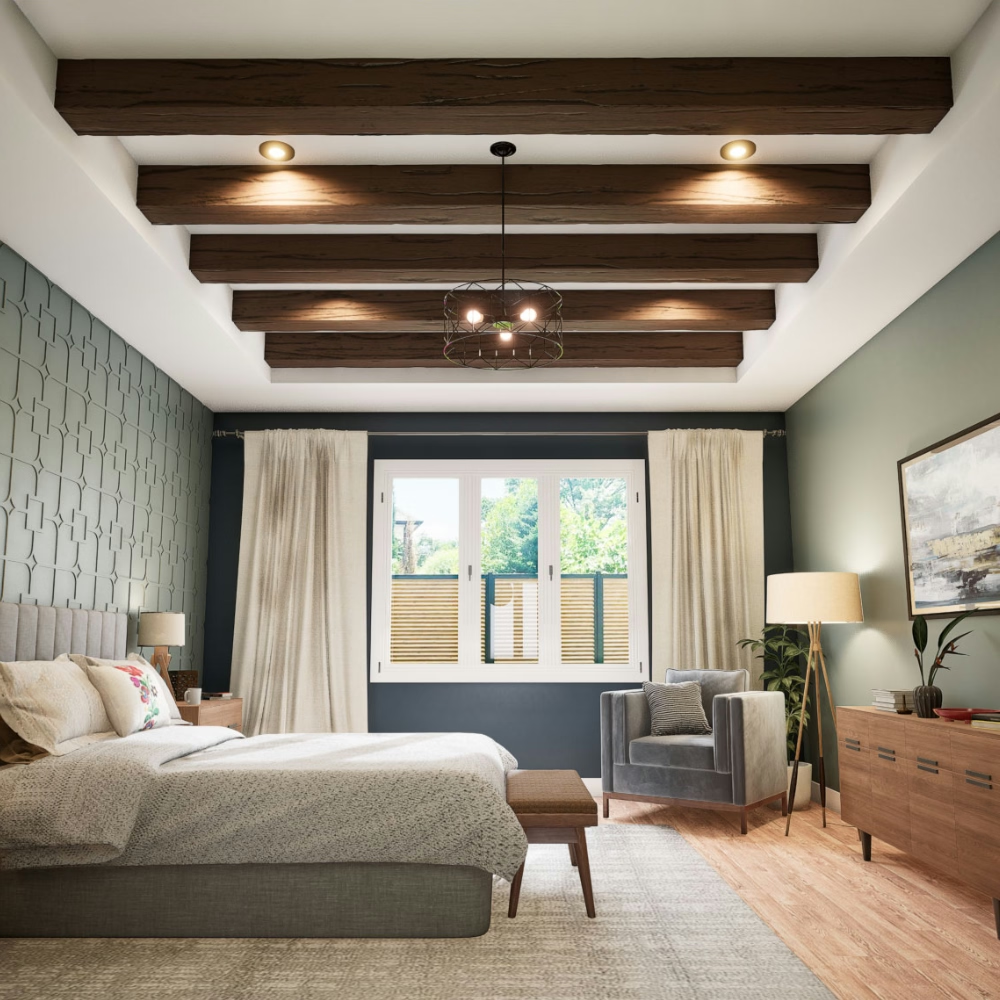
Hospitality venues including hotels, resorts, and restaurants frequently specify polyurethane timber parts for their ability to create warm, inviting atmospheres efficiently. The durability required for hospitality applications combines with aesthetic flexibility that supports diverse design directions from rustic to contemporary. Chain properties benefit from the consistency that ensures their multiple locations maintain brand standards.
Retail environments employ timber elements to create brand-appropriate atmospheres that encourage customer engagement and停留. Shopping malls, boutiques, and department stores use timber parts to define spaces and guide customer movement. The lightweight nature of polyurethane simplifies installation in retail spaces where ceiling structures may not support heavy natural timber.
Corporate offices increasingly incorporate timber elements to humanize workspace environments while maintaining professional image standards. Conference rooms, executive suites, and common areas benefit from the warmth that timber appearance contributes. The durability that polyurethane provides handles the traffic and use these spaces encounter without the refinishing that natural wood would require.
Budget Considerations
Commercial project budgets typically allocate specific amounts for finish carpentry and decorative elements. Polyurethane timber parts often provide better value than natural wood alternatives when total installed cost is considered. Material cost differences favor polyurethane, and installation labor savings amplify this advantage.
Long-term cost considerations may further favor polyurethane in commercial applications. The reduced maintenance requirements translate to lower ongoing operational costs for cleaning and repair. The durability that polyurethane provides extends replacement intervals compared to natural wood that might require earlier renewal.
Value engineering should consider whole-project impacts when comparing material options. Changes affecting installation time, maintenance requirements, or replacement intervals have project-specific implications that simple material cost comparison does not capture. Thorough analysis ensures that specification decisions serve project interests optimally.
Sustainability Dimensions
Commercial projects increasingly face sustainability requirements from building certifications, corporate policies, or client expectations. Polyurethane timber parts contribute to sustainability through reduced timber harvesting, manufacturing efficiency, and extended service life. These contributions may qualify for credit consideration in various certification systems.
The lifecycle sustainability of polyurethane compared to natural wood depends on specific applications and service conditions. Extended service life without replacement reduces the environmental impact of repeated manufacturing cycles. Manufacturing efficiency reduces waste generation compared to natural wood processing. These factors should inform specification decisions where sustainability is a priority.
End-of-life considerations for polyurethane products continue to evolve as recycling infrastructure develops. Some manufacturers offer take-back or recycling programs that close material loops, while others specify disposal methods appropriate for the specific formulation. Understanding these options helps projects achieve their sustainability objectives.
Technical References
ASTM standards cited in every specification
Test Data
Lab results from internal testing program
Updated 2026
Reviewed against current product specs


