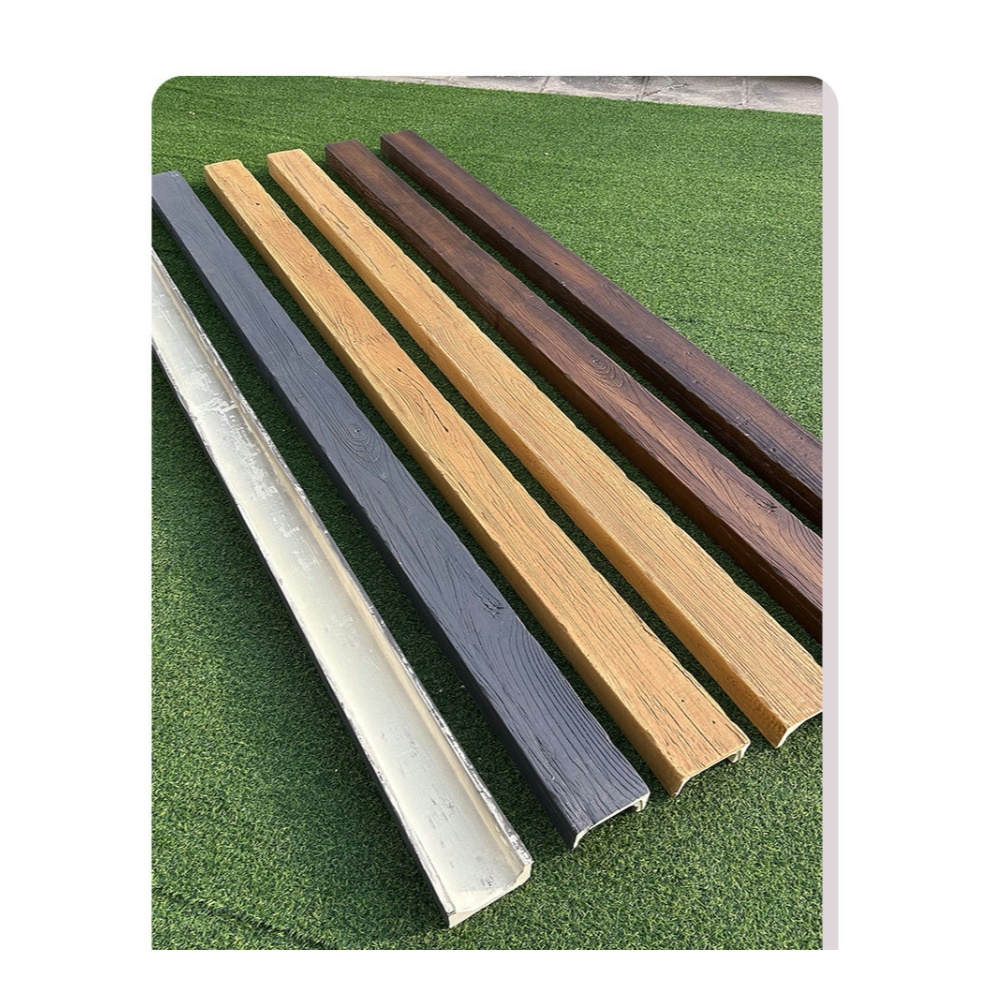
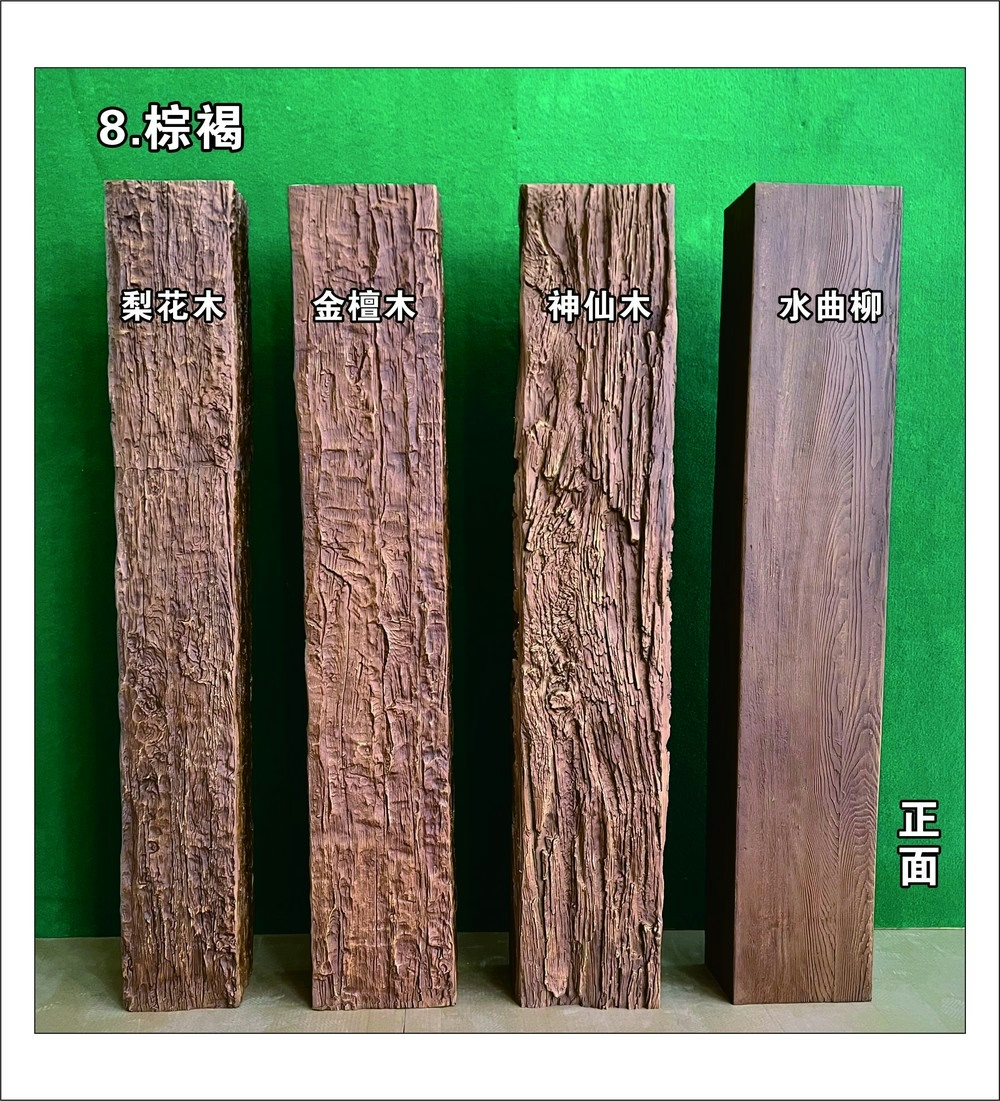
Modern buildings rarely present the simple rectangular geometry that textbook architecture implies. Beams must navigate around ductwork, cross at non-standard angles, and turn corners that building geometry determines rather than design preference. Addressing these geometric challenges traditionally required skilled carpentry or expensive custom fabrication. Right-angle section pieces simplify this challenge by providing pre-manufactured solutions for the most common geometric transitions.
The precision manufacturing of polyurethane enables section piece production at tolerances that field fabrication cannot match consistently. Each component emerges from controlled processes with exact dimensions, predictable properties, and reproducible appearance. This precision translates directly to installation efficiency, as components fit together predictably rather than requiring extensive fitting and adjustment.
Beyond efficiency, section pieces enable design possibilities that would be impractical without them. Complex ceiling grids, intersecting beam patterns, and architectural transitions become achievable without the specialized skills custom fabrication would require. This democratization of complex geometry expands the design vocabulary available to architects and interior designers.
Section Piece Geometry
Right-angle section pieces connect beam runs that meet at ninety-degree angles, creating the L-shaped configuration common in ceiling grids and perimeter beam installations. The piece must present continuous beam appearance from all viewing angles, meaning that both the horizontal and vertical surfaces must display appropriate beam profile and texture. This requirement distinguishes section pieces from simple connectors that might be concealed within the assembly.
The internal structure of section pieces must transfer loads between connected beams while maintaining geometric precision. The hollow or solid interior must accommodate any necessary hardware or adhesive while providing adequate material for secure attachment. Engineering of these internal details ensures that visible exterior appearance is supported by adequate structural provisions.
Profile matching requires that section pieces replicate the exact cross-sectional geometry of the beam lines they connect. This matching extends beyond obvious external dimensions to include texture orientation, which must flow logically from one beam to another. Grain patterns that turn corners create believable appearance that mismatched patterns cannot achieve.
Manufacturing Precision
Injection molding technology enables the precision that section pieces require, with tooling engineered to maintain tight tolerances throughout production. The molds themselves must be manufactured to exacting standards, as any error in the mold surface propagates to every piece produced. This tooling investment justifies itself through production volume and consistent quality.
Quality control during production verifies that each section piece meets dimensional specifications before release for finishing. Automated inspection systems complement human inspection, catching variations that might escape visual review. Any piece failing to meet tolerances receives rejection rather than proceeding to subsequent operations.
Post-molding operations including trimming, finishing, and packaging require handling protocols that protect the precision surfaces these components feature. The visible textures and edges that create authentic appearance must be protected from damage throughout subsequent processing. This protection adds cost but ensures that finished products meet quality expectations.
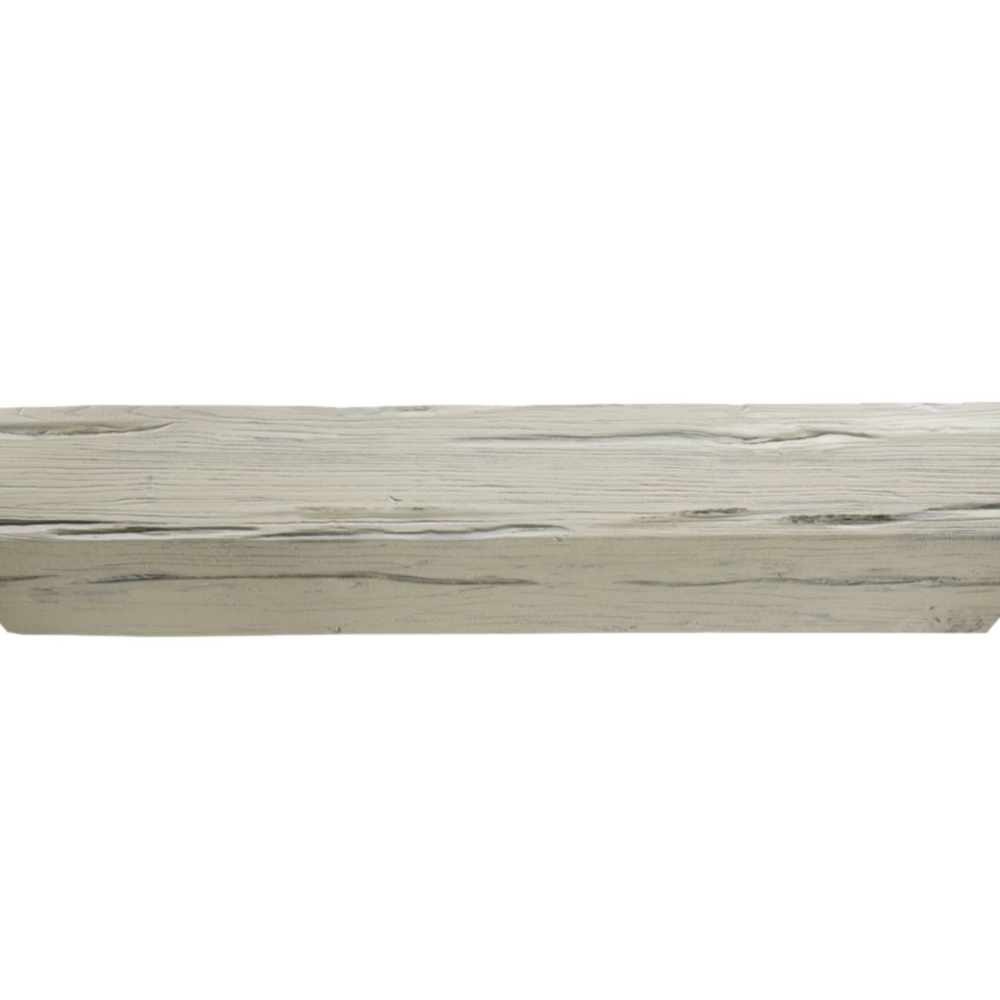
Installation Planning
Complex installations benefit from planning that maps the role of each section piece within the overall assembly. Identifying these pieces during planning allows procurement coordination that prevents delays when installation reaches these locations. The sequence of procurement should align section piece availability with installation schedule requirements.
Structural backing requirements for section pieces may exceed those for straight beam runs, as these locations concentrate loads from multiple directions. Verifying that adequate backing exists before installation prevents discovery of inadequate support after components are positioned. This verification should occur during planning rather than during installation.
Clearance verification ensures that section pieces can be positioned without interference from adjacent building elements. Ductwork, light fixtures, and other ceiling elements may conflict with section piece geometry in ways that straight beams avoid. Identifying these conflicts early allows resolution through relocation or redesign rather than problematic on-site modification.
Connection Techniques
The connection between section pieces and adjacent beam runs should ensure continuous load transfer and appearance. Adhesive bonding provides the primary connection, with mechanical fastening providing additional security during cure and throughout service life. The combination of adhesive and mechanical fastening provides redundancy that single-method approaches cannot match.
Dry fitting before adhesive application reveals any fit issues that might compromise the joint. Minor adjustments to positioning or, in some cases, light sanding of interference points may be necessary. These adjustments should be identified and completed before committing with adhesive, as correction after bonding proves difficult or impossible.
Clamping strategy must address the three-dimensional nature of section piece connections. Multiple clamps from different directions may be required to maintain position and contact during adhesive cure. The clamping setup should be planned before beginning adhesive application, as adjustments made after adhesive contact may create problems.
Finish Coordination
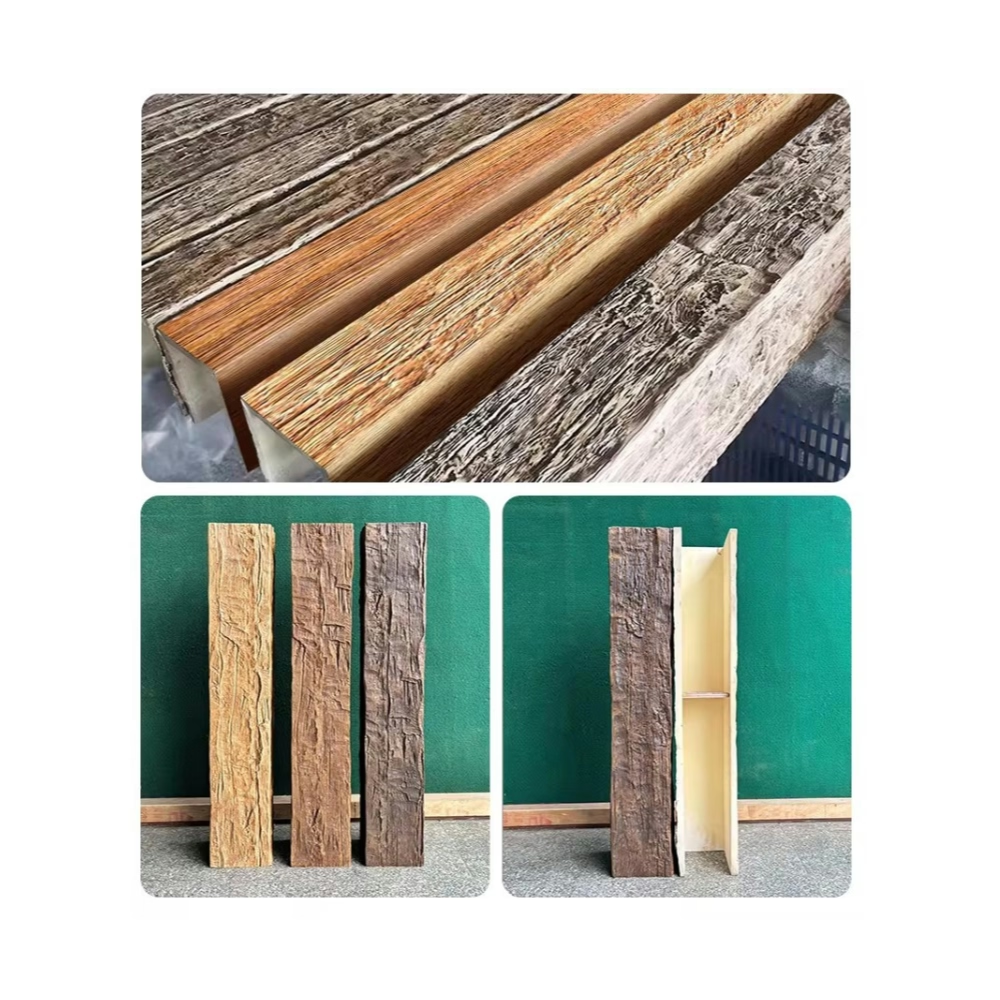
The finish applied to section pieces must match adjacent beam surfaces precisely to maintain continuous appearance. This matching includes color, texture depth, and surface sheen, all of which must be consistent across the joint. Batch-matched components from the same manufacturer provide the best matching, while field-applied finishes require careful technique and touch-up work.
Grain pattern coordination at section piece joints affects perceived authenticity significantly. Natural wood grain transitions around corners with patterns that follow the underlying wood structure. The section piece texture must replicate this natural transition rather than presenting mismatched patterns that announce their artificial origin. This texture coordination requires manufacturer attention during production.
Finish application may be easier to perform before section piece installation, when all surfaces remain accessible. However, installation handling may damage pre-applied finish, requiring touch-up after positioning. Balancing accessibility against damage risk guides the decision about whether to finish before or after installation.
Complex Configurations
Beyond simple right-angle turns, section pieces may be required for T-junctions, three-way intersections, and more complex configurations. Each configuration presents unique challenges that standard section pieces may not address. Custom fabrication or creative assembly of multiple components may be necessary for these situations.
Curved beam applications create challenges that straight section pieces cannot address. Flexible trim solutions or custom curved components may be required. These specialty solutions typically involve longer lead times and higher costs that should be factored into project planning.
Multi-level installations where beams intersect at different heights require section pieces that accommodate the height differential. These components may be custom fabricated to match the specific elevation changes that the project requires. Early engagement with manufacturers enables appropriate planning and pricing for these specialty requirements.
Quality Verification
Inspection of section pieces upon delivery verifies that received products meet specifications and arrived undamaged. Any discrepancies should be documented and communicated to the supplier immediately for resolution. This verification prevents installation of unsuitable products that might require later replacement.
Visual inspection during installation verifies that section piece appearance matches adjacent beams and that joints appear continuous. Any visible gaps, misalignments, or finish discrepancies should be addressed before proceeding. The difficulty of correcting problems after surrounding work completes makes early attention essential.
Final inspection should verify that all section pieces are securely attached, properly finished, and free from visible defects. This inspection represents the last opportunity to address problems before project completion. Thorough final inspection protects both appearance quality and long-term performance.
Technical References
ASTM standards cited in every specification
Test Data
Lab results from internal testing program
Updated 2026
Reviewed against current product specs