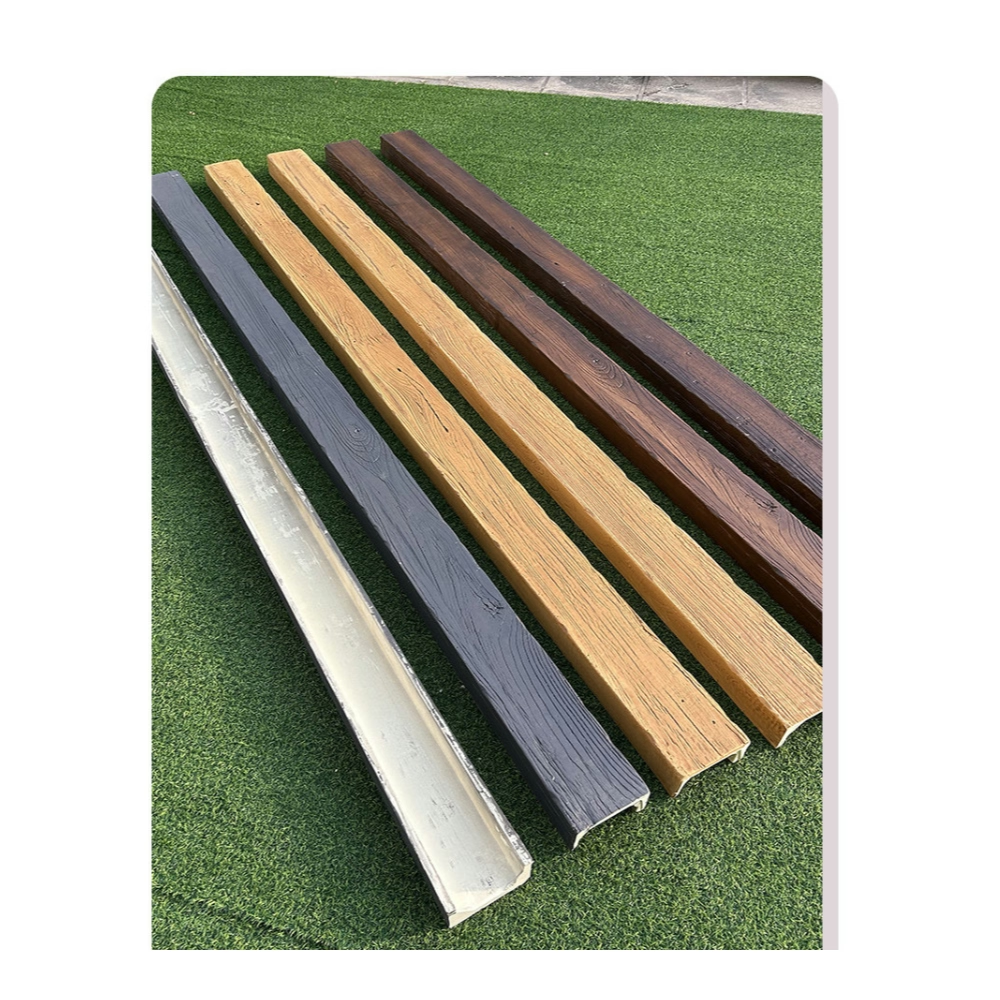
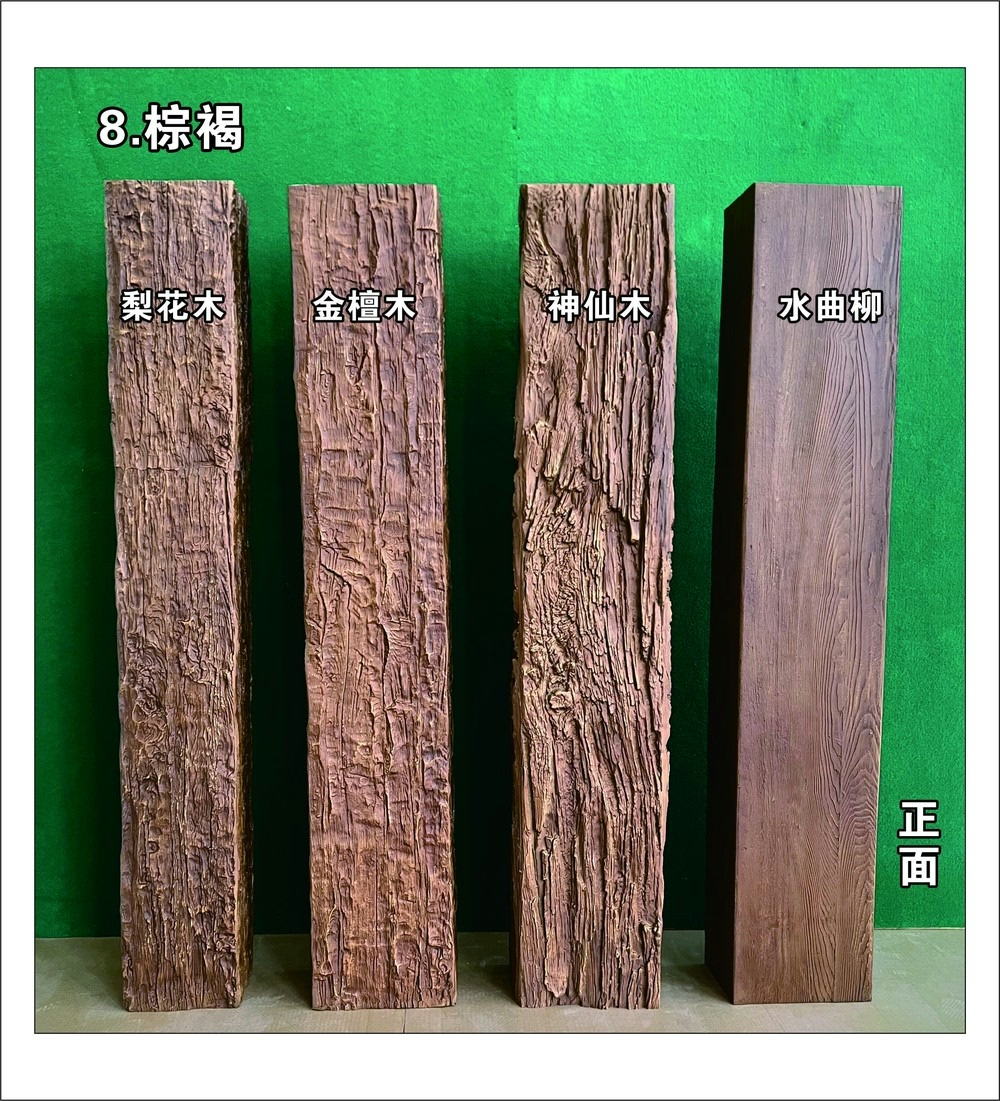
Curved polyurethane faux beams introduce fascinating architectural possibilities while simultaneously presenting installation challenges unknown to their straight counterparts. When these flowing architectural elements require extension or junction, standard splicing approaches fail to accommodate the complex geometry involved. Precision splicing connector kits specifically engineered for curved applications bridge this gap, enabling installers to extend curved beams while maintaining their distinctive radii and architectural character. Understanding these specialized kits expands what designers and contractors can accomplish with polyurethane beam systems.
The fundamental challenge with curved beam splicing lies in the conflict between joining precision and geometric continuity. A perfectly cut beam end might align perfectly in one plane while creating visible gaps or misalignments when the curved surface is considered three-dimensionally. Precision kits address this through flexible alignment systems that accommodate minor geometric variations while providing structural connections that perform reliably under load. These kits transform what could be a technical nightmare into a straightforward installation procedure.
Engineering Curved Beam Connections
Traditional beam splicing assumes flat surfaces meeting at predictable angles. Curved beam splicing must account for tangential relationships where beam ends approach each other along curved paths rather than straight lines. The connector kits designed for this application incorporate angular adjustment features that allow installers to align beams precisely despite the complex geometry involved. These adjustments typically operate through spherical bushings or multi-axis pivot points that permit fine-tuning after initial connector placement.
The structural requirements for curved beam splices differ from straight beam applications. Curved beams experience different load distribution patterns, with compression forces along the inner radius and tension along the outer radius. Connectors must accommodate these stress conditions without creating stress concentrations that might lead to failure at the joint location. Quality splicing kits incorporate reinforcement geometry that bridges the joint while following the beam's natural curvature, ensuring load transfer occurs smoothly without introducing weak points.
Material selection for curved beam connectors receives heightened attention compared to straight beam hardware. The complex loading conditions in curved applications demand materials that can flex slightly during installation while remaining rigid under load. Glass-reinforced nylon composites offer an excellent balance, providing sufficient flexibility for adjustment while maintaining structural integrity once fastened. Some manufacturers use hybrid constructions that combine flexible adjustment mechanisms with rigid structural components, optimizing each element for its specific function within the connector assembly.
Kit Components and Assembly Sequences
A complete curved beam splicing kit typically includes multiple component categories that work together to create reliable joints. Central joining brackets form the structural core, providing bearing surfaces that transfer loads between beam sections. These brackets incorporate alignment features that engage with both beam profiles, ensuring consistent positioning regardless of how the curved surfaces meet. Secondary brackets provide additional structural support while maintaining flexibility for geometric adjustment.
Fastening hardware within curved beam kits differs from standard offerings in both geometry and specification. Curved surface installation requires fasteners that maintain perpendicular engagement despite the non-flat mounting surface. Some kits include offset-head fasteners that seat properly in curved cavities, while others provide specialized washers that distribute clamping force across curved surfaces more evenly than standard washers. Adhesive products formulated for curved applications often accompany kits, providing bonds that accommodate the slight flexing that curved beam installations sometimes require during assembly.
The assembly sequence for curved beam splices follows a logical progression that builds confidence as the installation proceeds. Initial preparation involves cleaning and dry-fitting components without adhesive, verifying that alignment mechanisms engage properly and that the resulting curve maintains the intended radius. This dry-run phase allows adjustments before committing to adhesive bonds that might prove difficult to correct. Following successful dry-fitting, adhesive application and clamping proceed according to manufacturer specifications, with curing times calibrated for the specific adhesive system included in the kit.
Adapting to Various Curvature Configurations
Different curvature configurations present unique challenges that influence connector kit selection. Tight-radius beams require connectors with exceptional angular range, potentially incorporating flexible elements that allow greater adjustment than straight-beam hardware. Gentle curves demand less angular flexibility but may require longer connector overlap to maintain structural continuity across the joint. Understanding these variations helps installers select appropriate kits and adapt installation procedures to specific project requirements.
S-curved beams present the most complex splicing scenarios, where beam direction reverses within a single beam section. Connecting S-curve segments requires connectors capable of accommodating compound angles that change along the beam profile. Some manufacturers offer specialized S-curve kits with segmented connector designs that address different angular zones independently before being joined into a unified structural system. These sophisticated solutions enable architectural expressions that would otherwise require custom engineering for each specific installation.
Helical and spiral configurations push curved beam splicing to its practical limits, requiring careful coordination between connector design and installation sequence. Multiple splice points along spiral installations must maintain consistent relationships with neighboring structure, demanding connectors that facilitate precise positioning while providing structural continuity. Professional installers often create temporary support scaffolding for spiral installations, allowing beam sections to be positioned and spliced with confidence before permanent attachment to building structure.
Professional Techniques for Complex Junctions
Experienced installers develop specialized techniques for managing complex curved beam junctions that go beyond basic kit application. One common approach involves creating reference alignment tools from scrap beam material, allowing rapid verification of joint alignment before committing to adhesive bonds. These simple jigs accelerate installation while reducing the probability of alignment errors that might not become apparent until after cure completion.
Temperature management during installation becomes more critical for curved applications than straight beams. The heat generated during adhesive curing can cause localized expansion in polyurethane, potentially creating alignment shifts if thermal effects aren't anticipated. Professional installers often schedule curved splices during moderate temperature conditions and may use cooling techniques to manage exothermic adhesive reactions in sensitive applications. These precautions add minimal time to installations while preventing thermal-induced alignment problems.
Quality assurance for curved splices combines visual inspection with dimensional verification. Beyond checking for complete adhesive coverage and absence of gaps, installers measure actual curve radii at joint locations to verify that splicing hasn't introduced unintended radius changes. Significant radius deviation indicates alignment problems requiring correction before proceeding. Some installers use flexible measurement templates that follow the beam curve, allowing rapid verification of continuous radius along spliced sections.


The investment in precision splicing connector kits for curved polyurethane beams pays dividends through reduced installation time, improved joint quality, and enhanced architectural outcomes. When installers understand the engineering principles underlying curved beam connections and develop proficiency with specialized kits, they unlock design possibilities that might otherwise seem impractical. The resulting installations demonstrate how engineered solutions enable architectural ambition while maintaining the practical reliability that building professionals require.
Technical References
ASTM standards cited in every specification
Test Data
Lab results from internal testing program
Updated 2026
Reviewed against current product specs