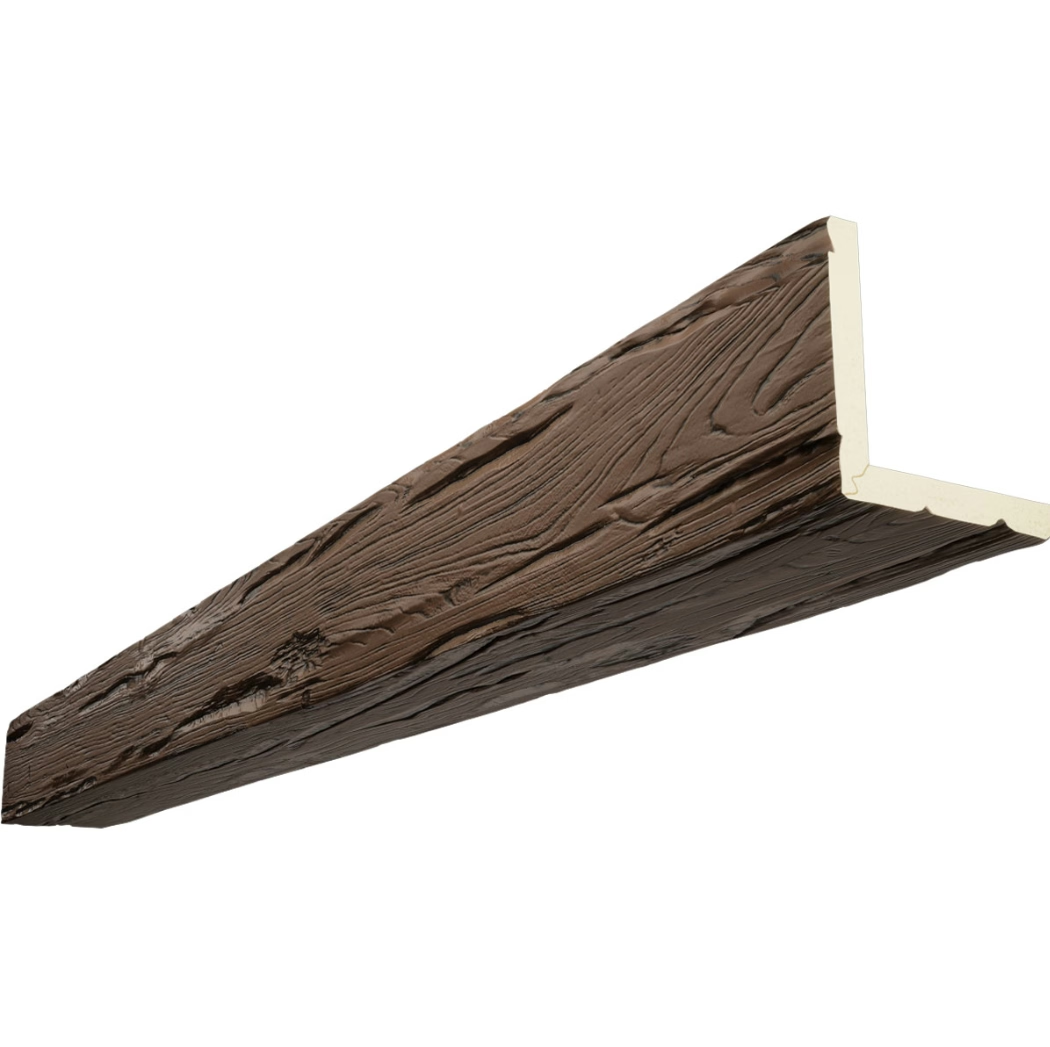
Contemporary architectural preferences have increasingly gravitated toward clean lines, minimal ornamentation, and purposeful simplicity. Within this design paradigm, straight hollow faux timber beams occupy a unique position—they deliver the organic warmth associated with natural wood while supporting modern construction priorities like weight reduction, installation efficiency, and dimensional precision. These architectural elements have evolved from imitations masquerading as wood substitutes into sophisticated design components that stand on their own merit in contemporary spaces.
The hollow construction of modern faux timber beams represents more than weight savings—it's a fundamental design feature enabling creative applications impossible with solid wood alternatives. Electrical wiring, HVAC ductwork, and structural mounting hardware can all route through beam cavities, transforming decorative elements into functional infrastructure. This integration capability proves especially valuable in renovation projects where ceiling cavities offer limited routing options for building services that must coexist with aesthetic treatments.
The Manufacturing Precision Advantage
Precision manufacturing processes differentiate contemporary hollow faux timber beams from earlier generations of simulated wood products. Computer-controlled cutting and molding ensure consistent dimensions across beam runs, eliminating the variations that characterize natural wood and handmade alternatives. Each beam emerges from production with exact specifications, allowing designers to specify precise clearances and relationships with adjacent building elements. This predictability transforms installation from craft dependent on individual skill into systematic construction achievable by any competent installer.
The tooling precision required for hollow beam production demands significant capital investment that smaller manufacturers cannot justify. The resulting industry consolidation has concentrated production among manufacturers capable of maintaining tight tolerances throughout production runs. These facilities employ advanced materials engineering, optimizing polyurethane formulations for consistent density, superior surface finish, and enhanced durability. The technical sophistication underlying seemingly simple beam products reflects the maturity of the polyurethane molding industry.
Surface texturing technology has advanced dramatically alongside dimensional precision. Modern faux timber beams achieve convincing wood grain replication through techniques including precision engraving, injection-molded texture transfer, and post-production surface treatment. The resulting textures catch light naturally, creating the subtle variations that make wood surfaces visually interesting. Unlike flat-surfaced alternatives, textured hollow beams create depth perception that reads as authentic timber even upon close inspection.
Weight and Handling Benefits
The lightweight nature of hollow polyurethane beams transforms logistics and installation compared to natural timber alternatives. A standard eight-foot ceiling beam might weigh fifteen to twenty pounds rather than the eighty to one hundred twenty pounds of comparable solid wood. This dramatic weight reduction affects every phase of beam deployment, from shipping and site handling to final installation. Workers can maneuver hollow beams without specialized equipment, reducing labor costs while improving safety conditions on installation sites.
Storage and inventory management benefit equally from hollow beam lightweight characteristics. Warehousing costs decrease when lighter products allow higher storage density without structural concerns about shelf loading. Construction sites with limited staging areas appreciate the ability to store substantial beam quantities in modest spaces. The logistics advantages compound throughout the supply chain, making hollow faux timber beams economically attractive beyond their material costs.
Installation speed improvements with hollow beams extend beyond handling convenience. The reduced weight allows faster positioning and temporary holding during mounting, meaning beams reach final position more quickly than heavier alternatives. For large commercial projects with numerous beam installations, these time savings multiply across the project, potentially reducing overall installation costs significantly. The labor efficiency advantage has made hollow beams increasingly popular among contractors seeking competitive bidding advantages.
Design Integration Strategies
Integrating straight hollow beams into contemporary interiors requires thoughtful approach to achieve cohesive results. The most successful modern installations often employ beams as deliberate contrasts to surrounding architectural elements—placing precise geometric beams against organic plaster surfaces or pairing beam textures with smooth-finished ceiling planes. The resulting visual tension creates interest while maintaining the clean aesthetic central to contemporary design philosophy.
Color and finish selection significantly influence how hollow beams interact with surrounding surfaces. Unfinished natural wood tones create warmth in otherwise cool modern spaces, while painted white or gray beams recede visually, becoming subtle ceiling accents rather than focal points. Some designers specify beams with grain patterns and colors that complement specific furniture pieces or flooring materials, creating visual connections that tie room elements together. The finish flexibility of polyurethane beams enables these coordinated approaches without the expense of custom wood finishing.
Scale relationships between beams and rooms require careful consideration in modern design contexts. Oversized beams can overwhelm modest spaces, while undersized beams might disappear into ceiling planes without providing intended visual impact. Professional designers often create scale mockups before final specification, positioning temporary beam representations to verify that chosen dimensions achieve desired effects. This verification step prevents expensive errors that might otherwise become apparent only after permanent installation.
Technical Integration Considerations
The hollow interior of these beams offers practical opportunities for technical integration that enhance building functionality. Recessed lighting fixtures can mount within beam cavities, creating seamless illumination that appears to emerge from timber elements rather than being added separately. The beam interior provides thermal isolation for fixtures while concealing wiring and mounting hardware that would otherwise require visible treatment.
Acoustic integration represents another opportunity where hollow beams contribute to room performance. Beam cavities can accommodate acoustic insulation that reduces sound transmission between floors while maintaining the visual warmth of exposed timber ceilings. This dual-purpose approach eliminates the need for separate acoustic treatment, streamlining ceiling construction while achieving superior acoustic outcomes. The integration potential makes hollow beams particularly valuable in commercial spaces like restaurants and offices where both aesthetics and acoustic comfort matter.
Structural mounting considerations differ between hollow and solid beam installations. Hollow beams require mounting hardware that distributes loads across broader interior surfaces rather than concentrating at single points. Manufacturers provide specialized mounting brackets designed for hollow beam profiles, ensuring secure attachment to building structure while maintaining clean exterior appearances. Understanding these mounting requirements helps designers specify appropriate beam products and helps installers prepare for correct hardware deployment.


The evolution of hollow faux timber beams from wood substitutes to sophisticated architectural products reflects broader trends in construction material development. Contemporary designers increasingly specify these elements for their inherent qualities rather than their ability to imitate natural materials. As manufacturing capabilities continue advancing, hollow beams will likely gain additional features that further expand their design potential, securing their place as permanent elements in the architectural vocabulary rather than transitional products serving until something better emerges.
Technical References
ASTM standards cited in every specification
Test Data
Lab results from internal testing program
Updated 2026
Reviewed against current product specs


