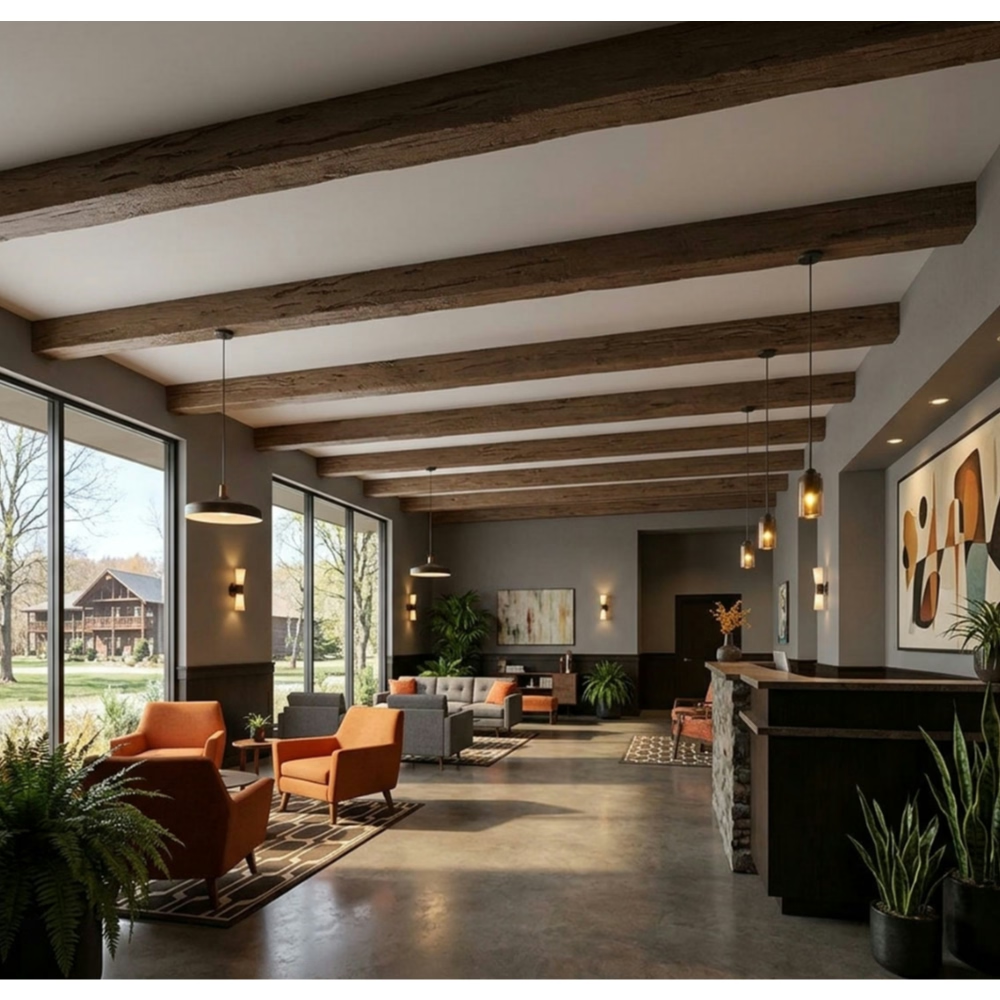
There's something undeniably commanding about a room anchored by dark, substantial ceiling beams. The visual weight they provide transforms ordinary spaces into environments that feel established, curated, and thoroughly intentional. For interior designers working on luxury residential projects or high-end commercial spaces, achieving this dramatic effect has traditionally meant wrestling with the practical limitations of genuine timber—concerns about load-bearing, installation complexity, and the relentless march of moisture-related expansion and contraction.
The emergence of premium polyurethane faux wood beams in ebony tones has fundamentally altered this equation. These architectural elements deliver the rich, commanding presence of dark-stained timber while eliminating the structural headaches that have long challenged designers and installers alike. The result is a product category that opens new creative possibilities for projects where aesthetic ambition meets practical reality.
The Allure of Deep, Dark Wood Tones
Ebony and near-black wood finishes carry centuries of design heritage. From the darkened great halls of European estates to the sleek, dramatic interiors of contemporary Japanese-influenced spaces, deep-toned wood has consistently signaled luxury, permanence, and refined taste. The psychological impact of these finishes is remarkable—rooms featuring dark wood beams feel more intimate despite often being larger in scale, the visual depth creating an enveloping quality that draws the eye upward and around the space.
The specific appeal of ebony tones lies in their versatility. Unlike lighter finishes that can feel dated relatively quickly, dark wood maintains its relevance across design eras. A room featuring ebony-toned beams in 2026 reads as contemporary and sophisticated; that same room in a decade will simply read as classic. This longevity makes dark finishes particularly attractive for commercial applications where renovation cycles are extended and design consistency matters enormously.
Modern manufacturing techniques have produced polyurethane faux wood beams in ebony finishes that rival the visual depth of genuine ebonized timber. The color penetrates consistently through the material, meaning that nicks, cuts, and installation handling won't reveal a different substrate beneath. This uniformity proves particularly valuable in high-traffic commercial installations where durability and appearance maintenance are ongoing concerns.
Engineering Lightweight Elegance
The fundamental advantage of polyurethane over traditional timber lies in its density. Where a genuine solid timber beam in a substantial size might weigh hundreds of pounds per linear foot, an equivalent polyurethane faux beam might weigh mere pounds. This differential transforms what's possible in interior design.
Consider the practical implications for installation. Traditional heavy timber beams typically require structural consultation, potentially reinforced ceiling joists, specialized lifting equipment, and certainly careful load calculations. The installation process alone might require days of preparation and coordination. Premium PU faux wood beams, by contrast, can frequently be installed using construction adhesive and mechanical fasteners directly to existing ceiling structures, with most residential installations completed in a single day by a two-person crew.
This weight reduction also addresses a persistent challenge in renovation work: the condition of existing structures. Older buildings often feature ceiling joists that, while perfectly sound for their original purposes, cannot safely support the additional weight of genuine timber beams. Rather than abandoning the design vision or undertaking expensive structural reinforcement, designers can achieve identical visual results with polyurethane alternatives that the existing structure can easily accommodate.
The material properties of premium polyurethane also contribute to long-term performance. Unlike timber, polyurethane won't expand and contract with seasonal humidity changes, won't warp or twist as it ages, and isn't subject to insect damage or wood rot concerns. For international projects where shipping containers and climate-controlled storage create dramatic humidity variations, this stability proves invaluable.

Design Applications Across Interior Styles
The versatility of ebony-toned faux wood beams extends across an impressive range of interior design styles, each utilizing the same material to achieve distinct aesthetic outcomes. Understanding these applications helps designers and homeowners identify the most effective approach for their specific contexts.
In contemporary minimalist interiors, ebony beams provide the dramatic focal point that prevents spaces from feeling stark or cold. The beams introduce organic texture and visual warmth while maintaining clean lines. A long, continuous beam running the length of an open-plan living space creates a design throughline that unifies disparate functional zones without the visual clutter of excessive ornamentation.
Transitional spaces—those drawing elements from both traditional and contemporary vocabularies—find ebony beams particularly effective. The classic architectural element of exposed ceiling beams meets modern materials and finishes, creating rooms that feel both timeless and thoroughly current. This approach works beautifully in renovated historic homes where genuine timber might conflict with updated systems or insulation, but the visual language of timber remains appropriate.
For spaces inspired by specific cultural traditions—Japanese modern, Scandinavian hygge, or industrial loft aesthetics—ebony-toned beams provide the essential texture and warmth that these styles demand. In Japanese-influenced interiors, the dark beams echo the exposed structural elements of traditional architecture while the clean polyurethane profile maintains the essential simplicity. In industrial conversions, ebony beams provide warmth that prevents concrete and steel from feeling oppressive.
Commercial applications deserve particular attention. Hotels, restaurants, and retail spaces increasingly utilize ebony faux wood beams to create signature environments that photograph well and generate social media engagement. The dramatic visual impact translates directly to marketing value, while the durability and maintenance characteristics of polyurethane align with commercial cleaning protocols and furniture-moving realities.
Achieving Authentic Wood Character
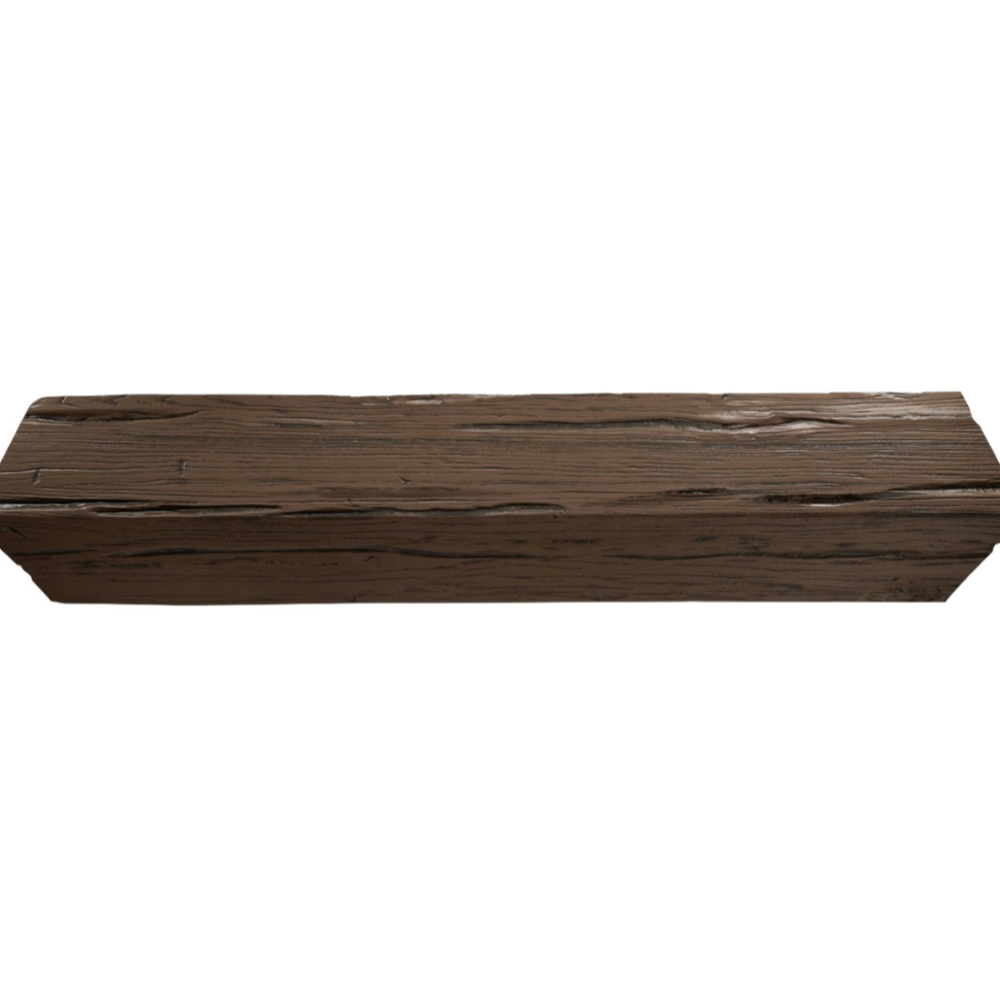
Modern premium polyurethane beams have evolved far beyond the "foam" aesthetic that characterized earlier generations of the product. Contemporary manufacturing techniques produce beams with surface textures that convincingly replicate the grain patterns, growth rings, and natural variations found in genuine timber. The key lies in understanding how to specify and install these products to maximize their authenticity.
Texture selection matters significantly. Premium manufacturers offer multiple texture options—from smooth, refined surfaces appropriate for contemporary settings to heavily weathered, distressed textures that suit rustic or farmhouse aesthetics. Ebony finishes on heavily textured surfaces read as reclaimed or salvaged timber; the same finish on a smoother texture suggests contemporary stained wood. Matching texture to overall design intent amplifies authenticity.
Installation details contribute substantially to the final appearance. Premium faux wood beams typically arrive factory-finished, eliminating on-site finishing labor and ensuring consistent results. However, the installation itself requires attention to joints, transitions, and connection points. Well-executed installations feature mitered corners that mirror traditional timber joinery, appropriate reveal depths that suggest genuine structural elements, and mounting hardware that's concealed within the beam's profile.
For projects requiring additional customization, premium polyurethane products accept standard wood stains and paints after light surface preparation. This flexibility enables designers to specify exact color matching to existing millwork or to create custom finishes that don't exist in the manufacturer's standard catalog. The ability to field-finish polyurethane without specialized products expands the design possibilities considerably.
Climate Considerations and International Use
One of the most compelling advantages of polyurethane faux wood beams for international projects involves climate resistance. Genuine timber behaves differently across humidity ranges—swelling in humid conditions, contracting in dry environments, and potentially developing gaps, splits, or structural issues over time. These behaviors create particular challenges for projects spanning multiple climate zones or for products manufactured in one region and installed in another.
Premium polyurethane is dimensionally stable across extreme temperature and humidity ranges. This stability means that a beam specified in a manufacturer's facility, shipped across international waters in a non-climate-controlled container, stored in a warehouse, and finally installed in a tropical or arid climate will perform identically. The dimensions remain consistent, the finish maintains its integrity, and the installation details that worked at the factory remain valid in the completed project.
For B2B supply chains serving international clients, this reliability simplifies logistics and reduces the documentation required to ensure successful installations. Projects can proceed on schedule without climate-related delays, and clients receive products that perform as specified regardless of when or where installation occurs. This predictability proves valuable for large projects with extended timelines or multiple installation phases across different regions.
The material also offers advantages in specific climate challenges. In coastal regions where salt air accelerates corrosion of metal components, polyurethane eliminates concerns about metal brackets or fasteners that genuine timber installations might require. In regions with pest pressures—termites, carpenter ants, or other wood-boring insects—polyurethane provides complete resistance without chemical treatment.
Selecting Quality Products
Not all polyurethane faux wood beams are created equal, and the distinctions matter enormously for project outcomes. Specifying premium products requires attention to several quality indicators that separate professional-grade materials from inferior alternatives.
Density provides the most fundamental quality indicator. Premium polyurethane beams feature consistent, high-density material throughout—not the crumbly, low-density foam that characterizes budget products. This density contributes to realistic weight simulation, improved durability, and better acceptance of fasteners and adhesives. A quick specification review or sample comparison reveals density differences quickly.
Surface finish quality varies dramatically between manufacturers. Premium products feature deeply penetrating finishes that integrate with the underlying texture, creating depth and visual complexity. Lesser products may display thin, surface-level coloring that appears flat and artificial, particularly under direct lighting conditions where finish quality becomes obvious.
Profile accuracy ensures that beams match their specified dimensions and shapes consistently. Premium manufacturers employ precision tooling and quality control processes that maintain tight tolerances across production runs. This consistency matters for visible installations where beams may be installed end-to-end or in combination with other architectural elements.
Warranty coverage reflects manufacturer confidence in their products. Premium products typically carry multi-year warranties covering both material defects and finish performance. Products with minimal or absent warranty coverage often indicate manufacturing shortcuts that will create problems during installation or in service.
Installation Best Practices
Successful faux wood beam installations begin with proper preparation and proceed through systematic execution. Understanding best practices ensures results that satisfy clients and stand the test of time.
Ceiling structure assessment precedes any installation. While polyurethane beams don't require structural support, they do require appropriate mounting surfaces. Wooden joists, metal beams, and solid ceiling structures all accept different fastening approaches. Identifying these conditions during planning allows appropriate hardware specification and prevents installation delays.
Proper fastening strategy ensures permanent installations. For most residential applications, construction adhesive combined with screws through the beam's top surface provides adequate attachment. The adhesive handles shear loads while screws resist uplift forces. Commercial applications or long-span installations may require additional mechanical connections or metal support brackets.
Joint treatment requires attention in any installation featuring multiple beam segments. Outside corners typically employ 45-degree miter cuts, while inside corners and linear splices may use scarf joints or butted connections with wood filler. The goal is transitions that appear continuous and intentional, never revealing the seams between pieces.
Finishing details complete professional installations. Caulking gaps between beams and adjacent surfaces prevents air infiltration and creates clean visual lines. Touch-up of any fastener locations ensures consistent color throughout. These final steps distinguish professional installations from amateur work, and they're steps that premium materials make straightforward to execute.
The ebony-toned polyurethane faux wood beam represents a remarkable convergence of aesthetic ambition and practical feasibility. For designers, developers, and homeowners seeking the dramatic impact of dark wood ceiling beams, these products deliver results that were simply impossible or impractical using traditional materials. The combination of authentic appearance, lightweight handling, climate resistance, and installation simplicity creates opportunities for projects of every scale and scope.
Technical References
ASTM standards cited in every specification
Test Data
Lab results from internal testing program
Updated 2026
Reviewed against current product specs


