The golden warmth of European oak has decorated grand halls and intimate rooms alike for centuries. This wood species carries associations with quality craftsmanship, natural beauty, and enduring elegance that transcend design trends. For interior designers and homeowners seeking these qualities, the challenge has always been practical: genuine European oak beams command premium prices, require specialized installation, and demand ongoing attention to humidity and temperature conditions. Premium polyurethane faux wood beams in European oak finishes have emerged as a sophisticated solution that honors the aesthetic while eliminating the practical limitations.
These factory-finished architectural elements replicate the distinctive grain patterns, subtle color variations, and inherent warmth of European oak with remarkable accuracy. Advanced manufacturing processes capture the organic character that distinguishes fine timber from synthetic alternatives, producing beams that read as genuine to casual observers and satisfy the critical eye of design professionals.
The Timeless Appeal of Oak Grain Patterns
European oak possesses a recognizable grain character that separates it from other wood species. The grain runs consistently but with subtle wave patterns that create visual interest without the dramatic figure found in woods like walnut or maple. This restraint contributes to oak's versatility—it complements a wide range of interior styles without demanding attention or dictating the overall aesthetic.
The color palette of European oak spans warm honey tones through richer amber and nut-brown hues. Premium polyurethane manufacturers have developed finishes that capture this entire range, from the pale, almost white tones of European white oak through the deeper golden-browns of traditional quarter-sawn oak. Each finish option creates a distinct mood while maintaining the essential oak character.
Premium faux wood beams in European oak finishes utilize deep-penetration staining techniques that color the material throughout rather than simply coating the surface. This approach produces the color consistency that characterizes genuine timber—where nicks, cuts, and handling won't reveal a different substrate. The result is a product that maintains its appearance through installation, use, and the inevitable minor impacts that occur over time.
The texture of European oak contributes significantly to its character. The grain creates subtle raised lines and patterns that catch light differently throughout the day, adding visual interest that changes with the sun's position and artificial lighting. Premium polyurethane beams replicate this texture with precision, ensuring that the installed beams exhibit the same light-responsive character as genuine timber.
Installation Advantages Over Traditional Timber
The practical advantages of polyurethane faux wood beams become apparent the moment installation begins. Where genuine timber requires careful planning around weight, structural support, and specialized handling, polyurethane beams present a dramatically simpler installation process that translates to reduced labor costs and faster project completion.
Most residential installations proceed with a two-person crew working without specialized equipment. The lightweight nature of polyurethane—often less than two pounds per linear foot for standard beam sizes—means that components can be positioned by hand, adjusted as needed, and secured without the coordination challenges that accompany heavy timber. Single-person installations are entirely feasible for smaller projects or when using temporary support systems.
Adhesive-based installation methods work effectively for most ceiling applications. Premium construction adhesives provide strong bonds to a variety of substrates, including drywall, plaster, wooden joists, and metal structural elements. The adhesive approach eliminates the need for visible mechanical fasteners, creating clean installations where the beam appears to float against the ceiling surface.
For projects requiring mechanical attachment, polyurethane beams accept standard wood screws and fasteners without the splitting or cracking concerns that affect genuine timber. Pre-drilling can further reduce any risk, and the material's consistency means that fastener performance remains predictable across the entire installation.
The dimensional stability of polyurethane contributes to installation success. Unlike timber, which may arrive at a job site at one moisture content and then expand or contract as it equilibrates to the building environment, polyurethane beams maintain their dimensions from factory through installation and throughout their service life. This predictability allows precise fitting and clean joints that will remain tight regardless of seasonal humidity changes.

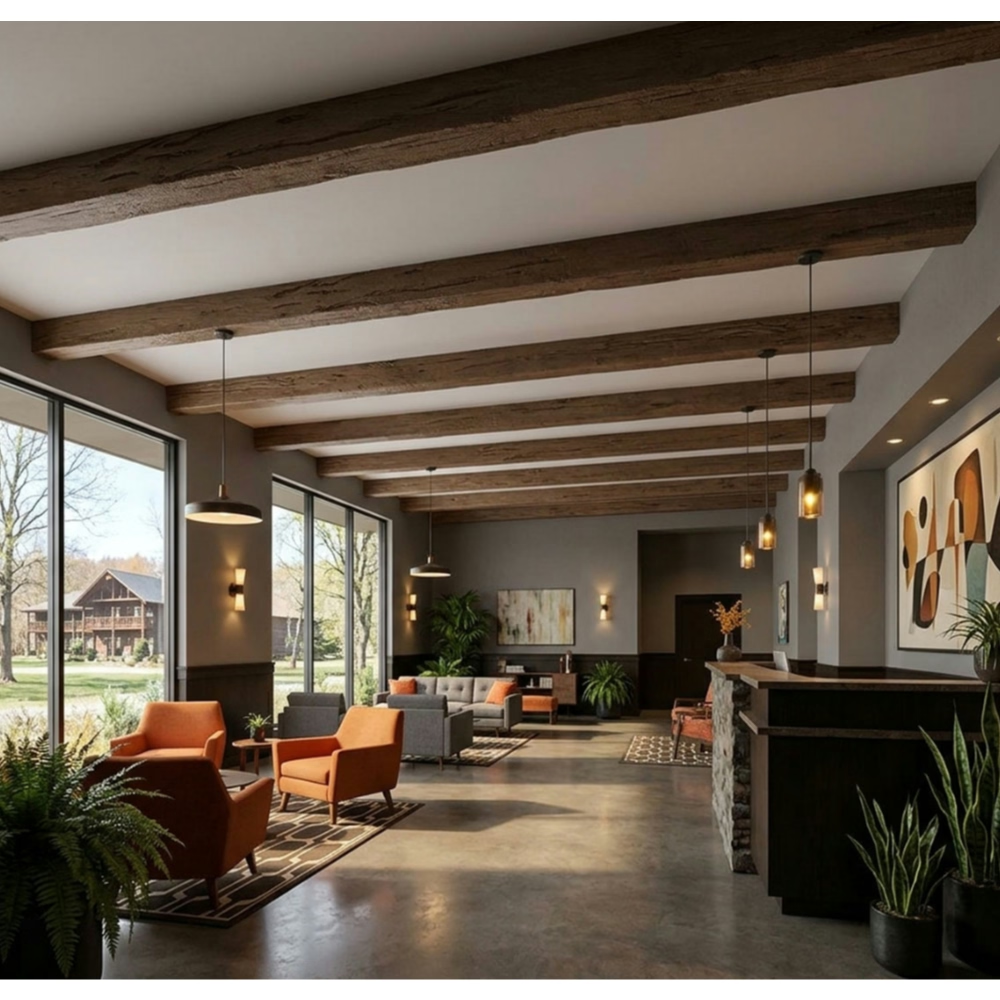
Design Integration Across Interior Styles
European oak finish faux wood beams adapt successfully to diverse interior design styles, each interpretation drawing different qualities from the same base material. Understanding these applications helps specify beams that enhance rather than conflict with the overall design vision.
In traditional interiors drawing from classical European design, oak beams reinforce established design language. The wood species has decorated manor houses, castles, and ecclesiastical buildings across the continent for centuries, and its visual associations with heritage and quality remain powerful. Beams in these settings might feature more pronounced texture and richer finishes that suggest age and authenticity.
Farmhouse and rustic contemporary interiors find European oak beams provide warmth without overwhelming the casual, comfortable character these spaces require. The neutral grain patterns allow oak beams to contribute texture and visual interest while remaining subordinate to the overall furnishing and decoration scheme. Lighter oak finishes work particularly well, preventing the heavy, oppressive feeling that darker woods sometimes create in smaller spaces.
Scandinavian and modern minimalist interiors have increasingly embraced wood as a primary finish material. European oak bridges these styles effectively—the species is native to northern Europe and carries associations that align with Scandinavian design values of natural materials and honest aesthetics. In these applications, oak beams provide essential warmth that prevents spaces from feeling sterile while maintaining the clean lines essential to the style.
Transitional spaces benefit from oak beams' versatility. The ability to specify different finish colors, textures, and beam profiles means that the same material family can support design visions ranging from thoroughly traditional to contemporary. This flexibility simplifies material selection for projects that draw from multiple aesthetic traditions.
Commercial Applications and Hospitality Design
The hospitality industry has embraced polyurethane faux wood beams extensively, and European oak finishes have proven particularly successful in this context. Restaurants, hotels, and entertainment venues require materials that combine aesthetic impact with practical durability—and premium polyurethane delivers on both counts.
Durability proves essential in commercial environments. Faux wood beams withstand the impacts that occur in busy spaces—the occasional collision with serving trays, the movement of furniture, the general bustle of public areas. Unlike genuine timber, polyurethane doesn't dent, doesn't show wear at edges, and maintains its appearance through years of service. When minor damage does occur, repair is straightforward using simple materials.
Maintenance simplicity aligns with commercial cleaning protocols. Polyurethane surfaces accept standard cleaning products without concern for finish damage, and the material doesn't require the periodic refinishing that genuine timber demands. This characteristic proves particularly valuable in food service environments where beams may be exposed to grease, moisture, or cleaning chemicals.
The European oak aesthetic performs well in hospitality contexts because it reads as both sophisticated and approachable. The finish conveys quality without stuffiness, making it appropriate for establishments ranging from casual dining through fine dining experiences. Design flexibility also supports brand consistency—beams can be specified to coordinate with other wood elements throughout a property, creating visual continuity that reinforces brand identity.
Acoustic properties deserve consideration in commercial applications. While polyurethane doesn't match the acoustic absorption of genuine timber, beam installations do break up sound reflections in ways that improve room acoustics. For restaurants and venues where conversation quality matters, the visual presence of beams contributes to acoustic comfort even if the mechanism differs from solid timber.
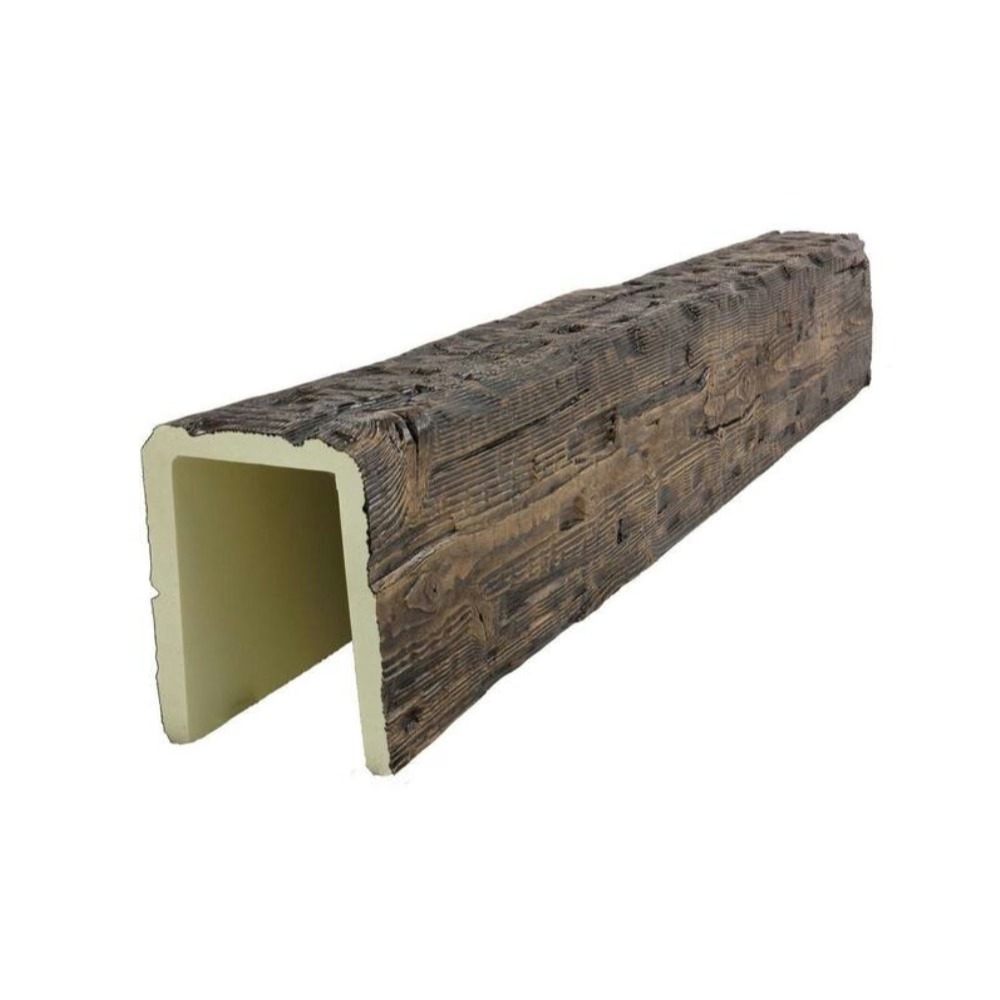
Quality Indicators and Specification
Professional specification of polyurethane faux wood beams requires attention to quality indicators that distinguish premium products from inferior alternatives. Understanding these distinctions prevents costly specification errors and ensures successful project outcomes.
Finish depth and penetration provide the most reliable quality indicator. Premium products feature finishes that color the material throughout, typically achieved through specialized manufacturing processes that allow colorants to penetrate deep into the polyurethane. Budget products often feature surface coatings that appear similar initially but wear differently over time, showing scratches and impact damage more readily.
Profile consistency affects both appearance and installation. Premium beams maintain consistent dimensions throughout their length and across production batches, enabling clean joints and predictable installation behavior. Quality control processes at reputable manufacturers catch deviations before products ship, while budget producers may ship beams with visible dimensional variations.
Texture quality determines whether beams read as genuine timber or obvious imitation. Premium manufacturers utilize molds taken from actual timber samples, capturing the organic variations that characterize natural wood. The resulting textures exhibit the subtle irregularities that make genuine timber visually interesting, avoiding the mechanical repetition that marks lower-quality imitations.
Warranty coverage reflects manufacturer confidence and provides project protection. Premium products typically carry warranties of five years or longer, covering both material defects and finish performance. Products with minimal warranty coverage often indicate manufacturing processes or materials that won't withstand extended service, and they may create liability exposure for designers and installers.
Project Planning and Execution
Successful beam installations begin with thorough planning that addresses both aesthetic and practical requirements. Early decision-making about beam specifications prevents delays and ensures that installations proceed smoothly.
Dimension selection should respond to the space and design intent rather than following惯例. Larger rooms can accommodate substantial beams without feeling crowded, while smaller spaces may benefit from proportionally smaller elements or accent beams rather than fully exposed structural mimics. The relationship between beam dimensions and ceiling height deserves careful consideration.
Finish selection should account for the complete color environment of the space. European oak beams will appear differently against light versus dark ceilings, in rooms with abundant natural light versus those relying primarily on artificial illumination, and in proximity to other wood finishes. Obtaining samples and viewing them in the actual space under actual lighting conditions prevents specification surprises.
Installation timing can affect project logistics significantly. While polyurethane beams install quickly once work begins, the preparation phase—structural assessment, mounting surface preparation, and layout marking—requires appropriate time. Coordinating beam installation with other finish work ensures that the space is ready and that subsequent work won't damage installed beams.
The European oak finish polyurethane faux wood beam represents a sophisticated synthesis of aesthetic tradition and modern material science. For projects seeking the warmth, quality associations, and visual character of genuine European oak, these products deliver results that honor the source material while expanding what's practically achievable in residential and commercial contexts alike.
Technical References
ASTM standards cited in every specification
Test Data
Lab results from internal testing program
Updated 2026
Reviewed against current product specs


