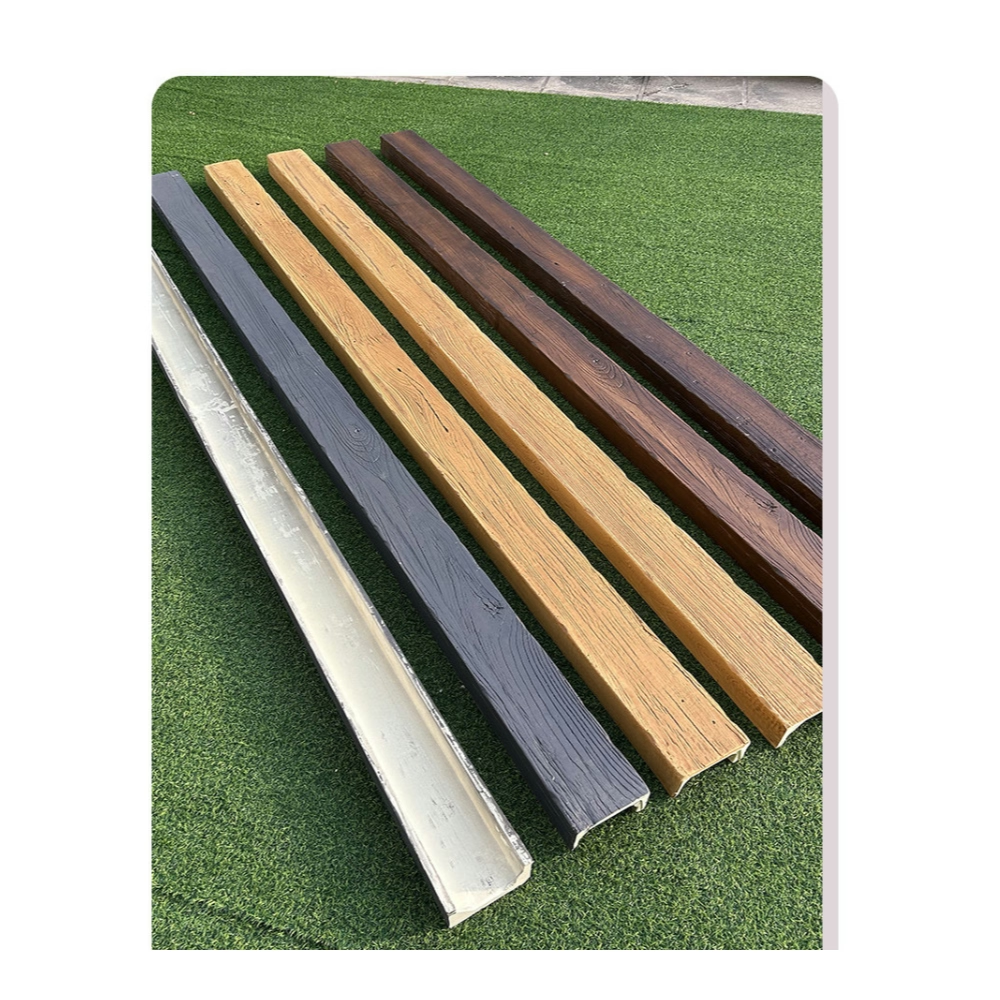
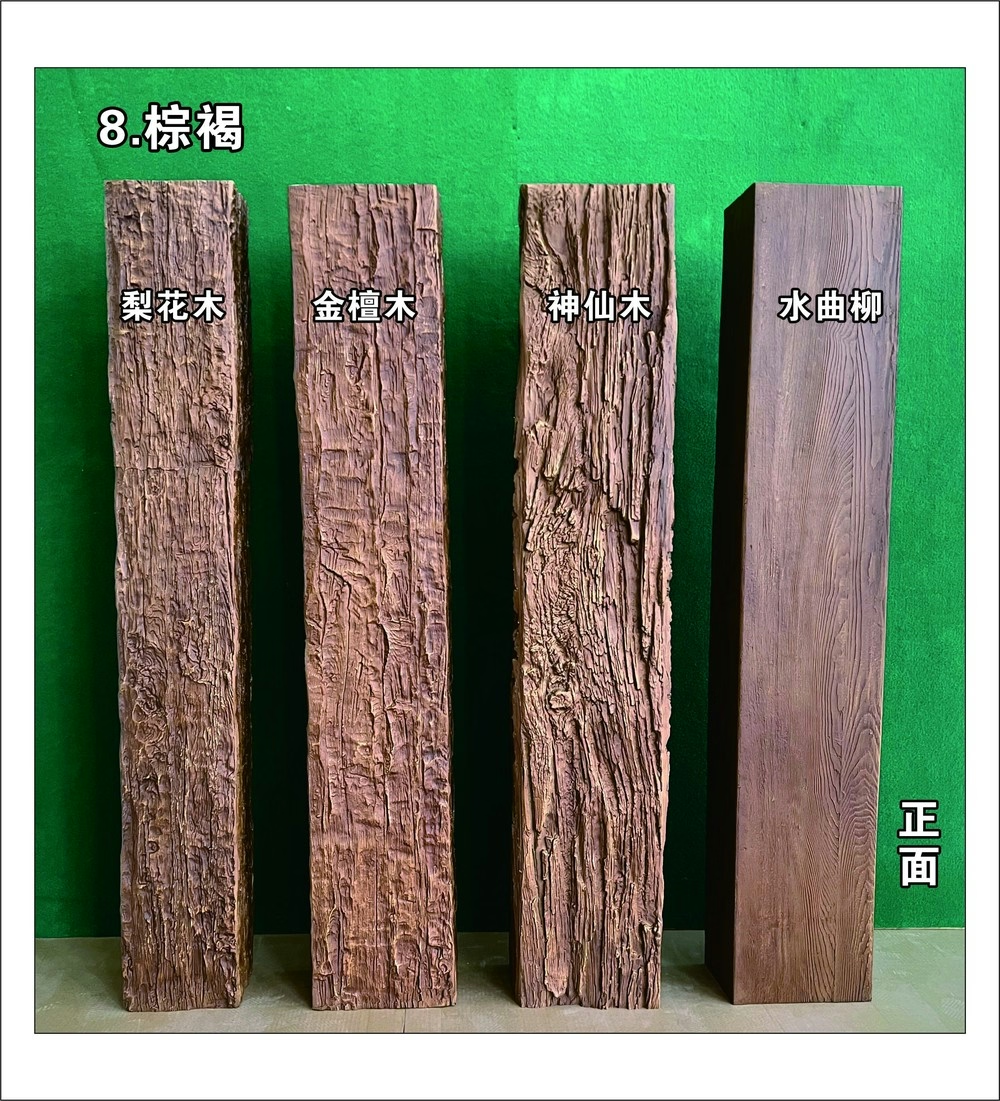
Time is money on every construction or renovation project, and finishing work often consumes disproportionate project hours relative to its value. The sanding, staining, sealing, and touch-up labor required to finish raw timber beams can extend installation timelines by days while introducing variability that affects final appearance. Factory pre-finished faux timber beams address this reality directly, arriving at the job site with immaculate, consistent finishes that require no additional work before, during, or after installation. The result is dramatically faster installation, predictable project schedules, and results that meet specifications without the variability inherent in on-site finishing.
Premium polyurethane faux timber beams in pre-finished configurations have refined the factory finishing process to a level that rivals—and often exceeds—what can be achieved on-site. Controlled manufacturing environments, specialized application equipment, and quality control processes that catch defects before packaging ensure that every beam arriving at a job site is installation-ready.
The Factory Finishing Advantage
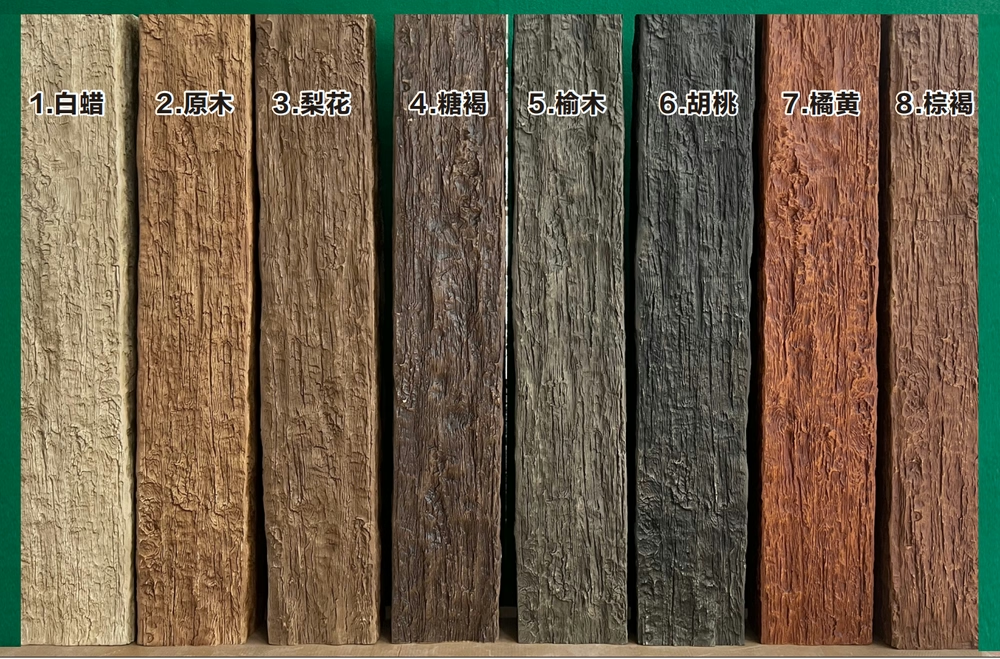
Factory finishing delivers consistency that on-site finishing cannot match. Every beam in an order receives identical treatment—same color, same coverage, same texture integration—while on-site finishing produces variation based on application technique, environmental conditions, material batch differences, and operator skill. This consistency matters particularly for projects with multiple beams or for installations where beams will be viewed together.
Environmental control contributes substantially to finishing quality. Factory finishing occurs in climate-controlled environments where temperature, humidity, and air quality are optimized for finish application and curing. On-site finishing exposes materials to whatever conditions exist—dusty environments, temperature variations, humidity fluctuations—all of which can affect finish appearance and durability. The controlled factory environment produces results that are simply unachievable in typical job site conditions.
Application precision improves with factory equipment. Automated spraying, dipping, and finishing systems apply materials with consistent coverage and thickness, eliminating the sags, runs, thin spots, and overspray that characterize hand application. The investment in professional application equipment produces finishes that look professional immediately upon installation without requiring correction or touch-up.
Quality inspection happens before shipping rather than after installation. Factory finishing includes inspection protocols that identify and address defects before products leave the facility. This inspection catches problems that would require expensive remediation if discovered after installation—problems with finish coverage, color consistency, texture integration, or surface defects. The cost of this inspection is built into pricing, making it essentially free compared to the cost of on-site problem resolution.
Installation Workflow Transformation
Pre-finished beams transform installation from a multi-day process into a streamlined operation. Understanding how this transformation works helps project managers and installers plan effectively and capture the time savings available.
Day one of a traditional beam installation might include material delivery, careful handling to avoid finish damage, mounting hardware installation, and initial beam positioning. Day two would address any finish touch-up required by installation handling, with staining, sealing, and curing consuming the majority of available time. Days three and beyond might involve additional coats, final sealing, and inspection before the installation is complete.
Pre-finished beam installation consolidates this timeline dramatically. Day one includes delivery, handling, and complete installation. There's no day two for finishing, no waiting for stain to cure or sealer to dry, no risk that environmental conditions will affect finish quality. The entire installation is complete when the last beam is secured, typically within hours of starting rather than spread across multiple days.
This timeline compression provides particular value in several contexts. Renovation projects with tight schedules can proceed without the finishing delays that often extend timelines beyond original estimates. Commercial projects where installation access must be scheduled can complete work in available windows without requiring return visits for finishing. Residential projects can proceed through installation to final inspection without extended disruption to household routines.
Labor cost reduction accompanies timeline compression. Fewer installation days mean less labor expense for the same work. The premium price differential between pre-finished and unfinished beams is often recovered in the first day of saved finishing labor, with remaining savings representing pure project profit improvement.
Storage and Handling Considerations
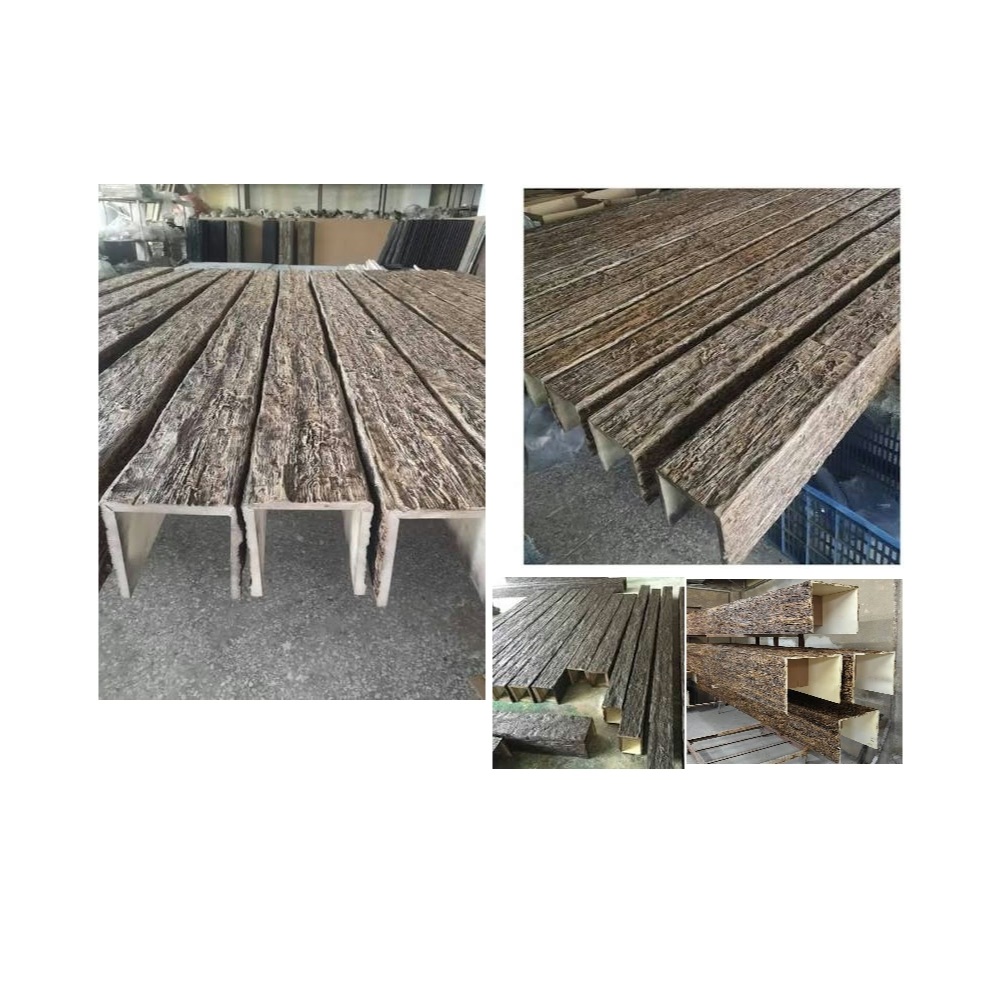
While pre-finished beams simplify installation, proper storage and handling practices protect the finished surfaces throughout the project. These practices are straightforward but important for ensuring that pristine finishes arrive intact at installation.
Storage in original packaging until installation protects finishes from dust, light, and accidental damage. Premium manufacturers design packaging specifically for pre-finished products, with protective materials that prevent finish damage during normal handling and storage. Removing beams from packaging for "inspection" or storage in uncontrolled environments creates unnecessary risk of damage.
Handling practices that avoid dragging beams across surfaces prevent scratches and finish damage. Two-person handling for longer beams distributes weight and prevents the twisting that can chip corners or damage edges. Temporary protective films available from some manufacturers provide additional protection for installations in busy environments or where multiple trades work in the same space.
Site conditions should be appropriate for pre-finished installation. While pre-finished beams tolerate more variable conditions than freshly finished timber, extreme temperatures, direct sunlight, or chemical exposures during installation can affect long-term performance. Planning installation sequencing to protect installed beams from subsequent trades reduces risk of finish damage.
Inspection upon delivery catches any shipping damage before installation begins. While premium packaging prevents most damage, container shipping and multiple handling events create opportunities for problems. Identifying damage before installation prevents the frustration of installing damaged materials and the expense of re-work.
Achieving Seamless Results
The goal of pre-finished installation is results that appear seamless—beams that read as single, continuous pieces without visible joints, fasteners, or transition points. Achieving this level of finish requires attention to details that separate professional installations from amateur work.
Joint treatment determines whether beams appear continuous or obviously assembled. Outside corners typically employ 45-degree miter cuts that align grain patterns and create clean transitions. Inside corners and linear splices may use scarf joints or butted connections with color-matched wood filler. The goal is transitions that mimic the appearance of solid timber joinery.
Proper fastening ensures beams remain secure while hiding attachment hardware. Adhesive-based installation eliminates visible fasteners for many applications. Where mechanical fastening is required, predrilling and countersinking create holes for screws that can be filled with color-matched putty. The result is beam surfaces that appear uninterrupted by fasteners.
Caulking and sealing complete the professional appearance. Gaps between beams and adjacent surfaces—ceilings, walls, other beams—are filled with paintable or color-matched caulk that creates clean visual lines. This attention to detail distinguishes installations that look intentional from those that appear assembled from components.
Post-installation protection during subsequent work preserves the finished appearance. Pre-finished beams in spaces undergoing additional construction should be protected from dust, debris, and physical impact. Lightweight protective films or temporary coverings prevent damage from scaffolding, dropped tools, or material handling while maintaining accessibility for touch-up if needed.
The factory pre-finished faux timber beam represents one of the most significant refinements in the polyurethane beam product category. By relocating finishing work to controlled factory environments, these products eliminate the variability, delay, and expense of on-site finishing while delivering results that exceed what job site conditions can produce. For projects where time, quality, and budget matter, pre-finished beams deserve serious consideration.
Technical References
ASTM standards cited in every specification
Test Data
Lab results from internal testing program
Updated 2026
Reviewed against current product specs