The ceiling remains one of interior design's most underutilized surfaces. While floors receive attention through flooring choices, wall treatments, and furniture arrangement, ceilings often remain blank planes that contribute little to room character. This oversight represents a significant opportunity—strategic ceiling treatment using premium faux beam products can transform rooms that would otherwise feel generic into spaces with distinctive architectural personality.
The visual impact of ceiling beams operates through multiple mechanisms simultaneously. They introduce scale and proportion that makes rooms feel more considered. They add texture and visual warmth that soften contemporary construction. They create focal points that organize furniture arrangement and guide movement through space. Understanding these mechanisms helps designers and homeowners deploy beam products effectively for maximum visual enhancement.
The Psychology of Ceiling Treatment
Rooms communicate through their proportions, and ceiling beams fundamentally alter how spaces are perceived. The visual weight they introduce changes the relationship between horizontal and vertical dimensions, creating impressions that affect emotional response and functional use.
High ceilings create grandeur but can feel cold and impersonal without treatment. The abundance of empty vertical space creates visual disconnection between occupants and the enclosing surfaces. Beams in these spaces create human-scaled interest that bridges the gap between floor and ceiling, making vast spaces feel more intimate and approachable. The beams provide the visual structure that prevents high-ceilinged rooms from feeling like institutional spaces.
Low ceilings create challenge but also opportunity. Strategically placed beams can create the illusion of greater height through careful proportioning and positioning. Beams running perpendicular to the shorter ceiling dimension draw the eye across the space in a way that suggests greater width, while consistent proportioning prevents beams from making already-low ceilings feel oppressive.
The warmth that wood textures introduce affects room character in ways that extend beyond visual appearance. Psychological studies consistently demonstrate that natural materials, including wood and wood-like appearances, create impressions of comfort, welcome, and established quality. Rooms featuring wood-textured beams feel more inhabitable than equivalent spaces with plain ceilings—a perception that affects how spaces function for daily living.
Strategic Beam Placement
Effective visual enhancement requires strategic placement that responds to room architecture and function. Random beam placement creates visual confusion; intentional placement creates designed effect that justifies the investment.
Feature ceiling areas concentrate beam placement in zones that naturally draw attention. Above dining tables, in conversation areas, or at room centers, concentrated beam treatment creates focal points that organize the space around them. This approach works particularly well in open-plan areas where beams define functional zones without requiring walls or other physical division.
Perimeter treatment wraps beam placement around room edges, creating visual framing that defines the ceiling plane. This approach suits rooms with existing architectural interest—crown moldings, wainscoting, or other trim elements—that beams can complement. Perimeter treatment adds warmth and texture without dominating the central ceiling, maintaining visual openness while introducing the character that plain ceilings lack.
Partial treatment creates understated effects that sophisticated observers will appreciate but that don't overwhelm casual visitors. Beams spanning only part of a ceiling—perhaps from wall to a central point, or crossing only a portion of the available width—create architectural interest without full commitment to complete beam installation. This approach suits spaces where subtle enhancement rather than dramatic transformation is desired.
Accent beams introduce character through single prominent elements rather than comprehensive treatment. A single substantial beam crossing a room's center creates instant architectural interest with minimal material investment. This approach works particularly well in smaller spaces where comprehensive beam installation might create visual heaviness, or in contemporary interiors where restraint aligns with overall design philosophy.
Coordinating with Existing Elements
Room visual enhancement succeeds when beam products coordinate with existing design elements rather than introducing conflicting characteristics. Premium faux beam products offer the variety necessary to achieve this coordination across diverse existing conditions.
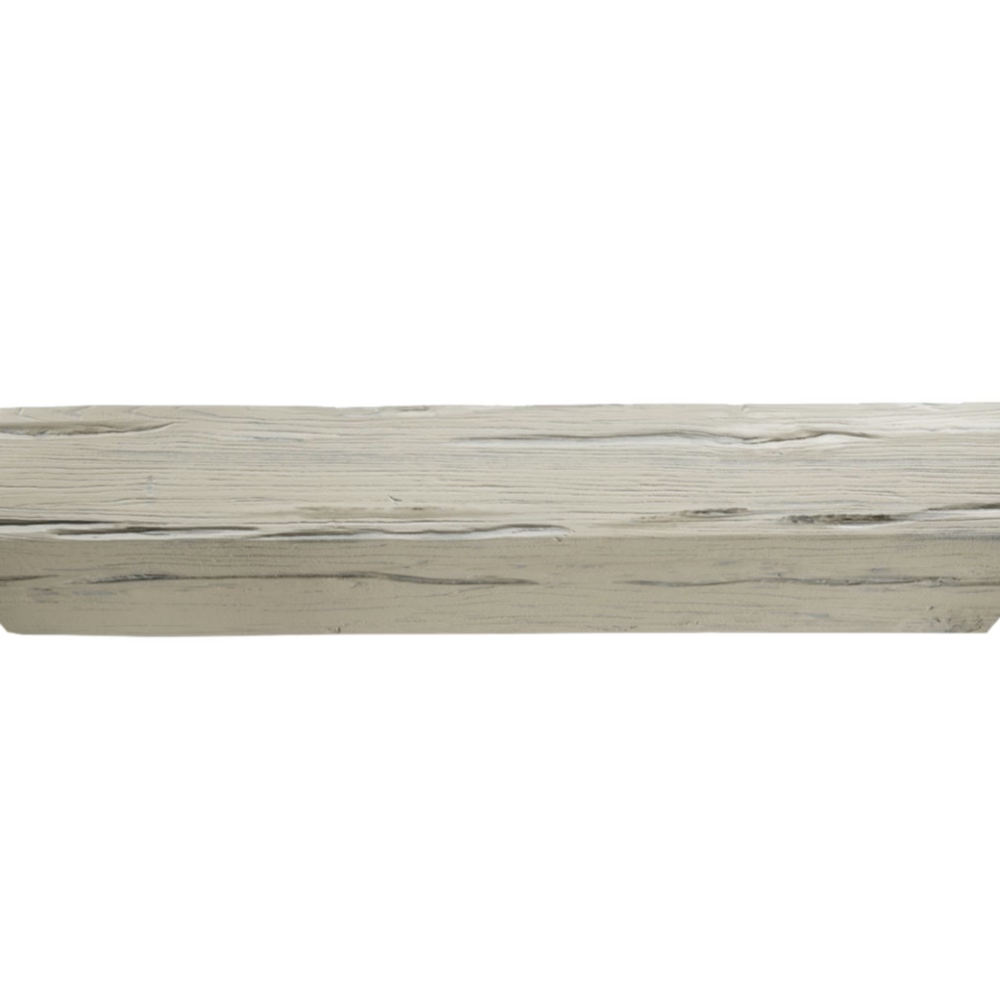
Wood tone matching ensures that beams enhance rather than compete with existing wooden elements. Floors, furniture, cabinetry, and existing millwork all contribute to a room's wood context. Selecting beam finishes that complement these existing elements creates visual harmony, while dramatically contrasting tones may create disjointed effects that undermine enhancement goals.
Proportion relationships between beams and surrounding elements affect perceived authenticity. Substantial beams may overwhelm delicate existing trim, while slender beams may disappear against substantial millwork. Matching beam scale to existing element scale ensures that beams read as appropriate additions rather than arbitrary insertions.
Style coordination requires attention to the aesthetic vocabulary established by existing elements. Contemporary rooms benefit from refined, clean-profile beams that maintain modern character. Traditional interiors may accommodate more ornate profiles that reference historical building practices. Matching beam style to existing aesthetic ensures integration rather than conflict.
Color temperature affects how beams relate to lighting conditions throughout the day and evening. Warm-toned beams enhance spaces with warm artificial lighting or abundant golden natural light. Cooler tones may better suit rooms with north-facing windows or predominantly cool interior lighting. Considering lighting conditions during specification ensures that beams maintain intended appearance throughout daily use.
Maximizing Visual Impact
Premium faux beam products deliver maximum visual enhancement when installation details receive appropriate attention. The difference between good and excellent results often lies in details that separate professional installations from amateur work.
Joint quality determines whether beams appear as continuous, authentic construction or obviously assembled from pieces. Professional mitered corners, properly executed scarf joints, and seamless transitions between beam segments create the visual continuity that genuine timber construction exhibits. These details require skill and attention but deliver results that justify the investment.
Attachment concealment ensures that no visible hardware interrupts beam appearance. Construction adhesive provides secure attachment without fastener holes. Where mechanical fastening is necessary, predrilling and color-matched putty create hidden connections. The goal is installations where beams appear to float naturally against ceiling surfaces.
Lighting interaction with beam textures creates the dimensional interest that distinguishes authentic appearance. Positioning beams to catch natural light creates shadow play that animates the ceiling throughout the day. Supplementary lighting can enhance this effect during evening hours, with beams creating interest that plain ceilings cannot match.
Room visual enhancement through ceiling beam treatment represents one of interior design's most accessible transformations. Premium faux beam products make this enhancement practical for any budget, any room, and any timeline. The combination of aesthetic impact, installation simplicity, and lasting performance creates value that extends throughout the life of the installation.
Technical References
ASTM standards cited in every specification
Test Data
Lab results from internal testing program
Updated 2026
Reviewed against current product specs


