Interior design has evolved from gradual evolution to periodic reinvention. Contemporary homeowners embrace style changes with increasing frequency, updating their environments to reflect changing tastes, respond to life transitions, or simply rediscover design possibilities. This transformation-oriented approach demands materials that support dramatic change without requiring the structural work that traditional renovation would demand. Premium faux beams provide the architectural foundation that style transformation requires, enabling spaces to shift from one aesthetic vocabulary to another without fundamental reconstruction.
The transformation potential that faux beams provide extends beyond simple aesthetic update. These elements create the structural skeleton around which complete stylistic reinvention can occur. With beams in place, other design decisions—furniture selection, finish choices, accessory deployment—find the framework they need to create coherent, intentional spaces.
Transformation Planning and Beam Specification
Successful stylistic transformation requires planning that addresses both the existing conditions and the target aesthetic. Premium faux beams contribute to this planning through specification options that support diverse transformation goals.
Existing ceiling conditions determine beam application possibilities. Flat ceilings offer clean surfaces for beam mounting but may require consideration of height relationships when beams are added. Vaulted or sloped ceilings create different contexts where beam positioning responds to roof geometry. Understanding existing conditions during planning ensures that beam specification aligns with practical possibilities.
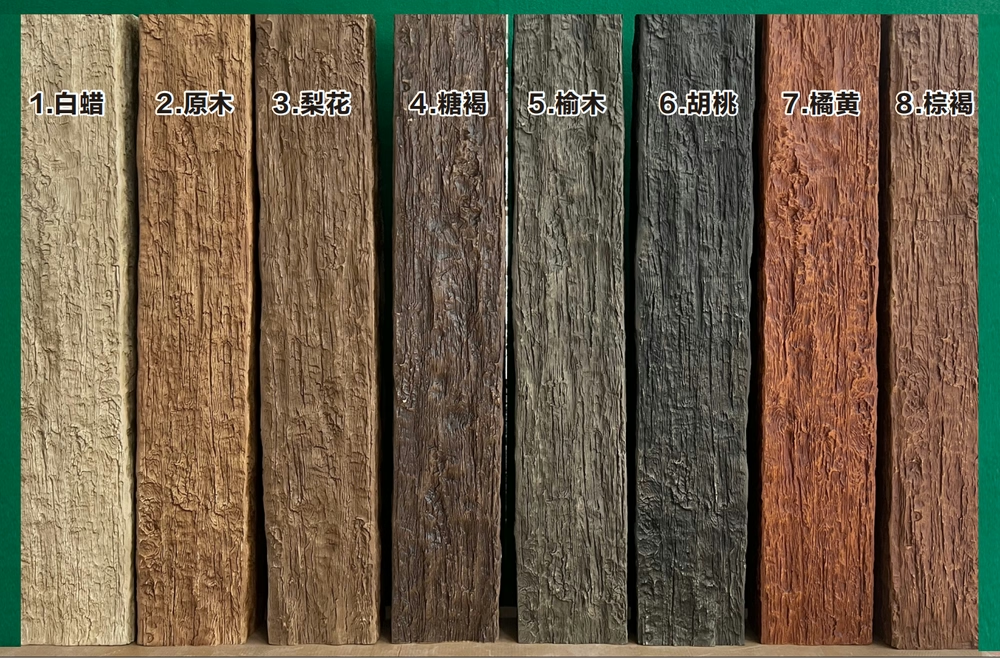
Target style determines appropriate beam characteristics. Rustic transformation goals favor beams with pronounced texture, warm wood tones, and substantial profiles that suggest farmhouse or cabin aesthetics. Contemporary transformation might prefer refined profiles, neutral finishes, and clean proportions that support modern environments. The specification options that premium manufacturers offer enable matching to any target style.
Scope determination addresses how comprehensively beams contribute to transformation. Complete ceiling treatment featuring multiple beams creates dramatic change but requires greater investment. Partial treatment with single accent beams provides transformation effect with limited material requirements. The scope decision balances transformation ambition against available budget.
Coordinate planning ensures that beams integrate with other transformation elements. Finish selections, furniture choices, and accessory purchases should all relate to beam specifications in ways that create coherent overall design. Planning these relationships before purchase prevents the disjointed results that arise from uncoordinated decision-making.
Style-Specific Transformation Approaches
Different stylistic directions create different requirements for beam treatment. Understanding these style-specific approaches helps ensure that beam specification supports intended transformation goals.
Farmhouse and rustic transformations embrace beams as fundamental design elements. In these contexts, beams should appear substantial, textured, and prominently displayed. Lighter finishes with visible grain patterns suggest the casual character that farmhouse aesthetics require. Beams in these transformations often span full ceiling widths, creating the heavy horizontal lines that define rustic architecture.
Industrial transformation finds beams contributing warmth to spaces defined by exposed brick, metal, and concrete. Beams in industrial contexts might feature darker finishes that complement industrial color palettes, or warm wood tones that provide necessary contrast against cooler industrial materials. The beam contribution in industrial transformation is often warmth rather than structural suggestion.
Scandinavian and minimalist transformation requires restraint in beam application. Clean, refined profiles in light finishes create the understated elegance that these styles demand. Beams in these contexts should enhance without dominating, contributing warmth and texture while maintaining the essential simplicity that characterizes Scandinavian design.
Transitional and eclectic transformation allows more flexible beam interpretation. These styles blend elements from multiple traditions, and beams can serve as bridges between different vocabularies. A traditional profile in a contemporary finish might support eclectic transformation goals, while mixing beam styles within a single space can reinforce the layered aesthetic that eclectic design embraces.
Installation Sequence for Transformation Projects
Transformation projects benefit from installation sequences that protect new work while enabling efficient completion. Premium faux beams support flexible installation approaches that align with diverse project requirements.
Early installation positions beams before other finish work begins. This approach allows beam installation to proceed without concern for damaging adjacent finishes. The subsequent finish work—painting, flooring, trim—can then proceed around completed beams, potentially using beams as reference points for other design decisions.
Late installation places beams after other finishes are complete. This approach requires protection of existing work but allows precise fitting against finished surfaces. The beam installer can measure actual conditions rather than working from plans, ensuring perfect fit regardless of construction variations.
Staged installation divides beam work across multiple phases. A transformation might begin with beams in primary living spaces while secondary areas receive treatment later as budget allows. Premium faux beam availability supports staged approaches, ensuring that later phases can match earlier installations precisely.
Regardless of sequence, beam installation should proceed efficiently once begun. Premium faux beams install quickly, minimizing the period when spaces feel disrupted by renovation activity. The fast installation that polyurethane enables supports transformation schedules that lesser materials would extend significantly.
Maintaining Transformation Results
Successful transformation produces spaces that maintain their transformed character over time. Premium faux beams contribute to lasting transformation through durability and stability that preserve initial results.
UV resistance ensures that beams maintain their finish despite exposure to natural light. Premium polyurethane resists the fading and degradation that affects lesser materials, maintaining color consistency and surface integrity through years of service. This resistance proves particularly valuable in rooms with significant natural light exposure.
Dimensional stability prevents the movement that could affect transformation aesthetics. Unlike timber, which expands and contracts with humidity changes, polyurethane maintains consistent dimensions regardless of environmental conditions. This stability ensures that joints remain tight, gaps don't develop, and beam relationships stay as designed.
Impact resistance protects beams from the minor collisions that occur in living spaces. Furniture moving, children's activities, and pet behavior all create potential for impact damage. Premium polyurethane resists impact better than timber, maintaining appearance despite the minor trauma that domestic life generates.
The complete stylistic transformation that premium faux beams enable represents accessible design ambition that contemporary homeowners increasingly pursue. These versatile elements provide the architectural foundation that transformation requires, supporting dramatic aesthetic changes while delivering practical installation advantages that make transformation projects achievable.
Technical References
ASTM standards cited in every specification
Test Data
Lab results from internal testing program
Updated 2026
Reviewed against current product specs


