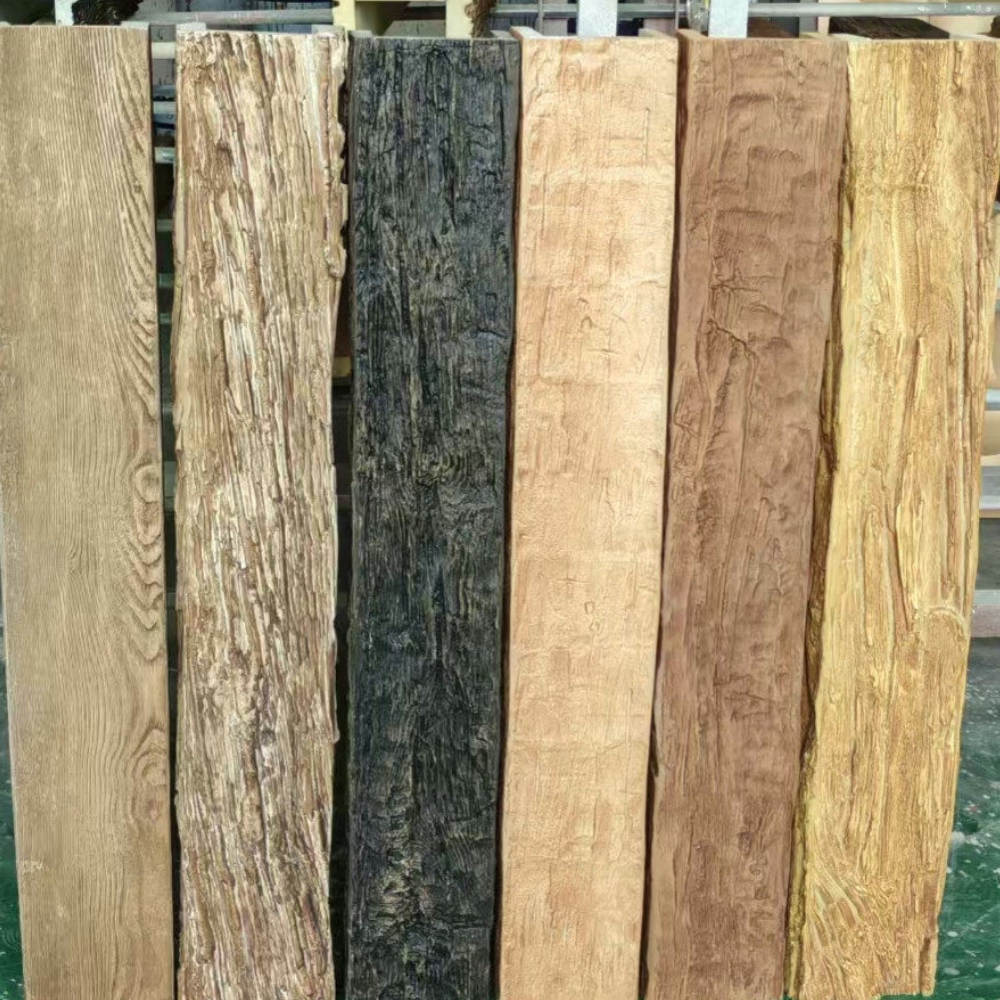
The tradition of using timber as a decorative element in architecture stretches back thousands of years, from the exposed beam ceilings of medieval great halls to the ornate carved brackets of Asian temple construction. Timber conveyed wealth, craftsmanship, and a connection to the natural world that stone and brick could not replicate. In contemporary architecture, this tradition continues, but the practical constraints of modern construction require reimagining how ornamental timber elements can be incorporated into buildings that were never designed to support their weight. Premium faux timber beams answer this challenge, providing the aesthetic richness of authentic wood without the structural demands that would limit their application.
Ornamental architecture differs from purely functional design in its emphasis on visual delight and cultural expression. Where structural elements must merely perform their load-bearing duties, decorative elements must engage the eye, create rhythm, establish hierarchy, and evoke emotional responses. Timber beams excel in this role because they satisfy both aesthetic and practical considerations simultaneously. Their horizontal lines create visual rest in spaces dominated by vertical walls and openings. Their three-dimensional presence adds depth to surfaces that would otherwise read as flat planes. Their natural material associations provide warmth and organic texture that soften the harshness of manufactured building materials. Faux beams capture all of these benefits while expanding the range of contexts in which they can be employed.

The versatility of faux timber beams as ornament elements reveals itself in the diversity of applications architects have developed over recent decades. In residential projects, beams serve as crown molding that crowns the junction between wall and ceiling, drawing the eye along the perimeter of rooms and emphasizing ceiling height. In commercial hospitality venues, beams create the illusion of timber roof structures over dining rooms, bars, and gathering spaces, establishing the warmth and authenticity that guests expect from quality establishments. In retail environments, beams add architectural character to otherwise generic storefronts, helping brands differentiate their physical presence in competitive marketplaces. Each application leverages the beams' visual impact while respecting the practical limitations of the space and the budget constraints that shape real-world projects.
The manufacturing process behind premium faux timber beams enables design possibilities that would be impossible or prohibitively expensive with genuine timber. Natural wood's dimensions are constrained by the trees from which it is cut, limiting beam lengths and requiring careful matching when multiple pieces must be joined. Polyurethane casting allows arbitrary lengths, cross-sectional profiles, and surface textures to be produced consistently across unlimited quantities. Designers can specify beams with compound curves, decorative chamfers, or intricate relief patterns that woodworkers could only approximate with great difficulty. This freedom of form expands the designer's vocabulary, allowing ornamental concepts that exist purely in imagination to be realized in physical form without engineering compromises.
Installation techniques for decorative faux beams have evolved to support their use as ornamental elements in contexts ranging from new construction to historic preservation. In new buildings, beams can be specified during the design phase and installed as part of the standard construction sequence, with blocking and backing coordinated with the structural trades. In renovation projects, beams can be mounted directly to existing finishes using adhesive systems and mechanical fasteners that require no penetration of the structural assembly. For historic buildings where preservation requirements limit modifications, lightweight faux beams provide a reversible treatment that can be removed without damage if future restoration becomes necessary. This installation flexibility makes faux beams accessible to projects across the entire spectrum of construction types and conditions.
The ornamental character of faux beams depends significantly on the quality of their surface presentation. Premium products achieve their visual impact through careful attention to texture, color, and proportion. The surface texture must include the subtle irregularities that characterize natural wood, including grain patterns, pore structure, and the slight variations in surface hardness that create visual depth when light strikes the beam from different angles. Color application must account for the way wood absorbs and reflects light, with darker tones concentrated in recesses and lighter tones on raised surfaces. Proportion must feel correct relative to the human body and the surrounding architectural elements, avoiding both the heaviness of oversized beams and the insignificance of undersized ones. Achieving these qualities requires both manufacturing expertise and design sensitivity.
Designers often incorporate faux beams into ornamental compositions that include related millwork elements such as corbels, braces, mantels, and ceiling medallions. This combination of elements creates visual complexity that reads as sophisticated craftsmanship, even in buildings constructed primarily from contemporary materials. The key to successful composition lies in maintaining consistency of style and finish across all elements. A beam finished in rustic reclaimed wood appearance should be paired with corbels and brackets that share the same aesthetic vocabulary, avoiding the jarring contrast that occurs when dramatically different finishes meet. Premium manufacturers typically offer coordinated product lines that ensure harmonious combinations, simplifying the designer's selection process while guaranteeing pleasing results.
The psychological impact of ornamental timber elements extends beyond simple visual appreciation. Research in environmental psychology suggests that exposure to natural materials, including wood, reduces stress indicators and promotes feelings of comfort and well-being. In healthcare facilities, offices, and educational environments where occupants experience prolonged exposure to built spaces, these effects accumulate into measurable improvements in satisfaction and performance. Faux timber beams provide a means of introducing these beneficial material associations into spaces where authentic timber would be impractical or impossible, extending the wellness benefits of wood aesthetics to a broader range of building types and occupancy scenarios.
The economic argument for faux timber beams as ornamental elements becomes clearer when total project costs are evaluated. Natural timber ornament elements require not only material costs but also specialized labor for installation, additional structural support where needed, and ongoing maintenance to address the dimensional instability that accompanies authentic wood. Faux beams eliminate most of these additional costs while providing comparable or superior aesthetic results in many applications. For projects with ambitious design goals but constrained budgets, faux beams offer a path to achieving ornamental richness without the financial strain that often forces designers to compromise their visions.
Technical References
ASTM standards cited in every specification
Test Data
Lab results from internal testing program
Updated 2026
Reviewed against current product specs