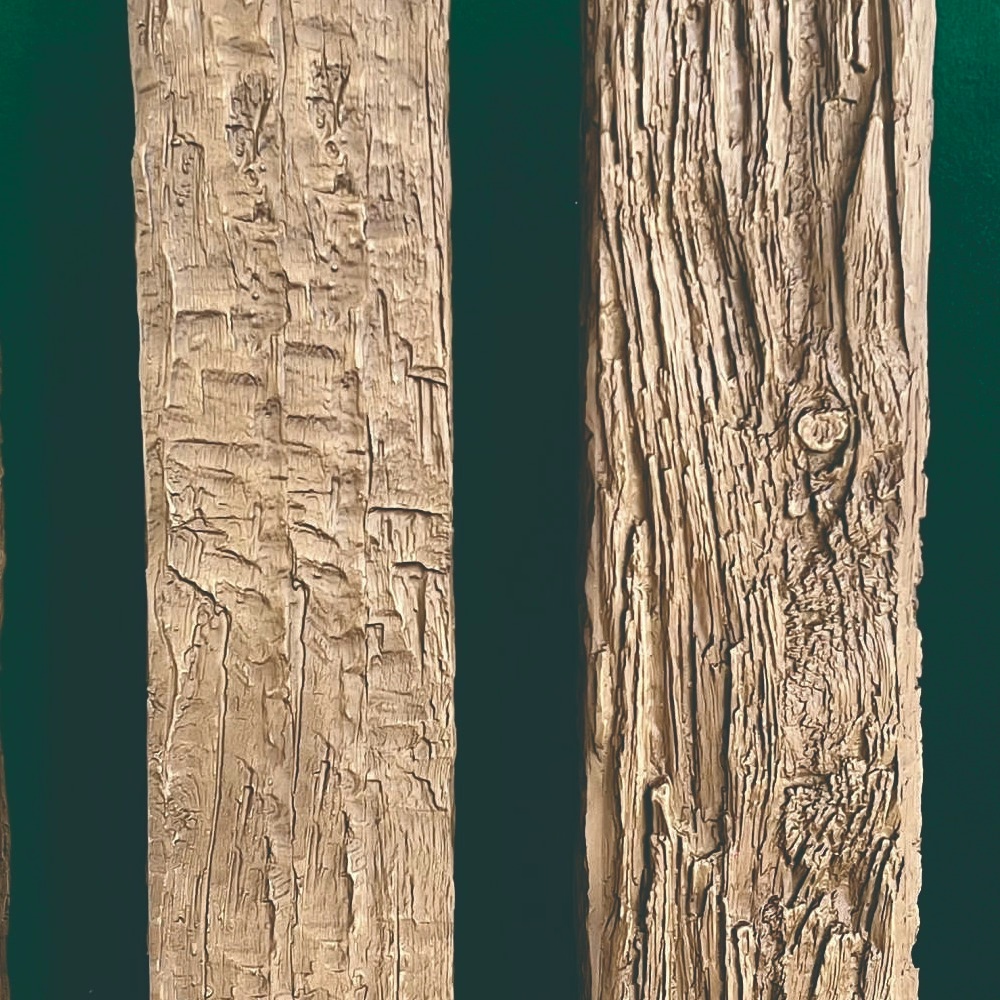
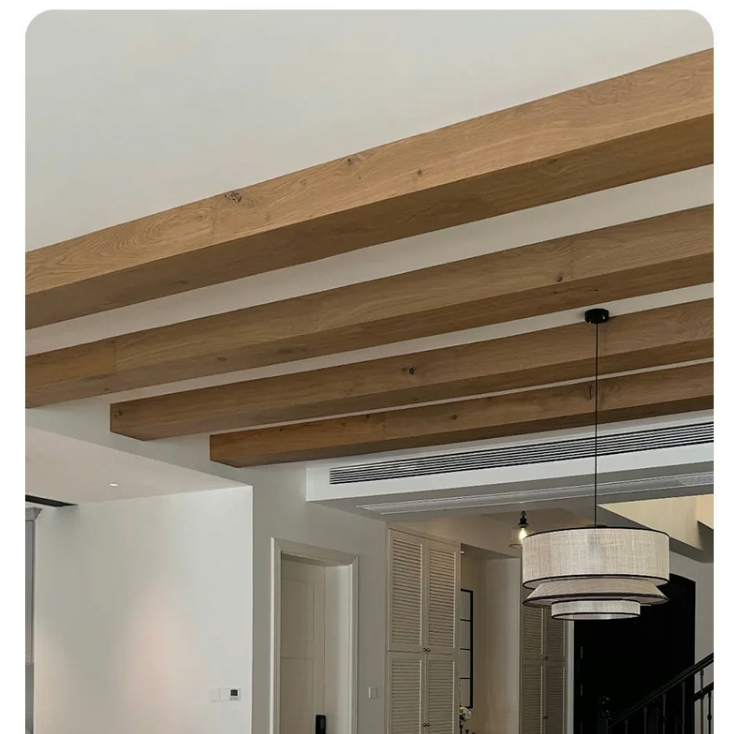
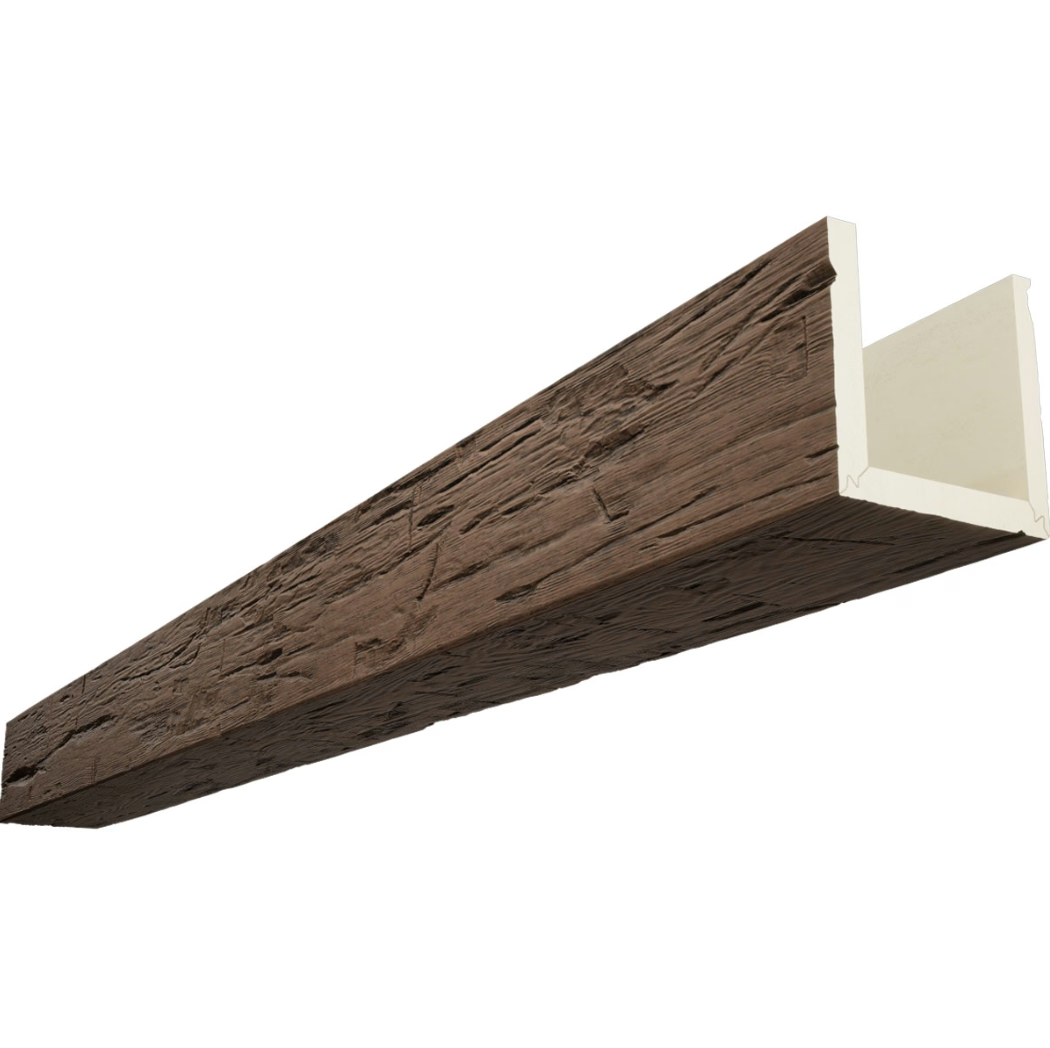
Professional remodeling contractors operate in a business environment defined by compressed timelines, tight margins, and clients who expect flawless execution. Every material decision carries implications for project profitability, and every installation challenge represents potential risk to the schedule and the contractor's reputation. In this context, material selection is not merely an aesthetic exercise but a strategic business decision that determines whether projects complete profitably or become sources of frustration and lost revenue. Premium faux timber beams have established themselves as contractor-friendly products that reduce risk, simplify logistics, and expand the range of projects where beam aesthetics add value.
The physical properties of polyurethane beams directly address the practical challenges that contractors face on renovation projects. Natural timber beams require structural evaluation to confirm that existing ceiling framing can support their weight, a process that adds engineering costs and may reveal conditions that complicate the project. Faux beams eliminate this evaluation requirement in most applications, as the lightweight construction can be supported by standard ceiling structures without modification. The reduction in weight also simplifies handling and positioning during installation, allowing single workers to maneuver beams that would otherwise require two or three-person teams. These labor savings accumulate throughout a project and contribute directly to improved profitability.

The installation process for faux beams follows predictable patterns that experienced contractors quickly master. After confirming that blocking or backing has been installed to support the beam weight at designated attachment points, the beams are positioned and temporarily braced while alignment is verified. Adhesive applied to the beam's back surface creates a primary bond with the mounting substrate, while mechanical fasteners provide secondary support and security. Joints between beam sections are fitted with precision and secured using the same techniques, resulting in connections that appear continuous and monolithic. The process requires no specialized tools or equipment beyond those already present in a contractor's standard inventory, eliminating the learning curve that accompanies products requiring new investment in equipment or training.
Existing construction conditions that would complicate authentic timber beam installation create no obstacles for faux beam products. Out-of-level ceiling surfaces can be accommodated through shimming or through the use of beam profiles that disguise dimensional variations. Irregular ceiling framing spacing is easily addressed by trimming standard-length beams to fit available conditions. Previously finished surfaces including plaster, drywall, and popcorm ceiling textures can receive beam installations without requiring removal or extensive preparation. These adaptations expand the range of projects where beams can be successfully installed, allowing contractors to pursue opportunities that would be impractical or unprofitable with authentic timber.
Client communication around faux beam products requires honest acknowledgment of the material's nature while emphasizing its performance characteristics and visual qualities. Most clients unfamiliar with polyurethane alternatives assume that any beam product must be either real wood or an inferior-looking imitation. The reality of premium faux beams challenges both assumptions. Contractors who present the material honestly—acknowledging that the beams are polyurethane rather than wood while demonstrating their authentic appearance and superior performance characteristics—find that clients readily accept the specification. The key lies in showing rather than telling: physical samples, photographs of completed installations, and opportunities to touch and examine the product build confidence that convinces even skeptical clients.
Specification consistency across multiple projects allows contractors to develop efficient workflows and negotiate favorable pricing. By standardizing on products from a single premium manufacturer, contractors develop familiarity with the range of available profiles, finishes, and customization options, enabling rapid response to client requests without extensive research or evaluation. Volume purchasing arrangements with manufacturers or distributors provide pricing advantages that improve project margins. The manufacturer's technical support resources become familiar and accessible, allowing quick resolution of questions or concerns that arise during estimation, installation, or post-installation service.
Quality control during installation protects the contractor's reputation and reduces callbacks. Premium faux beams are manufactured to consistent tolerances, but slight variations between individual pieces can create visible discontinuities if installers do not pay attention to grain matching and finish consistency. Professional contractors develop installation sequences that group pieces with compatible characteristics and that position any less-than-perfect sections in locations where they will be least visible. Careful inspection before installation commitment identifies any pieces that require replacement, avoiding the expense and embarrassment of corrections after adhesive has cured.
Post-installation service requirements for faux beams are minimal compared to authentic timber. Natural wood may develop cracks, gaps, or finish deterioration that requires attention as seasons change and humidity levels fluctuate. Polyurethane beams maintain their appearance indefinitely without intervention, providing clients with worry-free performance that reinforces the contractor's professional image. When questions arise, the manufacturer's warranty and support resources provide solutions without requiring the contractor to develop expertise in wood movement remediation or refinishing techniques.
Technical References
ASTM standards cited in every specification
Test Data
Lab results from internal testing program
Updated 2026
Reviewed against current product specs