The restaurant industry operates in an intensely competitive marketplace where every element of the guest experience contributes to success or failure. Interior design plays a crucial role in this experience, establishing the venue's identity, shaping customer perceptions, and creating the emotional context within which food and service are evaluated. Studies consistently demonstrate that dining environments influence not only customer satisfaction but also spending levels, return visit likelihood, and willingness to recommend the establishment to others. These relationships between environment and business performance make interior design a strategic investment rather than a purely aesthetic decision, raising the stakes for material selection and specification throughout the restaurant.
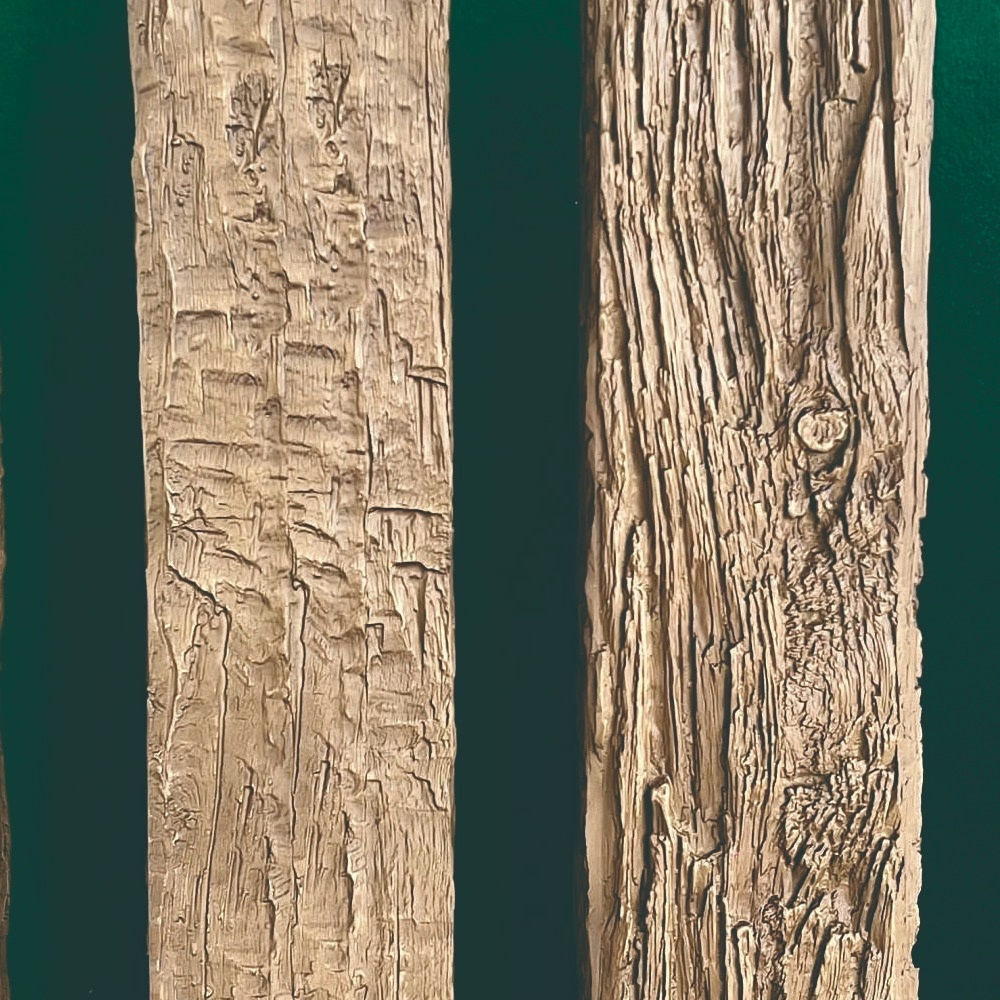
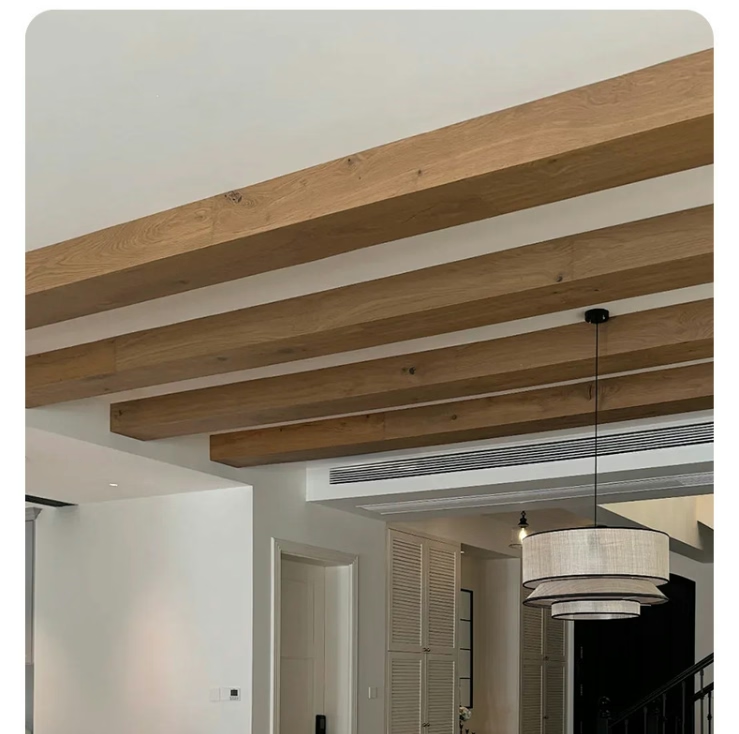
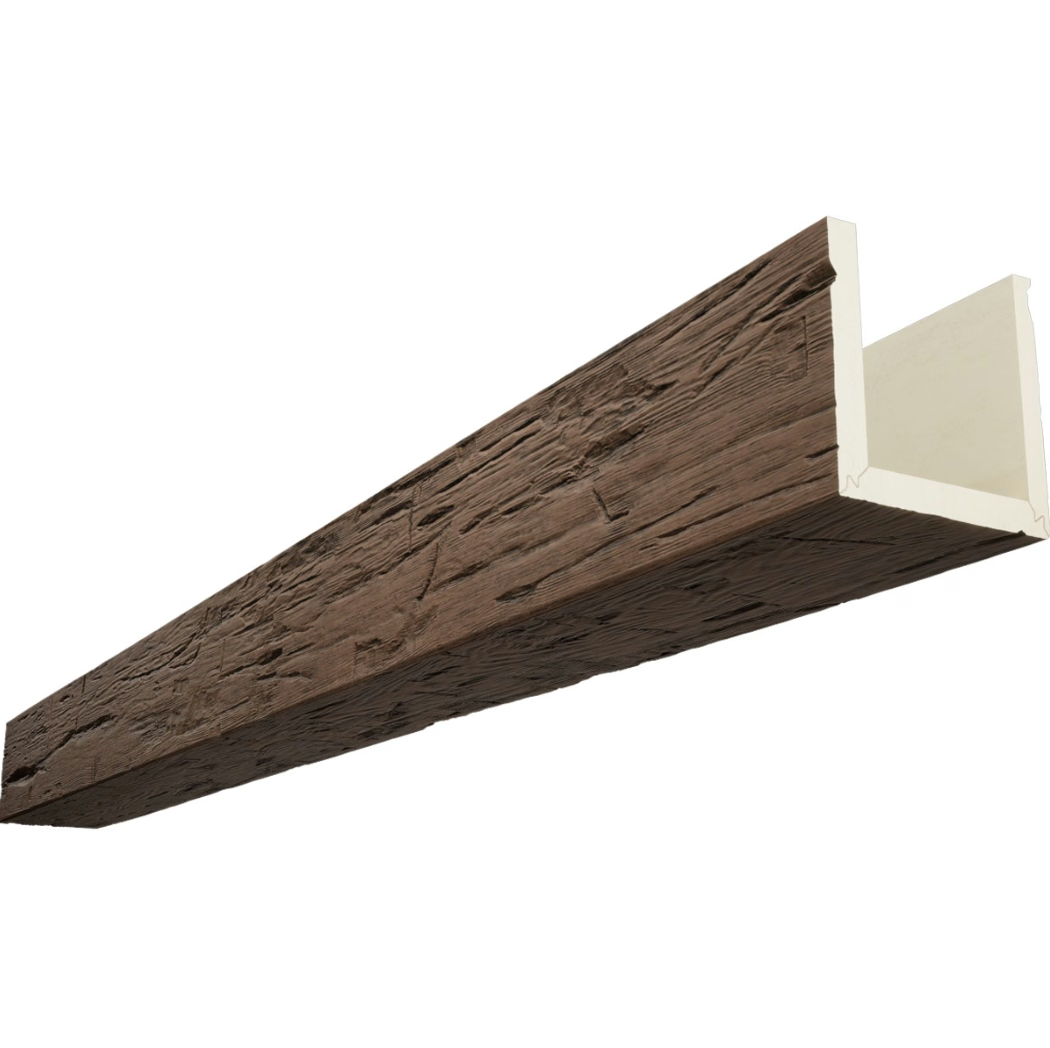
Timber has long been associated with hospitable, welcoming dining environments. The warmth of wood grain, the tactile quality of natural surfaces, and the visual texture of exposed beams create atmospheres that encourage lingering, conversation, and the relaxed enjoyment that distinguishes dining from mere eating. Restaurant designers leverage these associations deliberately, specifying timber elements to establish the particular character that differentiates each concept. Farm-to-table establishments invoke rustic authenticity through weathered reclaimed wood. Contemporary fine dining venues suggest refined craftsmanship through polished, contemporary timber applications. Sports bars and casual eateries establish energetic informality through timber that reads as approachable and unpretentious. Faux timber ceiling beams enable these design intentions across the full range of restaurant types and price points.

Commercial food service environments subject interior materials to stresses rarely encountered in residential applications. Temperature fluctuations between kitchen and dining areas, elevated humidity from cooking and dishwashing operations, grease-laden air circulation, and the constant vibration from ventilation systems all challenge material performance. Natural timber absorbs grease and odors, developing discoloration and persistent smells that prove difficult to remediate. The porous surface traps contaminants that create sanitation concerns in food service environments. Polyurethane faux beams present non-porous surfaces that resist grease absorption and can be cleaned with standard commercial cleaning products without damage. This practical durability translates into lower maintenance costs and extended service life compared to authentic timber.
The acoustic environment in restaurants significantly impacts both guest comfort and staff wellbeing. Hard surfaces common in commercial construction—concrete floors, tile walls, glass windows—create reverberant conditions that amplify ambient noise, forcing servers and guests to speak louder and straining conversations across tables. Timber beams contribute to acoustic management by introducing surfaces that absorb and diffuse sound, breaking up the parallel planes that create flutter echoes. The three-dimensional character of beams scattered across a ceiling provides excellent diffusion, scattering sound waves in multiple directions and reducing the intensity of reflected sound that reaches diners' ears. In restaurants where acoustics are a particular concern—quiet fine dining establishments or venues featuring live acoustic music—beam installations can be enhanced with acoustic insulation installed in the cavity above the ceiling plane.
Fire safety regulations in commercial occupancies impose requirements that affect material selection throughout restaurants. Natural timber, particularly in the form of exposed beams, may present fire safety challenges depending on the applicable building codes and occupancy classifications. Fire-retardant-treated wood products address some concerns but add cost and may affect appearance. Premium faux timber beams manufactured from fire-rated polyurethane compounds satisfy commercial fire safety requirements while maintaining authentic wood appearances, providing designers and operators with compliant solutions that do not require aesthetic compromise. These products carry appropriate third-party certifications that satisfy building officials and insurance underwriters.
Installation logistics in occupied restaurants require careful coordination to minimize disruption to ongoing operations. New construction and major renovations present minimal scheduling challenges, but the majority of restaurant interior work involves renovation of existing spaces, often during limited hours when the venue is closed to the public. Faux beam installation generates minimal dust and noise compared to structural modifications, allowing work to proceed during brief closure periods without creating conditions that require extensive cleaning before reopening. The speed of installation—beams can be installed in a typical dining room within a single day—further supports scheduling flexibility that keeps renovation projects on track.
Brand consistency across multiple restaurant locations depends on careful specification control that premium manufacturers can support. Chains and growing restaurant groups require identical appearance across locations to reinforce brand identity and customer expectations. Faux beams manufactured to consistent tolerances and finish specifications provide the uniformity that multi-location operations require, with color matching and texture consistency that cannot be guaranteed with natural wood products. The ability to specify custom profiles and finishes that become proprietary brand elements further differentiates restaurant identities in competitive markets.
Maintenance protocols for faux beams in food service environments follow straightforward procedures that kitchen and cleaning staff can implement without specialized training. Regular dusting removes accumulated particles. Periodic cleaning with mild detergent solutions addresses any accumulations from grease-laden air. Damaged sections can be repaired or replaced without disturbing adjacent installations, as beam connections are designed for serviceability rather than permanent bonding. This maintenance simplicity contrasts favorably with authentic timber, which may require periodic refinishing to address accumulated damage and wear.
Technical References
ASTM standards cited in every specification
Test Data
Lab results from internal testing program
Updated 2026
Reviewed against current product specs