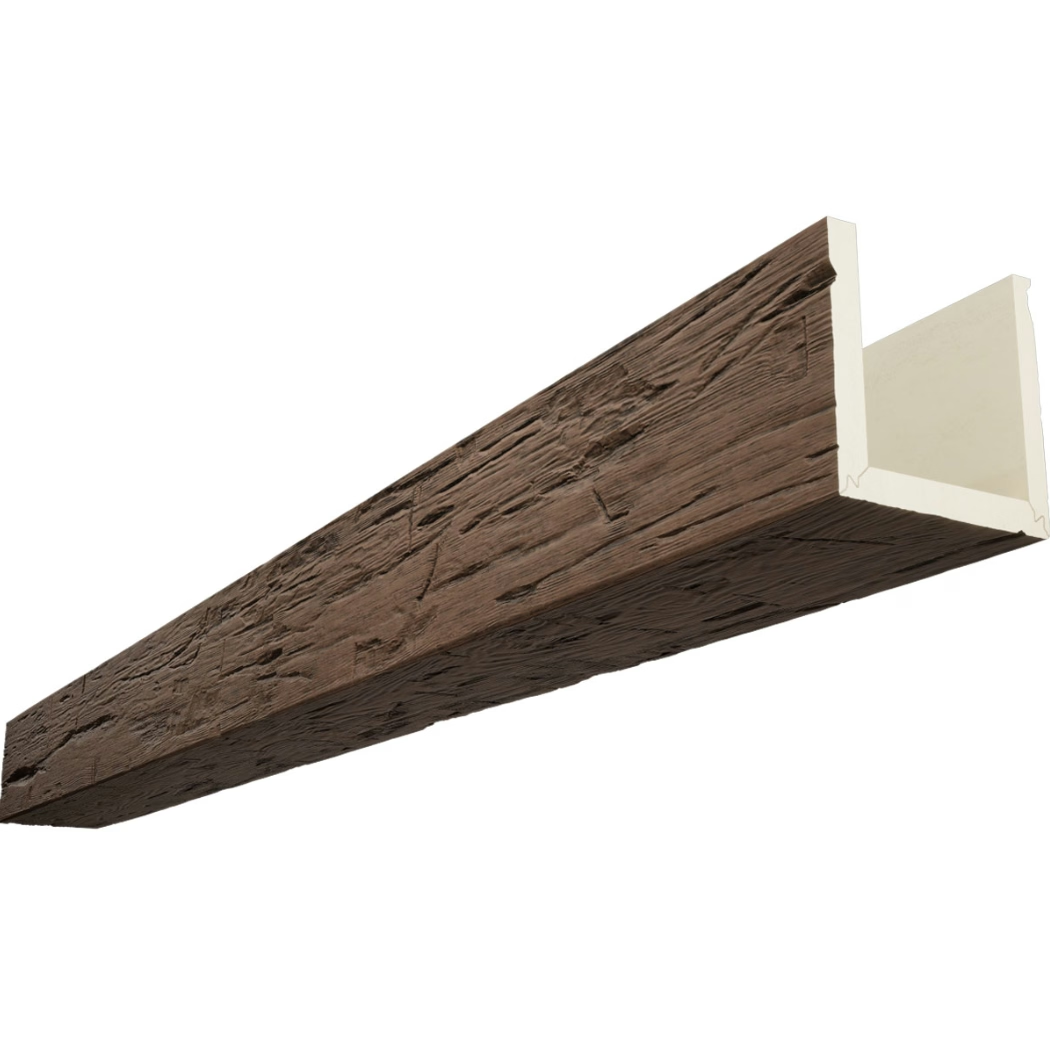
The interior fit-out industry encompasses the transformation of unfinished building shells into functional, aesthetically coherent spaces ready for occupancy. Whether the end user is a residential tenant moving into a new apartment or a business opening its doors to customers, the fit-out phase determines how spaces perform and how people experience them daily. Material selection throughout this phase involves countless decisions, each contributing to the final result. Premium faux wood beams represent a category of material that can serve multiple spaces within a single project, providing consistency and quality across diverse applications while simplifying procurement and installation logistics for general contractors and fit-out specialists.
Mixed-use developments illustrate the versatility of faux wood beams in comprehensive fit-out applications. These projects combine residential, commercial, and sometimes hospitality components within single structures, creating spaces with distinct functional requirements but shared design intentions. The residential lobby needs to feel welcoming and comfortable, establishing a positive first impression for arriving tenants and their guests. The commercial retail spaces require neutral backdrops that support tenant identities without competing for attention. The amenity areas—a fitness center, co-working lounge, or rooftop terrace—demand character and visual interest that encourage use. Faux wood beams can serve all of these spaces, with finish selections and installation configurations adjusted to match each area's specific requirements while maintaining material consistency that reinforces the project's unified design concept.

The specification process for comprehensive fit-out projects benefits from early engagement with faux beam manufacturers. During design development, beam products can be integrated into ceiling plans, elevation drawings, and finish schedules, establishing clear expectations for appearance and performance. As the project proceeds through construction documentation and into the installation phase, this early specification provides a foundation that prevents costly changes and delays. Premium manufacturers support this process through technical documentation, BIM modeling assistance, and design consultation services that help architects and interior designers optimize beam specifications for their specific project requirements.
Procurement efficiency represents a significant advantage when faux beams are specified for comprehensive fit-out projects. Rather than sourcing authentic timber beams from specialized suppliers with extended lead times and variable quality, fit-out contractors can procure faux beams from single manufacturers with reliable production capacity and consistent quality standards. Volume specifications allow pricing efficiency that benefits project budgets while ensuring that all spaces receive beams from the same production batch, eliminating variations between lots that sometimes affect natural materials. The simplified logistics of faux beam procurement—lighter weight, no special handling requirements, predictable dimensional characteristics—streamlines receiving, storage, and installation throughout the project.
Installation sequencing for faux beams in comprehensive fit-out projects follows established construction logic with some adaptations for the specific product characteristics. Beams are typically installed after major ceiling mechanical work is complete but before final ceiling finishes are applied, allowing attachment to structural elements and blocking that would be inaccessible after ceilings are closed. In renovation fit-outs where ceilings remain in place, beams can be mounted directly to existing surfaces using adhesive systems that bond effectively to most common ceiling materials. The installation proceeds room by room according to the project schedule, with beam crews working in parallel with other finish trades without the coordination complexity that heavier materials would require.
Quality assurance for faux beams in fit-out applications involves inspection procedures adapted to the manufacturing process and installation requirements. Receiving inspection verifies that shipped products match ordered specifications and arrive in undamaged condition. Pre-installation inspection confirms that beam surfaces are clean and free from defects that might affect appearance after installation. Installation inspection verifies that attachment methods are correctly applied and that beam alignment meets tolerance requirements. These inspections proceed quickly given the straightforward nature of faux beam products, providing confidence that final quality meets expectations without the extended inspection times that complex or variable materials might require.
Post-installation care for faux beams in occupied fit-out spaces requires minimal instruction for building maintenance staff. Unlike authentic timber, which may require periodic refinishing, moisture monitoring, or pest inspection, faux beams maintain their appearance through routine cleaning that addresses accumulated dust and environmental contaminants. Cleaning instructions can be incorporated into building maintenance manuals, ensuring that building staff understand how to preserve beam appearance without applying inappropriate cleaning agents or techniques. This simplicity reduces long-term maintenance costs while ensuring that the aesthetic quality established at project completion persists throughout the building's occupancy.
The lifecycle value of faux beams in comprehensive fit-out projects proves favorable when compared to authentic timber alternatives. Initial cost savings from simplified installation and eliminated structural requirements free budget for other finish enhancements that improve project quality. Ongoing maintenance savings compound over time, reducing total cost of ownership while maintaining appearance quality. The dimensional stability of polyurethane eliminates the concern about movement, cracking, or deterioration that accompanies authentic timber, providing building operators with predictability that supports reliable facility management. These lifecycle advantages position faux beams as sound investments in comprehensive interior fit-out applications.
Technical References
ASTM standards cited in every specification
Test Data
Lab results from internal testing program
Updated 2026
Reviewed against current product specs