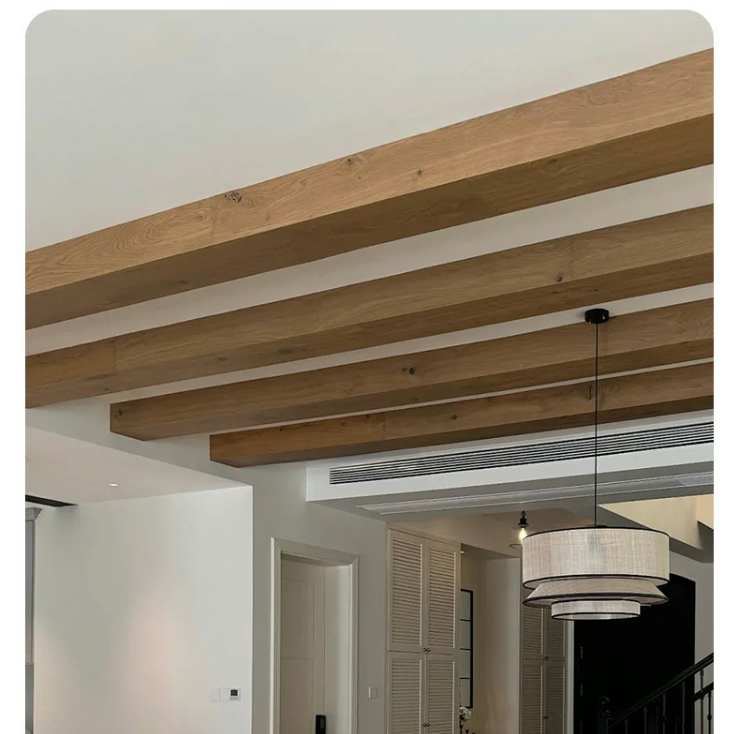
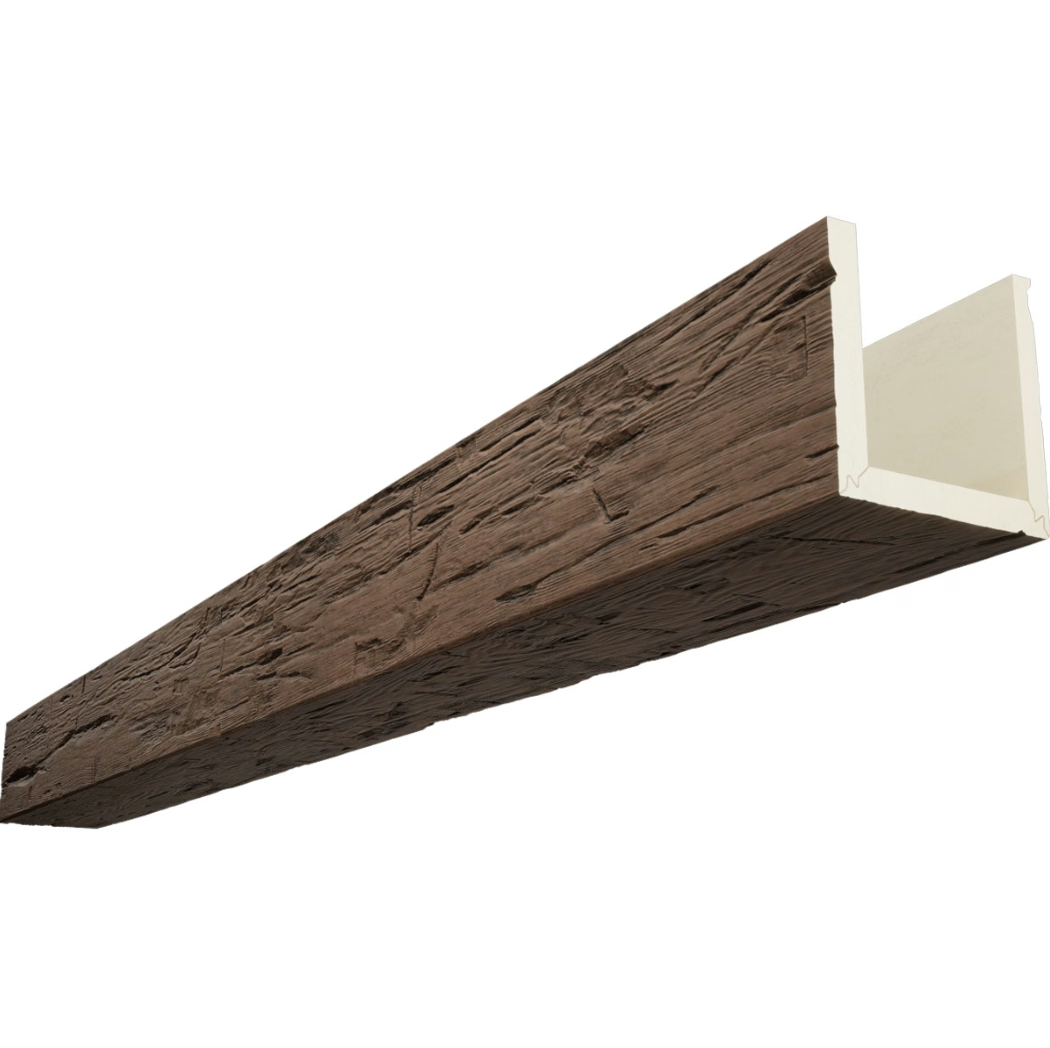
Professional interior fit-out contractors operate at the intersection of design vision and construction reality, transforming architectural concepts into built environments that satisfy client expectations while maintaining profitable operations. Every project decision involves tradeoffs between competing priorities: speed versus quality, cost versus appearance, risk versus opportunity. Material selection plays a crucial role in these calculations, determining not only the aesthetic outcome but also the practical challenges of handling, installation, and long-term performance. Premium faux wood beams have established themselves as contractor-preferred products that consistently support favorable outcomes across all of these dimensions.
The productivity advantages of faux wood beams begin with their physical characteristics and extend through the entire installation process. The lightweight nature of polyurethane compared to authentic timber translates directly into handling efficiency: workers can lift, position, and secure beams without the equipment or additional personnel that heavy timber requires. This efficiency compounds through a project, with labor hours saved on each beam accumulating into significant schedule and cost advantages. In an industry where labor costs represent the largest project expense component, these productivity gains directly improve contractor profitability while enabling competitive pricing that wins work in competitive bidding situations.

Reliability in commercial applications means consistent quality, predictable performance, and dependable supply. Premium faux beam manufacturers achieve these characteristics through quality management systems that ensure each product meets specifications before shipping. Dimensional tolerances are held tight, eliminating the fitting challenges that natural materials present. Finish consistency across production batches means that replacement pieces match original installations perfectly. Lead times are reliable, allowing accurate scheduling that keeps projects on track. These reliability factors eliminate categories of risk that contractors would otherwise need to manage, simplifying project execution and reducing the administrative burden of dealing with material-related issues.
Specification support for contractor projects extends beyond product availability to include the documentation and technical assistance that professional operations require. Premium manufacturers provide detailed installation instructions, load calculations where applicable, and compatibility information for adjacent materials and systems. When questions arise in the field, responsive technical support teams provide guidance that keeps projects moving without waiting for answers that may never come from commodity suppliers. This support infrastructure proves particularly valuable for contractors working on unfamiliar beam applications or in markets where local expertise is limited.
Competitive bidding in the fit-out industry requires accurate cost estimation that does not expose contractors to unexpected expenses during execution. Faux wood beams simplify this estimation process because their performance characteristics are well-documented and consistent across projects. Unlike authentic timber, where quality varies and unexpected conditions may require remediation, faux beams arrive ready for installation and perform predictably when installed according to specifications. This predictability supports accurate bidding that protects contractor margins while remaining competitive in the marketplace. The ability to bid confidently, knowing that material costs will not unexpectedly increase, represents a significant operational advantage.
The relationship between fit-out contractors and faux beam manufacturers often evolves from transactional to collaborative as contractors recognize the value of consistent supply relationships. Contractors who standardize on specific products develop installation expertise that improves efficiency and quality over time. They learn the nuances of handling and installation that only become apparent through repeated experience. They develop relationships with manufacturer representatives who can provide priority service when special requirements arise. This relationship depth adds value beyond the transactional exchange of products for payment, creating partnerships that benefit both parties over extended periods.
Post-installation support from premium manufacturers protects contractor relationships with their clients. When clients have questions about beam maintenance or report concerns about appearance, contractors can direct them to manufacturer resources that provide authoritative answers. When warranty issues arise, the manufacturer's support process handles resolution without requiring contractors to become experts in product performance. This support allows contractors to maintain client relationships based on their own service quality rather than being defined by product failures outside their control. The confidence that accompanies reliable post-sale support contributes to the professional reputation that successful contractors build over time.
Training opportunities for contractor personnel represent an often-overlooked benefit of manufacturer relationships. Premium manufacturers occasionally offer installation training programs that improve worker skills and productivity while demonstrating new products and techniques. Participation in these programs builds team capabilities while strengthening relationships with supplier partners. The investment in training pays returns through improved installation quality, reduced callbacks, and enhanced reputation for professionalism that attracts both clients and talented workers to contractor organizations.
Technical References
ASTM standards cited in every specification
Test Data
Lab results from internal testing program
Updated 2026
Reviewed against current product specs