The boundary between indoor and outdoor living spaces has become increasingly fluid in contemporary architecture. Homeowners and designers seek materials that maintain visual continuity across this threshold, creating seamless transitions that extend living environments beyond conventional walls. Premium faux wood PU beams address this need elegantly, offering the aesthetic warmth of timber with performance characteristics suited to exterior conditions.
Understanding how polyurethane beams perform in varied environments requires examining their material properties and the engineering that enables cross-application versatility. These manufactured elements have transformed from economy alternatives into premium products capable of satisfying the most demanding specifications.
Material Science Behind Dual-Environment Performance
Polyurethane's molecular structure provides inherent advantages for both interior and exterior applications. The closed-cell foam composition resists moisture absorption, preventing the swelling, rotting, and mold growth that limits natural wood's exterior performance. This moisture resistance operates passively without requiring chemical treatments or protective sealants that demand periodic reapplication.
The density of premium polyurethane beams exceeds that of standard construction foams, providing impact resistance and dimensional stability that serves demanding applications. This high-density composition resists denting and damage from normal handling and use, maintaining pristine appearance through installation and service. The material accepts fasteners securely while supporting the weight of light fixtures or other suspended elements.
UV resistance represents a critical advancement in exterior-capable polyurethane. Early foam products degraded rapidly under sun exposure, limiting their outdoor applications severely. Contemporary premium beams incorporate UV inhibitors that protect against the photo-oxidation responsible for color fading and surface chalking. These additives preserve both appearance and structural integrity during extended exterior service.
Temperature fluctuation tolerance ensures reliable performance across climate zones and seasonal variations. Premium polyurethane maintains its properties through freeze-thaw cycles without the cracking and splitting that damages natural wood. This resilience proves particularly valuable in regions experiencing extreme seasonal temperature swings.

Interior Applications and Design Opportunities
Within interior spaces, polyurethane beams unlock design possibilities that natural wood cannot accommodate. The material's workability enables complex profiles, curved sections, and integrated features that would require elaborate fabrication with genuine timber. This versatility expands the designer's palette significantly.
Great rooms and open floor plans benefit substantially from beam installations that define spatial zones without physical barriers. Beams can trace changes in ceiling height, mark the transition between kitchen and living areas, or emphasize the central axis of a primary living space. Their presence establishes architectural hierarchy that guides spatial understanding while maintaining visual openness.
Vaulted and cathedral ceilings reach their full potential when accented with beam treatments. The vertical drama of these architectural forms intensifies when structural elements become visible features. Polyurethane beams can follow rooflines, frame skylight openings, or create grid patterns that transform expansive ceiling planes into sophisticated design elements.
Fire-rated beam options address building code requirements in certain jurisdictions and applications. Premium manufacturers offer polyurethane beams with fire-retardant formulations that satisfy commercial and multi-family residential requirements. These products enable design consistency across projects with varied occupancy classifications.
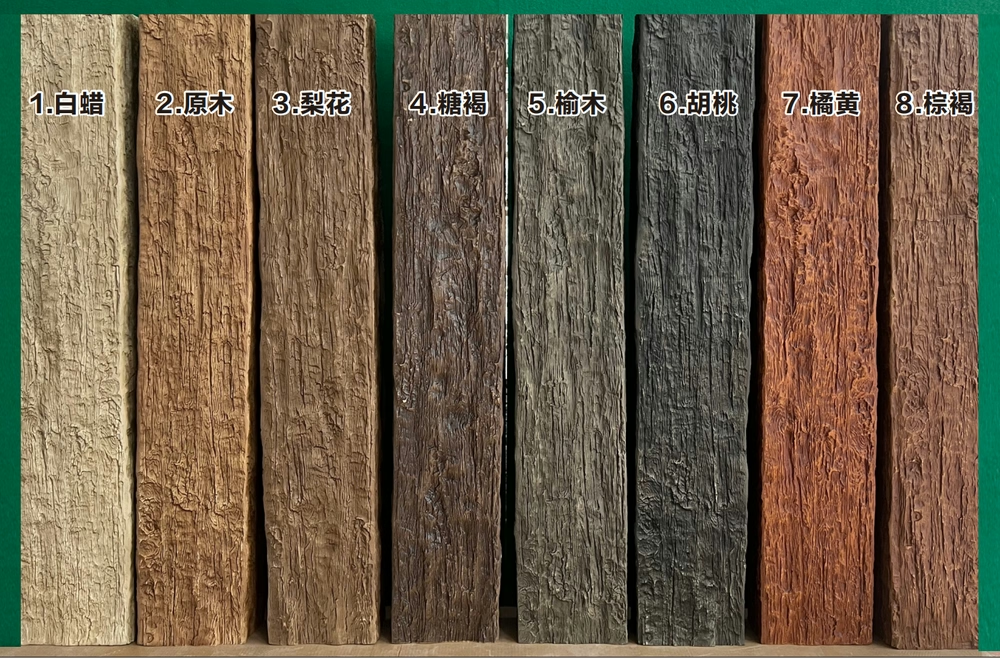
Exterior Applications and Environmental Performance
Outdoor beam applications demand materials that withstand environmental exposure without compromising aesthetics. Polyurethane beams designed for exterior use incorporate enhanced weatherproofing that extends service life dramatically compared to untreated natural wood. The performance gap between these options continues widening as manufacturing technology advances.
Covered porches and verandas represent ideal exterior applications where beams provide architectural interest while sheltered from direct precipitation. The underside of roof structures gains significant visual enhancement through beam installation, transforming utilitarian framing into designed features. This treatment works equally well for new construction and renovation projects.
Pergola and arbor constructions benefit from faux wood beam technology in ways that transform these outdoor structures. Traditionally requiring extensive maintenance to preserve wood appearance, these elements now deliver enduring beauty with minimal care. The lightweight nature of polyurethane simplifies the structural requirements for freestanding pergola constructions.
Gazebo constructions and detached outdoor rooms achieve new aesthetic possibilities with premium polyurethane beams. The material's ability to accept complex shapes enables decorative details that would prove prohibitively expensive in natural wood. Turret-style roof details, octagonal configurations, and other distinctive forms become economically practical.
Creating Cohesive Indoor-Outdoor Design
The most compelling application of dual-environment beams involves maintaining design continuity between interior and exterior spaces. When the same beam profile and finish appears in both locations, the visual connection creates a sense of expanded living area that enhances property value and enjoyment.
Achieving this cohesion requires thoughtful specification that accounts for lighting condition differences between spaces. Interior applications typically receive filtered natural light and controlled artificial illumination, while exterior applications experience direct sun, reflected light from hardscaping, and ambient outdoor conditions. Premium suppliers address this challenge through interior and exterior formulations that appear identical under typical viewing conditions.
Transition spaces between interior and exterior—sunrooms, enclosed porches, and similar areas—present natural opportunities for beam installations that bridge both environments. The beams in these zones can match either adjacent space's treatment or establish a distinctive character appropriate to the transitional nature of the space itself.
Design coherence extends beyond beams themselves to related elements including columns, brackets, and decorative trim. Premium manufacturers often produce complementary products that enable comprehensive outdoor room design. This coordination ensures that all wooden elements read as intentional design choices rather than assembled components from unrelated sources.
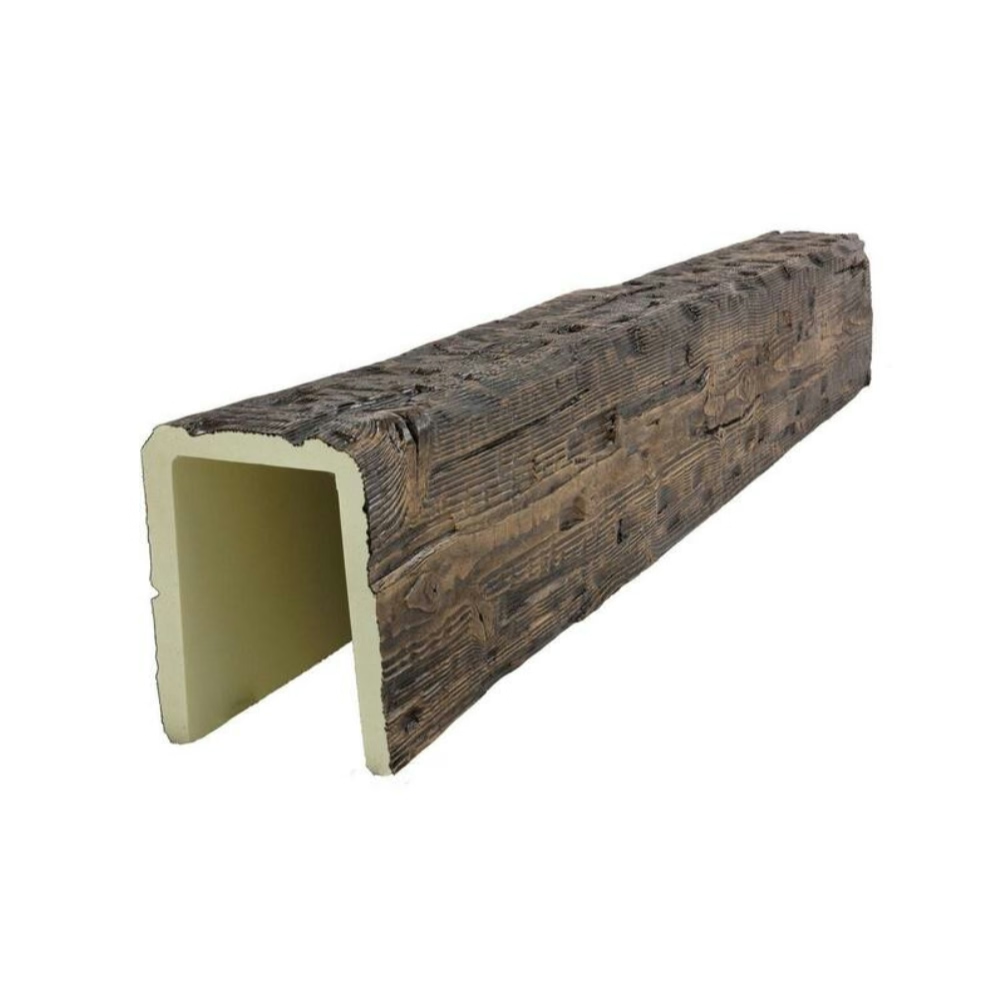
Maintenance and Longevity Considerations
The maintenance advantage of polyurethane beams over natural wood proves dramatic in exterior applications. Where genuine timber demands regular staining, sealing, and inspection, polyurethane beams require only occasional cleaning to maintain their appearance. This difference translates to substantial labor savings over the product lifecycle.
Cleaning protocols for exterior beams involve nothing more than mild detergent solution and periodic rinsing. The non-porous surface prevents dirt penetration that would require aggressive cleaning methods. Mold and mildew, which colonize natural wood surfaces in humid conditions, cannot establish on properly formulated polyurethane.
Damage repair capabilities differ significantly between materials. Natural wood damage often requires professional repair or component replacement. Polyurethane beam damage can sometimes be addressed through surface filling and refinishing, though severe damage typically requires panel replacement. Understanding these limitations helps set appropriate expectations for long-term care.
The lifecycle cost analysis strongly favors polyurethane for exterior applications. Initial cost premiums over treated lumber disappear when considering maintenance expenses, replacement costs, and the labor demands of wood care. Premium products with extended warranties provide additional confidence in the total cost picture.
Premium faux wood polyurethane beams represent a mature technology that delivers genuine value across interior and exterior applications. Their versatility enables design approaches that would prove impractical or prohibitively expensive with natural materials. For projects seeking coherent design language throughout indoor and outdoor spaces, these manufactured beams provide the consistency and capability that premium specifications demand.
Technical References
ASTM standards cited in every specification
Test Data
Lab results from internal testing program
Updated 2026
Reviewed against current product specs


