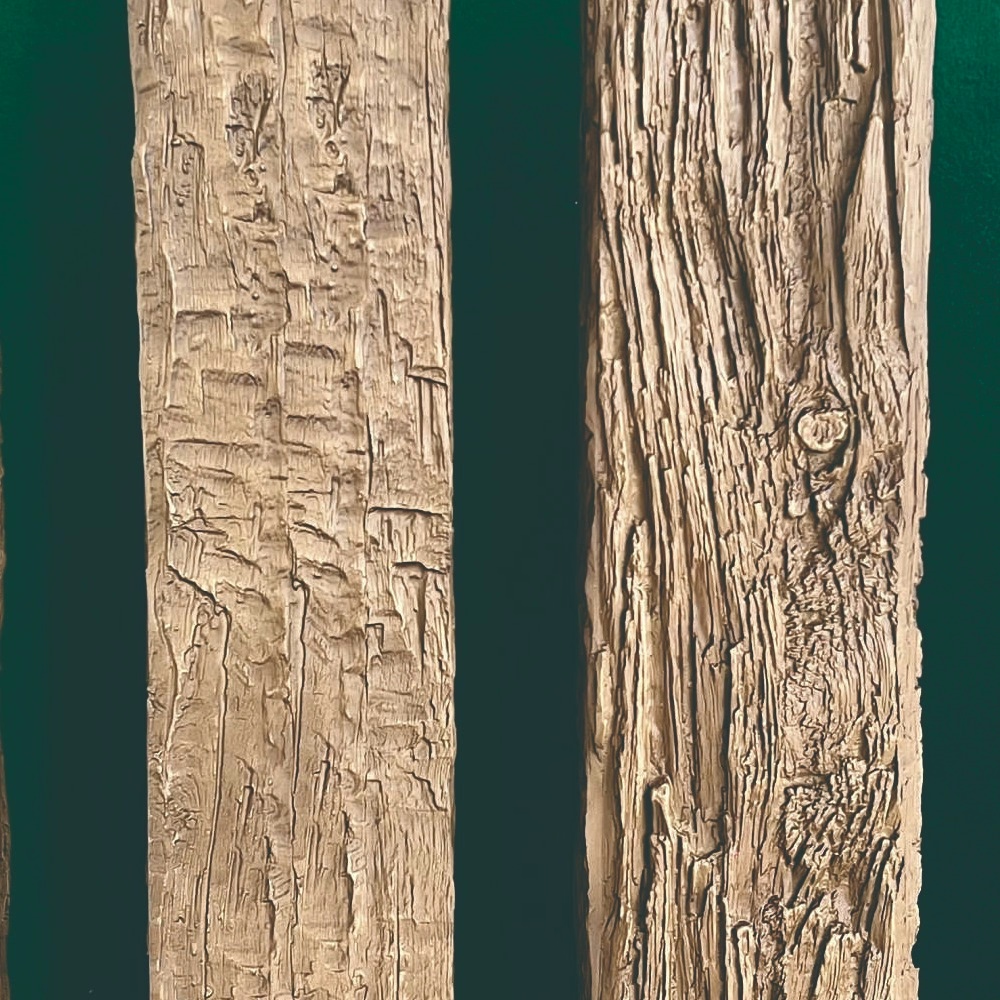
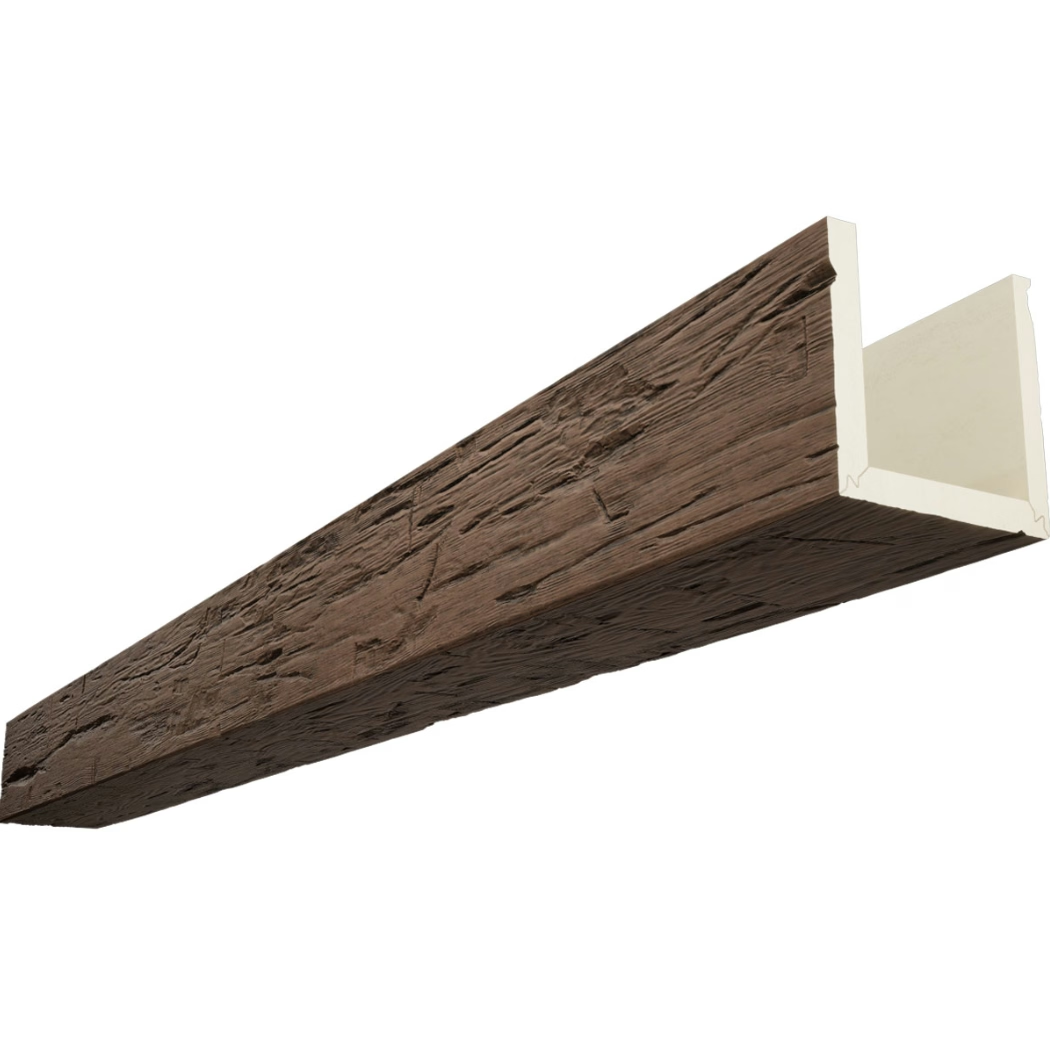
The hotel industry operates under unique constraints that shape material selection decisions for guest room renovations and new construction. Products must satisfy demanding performance standards while maintaining the aesthetic excellence guests expect from quality accommodations. Premium FF&E-certified faux wood ceiling beams have emerged as the preferred specification for hospitality projects seeking to incorporate timber aesthetics without compromising on practicality or budget.
FF&E—an abbreviation for Furniture, Fixtures, and Equipment—encompasses the movable items and installed equipment that complete a hotel room beyond the base building structure. Ceiling beams occupy a somewhat ambiguous position in this classification, often falling between permanent building elements and interpretive FF&E items depending on installation methodology. Regardless of technical categorization, the procurement and specification processes for hotel projects demand the same rigorous documentation and quality assurance that characterize other FF&E items.
Understanding Hospitality Procurement Requirements
Hotel procurement operates through established channels that differ significantly from residential material purchasing. Project managers and procurement specialists evaluate products against detailed specifications that address fire safety, durability, maintenance requirements, and availability for future replacement. These requirements exist to protect both guest safety and the hotel operator's long-term investment.
Fire performance standards represent perhaps the most critical specification requirement for ceiling materials in hospitality settings. Building codes typically mandate specific flame spread and smoke development ratings for products installed in commercial occupancies. Premium faux wood beam manufacturers have developed formulations that satisfy these requirements while maintaining realistic wood appearance. Understanding the applicable code classifications in your project jurisdiction ensures appropriate product selection.
Durability specifications address the extended service conditions hotel products must withstand. Unlike residential applications where the same family uses a space consistently, hotel rooms experience hundreds of different guests annually, each bringing varying expectations and behaviors. Ceiling elements must resist incidental contact, maintain appearance despite inconsistent cleaning approaches, and perform reliably through thousands of operational cycles.
Availability for future procurement deserves consideration during initial specification. Hotel properties frequently require replacement items that match original installations years after initial construction. Premium manufacturers maintain production consistency and archived formulations that enable satisfactory matching of aged installations. This reliability distinguishes quality suppliers from those who prioritize initial sales over long-term support.

Design Applications in Guest Room Environments
Guest rooms present specific design opportunities and constraints that influence beam specification decisions. The typical room proportions—moderately sized spaces with standard ceiling heights—require thoughtful scale selection to achieve visual impact without overwhelming the space. Premium beams offer dimensional options that accommodate these typical conditions.
Headboard accent walls often benefit from overhead beam treatment that extends the bed's visual prominence. A beam positioned above the headboard creates architectural framing that elevates the most important furniture element. This treatment works particularly well with upholstered headboards that lack substantial visual presence from ceiling height alone.
Suite configurations and family rooms offer expanded opportunities for beam installations. The larger ceiling planes in these spaces accommodate more substantial beam elements without the cramped feeling that can result in standard rooms. Connecting spaces between suite components benefit from beam treatments that define functional zones while maintaining spatial flow.
Corner rooms present unique opportunities where two exterior walls create natural emphasis points. Beams following each wall's direction toward the corner create a welcoming alcove effect that makes the space feel more intimate despite its standard dimensions. This approach works especially well in rooms with seating areas positioned to take advantage of the corner window views.
Commercial-Grade Performance Characteristics
Premium faux wood beams designated for hospitality applications incorporate performance features that address commercial service requirements. These characteristics distinguish commercial-specification products from residential alternatives, justifying different pricing structures through enhanced capability.
Impact resistance becomes critical in environments where luggage, housekeeping carts, and service equipment approach ceiling height regularly. Premium commercial beams resist denting and damage that would quickly degrade appearance in standard products. This resilience maintains pristine appearance through the heavy usage that characterizes hotel operations.
Cleanability specifications ensure that beams can be maintained using standard housekeeping protocols. The surface finishes must accept cleaning agents without degradation while resisting staining from common contaminants. Premium manufacturers test their products against hospitality cleaning chemicals to verify compatibility and establish appropriate maintenance guidelines.
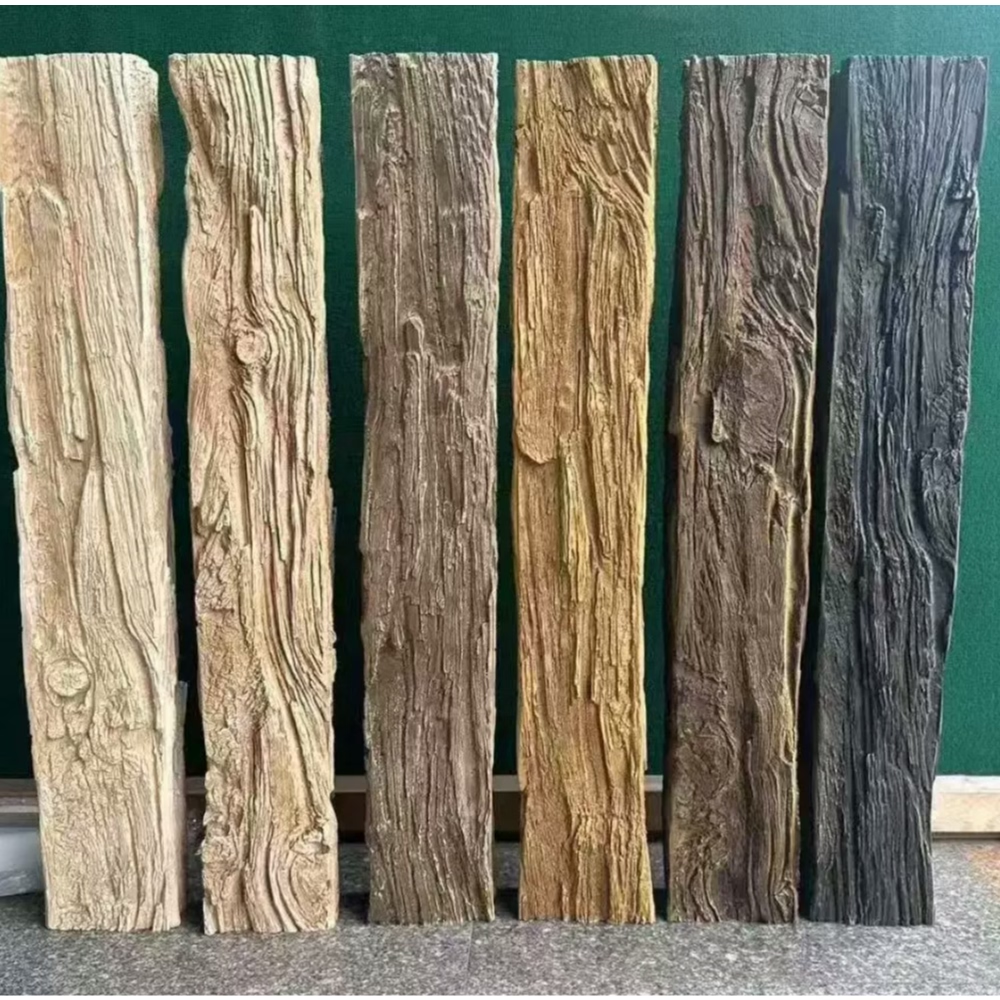
Consistency across large installations distinguishes quality commercial products. When dozens or hundreds of rooms receive beam installations, visible variation between units creates an impression of poor quality and inconsistent craftsmanship. Premium manufacturing processes maintain tight tolerances that ensure each unit matches specifications precisely.
Installation Efficiency for Hotel Project Timelines
Hotel renovation projects operate under severe timeline constraints that residential projects rarely face. Revenue lost during construction creates powerful incentives to minimize downtime. Premium faux wood beams accommodate accelerated installation schedules through thoughtful design features and simplified mounting systems.
Prefabrication at manufacturing facilities eliminates on-site preparation that would otherwise extend installation timelines. Beams arrive with finished surfaces, precise dimensions, and ready-to-install mounting provisions. This approach reduces the skilled labor requirements on-site and ensures consistent quality regardless of local workforce experience.
Modular installation systems enable rapid deployment across multiple rooms. When beams share common dimensions and mounting approaches, crews develop efficiency through repetition. Premium manufacturers provide installation training and detailed instructions that accelerate competency development for contracting crews.
Coordinating beam installation with other trade work requires careful planning in hotel contexts. Electrical, mechanical, and finishes contractors all require access to ceiling spaces during renovation. Premium beam products accommodate this coordination through installation sequences that minimize interference and damage risk from other trades.
Cost Analysis for Hospitality Projects
The economic case for premium faux wood beams in hotel applications involves factors beyond initial material cost. Successful hotel operators evaluate products through total lifecycle cost lenses that account for maintenance requirements, replacement intervals, and operational impacts during renovation.
Maintenance cost differences between premium and economy products become substantial when multiplied across hundreds of rooms. Economy beams requiring frequent cleaning attention or early replacement generate ongoing expenses that quickly offset initial savings. Premium products maintaining appearance with standard housekeeping protocols reduce labor costs significantly over time.
Replacement interval projections influence specification decisions for long-term operators. Products expected to serve fifteen years without replacement justify higher initial costs that would prove unjustifiable for shorter intervals. Premium manufacturers' ability to match aged installations ensures that future replacements integrate seamlessly with original work.
Operational disruption costs during renovation deserve consideration in project economics. Extended construction timelines reduce available room inventory and corresponding revenue. Installation approaches that minimize disruption may justify cost premiums that prove negligible against revenue protection.
Premium FF&E-certified faux wood ceiling beams represent a proven solution for hotel guest room projects demanding aesthetic excellence and practical performance. Their commercial-grade construction satisfies hospitality requirements while delivering the visual warmth that distinguishes memorable guest experiences. For projects where quality cannot be compromised and timelines cannot be extended, these products provide the capability and reliability that hospitality specifications demand.
Technical References
ASTM standards cited in every specification
Test Data
Lab results from internal testing program
Updated 2026
Reviewed against current product specs