Architecture communicates through form, proportion, and ornament that together create environments affecting occupant experience. Within this communicative vocabulary, ornamental elements play essential roles in establishing character, conveying cultural references, and demonstrating the attention to detail that distinguishes quality design. Premium polyurethane faux beams enter this ornamental conversation as components capable of fulfilling these expressive functions with reliability that traditional materials cannot match consistently.
The ornamental purpose of architectural elements extends beyond mere decoration to encompass symbolic meaning and cultural association. Beams reference structural honesty and connection to building traditions that stretch back through architectural history. This symbolic weight influences how spaces feel regardless of whether beams serve genuine structural purposes.
Interior ornamentation must withstand close scrutiny that exterior elements escape. Occupants live with these elements daily, observing them under varying lighting conditions and from multiple angles. The quality required for successful interior ornamental elements exceeds what would prove adequate for outdoor applications where distance and weather create different viewing conditions.

Ornamental Functions in Interior Design
Visual anchors provide focal points that draw occupant attention and guide spatial navigation. Beams positioned strategically create these anchors through scale, detail, or distinctive character that commands observation. Premium polyurethane enables the substantial presences that effective anchors require while maintaining proportions appropriate for interior applications.
Spatial definition through ornamental elements creates zones within larger rooms that feel intentionally composed rather than arbitrarily bounded. Beams spanning between walls or across ceilings establish boundaries that organize space without the solid partitions that full-height dividers would require. This partial definition preserves visual connectivity while creating perceptible distinctions.
Style expression through ornamental elements communicates design intentions that occupants sense even without conscious analysis. Traditional aesthetics rely on period-appropriate detailing, while contemporary spaces employ geometric precision and minimal ornament. Premium polyurethane offers product options addressing both territories and the transitional spaces between.
Design Character Establishment
Traditional interior character emerges through ornamental elements referencing historical precedents accurately. Victorian, Craftsman, Colonial, and other period styles each have characteristic appearances that informed observers recognize. Premium manufacturers offer product lines targeting these traditional aesthetics with details sophisticated enough to satisfy academic restoration requirements.
Contemporary interiors establish character through different means that traditional ornamentation would undermine. Clean geometry, minimal detail, and purposeful restraint characterize modern approaches. Premium polyurethane products in contemporary styles provide the refined simplicity that these spaces require without historical references that would feel inappropriate.
Transitional spaces blending traditional and contemporary sensibilities need ornamental elements that bridge these aesthetic territories. Beams with refined traditional proportions but simplified contemporary detailing work effectively in these hybrid environments. This versatility enables design continuity across spaces with mixed stylistic requirements.
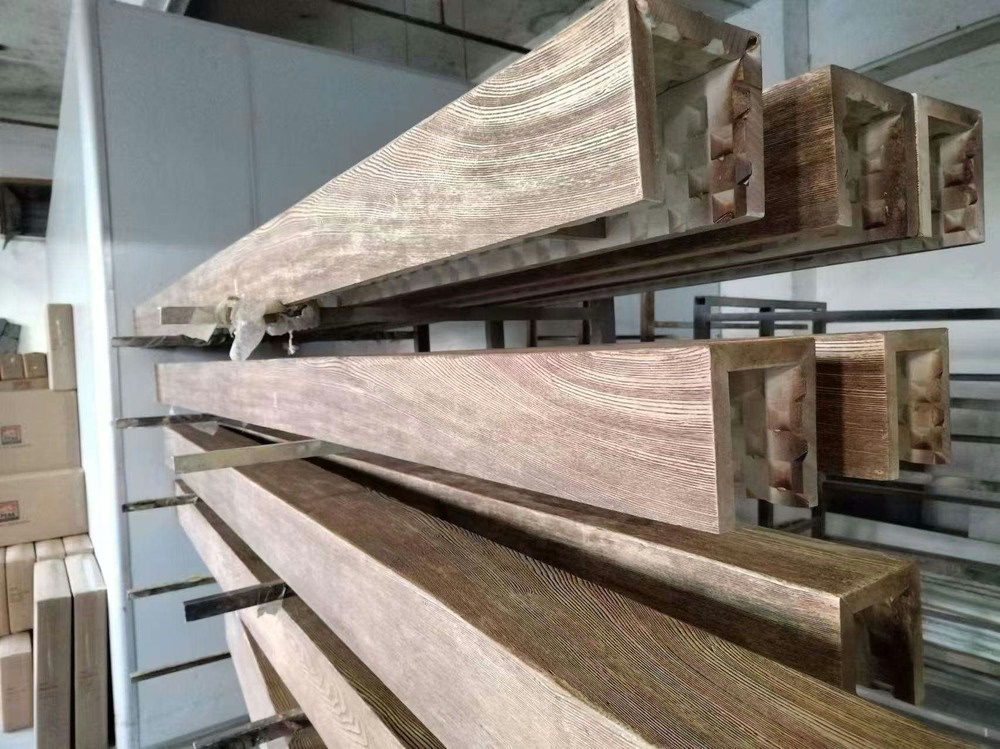
Integration with Interior Architecture
Ceiling geometry influences how ornamental beams interact with surrounding architecture. Vaulted ceilings accommodate dramatic installations that become primary focal points, while flat ceilings benefit from more restrained treatments that add interest without overwhelming. Understanding these geometric relationships enables appropriate specification.
Proportion relationships between beams and surrounding elements affect how successfully installations integrate with existing architecture. Beams sized appropriately for room scale create visual harmony, while poorly proportioned elements disrupt spatial composition. Premium suppliers offer size ranges enabling proportion matching across various room dimensions.
Adjacent material coordination ensures that beams relate appropriately to walls, floors, and other visible surfaces. Color, texture, and style coordination produces cohesive interiors, while mismatched elements create visual discord. Premium beam options include coordination guidance that helps achieve appropriate relationships.
Light and Shadow Considerations
Shadow play from ornamental beams creates visual interest through the interplay of light and dark across ceiling planes. Beams with substantial depth cast shadows that change throughout the day as sunlight moves across spaces. This dynamic quality adds life to static elements, making spaces feel more dynamic and engaging.
Artificial lighting integration enhances beam presence during evening and low-light conditions. Recessed fixtures, valance lighting, and accent illumination can emphasize beam character while providing functional illumination. Premium formulations accept routing and modification that enables these lighting integrations.
Surface light reflection affects how beams interact with both natural and artificial illumination. Matte surfaces absorb light creating subtle presence, while polished surfaces reflect creating more assertive character. Premium manufacturers offer finish options spanning this reflection spectrum to enable appropriate selection.
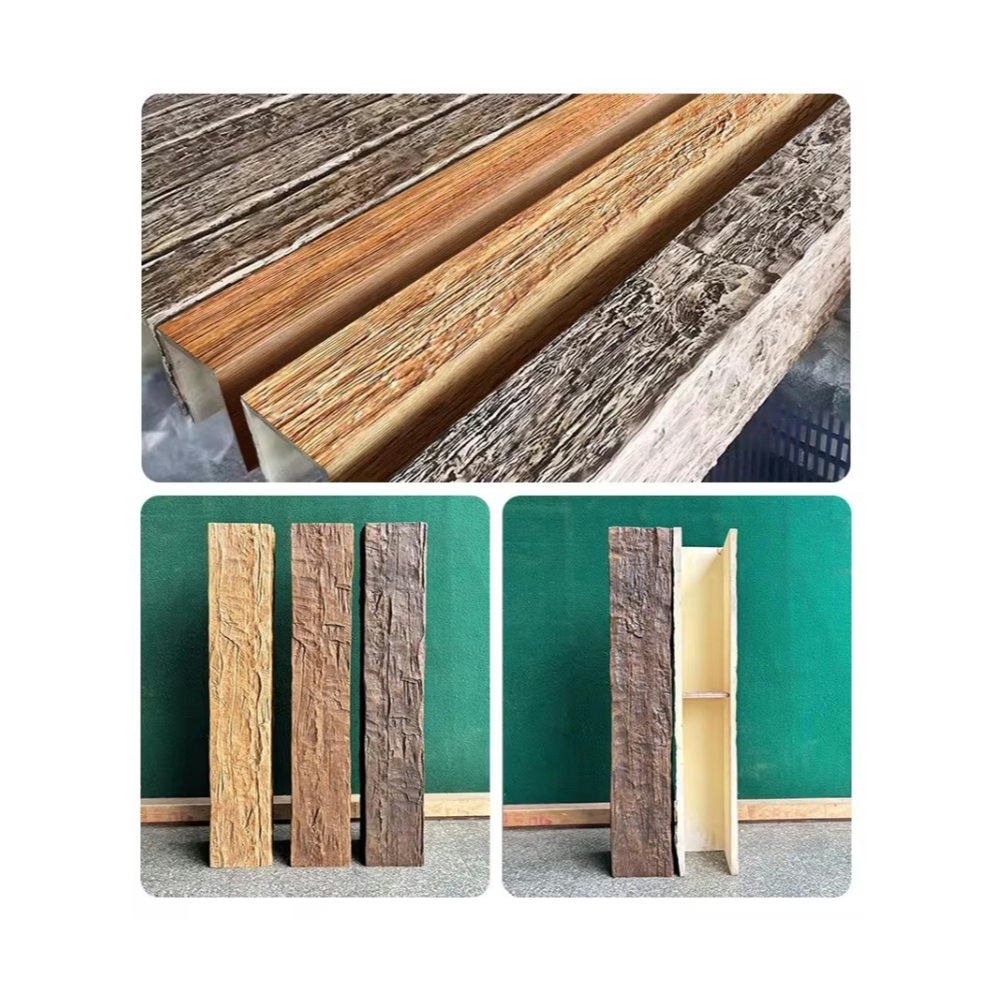
Detail Quality and Refinement
Profile refinement in premium products creates ornamental quality that budget alternatives cannot achieve. The subtle curves, precise arrises, and consistent details distinguish quality elements from obvious manufactured imitations. This refinement rewards close observation that casual viewing might miss.
Consistency across multiple units ensures that installations appear cohesive rather than assembled from disparate pieces. Premium manufacturing maintains tight tolerances that ensure each element matches corresponding pieces. This consistency proves particularly important in visible installations where viewers observe multiple elements simultaneously.
Edge treatment quality affects how beams present themselves at terminations and intersections. Clean, crisp edges indicate manufacturing precision, while ragged or inconsistent edges reveal budget production limitations. Premium attention to edge details distinguishes professional-quality ornamental elements.
Application-Specific Considerations
Focal room treatments in living rooms, dining rooms, and master suites benefit from ornamental beams that establish design themes for surrounding spaces. These primary rooms often justify premium specification that secondary spaces might not require. The investment in focal room quality creates lasting impressions that occupants and visitors remember.
Secondary space treatments in kitchens, hallways, and bathrooms may appropriately utilize more restrained ornamental approaches. These functional spaces benefit from beam presence without the dramatic treatment that primary rooms receive. Premium specification can be scaled appropriately across space hierarchy.
Commercial application requirements for ornamental elements include durability, cleanability, and code compliance that residential applications might ignore. Hospitality, retail, and office environments subject ornamental elements to stresses that residential use does not impose. Premium formulations addressing these commercial requirements enable successful specification.
The role of premium polyurethane faux beams as indoor architectural ornamental elements reflects their ability to serve expressive purposes while delivering practical performance. These components enable interior environments that communicate quality and design intelligence through their presence, contributing to spaces that occupants appreciate throughout their occupation of these carefully composed environments.
Technical References
ASTM standards cited in every specification
Test Data
Lab results from internal testing program
Updated 2026
Reviewed against current product specs


