Architecture communicates before anyone speaks a word. The moment a person steps through a doorway, the proportions of the space, the quality of light, and the presence or absence of natural material textures begin constructing an impression that settles before conscious thought engages. This is why architects and interior designers invest such care in specifying the elements that define a room's character — because those decisions shape every subsequent experience within the space.
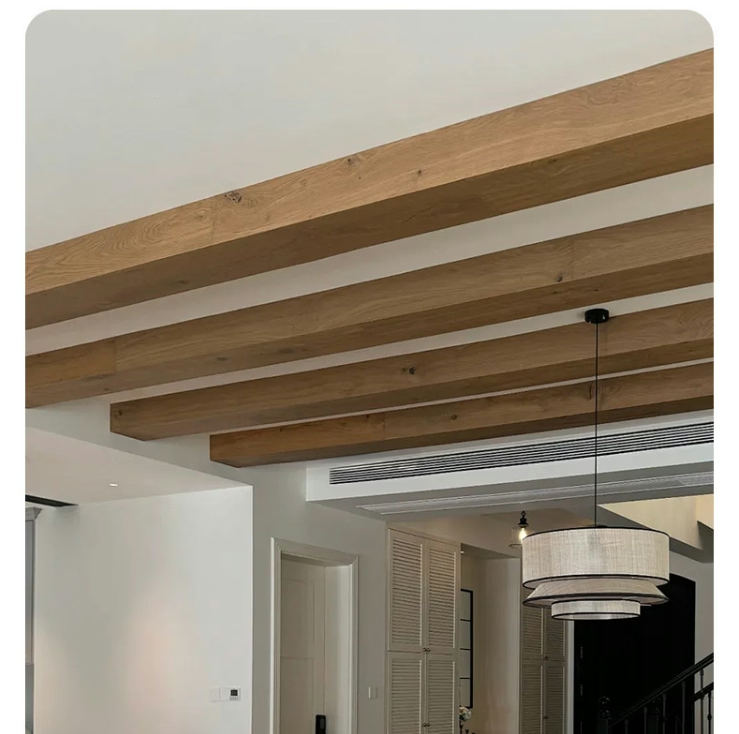
Among the most effective tools available for shaping interior atmosphere, few match the immediate impact of exposed timber detailing. The warmth, scale, and organic texture of wood read simultaneously as natural, authentic, and crafted — qualities that resonate across cultural boundaries and design preferences. Yet for projects where budget, structure, or timeline constrains the use of genuine timber, polyurethane faux beams offer a compelling alternative that delivers the aesthetic result without the practical limitations.
The Commercial Interior Opportunity
Commercial spaces face design challenges that differ fundamentally from residential projects. Foot traffic volumes, compliance requirements, maintenance expectations, and brand positioning all influence material selections in ways that private homeowners rarely consider. A material that works beautifully in a sitting room may prove entirely unsuitable for a restaurant dining room serving hundreds of covers each week.
Polyurethane faux beams navigate these commercial demands through a combination of performance characteristics that address practical concerns without sacrificing visual quality. The material resists impact damage better than natural wood, tolerates the temperature fluctuations common in spaces with variable occupancy, and cleans with standard maintenance products without requiring specialized care protocols.
Fire performance represents a critical consideration for commercial applications. Reputable manufacturers produce PU beam ranges that incorporate fire-retardant additives, achieving classifications required by building regulations in most jurisdictions. This compliance opens applications in hospitality venues, public buildings, and commercial developments where non-combustible or fire-rated materials are mandated.
The acoustic properties of polyurethane also merit attention in commercial contexts. While not a primary acoustic treatment, the dimensional presence of ceiling beams disrupts sound reflection patterns in ways that contribute to more comfortable ambient noise levels. Restaurants, function rooms, and open-plan offices benefit from these subtle acoustic improvements alongside the visual enhancements that justify the specification.
Application Across Building Types
Places of worship represent some of the most demanding interior applications for timber-look elements. Vaulted ceilings, transepts, and crossing spaces create expansive areas that cry out for the scale and warmth that beams provide. Yet the structural conditions in historic churches — often featuring stone vaulting, fragile plasterwork, and listed building restrictions — frequently preclude the installation of heavy real timber.
PU faux beams resolve these tensions elegantly. Their light weight attaches to existing structures without requiring the footings or support posts that genuine timber often demands. The availability of longer beam lengths enables seamless spans that would be impractical or impossible with natural wood. Fire-retardant formulations satisfy the safety requirements that apply to public assembly venues. And the permanence of the installation — these beams do not split, warp, or require ongoing maintenance — aligns with the expectation that church interior works should endure for decades without further intervention.
Boutique hospitality venues have adopted faux beams enthusiastically as the aesthetic shifts toward material authenticity and crafted interiors. Small boutique hotels, farm-to-table restaurants, and craft beverage taprooms all share a design vocabulary built around reclaimed materials, exposed structure, and honest construction. Faux beams slot directly into this aesthetic register while offering consistency that reclaimed timber — with its variability and potential pest history — cannot guarantee.
Health and wellness spaces present different requirements. Spas, yoga studios, and meditation centres seek warmth and organic texture but require surfaces that resist mould growth and tolerate high-humidity conditions. Polyurethane's closed-cell structure absorbs no moisture, making it genuinely suitable for these environments in ways that even treated natural timber cannot match.


Material Coordination in Multi-Element Schemes
Sophisticated interior schemes rarely rely on a single material in isolation. The most compelling spaces layer timber-look elements with complementary materials — stone, plaster, metal, glass — in compositions that reward extended viewing. Achieving this material richness requires beams that coordinate rather than compete with surrounding finishes.
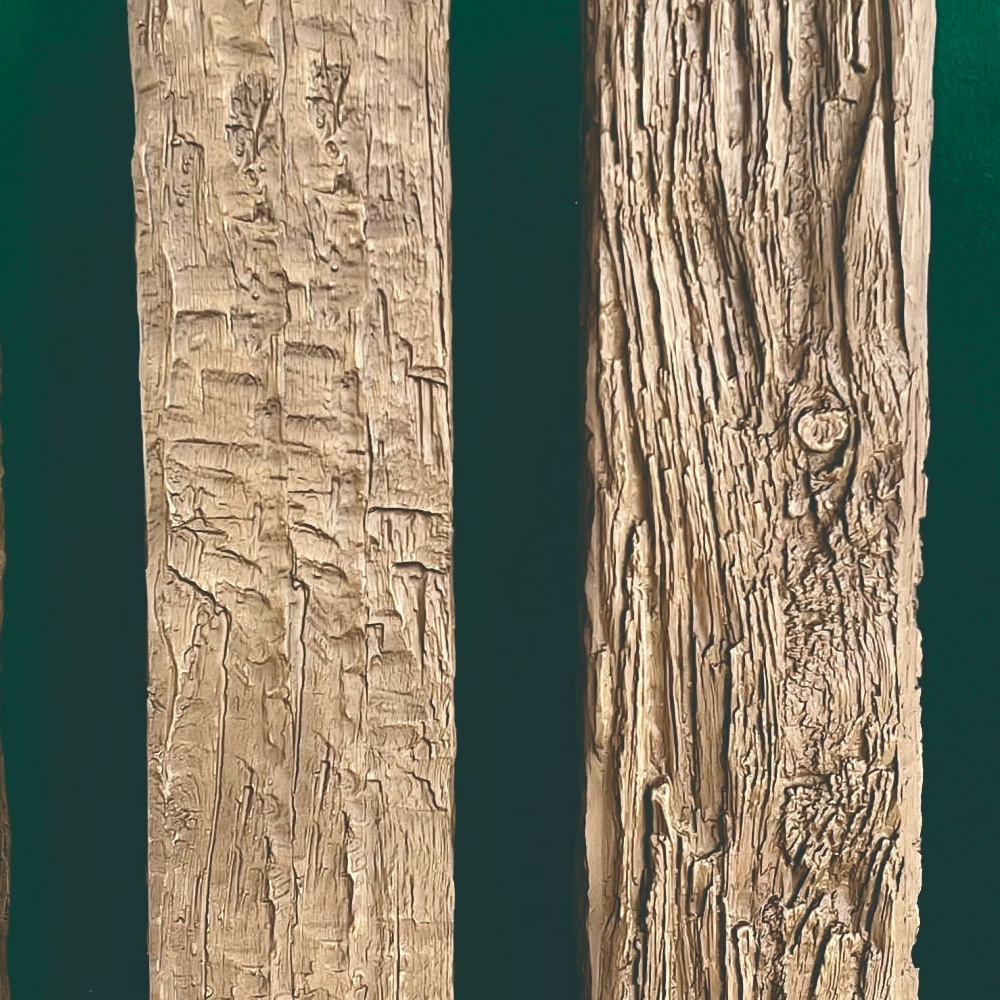
The colour-matching process has become significantly more refined as the market for faux beams has matured. Rather than the limited palette of earlier products, current ranges span the full spectrum from near-white limed finishes through honey oak, rustic chestnut, dark walnut, and charcoal-stained appearances. This breadth enables designers to specify beams that echo adjacent timber elements — kitchen cabinetry, dining furniture, architectural joinery — with confidence that the finishes will relate rather than clash.
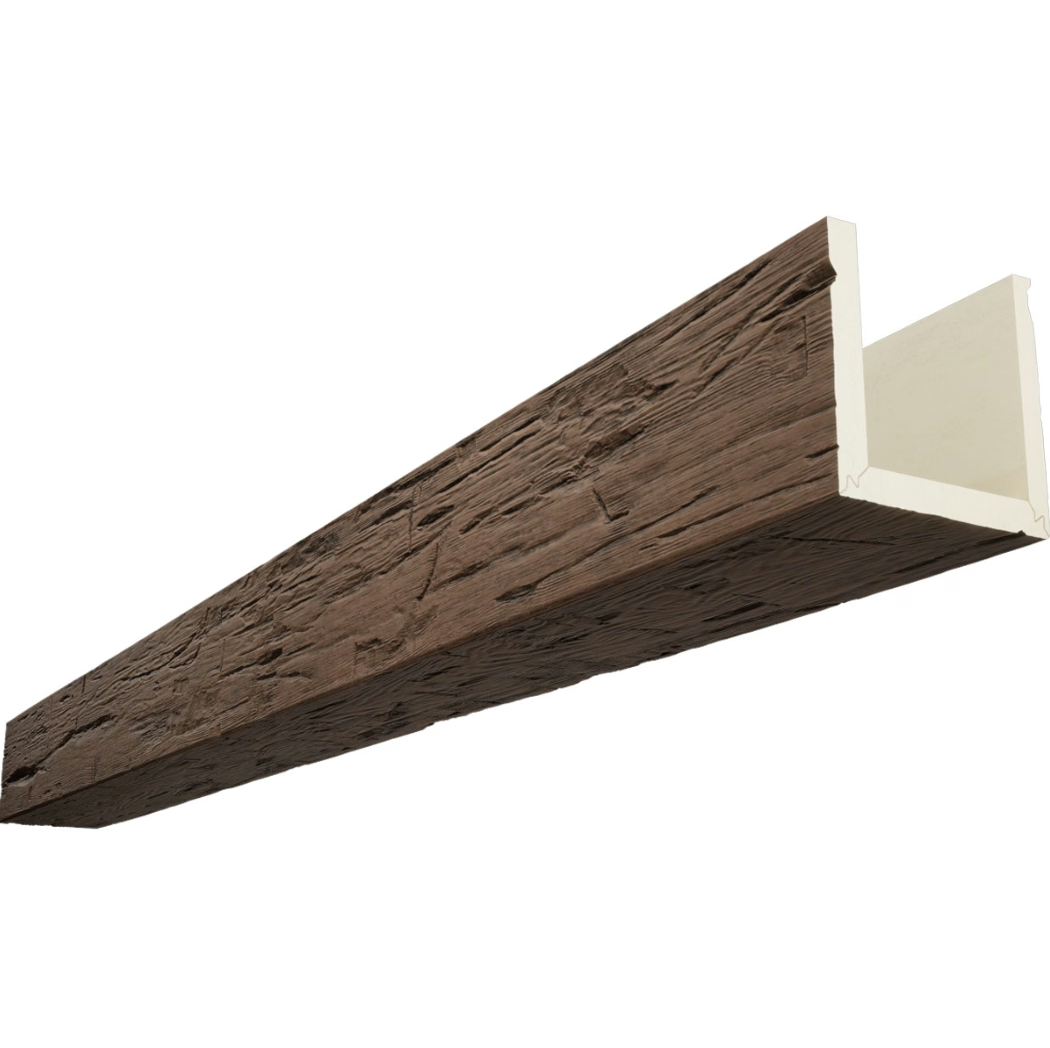
Profile selection similarly influences how beams integrate with their surroundings. Chamfered-edge profiles read more refined and contemporary, suitable for spaces featuring clean-lined furniture and minimal ornamentation. Deep cofferded profiles with pronounced shadow lines evoke rustic farmhouse character and pair naturally with stone, brick, and wrought iron details. The choice between these approaches should flow from the overall design concept rather than being made in isolation.
Installation Efficiency for Trade Professionals
Contractors and fit-out specialists appreciate the practical advantages that PU beams deliver during the installation phase. The light weight accelerates handling and positioning, reducing labour time relative to solid timber of equivalent visual impact. Straightforward fastening systems — typically metal bracket assemblies or construction adhesive applied to prepared mounting surfaces — require no specialized tools or trades beyond those already present on a typical interior fit-out.
Predictability represents a significant benefit for project programming. Natural timber arrives with inherent variability — grain patterns shift between boards, lengths may deviate from specification, and moisture content at delivery affects dimensional stability during and after installation. Polyurethane products arrive to specification, with consistent cross-sectional dimensions, straightness, and surface quality across the entire order. This consistency enables accurate estimating, reliable scheduling, and satisfied clients.
The availability of custom fabrication services extends these advantages to projects with unusual requirements. Bespoke beam profiles, non-standard lengths, and specific finish matching can all be accommodated through direct manufacturer engagement. While custom production involves longer lead times and premium pricing, the resulting elements arrive ready to install — eliminating site work and finishing trades that would otherwise be necessary.

Longevity and Maintenance Considerations
Commercial environments demand materials that maintain their appearance through years of use without requiring constant attention. The maintenance burden associated with any specified material directly affects operating costs and staff allocation — considerations that property owners and facility managers evaluate carefully during the specification phase.
Polyurethane faux beams require no ongoing maintenance beyond routine cleaning. Dust accumulation — often visible on ceiling-level details in commercial spaces with high air movement — wipes away with a damp cloth or standard cleaning solution. Unlike natural wood, polyurethane does not require periodic oiling, waxing, or sealing to maintain its appearance. The colour and texture remain consistent from installation through the expected service life of twenty years or more.
Structural integrity also proves reliable over extended periods. Polyurethane does not suffer from dry rot, wet rot, or insect attack — degradation modes that can compromise natural wood without warning. The material maintains its dimensions and surface quality across temperature cycles, humidity variations, and the building movements that naturally occur in structural frameworks. This reliability translates into peace of mind for property owners and reduced callback risk for installing contractors.
Specification Guidance for Design Professionals
Selecting the right beam specification for a commercial project involves evaluating several factors simultaneously. The structural conditions of the existing ceiling or wall substrate determine which fastening systems are viable. Fire performance requirements set by local building codes establish minimum classifications that the selected product must achieve. Design intent — the visual character and emotional quality that the space should convey — narrows the range of suitable profiles and finishes.
Engaging with manufacturers early in the design process yields significant benefits. Technical consultations can confirm product suitability for the intended application, identify any access or handling constraints, and establish realistic lead times for standard or custom production. Sample units enable accurate colour evaluation and tactile assessment before commitment. This upfront investment prevents costly late-stage specification changes and ensures that the installed result matches the design vision.
Documentation practices also merit attention. Specifying beams by manufacturer name and product code — rather than generic descriptions — reduces the risk of substitution with inferior alternatives during the procurement phase. Including finish samples and installation detail drawings in project documentation creates a reference that protects the design intent throughout the construction process.
Technical References
ASTM standards cited in every specification
Test Data
Lab results from internal testing program
Updated 2026
Reviewed against current product specs