The boundary between inside and outside has become one of the most active zones in contemporary residential design. As living patterns have evolved — with more time spent at home, more appreciation for outdoor connection, and greater investment in outdoor living infrastructure — the distinction between interior and exterior spaces has blurred. Covered patios flow into living rooms, outdoor kitchens adjoin family dining areas, and garden studios function as full-time workspaces connected to the main house.
This blurring of boundaries creates challenges for material specification. Interior finishes that perform brilliantly within climate-controlled environments may deteriorate rapidly when exposed to the temperature extremes, moisture fluctuations, and UV exposure that outdoor conditions deliver. Conversely, outdoor-rated materials often lack the aesthetic refinement that interior spaces demand. Finding materials capable of performing across both contexts — maintaining their appearance and structural integrity outdoors while delivering the design quality expected indoors — has become a significant specification challenge.
PU faux timber beams address this cross-context challenge with particular effectiveness. Their core material properties — dimensional stability, moisture resistance, and UV tolerance — make them genuinely suitable for covered outdoor applications while their surface quality and design range deliver the aesthetic refinement that interior specification requires. The result is a single material family that can be specified with confidence across both interior and exterior applications, creating visual continuity between spaces that would otherwise feel disconnected.
Understanding Outdoor Beam Applications
Outdoor beam applications fall along a spectrum from fully exposed to fully sheltered, and the performance requirements differ significantly across this spectrum. Clarifying the exposure conditions that a particular application will face is essential for appropriate specification.
Fully exposed installations — where beams are mounted to pergola posts or other structures with no overhead shelter — face the most demanding conditions. Direct rainfall, prolonged UV exposure, temperature extremes, and wind-driven moisture all test outdoor materials severely. Not all beam products are suitable for fully exposed applications; those that are specified must be specifically engineered for outdoor use with appropriate weather-resistant properties.
Covered outdoor installations — loggias, covered terraces, carports, and porch structures — provide significant shelter from direct rainfall while retaining exposure to wind, humidity, and the diffuse UV radiation that penetrates even cloud cover. These conditions are significantly less demanding than fully exposed applications, but still require materials with genuine outdoor performance credentials. Many beam products rated for covered outdoor use are not suitable for full exposure.
Sheltered transitional spaces — entrance porches, covered walkways between buildings, and semi-enclosed garden structures — present the mildest outdoor conditions. These spaces share more characteristics with interior environments than with fully outdoor conditions, and the performance requirements are correspondingly less demanding. Beams specified for these applications should nonetheless demonstrate some weather resistance rather than being purely interior-rated products.
Indoor-Outdoor Material Continuity
The most sophisticated residential designs create visual continuity between interior and exterior spaces that blurs the boundary and extends the living environment. Beams play a crucial role in this continuity strategy, providing a consistent material element that connects the indoor ceiling treatment to the outdoor overhead structure.
Achieving this continuity requires matching the beam specification across the interior and exterior zones. The same profile, the same finish, and the same installation methodology should apply inside and outside, creating the impression of a single material flowing through the building envelope. This matching demands careful specification — ensuring that the interior and exterior products are genuinely from the same product family and that the finishes are coordinated rather than merely similar.
The junction between interior and exterior beam installations deserves explicit design attention. This transition zone — typically at a large glazed opening, a bi-fold door stack, or a large window wall — is where the interior and exterior environments meet and where the beam installation must maintain its visual logic across the boundary. The beam run should either continue through the opening or terminate in a clearly resolved detail that acknowledges the transition without awkwardness.
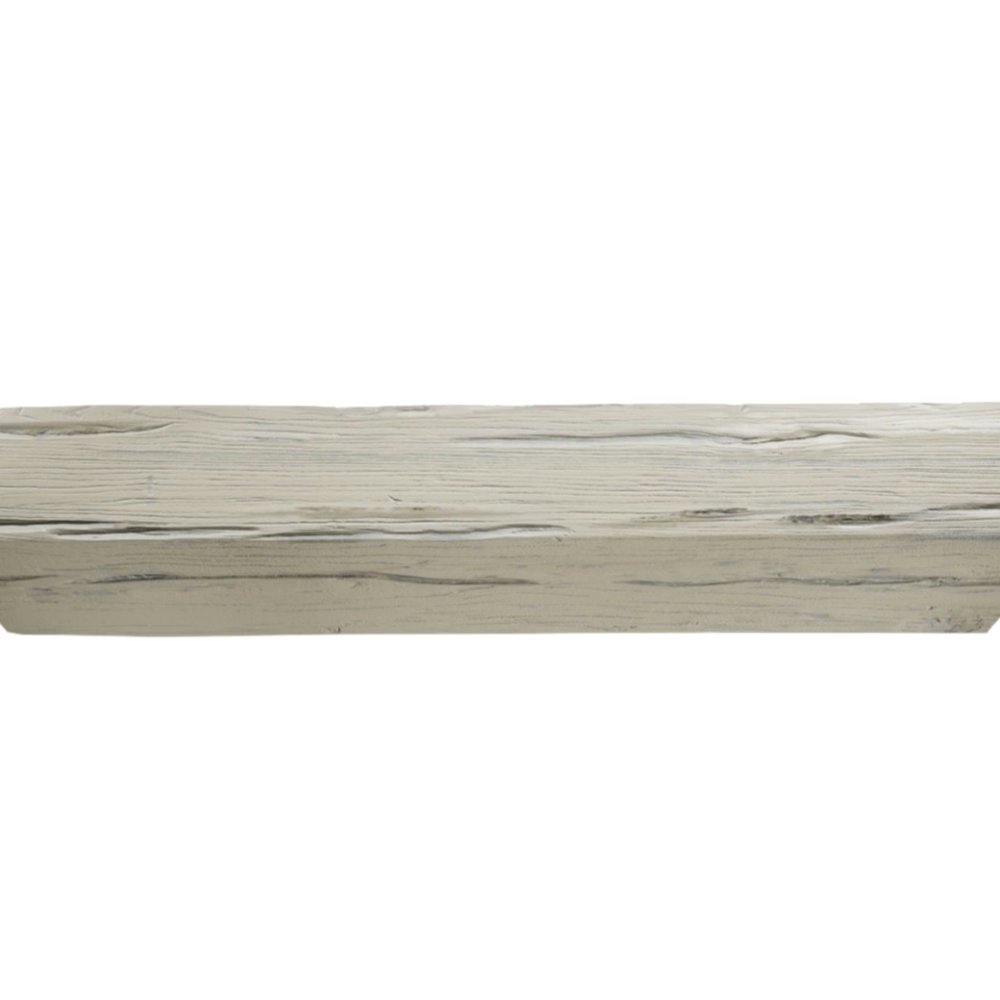
Pergola and Patio Applications
Pergola structures represent the most common outdoor application for faux timber beams. The open-lattice pergola — with beams spanning between posts to create an overhead framework — has become a ubiquitous landscape element, defining outdoor rooms and providing support for climbing plants while creating dappled shade that moderates the outdoor microclimate.
The specification of beams for pergola applications requires attention to span capacity. Unlike interior ceiling beams that span between fixed points in a structural ceiling, pergola beams span between posts that may flex slightly under load. The beam specification must be adequate for the span encountered, accounting for potential post movement, wind loading, and any imposed loads from climbing plants or lighting fixtures.
Post-to-beam connections in pergola applications require weather-resistant hardware that will not corrode or stain the beam surfaces. Stainless steel brackets and fixings provide the necessary corrosion resistance for outdoor conditions. The bracket design should be as unobtrusive as possible, maintaining the clean appearance of the beam installation while providing secure structural connection.
Patio ceiling applications differ from pergola applications in that the overhead structure is typically a fixed roof rather than an open lattice. Covered patios and terrace extensions that adjoin the main house often feature flat or pitched roofs that can receive beam installations identical to interior ceiling treatments. The primary additional consideration is ensuring that the roof structure is adequately waterproofed and insulated before beams are installed.
Weather Performance and Longevity
The outdoor performance of any material depends on the specific conditions it encounters and the quality of the product's engineering for those conditions. PU faux beams designed for outdoor use offer several performance advantages over natural timber alternatives.
Moisture resistance represents the most significant performance difference. Natural timber absorbs moisture from humid air and rainfall, leading to swelling, warping, and eventually rot in the absence of ongoing maintenance. Polyurethane absorbs no moisture, maintaining its dimensions and surface quality regardless of humidity levels. This stability is particularly valuable in outdoor contexts where timber alternatives require regular resealing to prevent moisture ingress.
UV stability in quality outdoor-rated PU products prevents the surface degradation that affects many plastics under prolonged sun exposure. UV-stable formulations resist chalking, colour shift, and surface embrittlement that would compromise both appearance and structural integrity over time. The specific UV stabilization technology varies between manufacturers, and the technical data for the intended application should be reviewed before specification.
Thermal cycling tolerance addresses the expansion and contraction that occurs as outdoor temperatures move through daily and seasonal cycles. Materials that expand and contract significantly under thermal stress can develop joint failures, surface cracking, and fixing problems over time. Polyurethane's low thermal expansion coefficient enables it to tolerate substantial temperature ranges without dimensional problems, contributing to the long service life that outdoor applications demand.
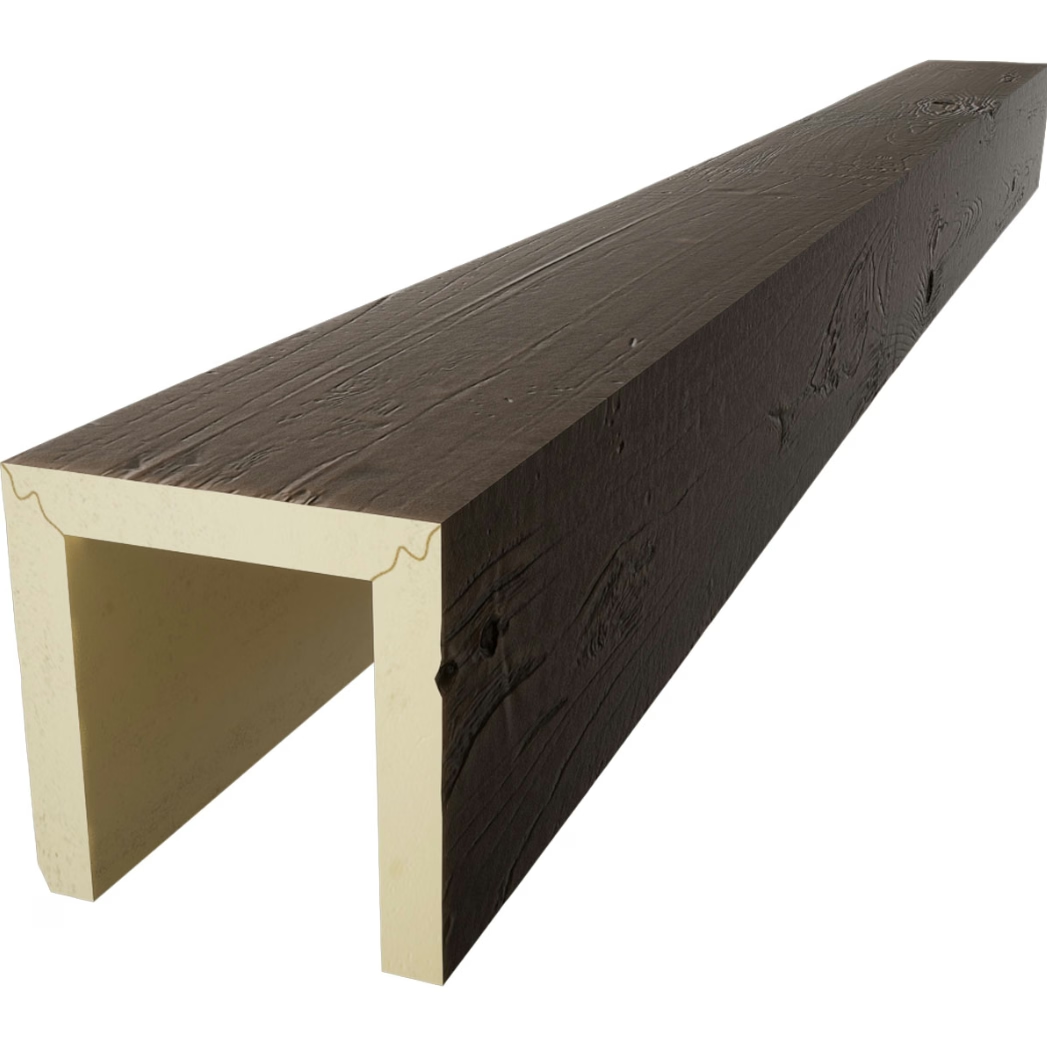
Maintenance Considerations for Outdoor Installations
Outdoor beam installations require less maintenance than natural timber alternatives but are not entirely maintenance-free. Understanding the maintenance requirements of different beam products enables appropriate specification and realistic expectations.
Routine cleaning for outdoor beams follows the same principles as interior cleaning — regular dusting or gentle washing to remove accumulated debris. The cleaning frequency for outdoor installations is typically higher than for interior applications, because outdoor exposure to wind, rain, and air pollution accelerates soiling accumulation. An annual deep clean with a gentle detergent solution is generally appropriate for most outdoor beam installations.
Inspection of outdoor fixings should occur annually, checking for any corrosion of metal components, any loosening of mechanical fixings, and any signs of impact damage from garden activities or furniture movement. Early identification of fixing problems enables remediation before the structural integrity of the installation is compromised.
The vegetation around outdoor beam installations requires management to prevent biological growth. Climbing plants that grow into beam joints or behind beam surfaces can create moisture traps and mechanical stresses that damage the installation over time. Regular pruning and training of climbing plants keeps them as visual enhancements rather than maintenance burdens.
Extending Indoor Design Principles Outdoors
The most successful outdoor beam installations extend the design thinking of the adjacent interior spaces rather than treating the outdoor area as a separate design problem. This extension requires the same design intentionality applied to the interior — considering proportion, material coordination, and the relationship between the beam installation and other outdoor elements.
Outdoor furniture, planting, and lighting should be specified in deliberate coordination with the beam finish and profile. The same principles that govern interior material coordination apply outdoors — the beam finish should relate to the furniture materials, the beam scale should be appropriate to the outdoor room proportions, and the overall composition should feel considered rather than improvised.
Lighting design for outdoor beam installations deserves as much attention as interior lighting receives. Concealed LED strip lighting above beams creates the same atmospheric uplighting effect outdoors as it does inside. Positioned spotlights can gra the beam texture and create drama in evening outdoor entertaining. Solar-powered and low-voltage lighting options enable atmospheric outdoor lighting without the installation complexity of hardwired systems.
Technical References
ASTM standards cited in every specification
Test Data
Lab results from internal testing program
Updated 2026
Reviewed against current product specs


