The relationship between architecture and sustainability has evolved substantially over recent decades. Early conversations focused on whether environmental considerations belonged in design decisions at all. That debate has resolved. Sustainability now represents a fundamental design value across professional practice, informing material selections, construction methods, and building operations in ways that affect virtually every project decision.
Within this context, man-made building materials have gained credibility that they previously lacked. Initial skepticism about whether products like engineered lumber or composite decking could deliver acceptable performance has given way to recognition that thoughtful use of manufactured materials often provides environmental advantages alongside practical benefits. The conversation has shifted from whether to use these materials to how to specify them most effectively.
Polyurethane architectural elements fit this trajectory well. The material offers meaningful sustainability advantages while delivering performance characteristics that meet professional requirements. Understanding both dimensions helps designers specify these products in ways that serve their clients and their environmental commitments.
Environmental Profile of Polyurethane Production
Polyurethane production involves chemical processes that transform petroleum-derived inputs into polymer materials with useful properties. This description raises legitimate environmental questions that deserve honest consideration. The answers involve both genuine advantages and honest acknowledgment of ongoing challenges.
Production efficiency represents a meaningful advantage. The molding process that creates polyurethane architectural elements generates minimal waste compared to machining solid materials. The chemistry of the reaction captures nearly all input material into useful product, while machining operations on natural materials may discard substantial volumes as sawdust or chips.
The lightweight nature of finished products affects transportation efficiency substantially. More polyurethane beams fit in a shipping container than equivalent wood products, reducing transportation emissions per unit of installed product. This advantage compounds across global supply chains where products travel substantial distances.
Durability contributes to lifecycle environmental performance. Materials that maintain their appearance and function for decades without replacement accumulate less environmental impact than those requiring frequent renewal. Polyurethane beams that serve for the life of a building without replacement avoid the repeated manufacturing, transportation, and disposal impacts that shorter-lived alternatives might incur.
Design Flexibility Enables Resource Efficiency
The manufacturing process that creates polyurethane beams enables design approaches that would be impractical with natural materials. Complex profiles, consistent dimensions, and integrated features reduce the need for site work that generates waste and consumes additional resources.
Custom profiles develop through mold modifications rather than tooling changes that require new equipment. This flexibility allows projects to specify exactly what they need without accepting available inventory or commissioning custom fabrication. The ability to get precisely what is specified reduces over-ordering and waste from unused materials.
Integrated features eliminate separate components that would require additional manufacturing, packaging, and transportation. Beams with integrated mounting provisions, integrated lighting channels, or integrated decorative elements replace multiple separate products with a single element that serves multiple functions.
Consistent quality reduces installation problems that might require replacement or repair. Natural materials may arrive with defects that only become apparent during installation, requiring additional ordering and installation of replacement pieces. The quality control in polyurethane production minimizes these exceptions, reducing the waste and inefficiency they create.
Aesthetic Possibilities in Contemporary Design
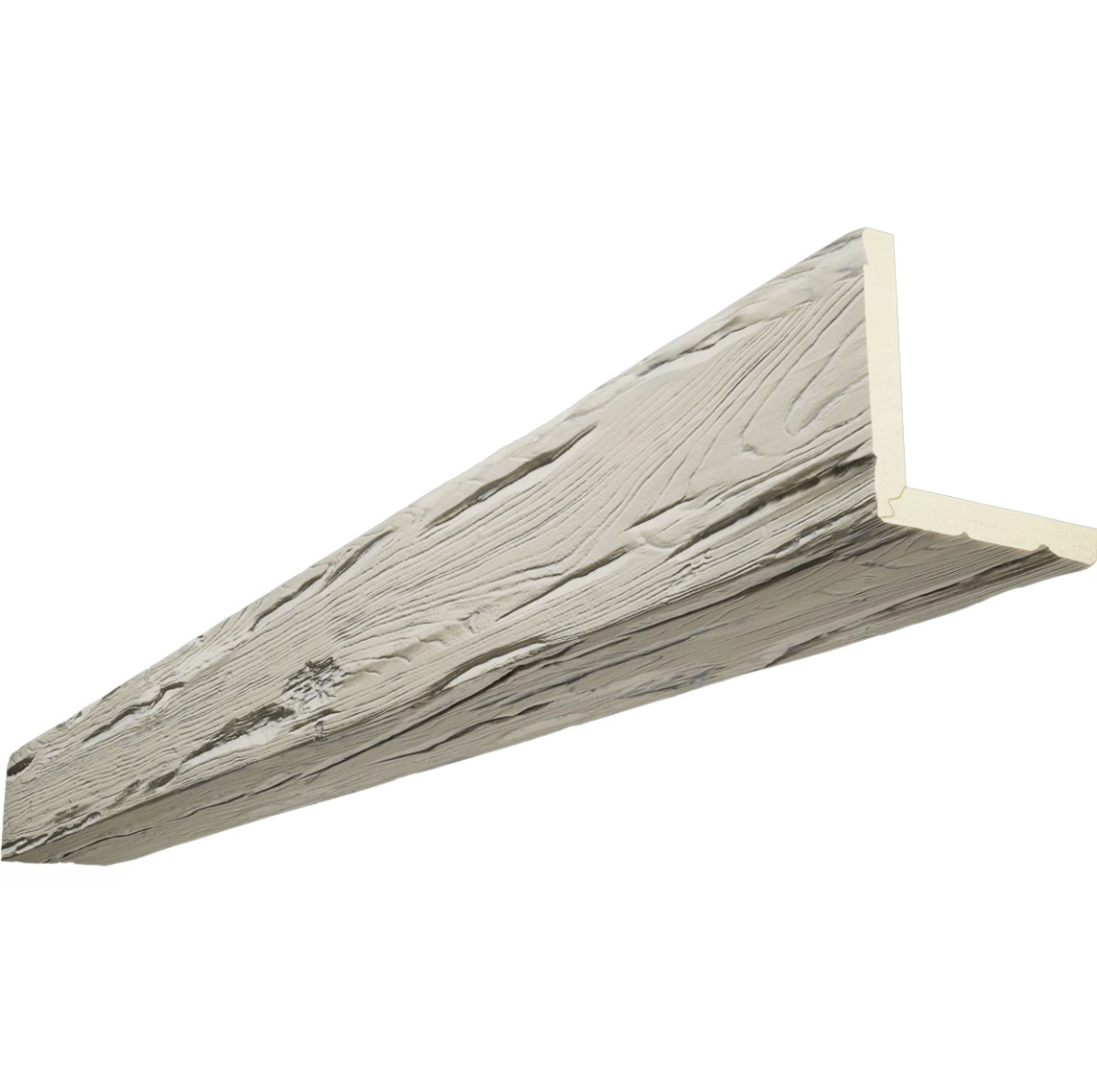
Contemporary architectural aesthetics embrace the qualities that polyurethane beams provide. Clean lines, consistent proportions, and controlled surface appearance align with design approaches that prioritize precision over picturesque imperfection. The material serves modern design intentions without requiring compromise.
The range of available finishes spans from highly natural representations of wood species to treatments that embrace the synthetic origin of the material. Projects can select the point on this spectrum that serves their specific design intent. A farmhouse renovation might specify heavily textured, rustic-appearing beams, while a minimalist office might specify smooth, light-colored beams that read as contemporary rather than traditional.
The ability to specify custom finishes enables projects with unique aesthetic requirements. Color matching to existing wood elements, coordination with specific material palettes, or creation of entirely novel appearances all become possible through the finishing capabilities of polyurethane production.
The dimensional possibilities exceed what natural materials can provide. Extremely long beams can be manufactured as single pieces rather than assembled from shorter sections. Unusual cross-sectional shapes can be produced economically. These capabilities expand the designer's vocabulary beyond the constraints that natural materials impose.
Performance for Contemporary Lifestyles
Modern interiors present demands that traditional materials struggle to accommodate. Open floor plans create large ceiling spans that must read as intentional rather than neglected. Moisture sources like steam from cooking or humidity from bathrooms affect materials throughout living spaces. Active families with children and pets create impact and abrasion that surfaces must withstand.
Polyurethane beams handle these conditions reliably. The dimensional stability that eliminates seasonal movement means that ceilings stay flat and joints stay closed regardless of humidity variation. The moisture resistance means that beams near kitchens and bathrooms need no special protection. The surface durability means that beams in active households maintain their appearance despite the rigors of daily life.
Maintenance expectations have shifted alongside lifestyle changes. Contemporary homeowners often lack time or interest in the periodic maintenance that natural wood requires. Polyurethane beams that look good indefinitely without refinishing, sealing, or repair align with these expectations better than alternatives that demand ongoing attention.
Integration With Building Systems
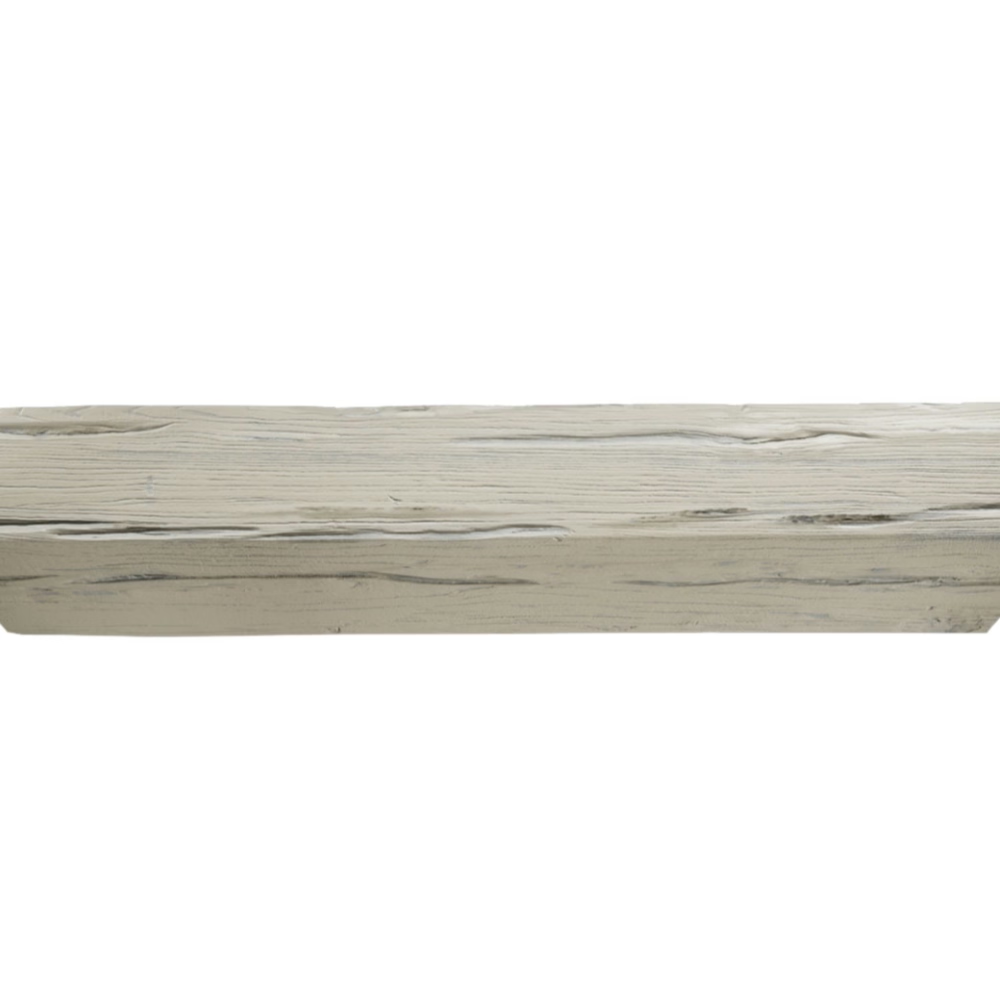
Contemporary construction increasingly integrates multiple building systems through coordinated design and construction processes. Ceiling elements interact with lighting, HVAC, fire protection, and acoustic systems. The ability of polyurethane beams to accommodate these interactions affects project success substantially.
Lighting integration benefits from the consistent manufacturing that polyurethane provides. Beams with integrated lighting channels position light sources precisely relative to the beam surfaces, creating predictable lighting effects without field fabrication. This consistency supports the coordination between architectural and electrical design that contemporary projects require.
HVAC integration may include supply or return connections through beam elements or coordination with diffusers located near beam installations. The manufacturing process can accommodate these requirements through custom fabrication that would be impractical with natural materials.
Fire protection coordination involves ensuring that beam installations do not compromise the performance of fire sprinkler systems or createCode compliance issues. Products with appropriate fire ratings address these concerns directly, with documentation available for inspection and specification.
Long-Term Value Proposition
The value proposition for polyurethane beams extends across the building lifecycle. Initial cost comparisons that focus only on material and installation miss the full picture of ownership costs. A more complete analysis considers maintenance requirements, replacement likelihood, and ultimate disposal or recycling.
Maintenance cost analysis favors polyurethane through the elimination of periodic refinishing that natural wood requires. The labor and material costs of refinishing, spread over the life of the installation, often exceed the initial premium that polyurethane may carry. Combined with the inconvenience of relocating furniture and managing the refinishing process, the maintenance advantage becomes substantial.
Replacement cost analysis considers the likelihood of damage and the cost of addressing it. Polyurethane's durability and moisture resistance reduce damage probability substantially. When damage does occur, replacement often involves simple removal and reinstallation rather than the repair or custom fabrication that natural materials might require.
End-of-life considerations are evolving as building deconstruction and material recovery gain attention. While polyurethane products are not currently widely recycled, their durability means that they often remain in service through multiple building generations, avoiding disposal altogether. The extended service life shifts the environmental equation in ways that simple material comparisons miss.
Man-made timber beams have earned their place in contemporary renovation practice. The combination of aesthetic capability, practical performance, and environmental responsibility addresses priorities that define current professional practice. Projects seeking to balance these requirements find polyurethane beams a compelling solution.
Technical References
ASTM standards cited in every specification
Test Data
Lab results from internal testing program
Updated 2026
Reviewed against current product specs


