Architecture has always embraced ornamentation as a means of expressing meaning, establishing status, and creating beauty. From the painted caves of prehistoric times through the elaborate carved interiors of Gothic cathedrals and the gilded salons of Baroque palaces, human beings have invested ceiling spaces with decorative treatment that transforms utilitarian surfaces into works of art. The impulse to beautify the overhead plane reflects something fundamental about how people relate to the spaces they inhabit.
The industrial era challenged this tradition. Mass production demanded standardization. Construction economics favored simplicity. The skilled craftsmen who once executed ornamental detail became rare and expensive. Modernist ideology explicitly rejected ornamentation as dishonest or unnecessary. The result was interior environments stripped of the decorative richness that previous generations took for granted.
Contemporary practice has recovered a more nuanced appreciation for ornamentation. The goal is no longer historical reproduction but rather thoughtful application of decorative treatment that serves contemporary purposes. Simulation wood beams in polyurethane support this approach by making ornamental ceiling treatments practically achievable.
The Role of Ornamentation in Contemporary Architecture
Contemporary attitudes toward ornamentation reject both the uncritical historicism that copies past forms without understanding their original purposes and the reflexive modernism that dismisses all decoration as waste. Instead, contemporary practice selects ornamental elements based on their ability to serve specific purposes in specific contexts.
Spatial characterization represents one such purpose. Ornamental ceiling treatments establish the character of a space—its associations, its ambitions, and its relationship to broader architectural traditions. A coffered ceiling in a courthouse communicates gravity and permanence. An exposed beam treatment in a restaurant suggests warmth and handcraft. The ornamentation serves communication rather than mere decoration.
Visual complexity addresses the human preference for environments with appropriate levels of visual interest. Spaces that are too plain feel sterile or institutional. Spaces with excessive decoration feel cluttered or overwhelming. The skill of design lies in calibrating ornamentation to create environments that engage without exhausting. Simulation wood beams provide tools for achieving this calibration.
Craft signaling operates through the visible evidence of skilled making. Contemporary interiors often lack the evidence of hand craftsmanship that traditional buildings display. Ornamental ceiling treatment provides an opportunity to reintroduce this craft signaling, suggesting care and attention that might otherwise be invisible. The quality of execution determines whether this signal reads as authentic or merely假装.
Profile Types for Ornamental Applications
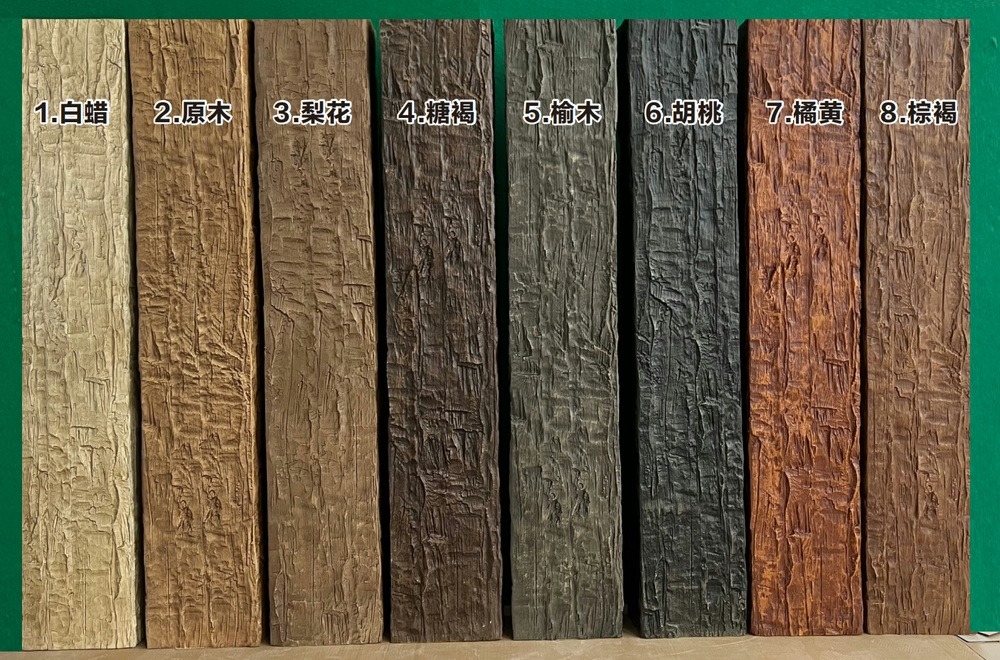
Ornamental beam profiles extend far beyond the simple rectangular shapes that structural timber typically presents. The manufacturing process that creates polyurethane beams supports complex profiles that would be difficult or impossible to produce in natural materials.
Scagliola and analogous decorative finishes create surfaces with subtle color variation and depth that suggest expensive stone or plaster. Polyurethane beams can receive these finishes through the same processes that produce them on other substrates, enabling ornamental effects that would be impractical in wood.
Fluted and reeded profiles add rhythmic surface texture through parallel channels or ridges. These treatments create visual interest through light and shadow, animating beam surfaces that might otherwise read as flat. The depth and spacing of flutes can be calibrated to the scale of the beam and the viewing distances in the installation.
Pediment-style beam ends create decorative terminations that frame beam installations and transition to surrounding surfaces. These ornamental treatments add refinement to installations that might otherwise feel utilitarian. The pediment profile can coordinate with other ornamental elements in the space for comprehensive design unity.
Integration With Ornamental Ceiling Systems
Ornamental beams rarely exist in isolation. They typically participate in ceiling systems that include multiple element types coordinated for overall effect. Understanding these systems helps designers specify components that work together effectively.
Coffered ceiling systems combine beams with recessed panels that create rhythmic grid patterns across ceiling surfaces. Polyurethane components for these systems include beam sections with compound profiles, panel inserts that fill the spaces between beams, and corner treatments that create clean intersections. The modular nature of these components allows design flexibility while maintaining production efficiency.
Crown and cornice integration connects beam installations with the wall-ceiling junction. Ornamental crown molding may follow the room perimeter, while beams may terminate at the cornice or pass through it to intersect with perpendicular beams. Coordinating the beam profile with the crown profile ensures that these elements read as a unified system rather than as separate additions.
Medallion and rosette placement creates focal points within beam grid patterns. These circular or polygonal ornaments often frame chandelier locations or mark ceiling centers. Polyurethane medallions coordinate with beam finishes while providing appropriate surface for fixture mounting. The combination creates ceiling compositions that balance grid regularity with focal emphasis.
Scale and Proportion Considerations
Ornamental treatments succeed or fail based largely on their relationship to the spaces they occupy. Beams that overwhelm small rooms create oppressive conditions. Delicate ornamentation in large spaces disappears into the visual noise. Calibrating ornamental treatment to spatial scale requires attention to both overall dimensions and fine detail.
Beam depth relative to ceiling height determines the visual weight of the treatment. Deep beams in low ceilings reduce the apparent height while adding substantial character. Shallower beams in higher ceilings maintain proportion while providing the ornamental interest that tall spaces often need.
Ornamental detail scale should relate to beam dimensions and viewing distances. Fine ornamental detail that appears refined at close range may disappear entirely when viewed from across a large room. Coarser detail that reads clearly at distance may appear crude up close. The range of viewing conditions in a space should inform detail specifications.
Grid spacing in multi-beam installations affects both the visual density of the treatment and the perceived scale of the room. Tighter spacing creates denser patterns that subdivide the ceiling visually, potentially reducing the apparent room size. Wider spacing maintains openness but may reduce the visual impact of the treatment.
Material Coordination in Ornamental Installations
Ornamental ceiling treatments rarely exist in isolation from surrounding materials. The coordination between beams and adjacent surfaces affects both the visual success of the installation and its relationship to the broader interior design.
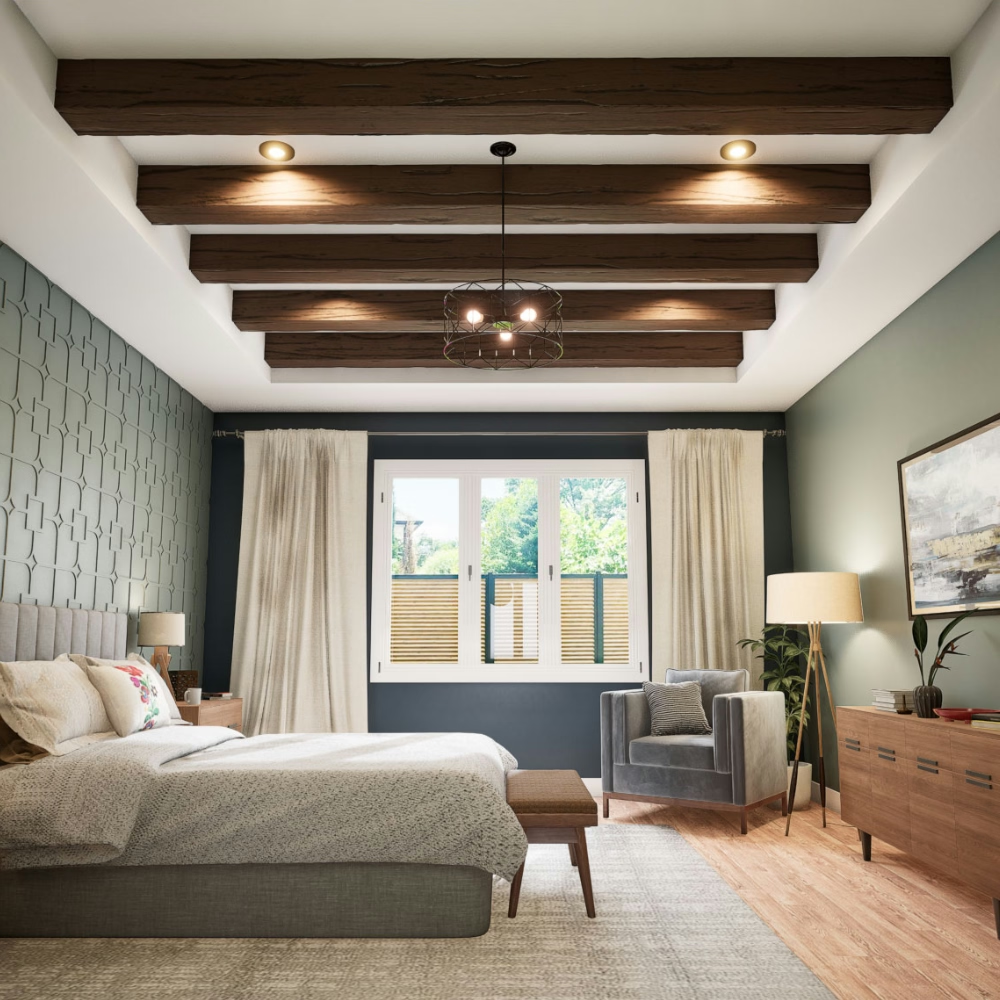
Wall surface treatment influences how beam-to-wall transitions read. If walls are smooth and beams are highly textured, the contrast may feel jarring rather than intentional. Coordinating the texture levels creates visual harmony that allows the ornamental treatment to contribute without overwhelming.
Floor surface materials affect the spatial perception that the ceiling treatment creates. Hard flooring materials reflect sound and light upward, making ceiling details more prominent. Soft floor coverings absorb these elements, reducing the visual intensity of overhead treatment. The flooring material should inform ceiling treatment specifications.
Lighting design interacts with ornamental ceilings in ways that require coordination during design development. Directional lighting from recessed fixtures creates shadows that animate ornamental surfaces. Ambient lighting from concealed sources provides even illumination that flattens the texture. The intended lighting approach should influence beam profile and detail specifications.
Execution Excellence in Ornamental Installations
The visual impact of ornamental ceiling treatment depends not only on design quality but also on installation quality. Details that are precisely executed reward close inspection. Details with visible gaps, misalignments, or damage undermine the design intent and suggest carelessness.
Joinery at beam intersections deserves careful attention. Mitered corners should meet tightly with consistent reveals. Scarf joints along beam lengths should disappear into the continuous surface. The installation should read as if the beams were carved from solid rather than assembled from pieces.
Finishing quality determines how seamlessly the installation integrates with surrounding surfaces. Caulk lines should be consistent and clean. Paint application should be even without runs or holidays. The transition between beam and ceiling should be smooth enough that the eye moves across it without pause.
Protection during subsequent construction phases prevents damage to completed ornamental installations. Dust, debris, and impact from other trades can compromise finished surfaces. Planning the sequence of work and protecting completed installations ensures that the ornamental treatment arrives at completion in condition to serve its intended purpose.
The tradition of architectural ornamentation continues through contemporary practice that selects and applies decorative treatment with purpose and skill. Simulation wood beams in polyurethane provide the means to achieve ornamental ceiling treatments that serve contemporary purposes while connecting to the rich history of architectural decoration.
Technical References
ASTM standards cited in every specification
Test Data
Lab results from internal testing program
Updated 2026
Reviewed against current product specs


