Luxury design operates by different rules than mainstream residential or commercial practice. The constraint is not budget in the conventional sense but rather the achievability of the extraordinary. Clients commissioning luxury interiors expect spaces that do not exist elsewhere, elements that cannot be found in product catalogs, and details that reflect not just current fashion but timeless design quality. Meeting these expectations requires capabilities that standard manufacturing and distribution channels cannot provide.
Custom fabrication of architectural elements addresses this expectation directly. The ability to translate design intent into physical reality without the compromises that available products impose creates opportunities for authentic luxury expression. When the difference between standard and custom determines whether a design succeeds or merely satisfies, the custom path becomes the only reasonable choice.
Polyurethane as a manufacturing medium proves particularly well-suited to custom fabrication for luxury applications. The processes that create custom polyurethane elements support complexity, precision, and finish quality that competing materials cannot match economically or reliably.
The Custom Fabrication Process
Custom beam fabrication begins with design development that translates client vision into manufacturable specifications. This phase involves exploration, refinement, and technical evaluation that shapes the final product before manufacturing begins.
Concept development explores possibilities through sketches, references, and discussion. The designer and client work together to articulate what the custom beam should achieve visually, how it should relate to surrounding elements, and what associations or qualities it should convey. This exploration may generate multiple directions before converging on a preferred approach.
Technical refinement develops the concept into detailed specifications that define dimensions, profiles, and finish requirements precisely. Computer modeling enables visualization and modification that would be impractical through physical prototyping alone. The model serves as the authoritative reference for all subsequent manufacturing steps.
Prototyping produces physical samples that allow evaluation of appearance, proportion, and detail before full production commitment. The prototype may be produced using rapid manufacturing methods that do not match final production processes but capture the essential characteristics for review. Modifications identified through prototype evaluation are incorporated before production tooling proceeds.
Production tooling creates the molds and fixtures required for volume manufacturing. This investment commits substantial resources to the custom design, which is why the prototyping and refinement phases are so important. Once tooling exists, modifications become expensive and time-consuming.
Full production manufactures the beam elements using the custom tooling. Quality control ensures that each piece matches specifications and integrates properly with adjacent elements. Packaging and shipping prepare the completed pieces for delivery to the installation site.
Design Collaboration and Creative Partnership
Luxury projects benefit from collaboration that extends beyond transactional vendor relationships. The designer's vision, the manufacturer's capabilities, and the client's aspirations align most effectively when all parties engage as creative partners rather than as separate parties with conflicting interests.
Early manufacturer involvement during design development enables feasibility assessment that prevents impractical specifications. Understanding manufacturing capabilities and limitations during design avoids costly revisions later when production tooling may already exist. The most successful custom projects begin manufacturer engagement during schematic design rather than waiting until construction documents are complete.
Material consultation explores options that the designer's experience might not encompass. Manufacturers with deep material expertise can suggest alternatives, combinations, or variations that expand the design vocabulary available. These suggestions often become signature elements that define the project's uniqueness.
Finish development creates proprietary appearances that cannot be achieved through standard product selection. The collaboration between designer and manufacturer's finishing specialists produces results that reflect both parties' expertise. The finished beams become distinguished not just by their form but by their surface character.
Custom Profile Capabilities
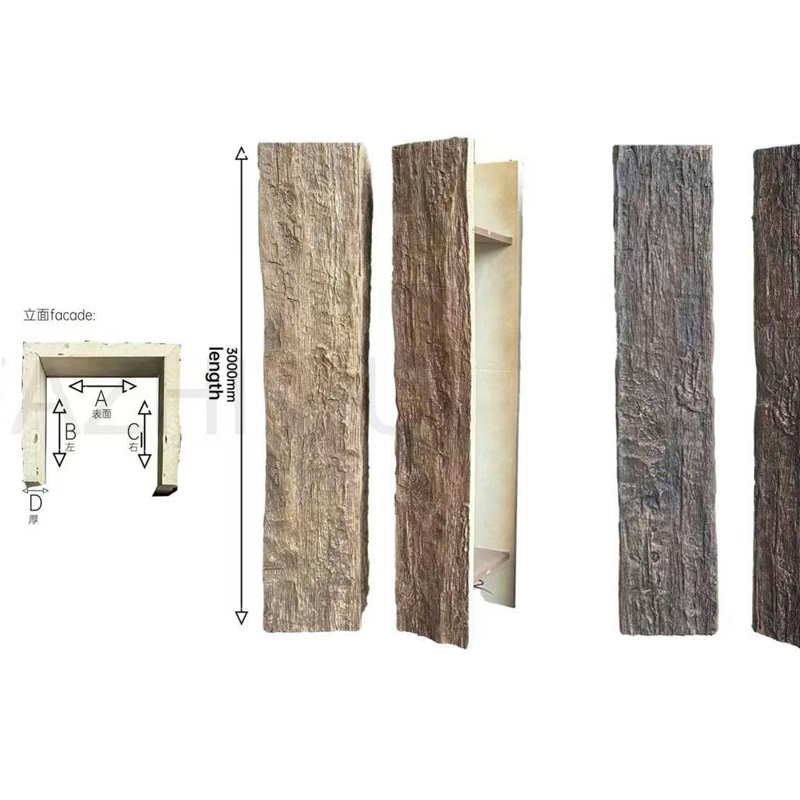
The flexibility of polyurethane molding supports profile complexity that wood cannot economically achieve and that plaster cannot reliably produce at large scale. Custom profiles limited only by design imagination become practical through this manufacturing approach.
Variable cross-sections change dimensions along the beam length, creating tapered, swelled, or otherwise profiled forms that wood naturally cannot provide. These variations add visual interest and dynamic quality that uniform cross-sections lack. The ability to specify exact variations rather than choosing from available options gives designers unprecedented control.
Compound curves in multiple axes create three-dimensional forms that flat-profile elements cannot achieve. Beams that twist, spiral, or undulate along their length become possibilities rather than impossibilities. These forms challenge manufacturing but deliver results that reward the effort.
Integrated features combine multiple functions in single elements. A beam that incorporates lighting channels, structural connections, and decorative surfaces simultaneously replaces what would otherwise require multiple separate components. This integration reduces visual complexity while expanding functional capability.
Proprietary Finish Development
The finish of a custom beam often matters as much as its form. A unique profile with a generic finish reads as custom but not necessarily luxurious. Proprietary finish development creates surface character that cannot be replicated from catalog selections.
Color matching to specific references ensures that beams coordinate precisely with other design elements. A fabric, a stone, a specific wood species—any reference can be matched through custom color development. The precision of this matching distinguishes luxury interiors from those that merely approximate their intentions.
Texture development creates surface character that reinforces the design narrative. Smooth, tactile, rough, refined—the texture vocabulary available for custom development spans the full range of possibilities. The chosen texture should align with the project's design language and the qualities it intends to convey.
Aging and patina effects simulate the passage of time and the accumulation of character that antique elements possess. Custom aging development can recreate specific periods, create generic antique character, or develop entirely new surface treatments that suggest history without replicating it. These effects add depth and interest that fresh-finished surfaces lack.
Project Scale and Complexity Considerations
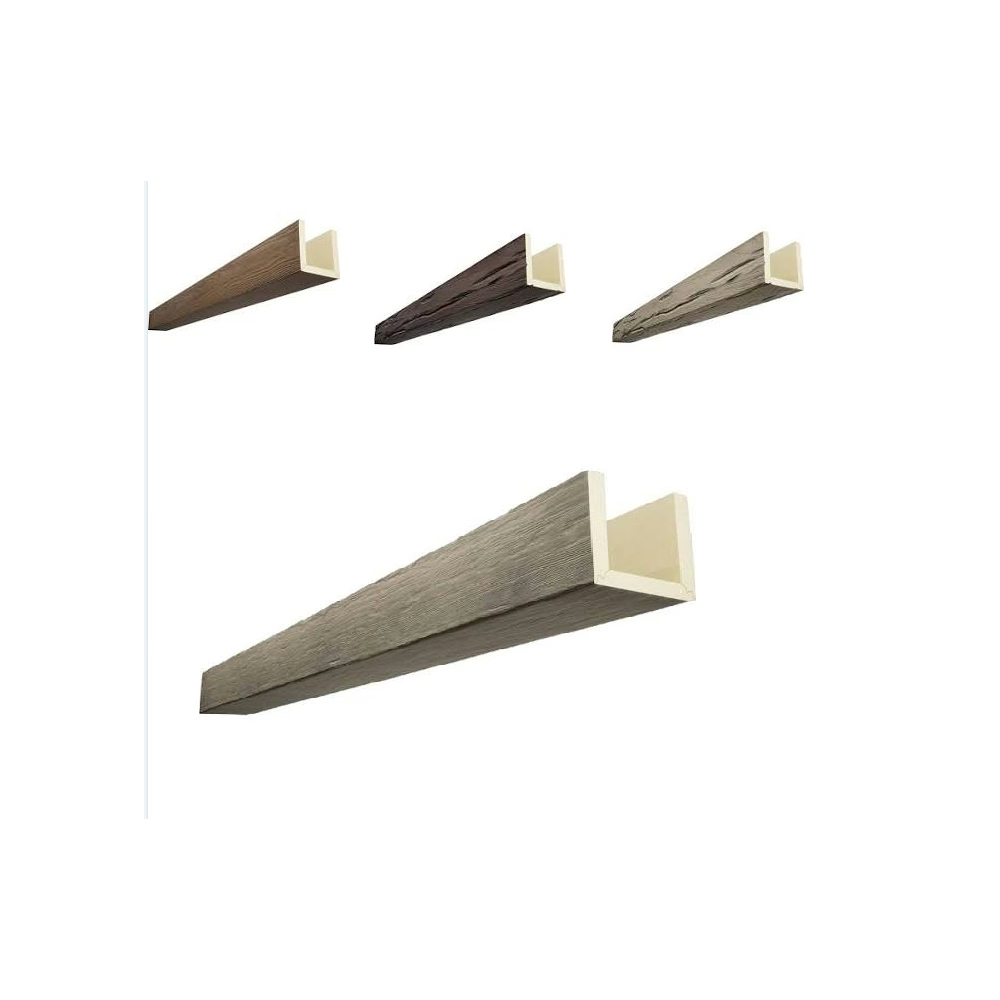
Custom fabrication serves projects across a wide range of scales and complexity levels. Understanding how these factors affect process and cost helps set appropriate expectations.
Small projects with complex requirements often benefit most from custom fabrication. When standard products cannot achieve the desired result and the quantity involved does not justify extensive tooling investment, custom methods using rapid manufacturing approaches may be appropriate. These approaches accept higher per-unit costs in exchange for avoiding tooling expense.
Large projects with complex requirements represent the ideal application for full custom fabrication. The tooling investment spreads across more units, reducing per-unit cost. The extended production run justifies the lead time and process development that custom fabrication requires.
Repeat projects leverage custom tooling across multiple production runs. A hotel chain developing a signature design for multiple properties, or a developer building multiple residential projects with consistent design language, benefits from tooling that exists from the first project and is reused for subsequent ones.
Investment and Value Assessment
Custom fabrication requires investment that exceeds standard product costs. Evaluating this investment requires understanding what the additional spending delivers.
Design exclusivity represents the primary value proposition. Custom beams exist in no catalog, no competitor's project, no online search. The client receives something that belongs to their project alone, distinguishing their interior from any other.
Quality optimization through custom specification ensures that every dimension, profile, and detail serves the specific application. Standard products represent compromise solutions that satisfy general requirements but may not optimally serve particular needs. Custom eliminates this compromise.
Integration benefits follow from designing all elements together rather than selecting from independent catalogs. Custom beams developed in coordination with other custom elements achieve a fit and finish that independently selected products cannot match.
The investment in custom fabrication delivers returns that cannot be measured in cost-per-unit comparisons. For projects where the extraordinary is the expectation, custom faux wood beams provide the means to achieve it.
Technical References
ASTM standards cited in every specification
Test Data
Lab results from internal testing program
Updated 2026
Reviewed against current product specs


