Building ornamentation serves purposes beyond mere decoration, contributing to perceived scale, visual weight, and architectural character that shapes how spaces feel and function. Polyurethane faux beams offer an efficient way to incorporate timber aesthetics into ornamentation schemes without the expense and complications of structural timber. Understanding the design possibilities helps architects and designers exploit these products effectively.

The Role of Beams in Architectural Ornamentation
Beams create visual anchors that define spaces and direct attention within interiors. A fireplace surrounded by exposed beams draws the eye and establishes the hearth as the focal point. Beams crossing ceilings at regular intervals provide rhythm that makes large spaces feel organized rather than overwhelming. The weight and presence that beams bring to interiors cannot easily be replicated by other means.
Scale perception responds to beam installation in predictable ways. Heavy, deeply detailed beams make ceilings appear lower and rooms feel more intimate. Lighter, simpler profiles create a sense of airiness that suits contemporary spaces. Matching beam character to the desired spatial feeling requires understanding these psychological effects and selecting accordingly.
Period authenticity often depends on appropriate beam details. Tudor revival homes demand the heavy, exposed timber aesthetic of medieval construction. Craftsman bungalows benefit from simpler beams that complement the movement's emphasis on honest materials. Victorian interiors may incorporate decorative beam ends and carved details that reflect the era's ornamental tendencies.
Profile Selection for Ornamental Applications
Coffered beam profiles create formal, classical interiors with their recessed panel details. These beams feature flat central sections with decorative molded frames around the perimeter. The panel details catch light dramatically and add depth to ceiling surfaces. Coffered beams work particularly well in dining rooms, libraries, and formal living spaces where their refined character suits the occasion.

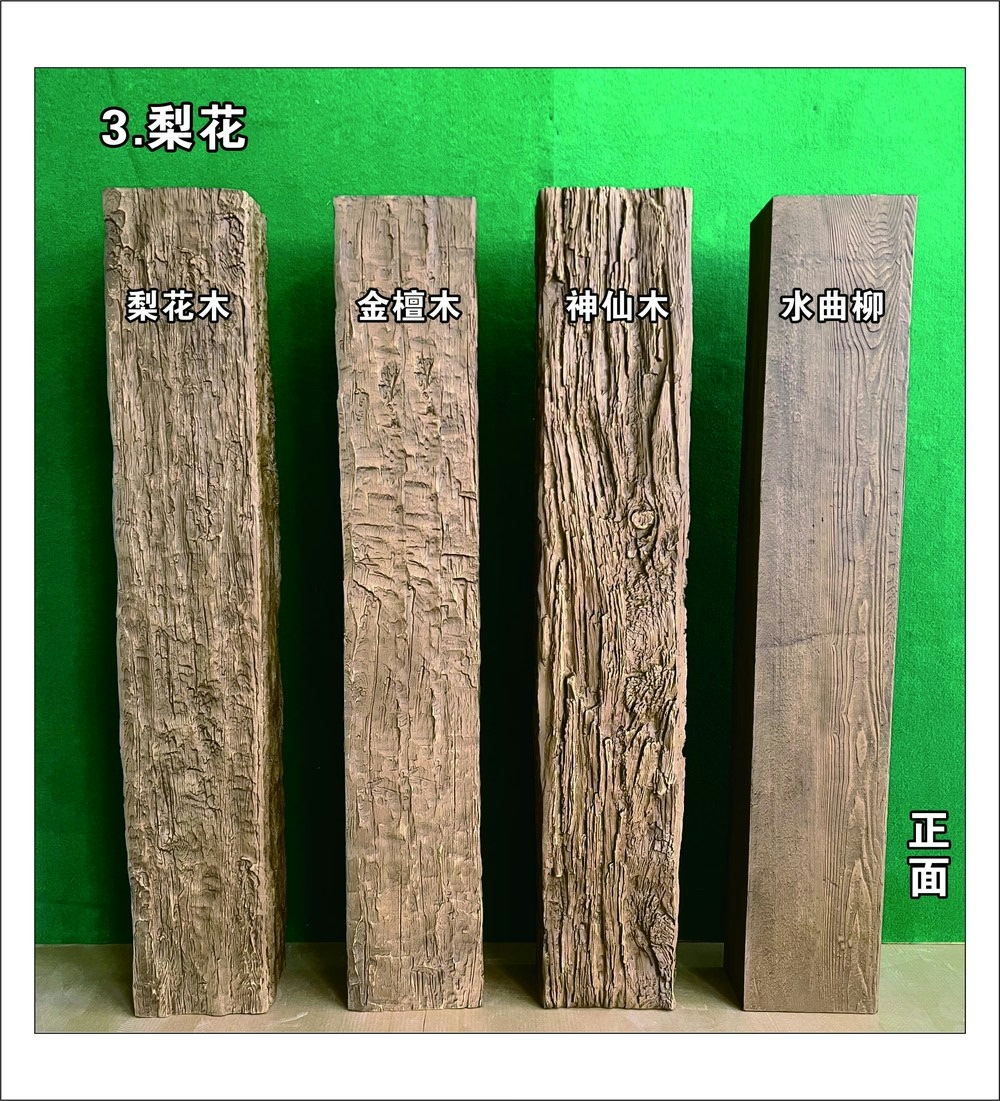
Timber frame style beams capture the essence of traditional joinery without requiring actual structural timber. Available in both authentic reproductions and updated interpretations, these profiles feature pegged joints, chamfered edges, and other details that reference traditional timber framing. The detail level can be adjusted to suit project budgets while maintaining the essential character.
V-groove and tongue-and-groove beam profiles offer simpler aesthetics appropriate for contemporary applications. These beams feature the linear shadow lines that paneling creates, adding interest without overwhelming minimalist interiors. The clean lines suit modern and transitional spaces where heavy ornamentation would feel out of place.
Custom profile development expands the design possibilities significantly. Manufacturers can create unique profiles that match specific design requirements or replicate historic details no longer available in standard options. Custom tooling costs spread across larger orders can make custom profiles surprisingly affordable, particularly for substantial installations.
Color and Finish Considerations
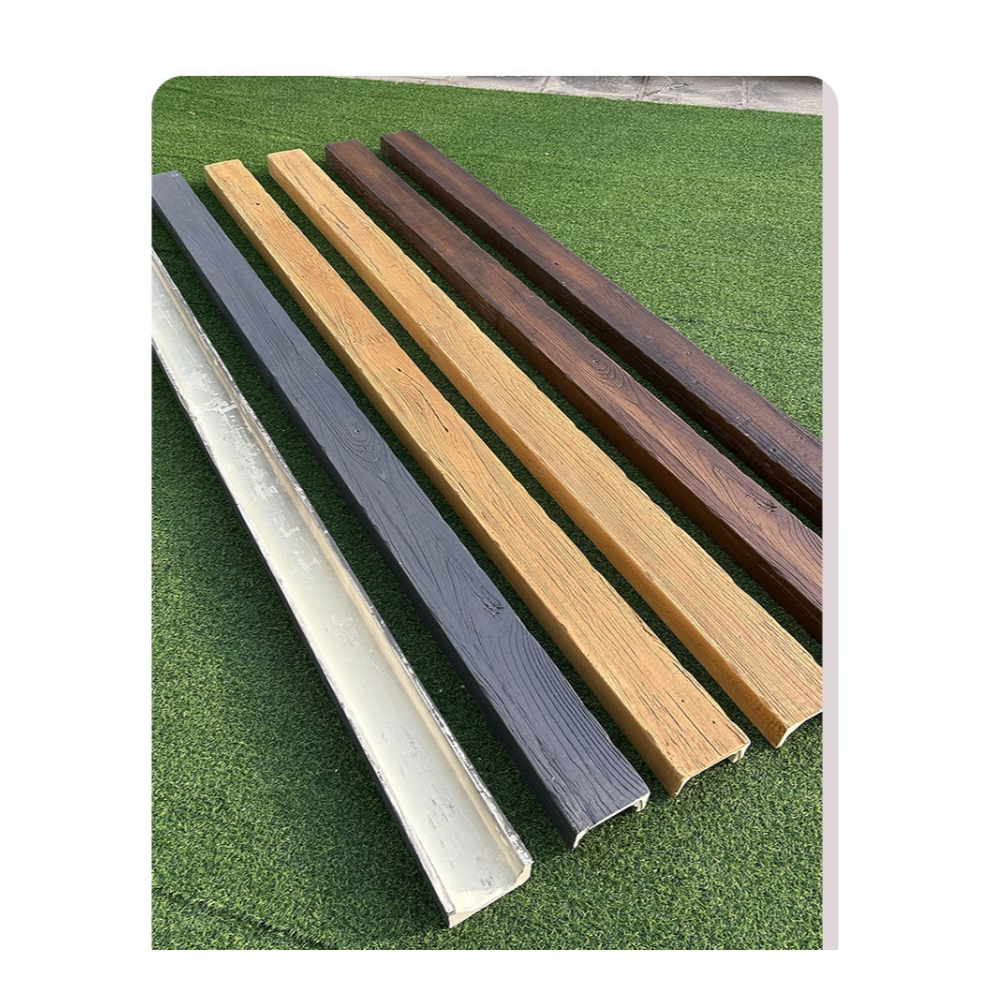
Stained finishes authentically replicate the rich tones of natural timber. From light honey oaks to deep mahoganies, stain colors can be selected to coordinate with existing woodwork or create deliberate contrasts. Premium stain application produces color that penetrates below the surface, creating depth that surface painting cannot achieve. The stained appearance holds up better to wear than painted finishes in most applications.
Painted finishes suit spaces where beams should recede visually or coordinate with white or colored ceilings. High-quality paint application over properly prepared surfaces provides long-lasting results. Painted beams in the same color as the ceiling create the effect of beams painted the same color as the surrounding woodwork, a treatment that reads as intentional rather than afterthought.
Natural finish options preserve the appearance of bare polyurethane while providing necessary protection. These finishes work well when the material's identity as faux wood is embraced rather than concealed. The technological aesthetic of perfectly reproduced wood grain on synthetic material can itself become a design statement in contemporary contexts.
Two-tone treatments that stain the recessed surfaces while painting raised details create visual depth that enhances authenticity. This technique requires additional finishing steps but produces results that more closely approach natural wood appearance. The additional cost is modest for professionally finished products but significant for site-applied treatments.
Integration with Other Ornamental Elements
Beam corbels and brackets add vertical support elements that enhance authenticity. These decorative pieces mount where beams meet walls or other vertical surfaces, creating the appearance of structural support while providing practical mounting locations. Available in sizes and styles to match beam profiles, corbels and brackets transform simple beam runs into complete architectural compositions.
Beam straps and plates introduce metal decorative elements that complement timber aesthetics. Wrought iron straps crossing beams at intervals or plates at connection points reference traditional hardware while adding visual interest. These metal elements create contrast that makes wood surfaces appear more substantial and authentic.
Crown moldings and cornices integrate with beams to create complete ceiling trim systems. Moldings framing beam perimeters or filling the gap between beams and walls create finished transitions that elevate overall appearance. Coordinating molding and beam profiles ensures cohesive design that appears intentional rather than assembled from unrelated parts.
Light fixtures mounted on or within beams extend ornamentation while providing functional illumination. Plate steel mounting plates that appear to support beams can simultaneously serve as fixture mounting points. Recessed lighting installed between beams provides illumination without interrupting beam visual impact.
Installation Approaches for Ornamental Beams
Suspended mounting systems create floating appearances where beams seem to hover below ceiling surfaces. This approach works particularly well with shorter beam runs and where ceiling access for mounting would be difficult. The visual effect of floating beams adds drama and interest that surface mounting cannot achieve.
Furring systems create mounting surfaces flush with ceiling planes where beams will be installed. This approach accommodates wiring and mechanical systems within the furring space while providing solid backing for beam attachment. Furring installation requires coordination with mechanical trades but produces cleaner results than surface mounting.
Z-clip systems provide secure attachment while allowing beams to be removed for access or modification. Aluminum z-shaped clips mount to structural backing and engage corresponding channels in beam backs, securing beams without visible fasteners. This approach facilitates maintenance access while maintaining the appearance of permanent installation.
Adhesive mounting supplements mechanical attachment in many installations. Construction adhesive between beams and mounting surfaces distributes weight and prevents movement. Adhesive works best with close-tolerance installations where beams fit snugly against mounting surfaces. Mechanical attachment should never be omitted in favor of adhesive alone.
Design Guidance for Ornamental Applications
Scale relationships matter significantly in ornamental beam installations. Beams that appear too small for their span look trivial rather than authentic. Generally, deeper beams with more substantial profiles create more convincing results. When in doubt, err toward larger, more heavily detailed options that will make appropriate visual impact.
Coordination with other woodwork ensures that beams contribute to rather than complicate overall design. Matching beam color and finish to existing woodwork creates continuity, while deliberate contrast can create visual interest when done intentionally. Avoiding awkward middle-ground where beam woodwork clashes with nearby elements without clearly contrasting.
Lighting design should be planned concurrently with beam selection. Light fixtures positioned to illuminate beam surfaces create dramatic effects, while fixtures positioned to shine into rooms may create shadows that undermine the intended effect. Mock-up installations or detailed lighting calculations help verify that the intended effect will be achieved before commitment to specific beam options.
Technical References
ASTM standards cited in every specification
Test Data
Lab results from internal testing program
Updated 2026
Reviewed against current product specs


