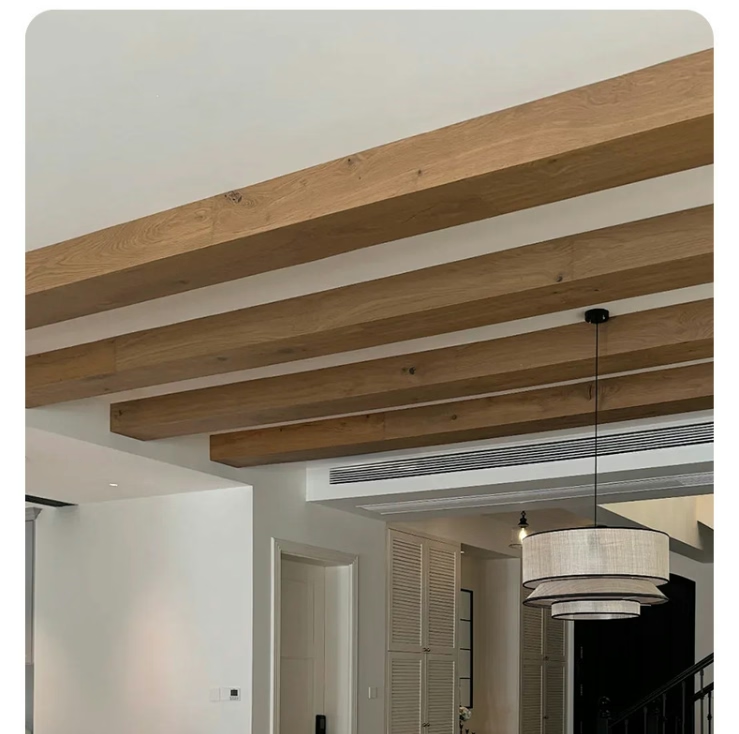
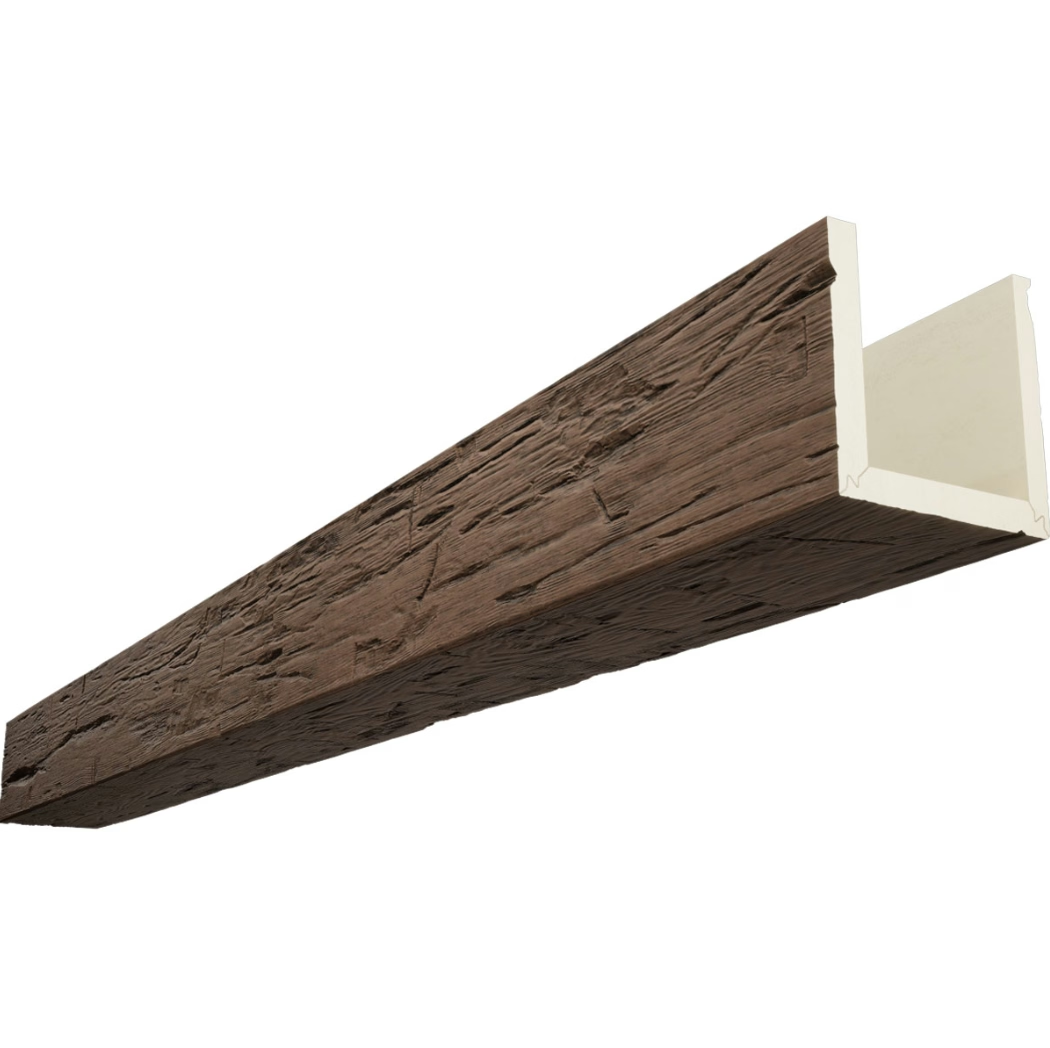
Chinese polyurethane manufacturers have established significant capabilities in faux wood beam production, serving markets worldwide with products ranging from standard catalog items to fully customized specifications. The combination of manufacturing expertise, competitive pricing, and substantial production capacity makes Chinese suppliers attractive partners for businesses ranging from small distributors to major construction firms. Understanding how to work effectively with these manufacturers ensures successful outcomes.

Manufacturing Capabilities Overview
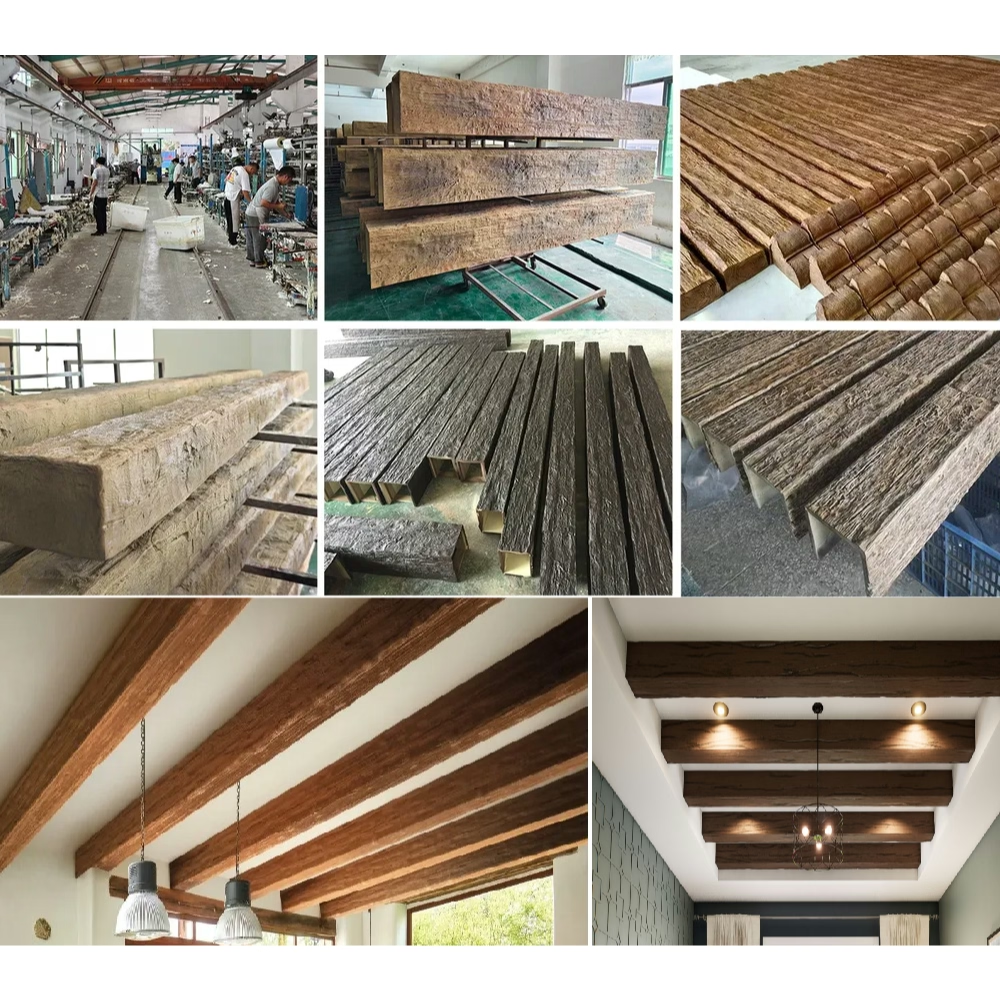
Chinese polyurethane manufacturers have invested heavily in production equipment that matches or exceeds capabilities elsewhere. Modern facilities include computer-controlled mixing systems, precision molds, and automated finishing lines that produce consistent results at high volumes. This equipment investment reflects confidence in continued market growth and the desire to serve premium market segments.
Formulation expertise developed over decades of serving diverse markets enables Chinese manufacturers to produce polyurethane products for varied applications. From standard density formulations to specialized compounds with enhanced properties, manufacturers offer ranges that address most requirement categories. Custom formulation development, while requiring additional time and investment, extends capabilities further.
Production capacity at major facilities often exceeds what Western manufacturers can offer, enabling large orders to be fulfilled without the production bottlenecks that plague smaller operations. Capacity reserves allow flexible scheduling that accommodates rush orders when necessary, though premium pricing typically applies for expedited production.
Quality management systems at leading facilities have achieved international certifications including ISO 9001 and similar standards. These systems provide frameworks for consistent production and documentation that supports quality assurance requirements. Verification through third-party audits confirms system effectiveness.
Customization Options
Profile customization creates unique beam shapes that standard catalogs cannot provide. Detailed drawings or reference samples enable manufacturers to develop tooling for custom profiles. Tooling investment varies with complexity but typically ranges from moderate to substantial depending on profile intricacy.

Color matching services produce finishes that coordinate with specific design requirements. Laboratory color matching using spectrophotometric analysis ensures accurate reproduction of target colors. Sample approval processes verify that matched colors meet expectations before production commitment.
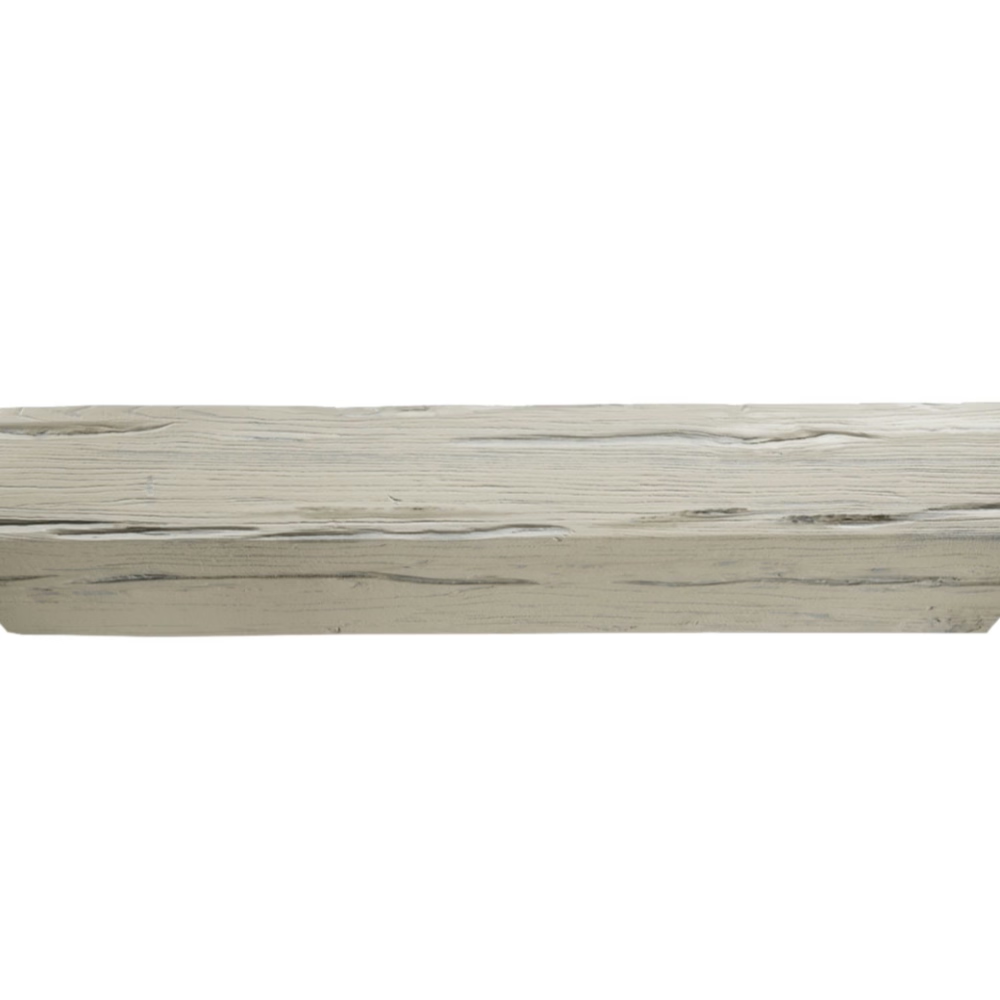
Surface texture modification adjusts the appearance of wood grain and other surface characteristics. From extremely smooth contemporary surfaces to heavily textured rustic appearances, texture options span broad ranges. Texture selection affects both appearance and finishing requirements.
Specialized formulations address specific performance requirements. Fire retardant, antimicrobial, and enhanced UV resistance all require formulation adjustments. Discussing performance requirements during specification development ensures appropriate compound selection.
Communication and Specification
Clear specification writing prevents misunderstandings that waste time and money. Written specifications supplemented by visual references communicate requirements most effectively. Photographs, drawings, and physical samples together provide comprehensive guidance.
Time zone considerations affect communication scheduling but rarely create insurmountable problems. Establishing communication windows that overlap normal working hours facilitates real-time discussion when needed. Asynchronous communication through email and messaging accommodates most routine coordination.
Translation quality affects specification accuracy when working across languages. Professional translation of technical documents ensures that manufacturing personnel understand requirements correctly. Some manufacturers provide English-speaking personnel who facilitate direct communication.
Visual documentation compensates for language limitations by communicating through images rather than words. Photographs showing desired appearance, installation examples, and unacceptable alternatives communicate effectively across language barriers. Building libraries of reference images supports ongoing collaboration.
Quality Assurance Strategies
Pre-production samples verify that manufacturing processes can produce acceptable products before full production commitment. Sample review identifies any necessary adjustments to formulations, colors, or techniques. This investment prevents production errors that would affect entire orders.
In-process inspection during production catches problems before entire batches are complete. Requesting inspection reports or photographs during production provides visibility into ongoing work. This approach requires more engagement but prevents problems from developing undetected.
Third-party inspection services provide independent verification of product quality. Companies specializing in factory inspection offer services ranging from simple visual verification to comprehensive quality assessment. Third-party inspection provides comfort when direct oversight is impractical.
Load testing and certification for specific applications may be required for commercial installations. Manufacturers can arrange testing through recognized laboratories when projects require documented performance verification. Planning for testing requirements early in projects prevents delays.
Logistics and Shipping
Ocean freight represents the primary shipping method for international orders from China. Transit times typically range from two to six weeks depending on destination and service level. Understanding lead times helps plan orders that arrive when needed without excessive inventory accumulation.
Shipping cost calculation requires attention to dimensional weight versus actual weight. Polyurethane beams' relatively light weight means that dimensional constraints often govern container utilization rather than weight limits. Optimizing package configuration maximizes container efficiency.
Port congestion and delay variability affect transit time predictability. Recent years have demonstrated how external factors can disrupt shipping schedules unexpectedly. Building schedule buffers helps accommodate delays without impacting project timelines.
Customs clearance processes vary significantly by destination country. Understanding import requirements for destination markets prevents delays at borders. Some manufacturers offer customs clearance assistance that simplifies this process.
Building Manufacturing Relationships
Factory visits provide insights that remote communication cannot match. Seeing production facilities, meeting personnel, and observing processes builds understanding that improves collaboration. Many manufacturers welcome visits from serious potential partners.
Long-term relationship development often yields benefits that transactional purchasing cannot provide. Preferred customer status may bring pricing advantages, priority scheduling, or enhanced service levels. Demonstrating commitment through consistent order flow encourages manufacturers to invest in relationship maintenance.
Volume commitment discussions establish expectations that benefit both parties. Manufacturers gain production planning visibility while buyers secure supply commitments and potentially better pricing. Structure commitments to protect both parties' interests.
Performance feedback helps manufacturers improve products and service over time. Sharing experiences, both positive and negative, enables continuous improvement. Manufacturers who receive constructive feedback can address issues and enhance capabilities.
Risk Management
Payment terms protection uses instruments like letters of credit or escrow services that release funds only when conditions are met. These arrangements add cost but provide meaningful protection for significant orders.
Quality dispute resolution processes should be established before problems arise. Understanding how manufacturers handle claims, returns, and credits prevents surprises when issues occur. Written agreements that define resolution procedures provide frameworks for addressing problems fairly.
Supply continuity planning addresses the risk of supplier inability to fulfill. Maintaining relationships with backup suppliers or domestic alternatives provides alternatives if primary sources encounter difficulties. Diversification reduces concentration risk.
Intellectual property protection concerns legitimate manufacturers more than disreputable ones. Working with established companies that respect intellectual property rights reduces risks. Clear agreements about proprietary designs and specifications provide additional protection.
Technical References
ASTM standards cited in every specification
Test Data
Lab results from internal testing program
Updated 2026
Reviewed against current product specs