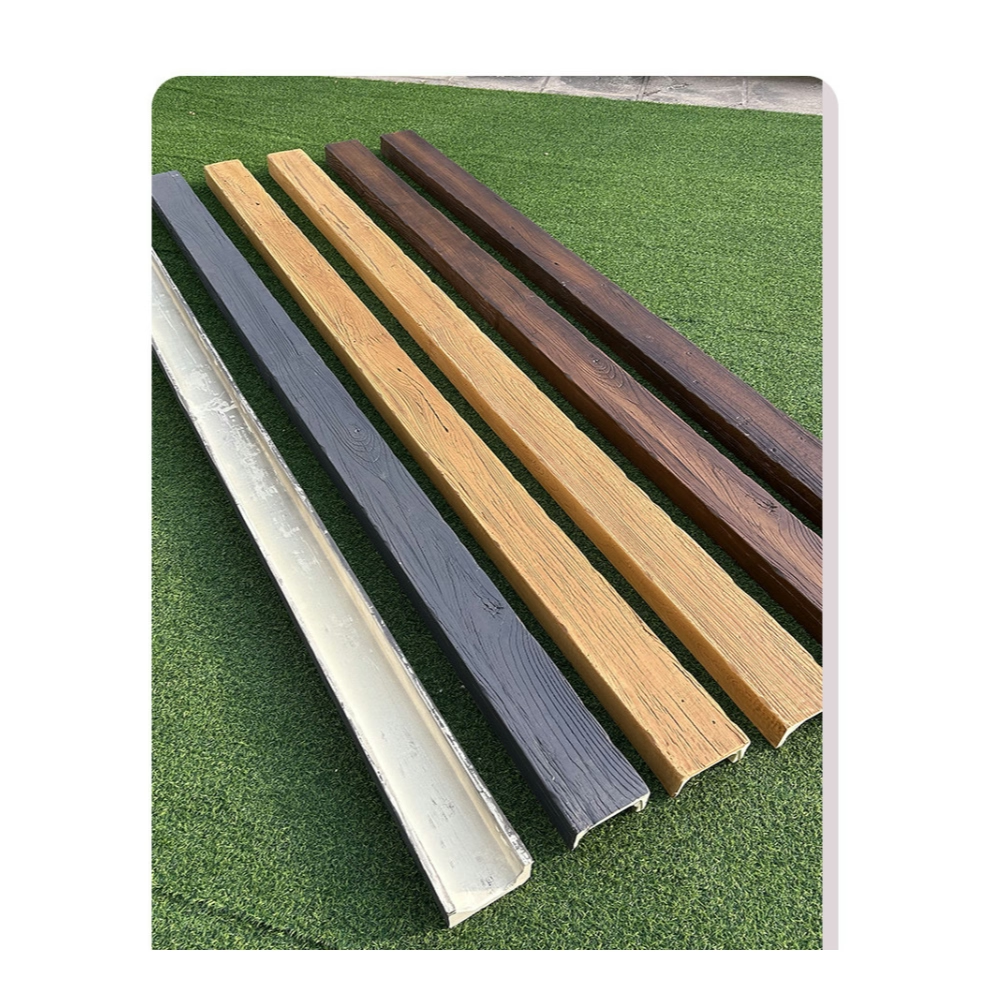
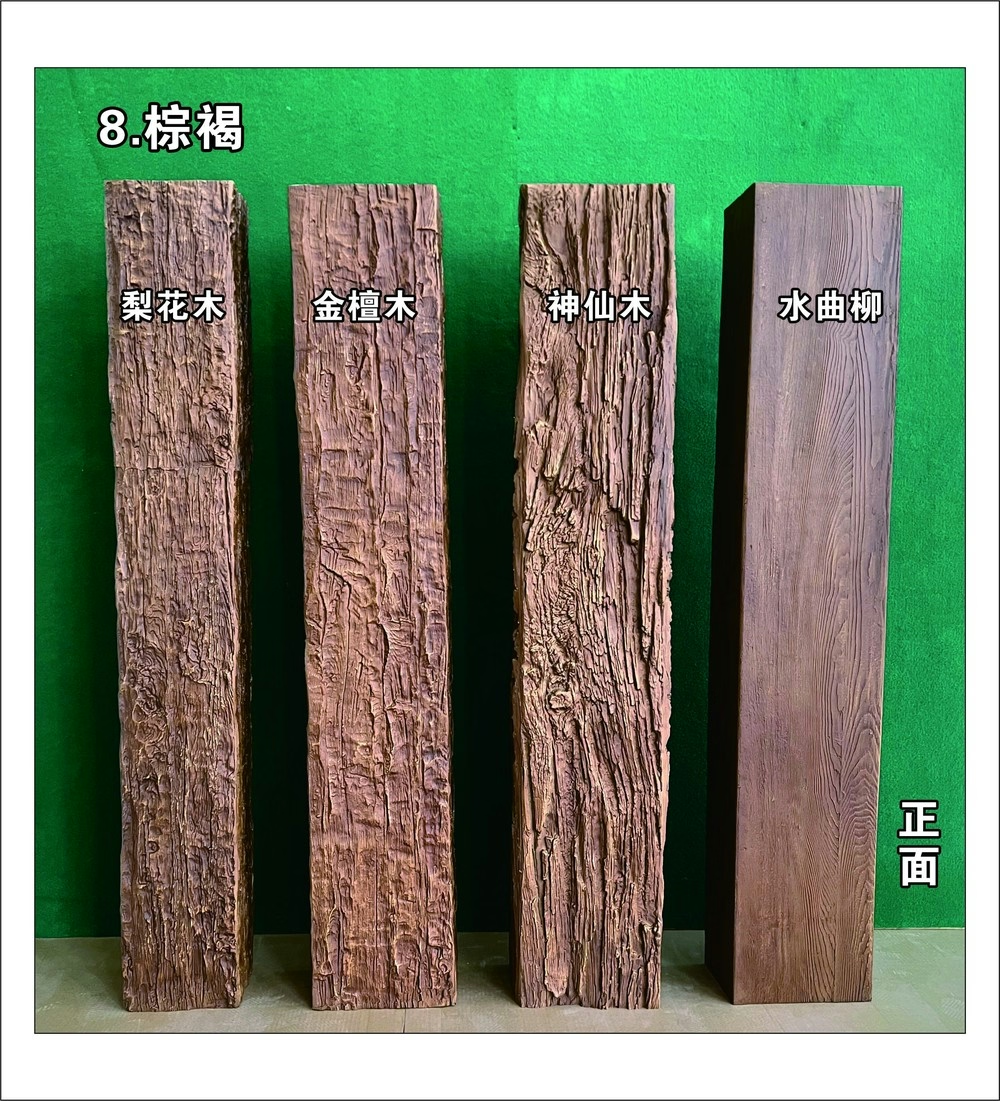
Sagging in polyurethane faux wood beams represents one of the most common issues encountered after installation, and addressing it requires understanding both the causes of the problem and the appropriate correction techniques. While polyurethane beams are significantly lighter than solid timber, they still carry meaningful weight that, when improperly supported or subjected to environmental conditions, can lead to visible deflection over time. Professional fixing methods restore both appearance and structural integrity while implementing measures that prevent recurrence.
Diagnosis precedes any repair effort, as effective solutions depend on accurately identifying the underlying cause of sag. Insufficient support spacing represents the most frequent culprit, where beams were mounted with attachment points too far apart to resist the forces of gravity and material weight. Thermal expansion and contraction can exaggerate existing sag in environments with significant temperature variations. Inadequate adhesive bonding between beam segments allows joints to separate and beams to deflect. Moisture infiltration, though less common with polyurethane than solid wood, can affect beams in consistently humid environments. Careful inspection reveals which factors contribute to specific sag situations.
Assessment of sag severity determines appropriate repair approaches. Minor deflection—where beams show slight curvature but remain securely attached—often requires only cosmetic correction and additional support installation. Moderate sag affecting beam appearance without compromising structural attachment might require a combination of repositioning, reinforcement, and refinishing. Severe sag indicating potential attachment failure demands immediate attention to prevent beams from falling, potentially requiring complete reinstallation rather than repair. Professional evaluation distinguishes between these severity levels and recommends appropriate responses.
Temporary support installation provides immediate safety while permanent repairs proceed. Installing adjustable support posts beneath sagging beams prevents further deflection during assessment and repair planning. These temporary supports should bear against solid structural elements, not ceiling drywall that cannot safely resist beam weight. The temporary support remains in place until permanent corrections are complete, ensuring that damaged beams do not fall during repair work. Careful documentation of support locations aids subsequent repair planning.
Reattachment procedures address sag resulting from failed mounting connections. This work requires accessing attachment points from above, either through attic spaces or by temporarily removing ceiling sections. Each attachment location receives inspection to assess condition of existing hardware, substrate material, and beam connection. Replacement hardware installs as needed, with attention to proper fastener selection for specific substrate materials and appropriate spacing between attachment points. Reattachment procedures should exceed original installation quality to prevent repeated failures.
Support reinforcement adds intermediate attachment points where original spacing proved insufficient. Strategic placement of these additional supports distributes beam weight more effectively, reducing deflection between original mounting locations. Reinforcement options include concealed mounting brackets installed above beams, adhesive bonds between beams and ceiling substrates, and mechanical fasteners through beam bottoms into structural elements. Selection among these options depends on ceiling construction, beam profile, and visual accessibility of repair locations.
Joint repair addresses sag originating at beam connection points. Mitered corners, butt joints, and beam-to-beam connections often show the first visible signs of sag as these locations experience the greatest stress. Repair approaches include reinforcing joints with hidden metal plates, injecting structural adhesive into separation gaps, and adding surface-mounted trim pieces that conceal repair work while providing additional strength. After repair, joints should appear seamless while demonstrating improved resistance to separation forces.
Realignment procedures correct accumulated sag that has developed gradually over time. This process involves carefully removing beams from their current positions, addressing underlying support issues, and reinstalling in properly aligned orientations. Realistic expectations are important—beams that have sagged for extended periods may not return completely to original positions, and some residual curvature might remain visible after realignment. Complete reinstallation often provides superior results compared to attempting adjustment of beams that have conformed to sagging positions.
Finish repair becomes necessary when beam surfaces show damage from repair procedures or age-related issues that sag exacerbates. Surface scratches, dents, and finish disruption require refinishing to restore original appearance. Minor damage can often be repaired in place using appropriate fill materials and touch-up finishing. Extensive damage may require beam removal for refinishing in a controlled environment before reinstallation. Professional finish matching ensures that repaired areas blend seamlessly with surrounding surfaces.
Prevention measures implemented during repair protect against future sag problems. Increased support density using closer fastener spacing provides redundant strength that resists gravitational forces. High-quality adhesive applied along full beam lengths supplements mechanical fastening. Expansion accommodation through appropriate gaps at beam ends prevents thermal stress that could compromise attachments. Environmental control measures including dehumidification in humid climates and insulation in extreme temperature environments reduce conditions promoting sag development.
Documentation of repair work provides valuable reference for future maintenance and troubleshooting. Professional repair records include photographs of conditions before, during, and after repair, along with specifications of materials and techniques used. This documentation allows assessment of repair quality and informs future maintenance decisions. For commercial installations, repair documentation supports warranty claims and building inspection requirements.
Professional repair services offer advantages over DIY approaches, particularly for significant sag issues. Experienced technicians bring diagnostic skills that accurately identify root causes, repair techniques refined through numerous similar projects, access to professional-grade materials and tools, and warranty protection on completed work. While professional repair costs exceed DIY expenses, the assurance of proper correction and prevention often proves more economical than repeated DIY attempts that fail to fully address underlying issues.

Follow-up inspection after repair completion verifies that corrections achieved intended results. Measurement of beam alignment before and after repair documents improvement and identifies any remaining concerns. Stress testing through gentle pressure application confirms that attachment strength adequately resists normal forces. Final finish inspection ensures that repaired areas meet appearance standards. This verification provides assurance that repaired beams will perform reliably going forward.
Long-term monitoring of repaired beams identifies any recurrence of sag problems that might indicate incomplete repair or new issues developing. Regular visual inspection during routine ceiling maintenance allows early identification of developing problems. Documentation of normal appearance makes subtle changes more noticeable. Prompt attention to any recurrence prevents minor issues from developing into major problems requiring extensive repair.
Quality repair work restores both function and appearance while implementing improvements that reduce probability of future problems. Professional fixing methods address immediate sag issues while establishing foundations for long-term performance. For property owners encountering beam sag, professional repair provides the most reliable path to restored ceiling appearance and structural integrity.

Technical References
ASTM standards cited in every specification
Test Data
Lab results from internal testing program
Updated 2026
Reviewed against current product specs