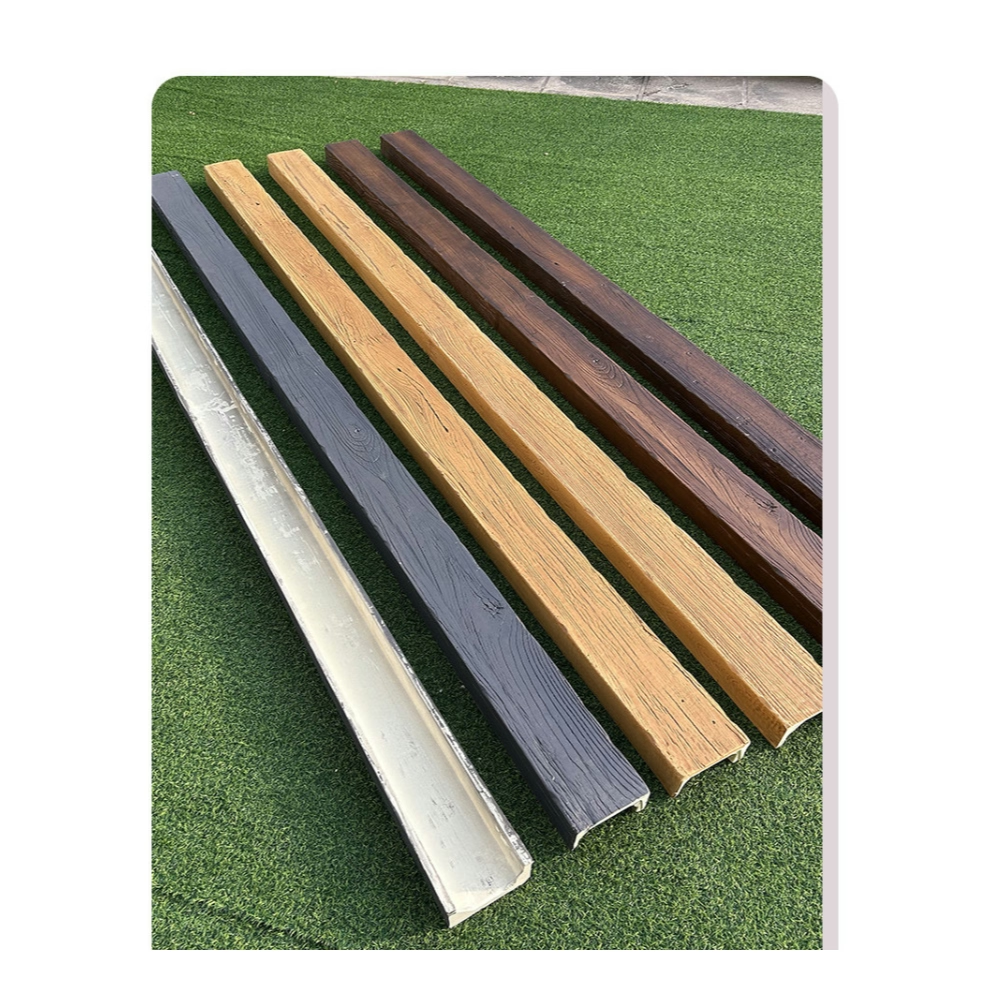
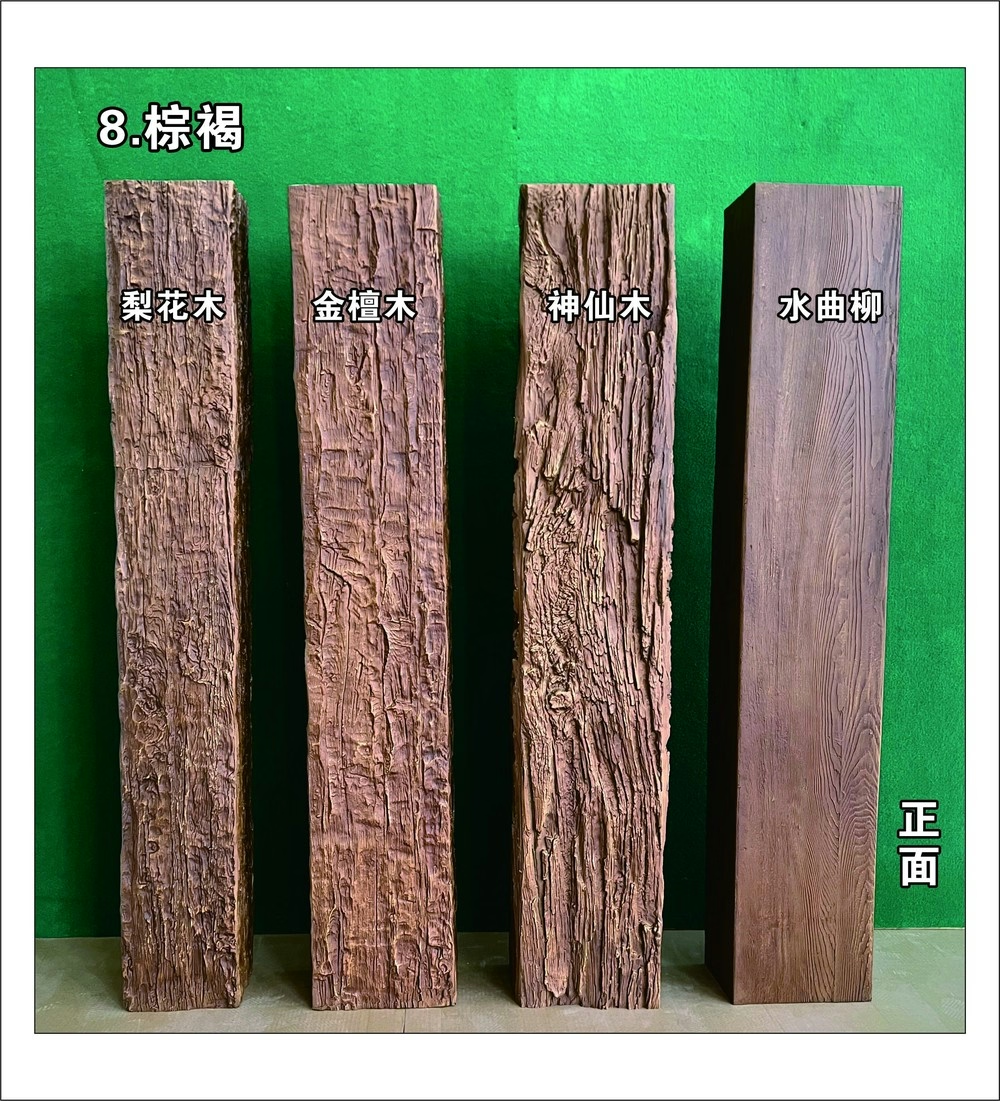
Successful polyurethane faux wood beam installation depends significantly on appropriate hardware selection. While beams themselves represent the visible aesthetic elements, the supporting infrastructure of brackets, connectors, and mounting systems determines whether installations remain secure and stable over time. Professional installers develop comprehensive understanding of available hardware options, matching components to specific project requirements and installation conditions.
Mounting brackets form the foundation of most beam support systems, providing connection points between beams and structural ceilings or walls. Heavy-duty steel brackets anchor to structural framing and support beam weight through designed load paths. Concealed mounting brackets install within beam cavities, allowing invisible support after installation. Surface-mount brackets provide visible architectural details that complement beam styling in applications where brackets contribute to overall aesthetics. Professional bracket selection considers load requirements, beam profiles, and visibility preferences.
Support hangers address specific installation scenarios where traditional mounting approaches prove impractical. Drop ceiling hangers adapt beam mounting to suspended ceiling systems that lack traditional structural framing. T-bar clips connect beams to suspended ceiling grid systems without compromising ceiling integrity. Stem hangers provide adjustable-length support for beams mounted below overhead structures. These specialized hardware options enable beam installation in construction types that would otherwise present insurmountable mounting challenges.
Structural support beams serve applications where faux beams must carry actual loads beyond their own weight. Steel I-beams or dimensional lumber wrapped in matching polyurethane create beams that combine authentic appearance with genuine structural capacity. Connection plates and hardware for these hybrid assemblies must accommodate both the decorative polyurethane shell and the underlying structural element. Professional specification ensures that visible appearances and hidden structures work together seamlessly.
Beam-to-beam connectors create stable joints where beams intersect or join end-to-end. Corner plates provide hidden reinforcement for mitered corner joints. Spline connectors join beams end-to-end while maintaining alignment through extended contact surfaces. T-joint brackets support beams meeting at perpendicular angles. These connectors address the structural demands that beam intersections create, preventing the joint failures that occur when beams lack adequate mutual support.
Concealed mounting systems maintain clean beam appearance by hiding all hardware from view. Adhesive mounting uses construction-grade adhesives to bond beams directly to ceiling surfaces without mechanical fasteners. Magnetic mounting systems allow removal and reinstallation for maintenance access. French cleat configurations provide secure attachment while allowing beams to hang from wall-mounted strips. These concealed options appeal to projects where visible hardware would compromise intended aesthetics.
Visible hardware options range from architecturally-integrated elements to purely functional components. Forged iron brackets bring traditional character to rustic installations. Steel aircraft cables provide minimalist support for contemporary applications. Decorative corbels add ornamental detail while supporting beam ends. When hardware will be visible, professional selection ensures that support elements enhance rather than detract from overall design.
Fastener selection for beam attachment requires matching hardware to specific substrates and load requirements. Wood-to-wood connections benefit from smooth-shank nails or screws that minimize splitting. Concrete and masonry attachment requires specialized anchors designed for these materials. Steel substrate connections use self-drilling fasteners or pre-drilled holes with appropriate hardware. Professional installers maintain fastener inventories that address common substrate conditions while ordering specialty fasteners for unusual situations.
Expansion accommodation hardware allows beams to respond to temperature and humidity changes without damage. Sliding bracket configurations permit movement while maintaining support. Expansion joints between beam segments prevent compression damage from dimensional changes. Thermal consideration becomes particularly important in sun-exposed locations, exterior applications, or spaces with significant temperature variation.
Support wire and rod systems provide overhead support for suspended beam installations. Aircraft cables offer strength with minimal visibility. Threaded rods provide rigid support with adjustable length. Turnbuckles allow fine-tuning of support tension after installation. These overhead support systems must anchor to structural elements capable of supporting beam weight, with hardware rated for the loads they will carry.
Finish hardware includes elements that complete installation appearance. Beam end caps provide finished appearances where beams terminate. Corner trim pieces cover joint gaps and transition details. Crown molding accessories integrate beams with surrounding ceiling architecture. These finishing elements require color and texture matching to adjacent beam surfaces for seamless appearance.
Testing and verification hardware confirms installation adequacy before project completion. Stud finders locate mounting points in concealed framing. Level instruments verify proper beam alignment. Laser alignment tools ensure that multiple beams install in consistent planes. These verification tools may not remain part of completed installations but play essential roles during construction.
Safety hardware protects installers and building occupants throughout installation and use. Safety cables installed as secondary support prevent beam falls if primary attachments fail. Protective padding prevents damage during handling. Personal protective equipment shields installers from tool hazards. Professional safety practice ensures that beam installation enhances rather than compromises building safety.
Maintenance hardware facilitates access for inspection and repair. Removable mounting systems allow beam removal without destruction. Service access panels accommodate fixture maintenance without beam removal. Documentation of hidden mounting locations prevents future drilling or cutting into beams during building maintenance. These considerations extend beyond initial installation to address long-term building operations.
Specialized application hardware addresses unique installation requirements. Seismic restraint systems in earthquake-prone regions prevent beam movement during ground motion. Wind load resistance in hurricane-prone areas ensures beam retention during severe weather. Fire-rated assemblies may require specific hardware to maintain rating compliance. Geographic and regulatory factors influence hardware selection beyond standard considerations.
Quality indicators for hardware purchases include material specifications, load ratings, and third-party testing certification. Steel hardware should specify grade and corrosion resistance. Load ratings should exceed actual installation loads with appropriate safety margins. Testing agency listings provide verification that hardware performs as specified. Professional purchasers verify these specifications rather than assuming product quality based on appearance or price.
Compatibility between hardware and beam materials requires consideration during selection. Chemical interactions between metals and polyurethane can cause surface staining or degradation. Dissimilar metals in contact can create galvanic corrosion that weakens connections over time. Isolating hardware with appropriate washers or coatings prevents these compatibility issues. Professional installers understand these material interactions and specify hardware accordingly.
Installation guides and technical documentation accompany professional hardware products, providing specification and installation details. These documents specify appropriate applications, load capacities, installation procedures, and inspection requirements. Professional installers follow manufacturer guidance closely, understanding that hardware performance depends on proper installation according to documented procedures.
Supplier relationships provide access to hardware expertise that supports installation success. Technical support from hardware manufacturers helps match products to application requirements. Bulk purchasing arrangements reduce per-unit hardware costs on larger projects. Rapid reordering capabilities address unexpected hardware needs during installation. These supplier relationships add value beyond simple product availability.

Long-term hardware performance depends on environmental exposure and maintenance conditions. Indoor installations in climate-controlled environments typically experience minimal hardware degradation. Exterior installations face moisture, UV exposure, and temperature cycling that accelerate corrosion and material degradation. Professional hardware selection accounts for these environmental factors, specifying appropriate materials and coatings for each application.
Warranty and liability considerations influence hardware selection for professional installations. Hardware failures that cause beam damage or personal injury may create liability exposure for installers. Specifying quality hardware with appropriate certifications and ratings provides documentation supporting professional practice. This documentation protects both installers and building owners from consequences of hardware-related failures.
Inventory management for installation contractors ensures that appropriate hardware accompanies every project. Maintaining stocked hardware inventories prevents delays from supplier coordination. Organized storage and labeling systems allow rapid identification of needed items. Regular inventory review replenishes depleted stock before critical shortages develop. Professional contractors treat hardware inventory management as essential operational practice.

Technical References
ASTM standards cited in every specification
Test Data
Lab results from internal testing program
Updated 2026
Reviewed against current product specs