Maria Chen has designed residential interiors for high-net-worth clients across the Pacific Northwest for over fifteen years. When asked about her experience with polyurethane faux wood beams, she describes them as "one of the few products that consistently exceeds expectations on both ends of the project." Her clients appreciate the authentic appearance while she values the installation predictability that natural wood simply cannot provide.
This sentiment echoes throughout conversations with design professionals who have incorporated faux beams into their portfolios. The consensus emerging from these discussions reveals a product category that has matured significantly, offering design solutions that address longstanding challenges in achieving rustic aesthetics within contemporary construction methods.
The Specification Decision Point
Interior designers frequently encounter a critical decision point when clients request rustic architectural features: natural wood versus faux alternatives. Sarah Mitchell, principal of a boutique residential design firm in Austin, Texas, explains her typical evaluation process. "I always start by understanding how the space will be used and what maintenance level the client can sustain. For vacation homes that sit empty for months, natural wood can introduce problems—moisture damage, pest issues, the need for seasonal inspections. Faux beams eliminate those concerns entirely."
The specification conversation often turns to budget considerations, which Mitchell addresses directly. "People assume faux is always cheaper, but that's not necessarily true for premium products. When you're comparing industrial-grade faux beams to reclaimed barn wood, the cost difference might be minimal, but the faux product ships consistent, installs clean, and arrives without embedded nails or mysterious stains from decades of farm use."
Commercial designers face additional specification pressures. James Okonkwo, who specializes in hospitality interiors, notes that "time is money in every sense on commercial projects. Natural wood beams might need on-site finishing, acclimation periods, and handling precautions. Polyurethane beams arrive ready to install, which directly impacts my project schedules and labor budgets."

Aesthetic Authenticity in Practice
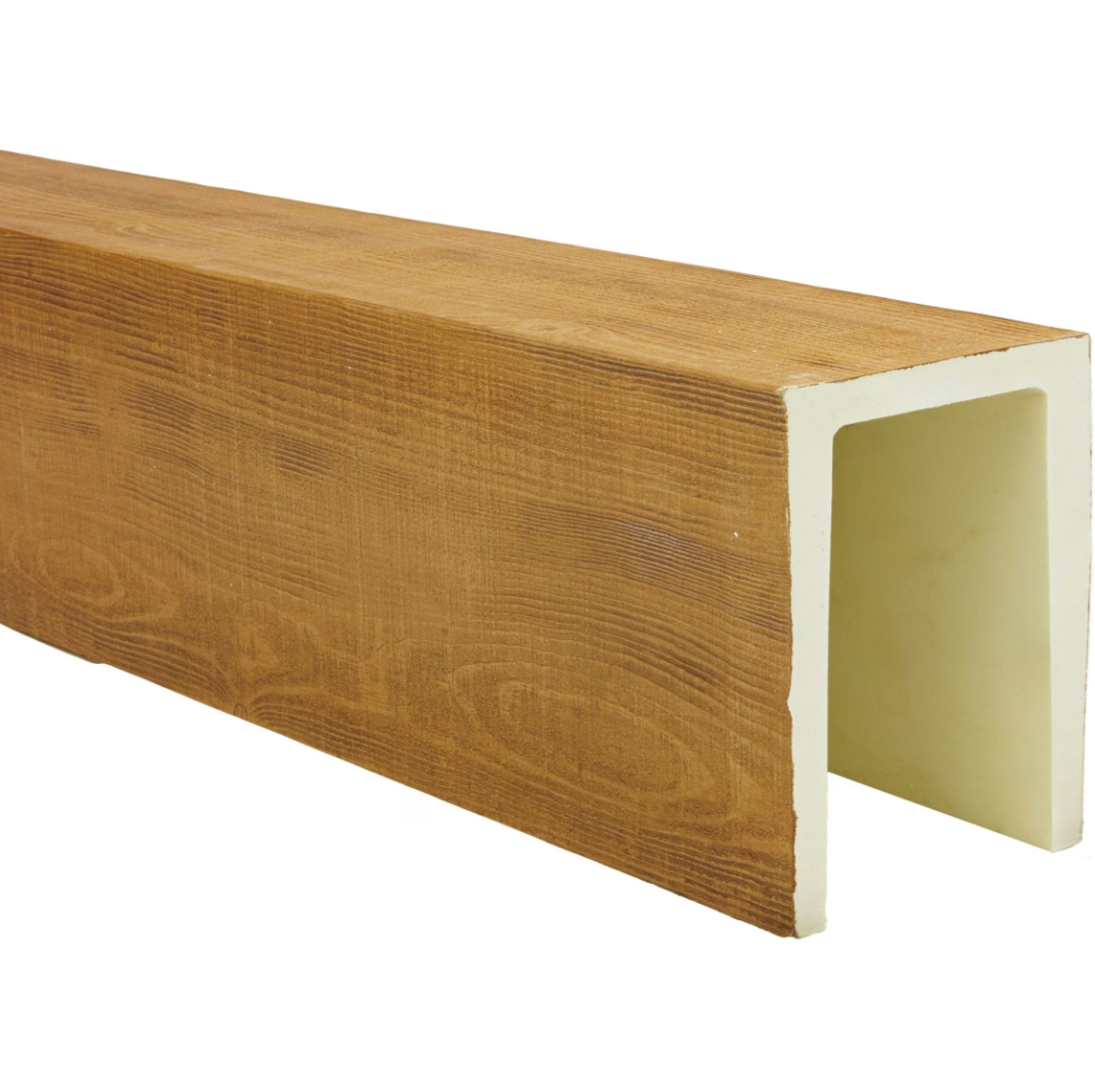
The question of visual authenticity arises consistently in designer discussions. Modern manufacturing techniques have largely addressed earlier concerns about faux products appearing obviously artificial. Chen observes that "the texture work in quality products is genuinely impressive. The grain depth, the color variations, the occasional knot—these details create the character that makes wood look authentic. My clients struggle to distinguish between the faux and natural options when they're side by side in finished rooms."
However, designers caution against assuming all faux beams achieve equivalent quality. Mitchell emphasizes the importance of physical samples: "I never specify based on photographs alone. The way a product photographs and how it looks in person can differ substantially. I request samples and hold them under different lighting conditions before committing to a project specification."
Texture variety represents another key consideration. Okonkwo explains his approach: "For restaurants and bars, I typically specify heavier textures—weathered, reclaimed styles that convey authenticity through visible wear. For corporate offices, smoother textures often work better, projecting professionalism rather than rustic charm. The same faux beam manufacturer might offer both options, giving us flexibility without sacrificing quality."
The consistency advantage of faux products deserves emphasis, according to Mitchell. "With natural wood, you accept whatever character the specific boards provide. You might order ten beams and receive pieces with wildly different grain patterns or colors. Faux beams from the same production run match consistently, which matters enormously when we're trying to achieve a specific design vision."
Installation Realities and Designer Preferences
Design professionals who have managed projects with both natural and faux beam installations consistently report favorable experiences with the manufactured alternatives. Chen describes a recent kitchen renovation where she specified eight-foot faux beams spanning a vaulted ceiling. "The installation crew completed the entire project in an afternoon. The beams are lightweight, they cut cleanly with standard tools, and they mount using concealed brackets. Natural beams of that size would have required structural calculations, specialized lifting equipment, and probably two days of labor."
The mounting system flexibility of faux beams opens design possibilities that natural alternatives cannot match. Mitchell recalls a master bedroom project where exposed beams needed to run perpendicular to existing ceiling joists that were spaced irregularly. "With natural wood, we'd have been constrained by the structural requirements of supporting the beam weight. The faux beams could be installed using a ledger system that attached to the existing joists without requiring them to bear significant load."
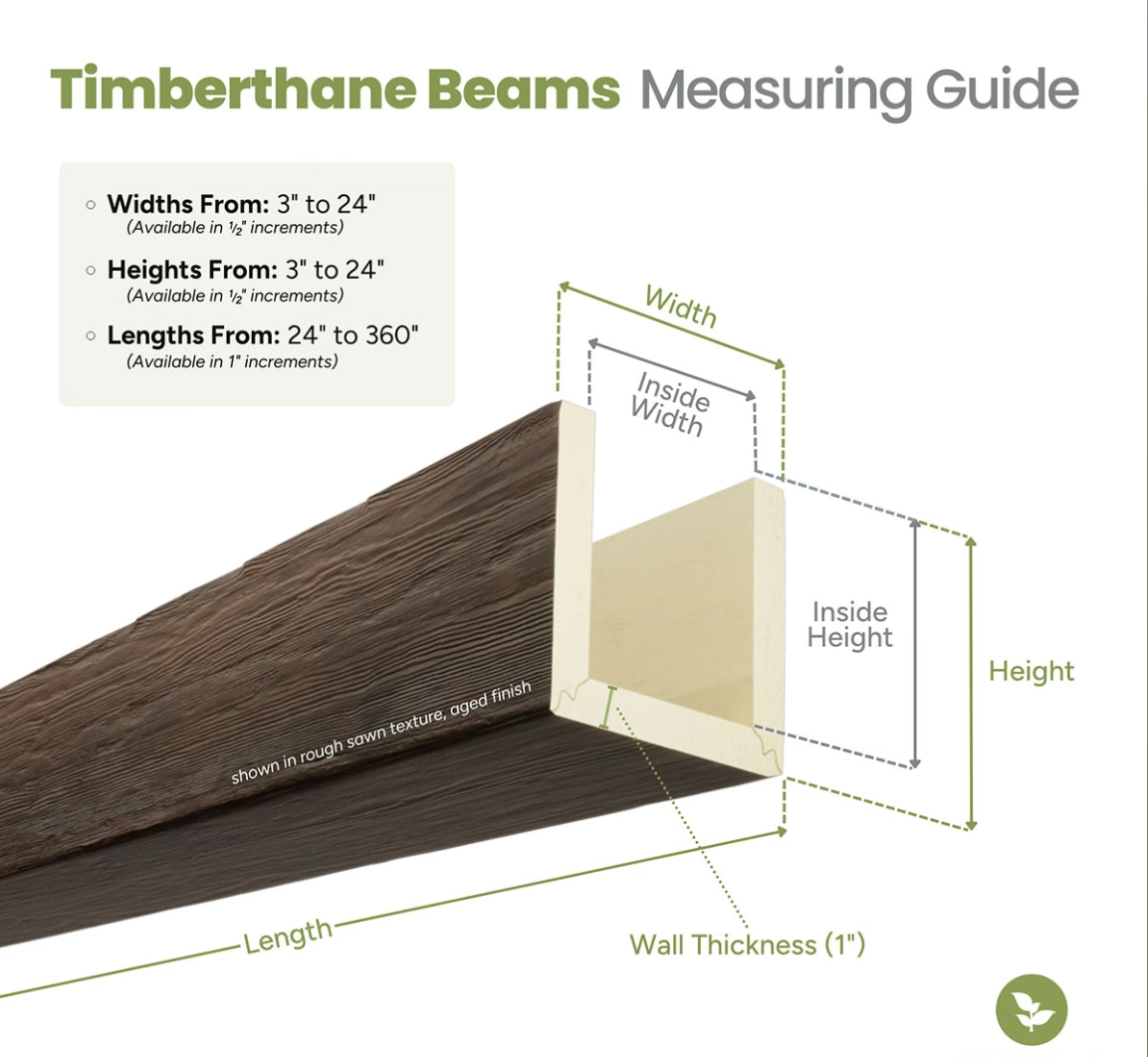
Okonkwo appreciates the dimensional precision of faux products for commercial applications. "In hospitality design, we're often working with tight tolerances. Coordinating beam installations with recessed lighting, HVAC diffusers, and sprinkler systems requires accurate dimensions. Faux beams arrive at specified measurements consistently, whereas natural wood can vary based on moisture content and milling variations."
The ability to route utilities through hollow faux beams provides practical advantages that designers increasingly exploit. Mitchell has specified beams with integrated raceways for low-voltage wiring, allowing clean installations of pendant lighting without visible conduit runs. "This is something you simply can't do with solid wood beams. The hollow construction of faux beams opens up routing options that transform what's possible in residential electrical planning."
Client Reception and Satisfaction
Designers report overwhelmingly positive client responses to faux beam installations. The initial skepticism that once greeted manufactured alternatives has largely dissipated as consumers become more familiar with polyurethane technology and its applications. Chen notes that "clients who express reservations during specification usually forget those concerns the moment they see the finished installation. The aesthetic result speaks for itself."
The low-maintenance characteristics of faux beams generate particular client appreciation, especially for vacation properties or rental installations where regular upkeep is impractical. Mitchell recalls a beach house project where clients initially requested natural wood beams for their investment property. "After discussing maintenance realities—salt air accelerates wood degradation, sand gets embedded in textures, mold can develop in humid conditions—they chose faux beams. Two years later, the beams look exactly as they did on installation day. The clients have told me they're extremely satisfied with that decision."
Commercial clients appreciate the brand consistency that faux beams provide. Okonkwo explains that hospitality chains often require uniform aesthetics across multiple locations: "When a restaurant chain opens twelve locations per year, they need consistency in their design elements. Faux beams from established manufacturers deliver that repeatability. Natural wood variations would create unwanted differences between locations, potentially diluting brand identity."
The durability of quality faux products addresses concerns that clients frequently raise about manufactured alternatives. Mitchell summarizes: "People assume that if something looks like wood but isn't, it must be cheap or fragile. Quality faux beams actually outperform natural wood in impact resistance and moisture stability. Once clients understand this, their concerns typically disappear."

Design Applications and Creative Possibilities
Design professionals have discovered numerous creative applications for faux beams beyond traditional ceiling installations. Chen has specified beams for kitchen island supports, creating a farmhouse table aesthetic within contemporary kitchen designs. "The beams provide both structural character and practical function, anchoring the island visually while creating the impression of authentic farmhouse construction."
Mitchell frequently uses faux beams for architectural transitions, specifying beams at wall intersections to create visual continuity between ceiling and wall planes. "This technique works particularly well in great room configurations where the transition from living area to kitchen can feel abrupt. Running beams along the dividing wall creates an architectural element that unifies the space while defining zones without physical barriers."
Exterior applications represent an emerging opportunity that designers increasingly explore. Okonkwo has specified UV-stable faux beams for covered patio installations where natural wood would deteriorate rapidly in climate conditions. "With proper specification—UV-resistant products, appropriate sealing at cut edges—the same aesthetic benefits apply to exterior environments. This opens design possibilities in climates where wood durability has historically limited architectural options."
The availability of various beam profiles allows designers to match existing architectural elements or create entirely new aesthetics. Mitchell notes that manufacturers offer dozens of standard profiles, from simple square beams to complex multi-part trusses. "When we're working on renovations that include existing structural beams, we can often find matching profiles or create coordinated designs that complement rather than conflict with existing elements."
Recommendations from Design Professionals
The insights shared by practicing designers coalesce around several practical recommendations for colleagues considering faux beam specifications. First, always request physical samples before specifying, as photographs cannot convey texture quality or color accuracy. Second, verify manufacturer specifications for UV resistance, fire ratings, and warranty coverage, as these factors vary substantially across producers. Third, discuss installation requirements with mounting contractors early in the design process to ensure adequate blocking and support systems.
Designers also recommend visiting manufacturer facilities or viewing completed installations when possible. Chen explains that "seeing beams in context, installed in actual projects, provides confidence that product photographs simply cannot convey. Many manufacturers maintain showrooms or can arrange visits to nearby installations where you can examine their work firsthand."
The specification process benefits from clear communication with clients about expectations and limitations. Mitchell advises colleagues to explain the manufacturing process and material properties, enabling clients to make informed decisions. "When clients understand what they're receiving—the materials, the construction, the expected performance—they typically feel more confident in the specification. Transparency builds trust."
Okonkwo emphasizes the importance of working with established manufacturers who provide technical support. "For commercial projects, I want to know that if issues arise, I can reach someone who understands the product. Smaller manufacturers might offer lower prices but lack the support infrastructure to address problems that inevitably occur on complex installations."
Technical References
ASTM standards cited in every specification
Test Data
Lab results from internal testing program
Updated 2026
Reviewed against current product specs


