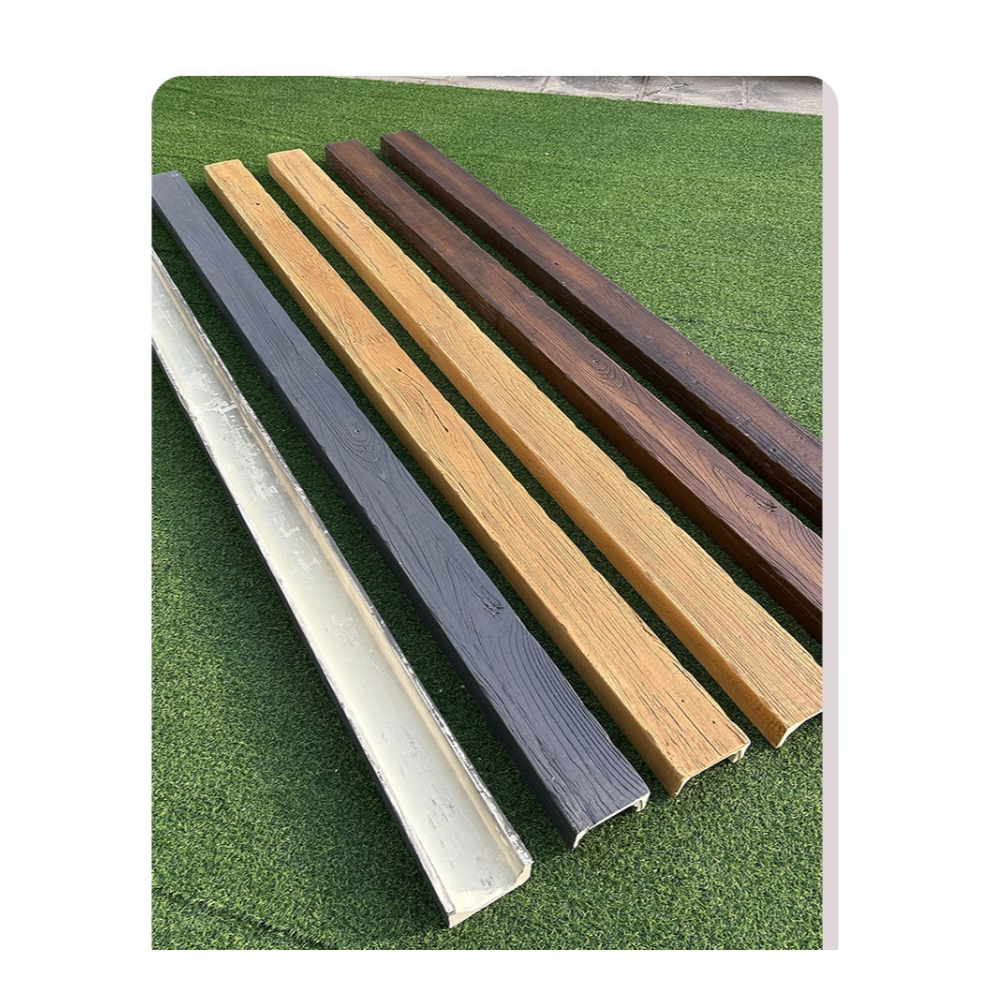
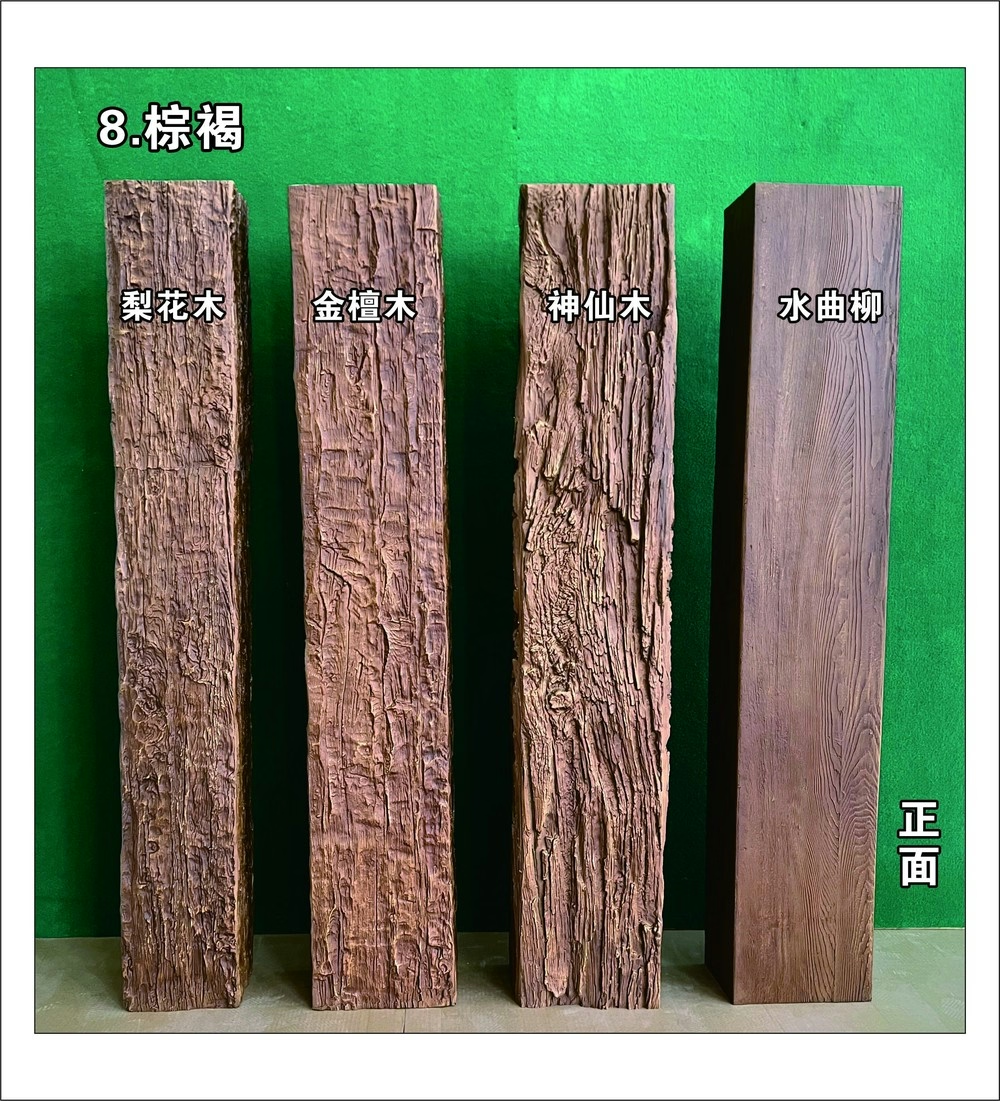
Joiners fittings form the structural backbone of complex faux wood beam installations where multiple beam segments must connect securely while maintaining clean visual appearance. Whether creating continuous runs, building intersecting grid patterns, or constructing three-dimensional ceiling features, appropriate fitting selection and proper installation technique determine whether connections perform reliably or fail prematurely under normal service conditions.
Corner joint fittings address the most common connection requirement when beams meet at room corners or create box beam formations. Precision-machined metal brackets provide hidden reinforcement at forty-five-degree miter joints, the most common corner configuration. These brackets fit within beam cavities, providing shear resistance that adhesive bonds alone cannot reliably provide. Installation involves positioning brackets during dry-fit, marking fastener locations, pre-drilling, and securing with appropriate screws that do not protrude through beam surfaces.
T-joint fittings support beam intersections where one beam crosses perpendicular to another. Various designs serve different beam profile configurations and load requirements. Some feature webbing that spans the intersection, connecting to both beams along extended contact surfaces. Others use gusset plates that reinforce specific stress points. Selection depends on whether beams intersect at the same plane, whether one beam sits on top of another, or whether complex three-dimensional configurations require specialized solutions.
Spline connectors address end-to-end beam joints where single beams cannot span entire required lengths. These fittings slide into prepared slots in beam ends, providing alignment guidance and transfer loads across joint boundaries. Spline lengths typically extend several inches into each beam, distributing stress concentrations that would otherwise occur at joint edges. Installation requires accurate slot cutting but produces joints that maintain alignment reliably.
Lap joint fittings accommodate situations where beam ends must overlap rather than meet at clean joints. These conditions arise when beam runs must navigate obstacles, when existing structure prevents flush joint placement, or when beam positioning requires unusual configurations. Lap joints with appropriate reinforcement provide adequate strength when properly executed, though they require more careful finish matching to appear seamless.
French cleat systems offer unique advantages for certain beam applications, particularly when beams must be removable for access or modification. Two-part configurations include a mounting strip attached to structural elements and a corresponding profile on beam backs that engages the mounting strip. This mechanical connection provides secure attachment while allowing tool-free removal. French cleat installations suit commercial applications where maintenance access is anticipated or where beam repositioning might be desirable.
Corner plates specifically designed for polyurethane beam profiles provide reinforcement while remaining completely hidden after installation. These plates feature stepped profiles that match common beam cross-sections, allowing flush mounting within beam cavities. Various corner plate configurations serve different beam sizes and joint configurations. Professional installers maintain inventories of common corner plate types while ordering special configurations for unusual applications.
Beam-to-wall connections require fittings that anchor beam ends securely to vertical surfaces. L-brackets,Z-clips, and cleat systems provide support for beam ends that terminate at walls. These fittings must account for wall surface conditions, stud locations, and any trim or finish elements that affect beam positioning. Concealed wall attachment systems maintain clean appearance while providing adequate support.
Support strap fittings provide continuous reinforcement along beam lengths where intermediate support is needed. Steel straps bolted or screwed to beam bottoms distribute loads across extended spans, preventing the deflection that might occur with point attachments alone. These straps prove particularly valuable in commercial applications where ceiling access for maintenance might stress beams, or where seismic activity creates unusual load conditions.
Joist hanger fittings adapt beam mounting to standard ceiling joist construction. These metal hangers wrap around beam ends, creating positive connections to structural framing. Joist hanger selection must match beam dimensions, and installation requires access to framing from below or above. Building codes may specify joist hanger requirements for certain applications, particularly in commercial buildings.
Expansion joint fittings accommodate dimensional changes that occur with temperature and humidity variation. Sliding plate configurations allow beam movement while maintaining support and alignment. These fittings prove important in large installations where cumulative expansion could create stress concentrations or buckling if restrained. Professional specification includes expansion accommodation based on expected environmental conditions.
Testing protocols verify that fitting installations achieve intended performance. Pull testing applies controlled force to connections, measuring resistance and identifying any movement that indicates inadequate installation. Visual inspection confirms that fittings seat fully and fasteners engage properly. Documentation of testing provides quality assurance records and supports warranty requirements.
Corrosion resistance becomes critical in humid environments or exterior applications. Stainless steel fittings resist corrosion that might weaken standard steel components over time. Powder-coated fittings provide barrier protection against moisture. Professional specification matches fitting materials to environmental conditions rather than assuming standard products will perform adequately.
Load calculation for fittings ensures that selected hardware exceeds expected loads with appropriate safety margins. Fitting manufacturers publish load ratings that enable specification against specific requirements. Professional installers verify that load calculations account for beam weight, any attached items, dynamic loads, and environmental factors. Under-specified fittings risk failure; over-specification adds unnecessary cost.
Installation technique directly affects fitting performance. Following manufacturer instructions for fastener type, size, and spacing ensures that load ratings remain valid. Proper fastener engagement without over-driving prevents fitting distortion that might compromise performance. Quality installation treats fitting attachment with the same care as structural connections.
Fitting concealment maintains beam appearance while providing necessary structural support. Most professional fittings are designed for hidden installation within beam cavities. When concealment proves impossible, decorative fittings that complement beam aesthetics provide alternative approaches. The goal is achieving secure connections without visible hardware that compromises architectural appearance.
Accessibility considerations affect fitting selection for some applications. Connections that will require future inspection or adjustment benefit from designs that allow access without beam removal. Access panel provisions in nearby ceiling elements enable inspection without destructive intervention. Professional planning addresses accessibility before installation rather than discovering limitations during maintenance.
Quality verification at delivery confirms that fittings meet specifications before installation. Inspect fittings for manufacturing defects, dimensional accuracy, and finish quality. Verify that received quantities match requirements. Any discrepancies should be resolved with suppliers before installation, as fitting problems discovered during installation create significant complications.
Specialized fitting applications require custom solutions beyond standard product offerings. Curved beam intersections, non-standard angles, and unusual profile configurations may require field-fabricated connections or custom manufacturing. Professional installers assess these situations and develop appropriate solutions based on load requirements and aesthetic considerations.
Documentation of fitting locations supports future maintenance and modification. Recording fitting types, sizes, and positions enables future work to proceed without risking damage to concealed connections. As-built documentation becomes valuable when beams must be removed for service access or when modifications require understanding existing construction.
Professional fitting selection criteria include manufacturer reputation, product testing, load ratings, and warranty coverage. Established manufacturers with track records of reliable performance provide confidence that fittings will perform as specified. Testing agency listings verify independent validation of performance claims. Warranty terms indicate manufacturer confidence and provide recourse if defects emerge.
The cumulative effect of appropriate fitting selection and proper installation creates beam systems that perform reliably over decades of service. Connections that might seem minor compared to overall beam appearance actually determine whether installations maintain structural integrity and visual alignment over time. Professional attention to fitting details ensures that faux beam installations meet the same standards as the solid timber they emulate.

Training and experience in fitting techniques develop through practice and mentorship. Apprenticing with experienced installers accelerates learning that might take years to develop independently. Industry certification programs validate fitting competency for those seeking professional credentials. These development paths produce installers capable of handling complex beam connections with confidence.

Technical References
ASTM standards cited in every specification
Test Data
Lab results from internal testing program
Updated 2026
Reviewed against current product specs