The demand for distinctive architectural details has never been higher, and developers, designers, and contractors increasingly seek custom decorative moulding and beams that transform ordinary spaces into memorable environments. Working with a professional manufacturer who specializes in these architectural elements means gaining access to engineering expertise, production flexibility, and quality control processes that generic suppliers simply cannot match. The right manufacturing partner becomes an extension of your design team, translating creative visions into tangible products that perform beautifully in the field.
Custom manufacturing begins long before any material gets cut or shaped. Professional manufacturers invest heavily in the initial consultation phase, understanding not just the technical specifications of a project but the aesthetic goals and functional requirements driving the design. This deep engagement reveals opportunities for value engineering, suggests alternative approaches that might achieve the desired effect more efficiently, and identifies potential challenges before they become expensive problems during production.
Engineering Excellence in Production
Modern custom moulding and beam production combines advanced technology with traditional craftsmanship. Computer-aided design systems translate conceptual drawings into precise manufacturing specifications, while computer-numerically controlled machinery executes those specifications with remarkable accuracy. This technological foundation enables manufacturers to produce complex profiles, intricate patterns, and oversized elements that would be impossible to create consistently by hand.
The engineering process addresses structural considerations alongside aesthetic ones. Even decorative elements must perform reliably under the conditions they'll encounter. Professional manufacturers understand load requirements, attachment methods, and environmental factors that affect product selection and specification. They guide customers toward configurations that balance visual impact with practical performance, ensuring that beautiful beams remain secure and intact throughout the building's life.
Material selection plays a crucial role in custom production. Polyurethane has emerged as a preferred material for decorative moulding and beams due to its unique combination of characteristics. It machines cleanly, accepts detailed surface textures, weighs considerably less than wood or stone, and resists the moisture and pest issues that plague natural materials. Professional manufacturers work extensively with polyurethane formulations optimized for architectural applications, offering consistent quality across production runs.

Design Flexibility and Customization Options
The range of customization available through professional manufacturers extends far beyond simple size variations. Customers can specify entirely new profiles designed specifically for their projects, modify existing designs to better suit their aesthetic, or select from extensive libraries of standard configurations that get customized through finish, texture, and color selection. This flexibility enables truly unique installations that differentiate buildings from their surroundings.
Profile customization begins with understanding the architectural context. A restoration project reproducing historic details requires different approaches than a contemporary design seeking cutting-edge aesthetics. Professional manufacturers maintain libraries of traditional profiles while continuously developing new designs that address modern architectural trends. This combination of historical knowledge and contemporary awareness positions them to serve diverse market segments effectively.
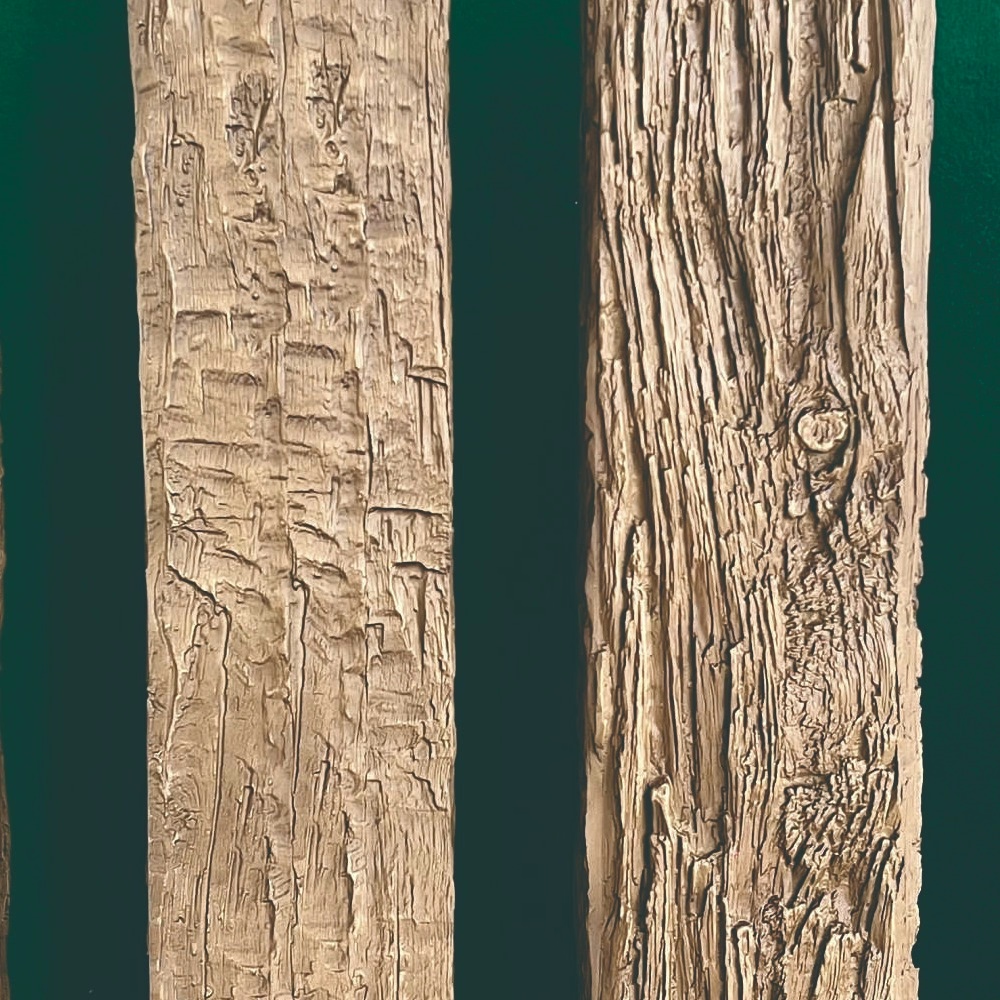
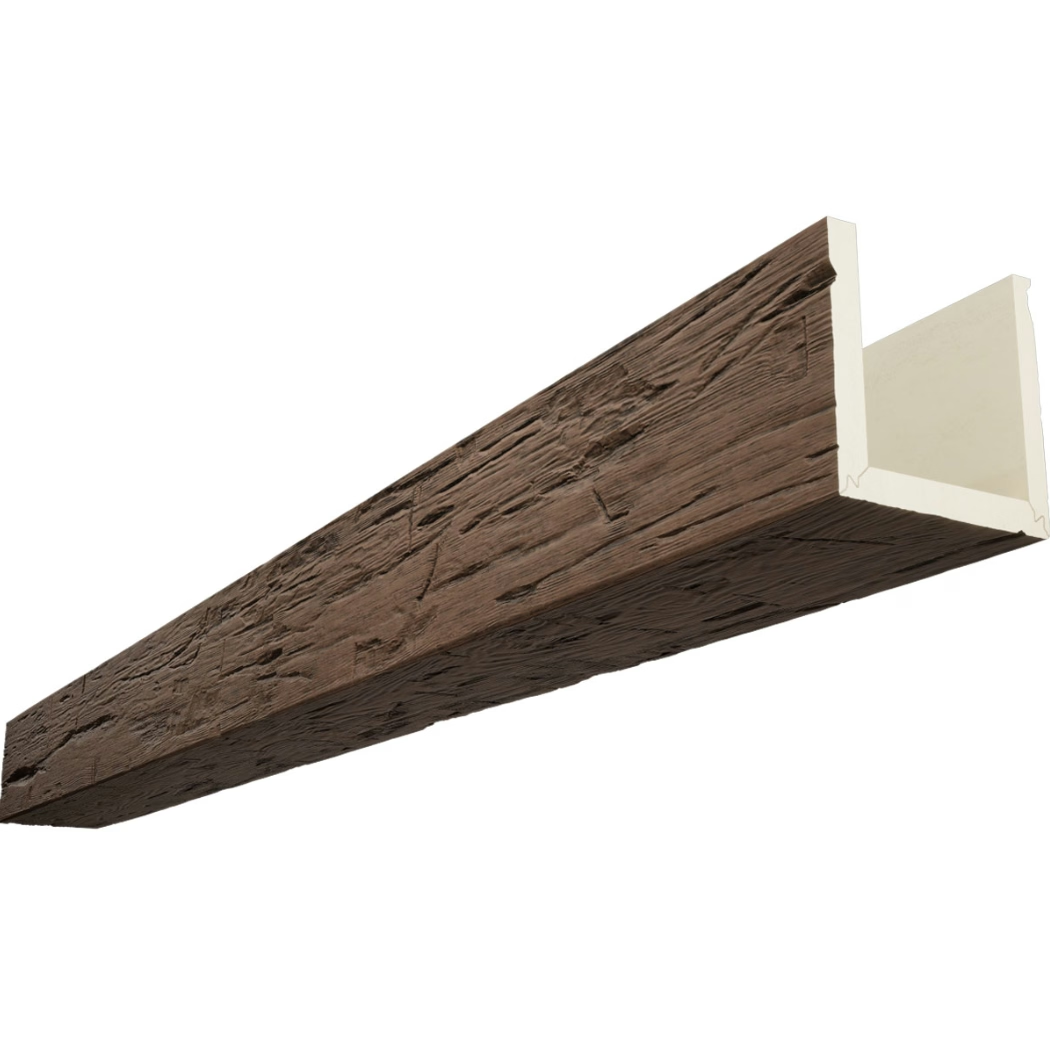
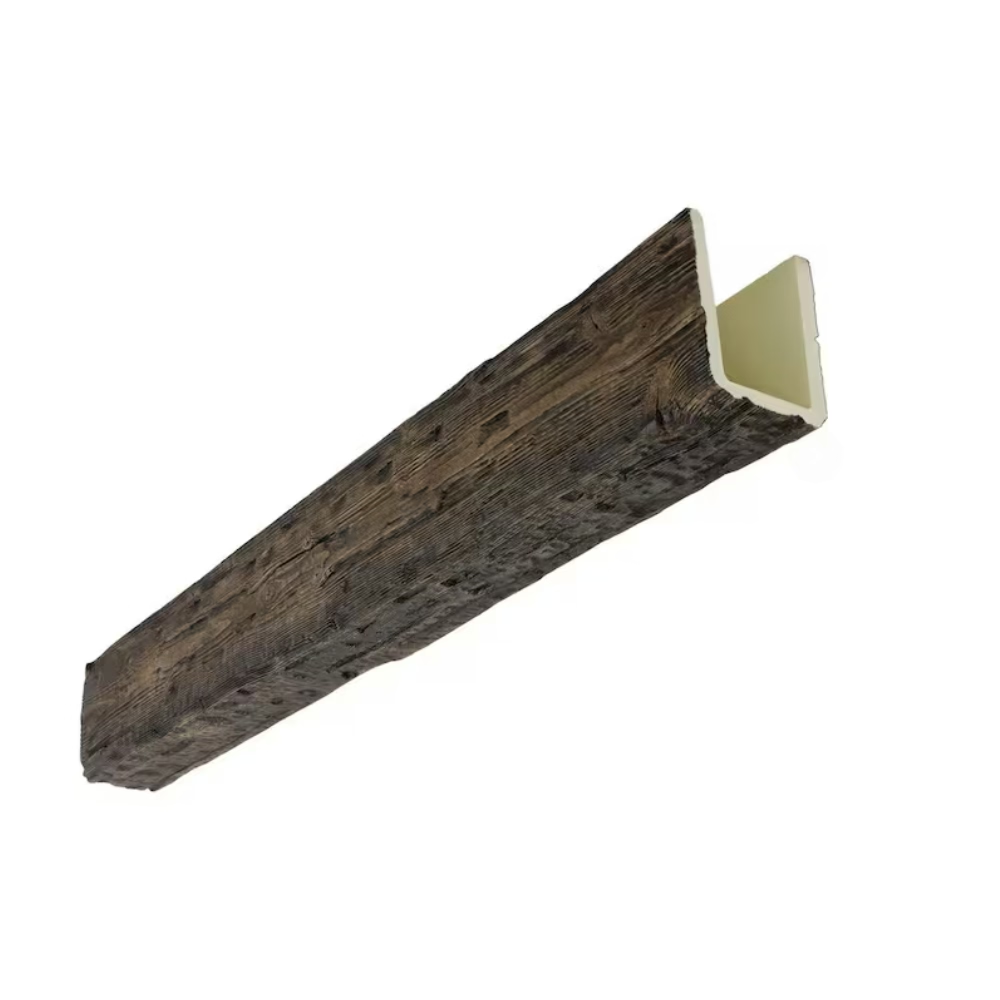
Surface finish options multiply the design possibilities exponentially. Beyond standard smooth finishes, manufacturers offer textures that simulate rough-sawn wood, weathered barn wood, hand-carved details, and even stone-like surfaces. Each texture option gets applied consistently across production runs, ensuring that beams installed in different areas or at different times maintain visual coherence. Custom color matching services extend this flexibility further, enabling architects to specify exact hues that complement other building materials.

Quality Standards and Assurance
Professional manufacturers distinguish themselves through rigorous quality control at every production stage. Raw materials undergo inspection upon receipt, ensuring consistency from the beginning of the manufacturing process. In-process monitoring catches potential issues before they propagate through subsequent operations. Final inspection verifies that completed products meet all specifications before shipment, giving customers confidence that what they ordered matches what they'll receive.
Documentation practices support quality assurance throughout the relationship. Detailed specifications accompany each order, providing clear reference points for quality verification. Certificates of conformance confirm that products meet agreed-upon standards. For projects with special requirements, third-party testing and certification services provide independent verification of performance characteristics. These documentation practices prove especially valuable for commercial projects where multiple parties share responsibility for specification compliance.
Warranty programs demonstrate manufacturer confidence in their products. Professional manufacturers stand behind their work with warranty coverage that protects customers against defects in materials or workmanship. The specific terms of warranty coverage vary by manufacturer and product line, but comprehensive warranty programs indicate a commitment to long-term customer satisfaction rather than simply completing individual transactions.
Collaborative Development Process
The most productive manufacturer relationships develop through collaborative engagement that extends beyond individual orders. Professional manufacturers welcome involvement in design development, value engineering, and constructability reviews. This early engagement often reveals opportunities to improve designs, reduce costs, or streamline installation that might otherwise go unnoticed until construction is underway.
Sample production represents a critical phase in custom manufacturing. Professional manufacturers produce samples that accurately represent final production methods, enabling architects and designers to evaluate aesthetics, verify dimensions, and test installation approaches before committing to full production. This investment in sampling reduces risk significantly, ensuring that completed installations meet expectations.
Communication throughout the production process keeps projects on track. Professional manufacturers provide regular updates on production status, shipping schedules, and any issues requiring attention. This transparency enables project managers to plan installation activities with confidence, knowing exactly when materials will arrive and what condition they'll be in. For complex projects involving multiple shipments, coordinated communication becomes essential to maintaining schedules.

Building Strategic Manufacturing Partnerships
Forward-thinking design firms and contractors cultivate relationships with manufacturers whose capabilities align with their project portfolios. These partnerships offer mutual benefits: manufacturers gain insight into evolving market needs, while design professionals gain access to manufacturing expertise that enhances their competitive positioning. The relationship becomes a strategic asset that supports business development for both parties.
Qualifying potential manufacturing partners requires evaluating several dimensions beyond simply comparing quotes. Production capabilities determine what designs can be realized. Quality systems indicate how consistently those designs get executed. Communication practices reveal how effectively the manufacturer will engage throughout the relationship. Financial stability suggests whether the manufacturer will remain a reliable partner for years to come. Professional buyers evaluate all these factors systematically, building partnerships that support their long-term business objectives.
The investment in establishing strong manufacturing relationships pays dividends across project portfolios. Consistent quality reduces callbacks and warranty claims. Reliable delivery prevents schedule disruptions. Design expertise expands the range of projects that can be pursued confidently. These benefits compound over time, making strategic manufacturer selection one of the most important decisions in any decorative building materials procurement strategy.
Technical References
ASTM standards cited in every specification
Test Data
Lab results from internal testing program
Updated 2026
Reviewed against current product specs