The decorative building materials market offers significant opportunities for businesses that can establish distinctive product offerings. Private label manufacturing enables companies to develop branded faux beam products without the substantial capital investment that manufacturing infrastructure requires. Professional private label partnerships combine manufacturer expertise with brand owner vision, creating products that serve markets efficiently while building brand equity.
Private label arrangements work particularly well for polyurethane faux beams due to the material's manufacturing flexibility and the market's growing demand for distinctive styling. Manufacturers who specialize in these products can produce custom configurations, finishes, and packaging that reflect brand identities without requiring buyers to master production processes. This specialization creates value for both parties.
Understanding Private Label Business Models
Private label arrangements vary in structure and depth, from simple co-packing agreements to comprehensive product development partnerships. Understanding these variations helps businesses select arrangements that match their capabilities and objectives. The appropriate model depends on marketing strength, technical requirements, and investment capacity.
Co-packing represents the simplest private label arrangement, where manufacturers produce existing products under buyer specifications for packaging and labeling. This approach works well for businesses with established product needs that existing catalog items satisfy. The buyer focuses on marketing and distribution while the manufacturer handles production, with each party excelling in their respective domain.
Full-service private label extends beyond production to include product development, customization, and ongoing support. Manufacturers in this arrangement collaborate with brand owners to develop products specifically for their target markets. This deeper involvement requires greater manufacturer investment but enables more distinctive product positioning that supports premium pricing.

Product Development Collaboration
Successful private label relationships involve brand owners in product development processes that shape final offerings. This collaboration ensures that products meet market needs while leveraging manufacturer expertise in production capabilities and material performance. The best outcomes emerge from genuine partnership rather than simple specification fulfillment.
Design collaboration begins with market understanding that informs product specifications. Brand owners contribute knowledge of customer preferences, competitive positioning, and pricing dynamics. Manufacturers contribute understanding of what's producible efficiently, what materials perform best, and what finishing options create lasting appeal. Combining these perspectives produces products that serve markets effectively.
Prototype development tests concepts before committing to full production. Professional manufacturers create samples that reflect intended specifications, enabling brand owners to evaluate appearance, quality, and functionality. This prototyping phase often reveals adjustments that improve products or reduce production complexity, with changes incorporated before manufacturing scale begins.
Customization and Differentiation Options
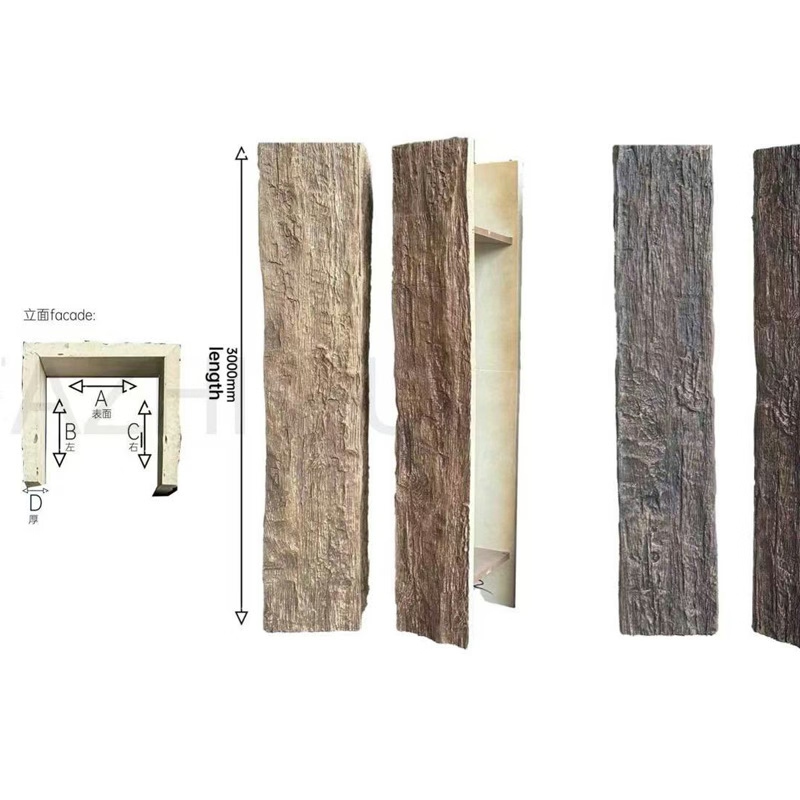
Private label products must differentiate from generic catalog offerings to justify brand positioning and premium pricing. Professional manufacturers offer multiple customization dimensions that enable this differentiation while remaining producible at scale. Understanding these options helps brand owners develop distinctive product lines.
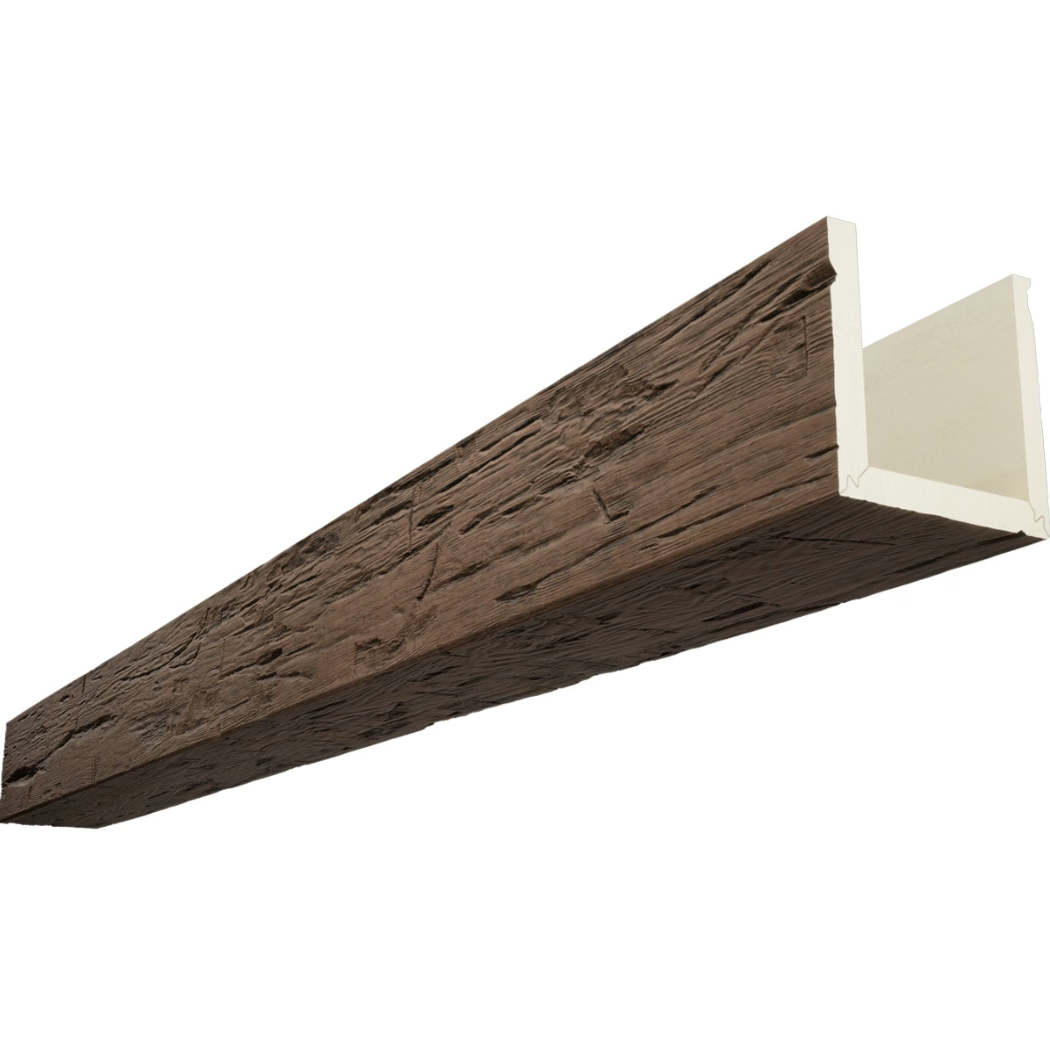
Profile customization creates unique cross-sectional shapes that distinguish products from competitors. Custom molds—whether modifying existing profiles or creating entirely new shapes—enable brand owners to offer beam styles that no other source provides. This exclusivity supports differentiated positioning and reduces direct price competition.
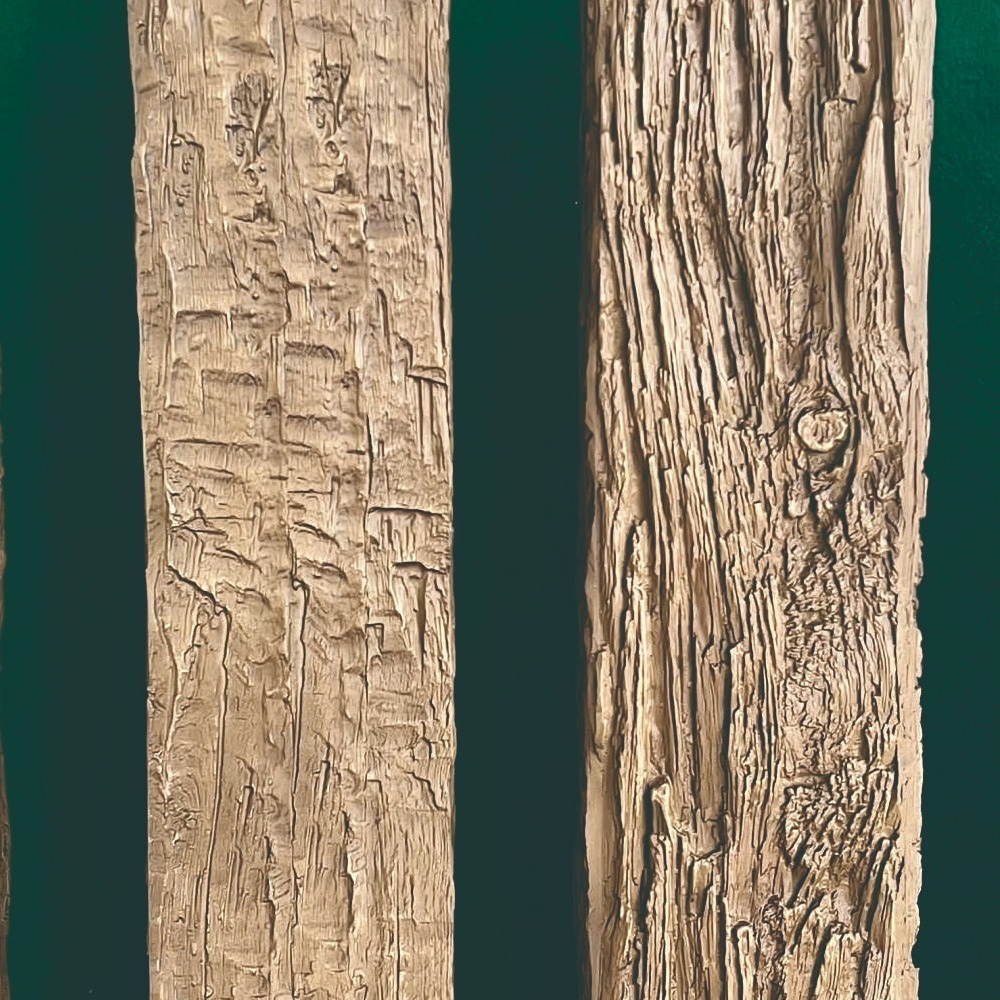
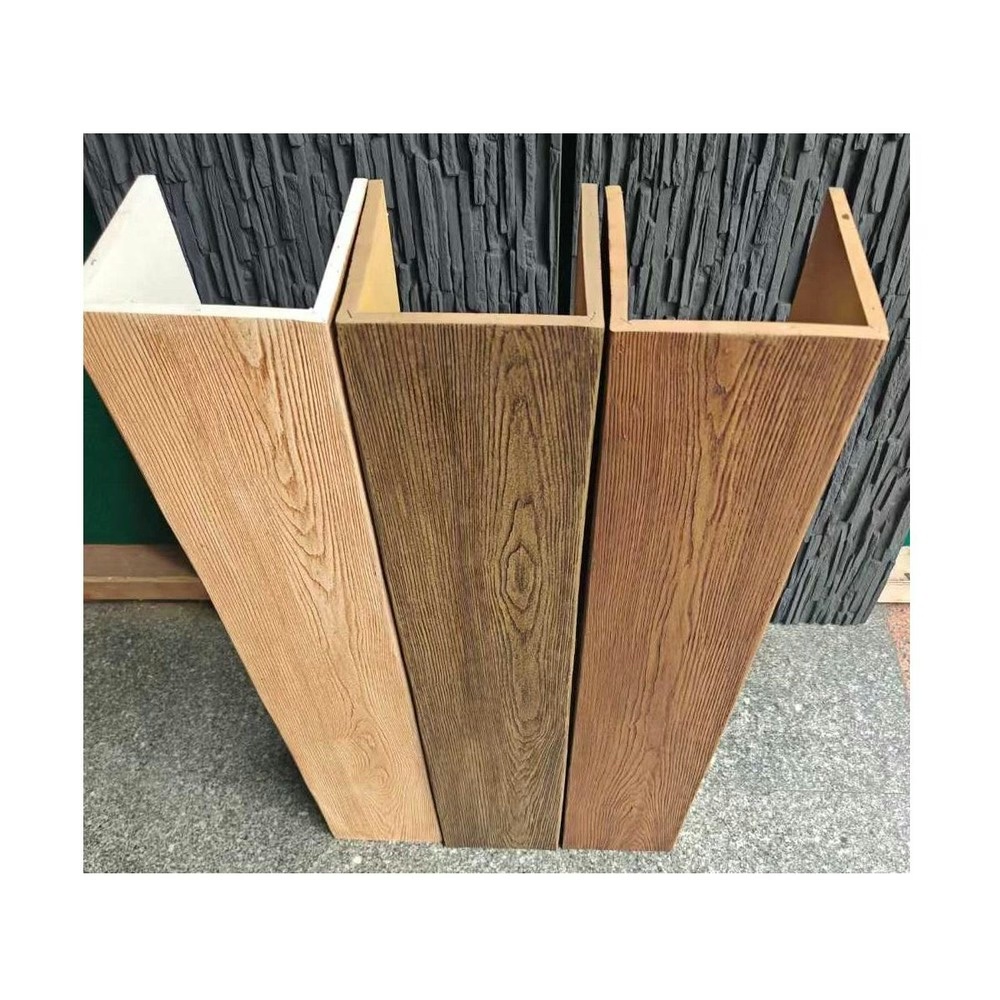
Finish and texture options multiply differentiation possibilities. Beyond standard smooth surfaces, manufacturers offer various textures that simulate different wood species, weathering patterns, or hand-carved details. Custom color matching extends differentiation to color, enabling brand owners to specify exact hues that align with brand identities or market preferences.

Quality Standards and Specifications
Private label arrangements require clear quality specifications that ensure consistent product performance across production runs. Professional manufacturers maintain quality systems that verify specifications throughout production, but brand owners must articulate what those specifications require. This clarity protects brand equity by preventing quality variations that damage customer perceptions.
Material specifications define the polyurethane formulations acceptable for production. Density ranges, impact resistance, and surface characteristics all affect how products perform and how they compare to competitive offerings. Professional manufacturers provide technical data that enables informed specification, while brand owners decide what performance levels their markets require.
Dimensional tolerances ensure that products fit applications correctly. Acceptable variation ranges for length, width, depth, and profile accuracy must be defined to prevent disputes. Professional manufacturers specify their standard tolerances, while brand owners with tighter requirements may need to accept premium pricing for more precise production.
Packaging and Presentation Requirements
Private label products represent brand owners to customers, making packaging and presentation essential elements of the overall offering. Professional manufacturers accommodate various packaging requirements, adapting their standard approaches to meet brand owner specifications. Attention to packaging details strengthens brand perception and supports premium positioning.
Product packaging protects items during distribution while communicating brand identity. Carton design, labeling, and bundling all contribute to the customer unboxing experience. Brand owners who invest in thoughtful packaging differentiate their offerings from competitors who ship products in generic packaging.
Installation documentation and marketing materials extend brand presence beyond the physical product. Professional manufacturers can produce installation guides, spec sheets, and care instructions under brand owner branding, creating comprehensive product experiences that support both immediate sales and long-term customer satisfaction.
Building Sustainable Private Label Partnerships
Long-term private label success depends on partnerships that evolve with market needs and business objectives. Professional manufacturers view private label relationships as strategic partnerships rather than transactional arrangements, investing in success that generates ongoing business. This partnership orientation creates mutual commitment that benefits both parties over time.
Volume commitments and exclusivity arrangements shape the economics of private label relationships. Manufacturers need sufficient volume to justify customization investments, while brand owners need exclusivity to protect market positioning. Negotiating these terms requires understanding from both perspectives, leading to arrangements that balance immediate needs against long-term relationship value.
Communication cadence maintains partnership health over time. Regular reviews of product performance, market feedback, and development opportunities keep relationships dynamic rather than static. Professional manufacturers and attentive brand owners use these touchpoints to continuously improve products and strengthen market positions.
Technical References
ASTM standards cited in every specification
Test Data
Lab results from internal testing program
Updated 2026
Reviewed against current product specs