
Before specifying any finishing material, professional interior designers insist on physical samples that enable accurate evaluation under actual project conditions. This practice proves particularly important for faux wood beams, where visual qualities, texture characteristics, and integration potential require direct examination rather than catalog imagery.
Elena Rodriguez, a residential designer known for her careful material specification process, maintains an extensive sample library accumulated over fifteen years of practice. Her sample evaluation methodology helps clients visualize completed projects accurately while preventing costly specification errors that compromise design intent. She credits sample evaluation with reducing revision requests and increasing client satisfaction across her project portfolio.
Why Sample Evaluation Matters
Digital product imagery, however high-resolution, cannot substitute for physical examination when making specification decisions. Lighting conditions, surrounding materials, and spatial context all influence how beam finishes appear in completed installations, and these factors vary across client environments in ways that catalog photography cannot anticipate.
Color perception shifts dramatically between lighting sources, with warm incandescent, neutral daylight, and cool fluorescent sources revealing different aspects of beam finishes. Samples examined under project-appropriate lighting reveal whether specific beam finishes will achieve intended effects or create unexpected color relationships that clash with other specified materials.
Scale appreciation comes only through physical comparison between samples and spatial dimensions. Catalog images remove beam samples from contextual relationships that determine appropriateness for specific rooms. Holding samples against ceiling planes while standing in actual spaces reveals whether proposed beam dimensions create intended proportions or overwhelm/underwhelm available scale.
Texture authenticity requires tactile examination that digital media cannot provide. Running hands across beam surfaces reveals texture depth, consistency, and quality that determine whether finished installations will satisfy expectations for realistic wood appearance. Samples enable touch evaluation that catches texture deficiencies before commitments.
Selecting Appropriate Sample Kits
Sample kit offerings vary significantly between manufacturers, with options ranging from minimal single-piece selections to comprehensive systems including multiple profiles, finishes, and accessories. Selecting appropriate kits requires understanding evaluation objectives and project requirements.
Profile variety kits include multiple beam shapes and sizes that enable proportion evaluation across different architectural contexts. These kits prove valuable when projects involve varied ceiling configurations requiring different beam styles, or when designers seek flexibility to address multiple project types from a single sample resource. Profile variety kits typically cost more but provide broader evaluation capability.
Finish-focused kits emphasize color and texture options within specific beam profiles, enabling accurate selection among available finish variations. These kits serve projects where beam style is predetermined but finish selection requires careful evaluation, such as client projects matching existing finishes or coordinating with specific furniture selections.
Comprehensive evaluation kits combine profile and finish variety with mounting hardware, joining accessories, and technical documentation. These kits support complete project evaluation including installation considerations, enabling specification decisions that account for practical factors alongside aesthetic qualities. Comprehensive kits particularly benefit designers new to faux beam specification.

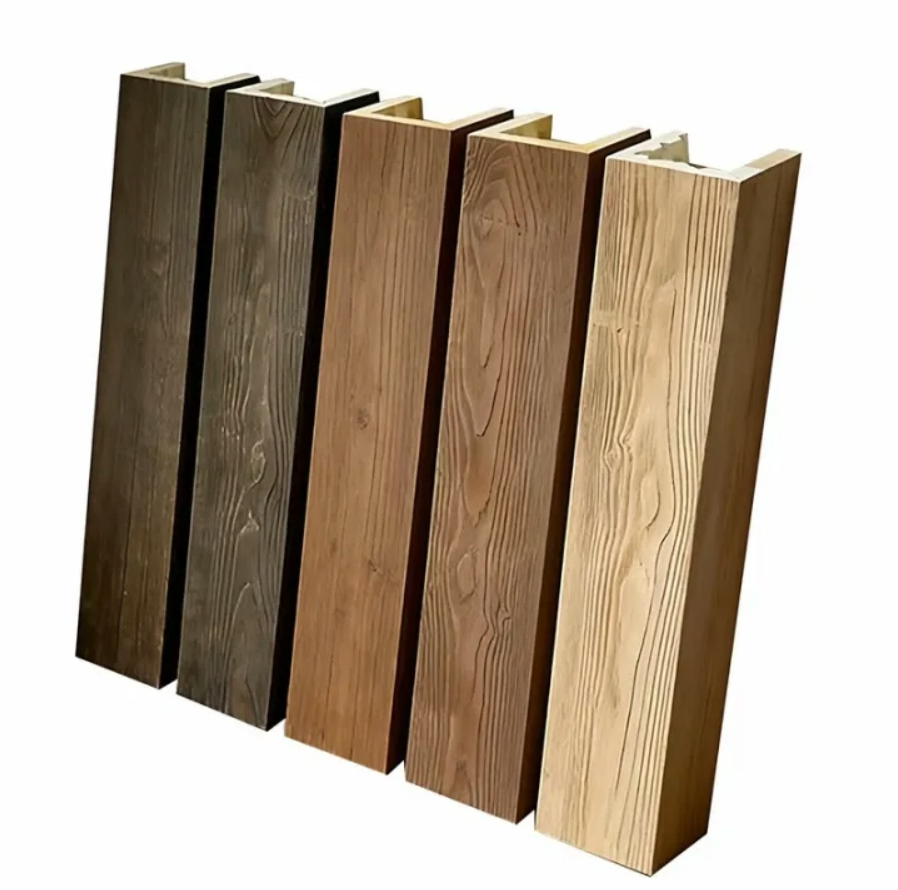
Establishing Sample Evaluation Procedures
Systematic evaluation procedures ensure comprehensive assessment while building confidence in specification decisions. Establish consistent evaluation criteria that apply across all projects, creating reliable methodology that improves over time as experience accumulates.
Visual assessment under multiple lighting conditions reveals how beam finishes respond to environmental variation. Examine samples under natural daylight, incandescent lighting, and LED sources common in contemporary projects. Document observations regarding color shifts, highlight behavior, and overall aesthetic consistency across conditions.
Spatial integration testing places samples in actual project environments, evaluating how beam finishes coordinate with surrounding materials, furniture, and architectural features. Photograph samples in context, noting any unexpected interactions or relationships that influence specification decisions. Multiple placement locations reveal potential that single-position assessment misses.
Durability assessment evaluates how samples respond to handling, cleaning, and environmental exposure during evaluation periods. Subject samples to conditions similar to service exposure, including light touching, occasional cleaning, and temperature variation. Samples that show signs of degradation during evaluation indicate potential service concerns worth noting.
Client Presentation Strategies
Translating sample evaluation into client communication requires presentation approaches that help clients understand and participate in specification decisions. Effective client engagement builds confidence in final selections while reducing second-guessing after installation.
Create comparison boards that display selected samples alongside complementary materials, enabling clients to visualize complete material palettes. Position beam samples relative to paint colors, fabric selections, and other specified finishes, revealing how beam finishes interact with overall design schemes. Comparison boards prove particularly valuable for client approval processes.
Document evaluation findings in presentation materials that justify specification decisions using professional criteria. Explain why specific beams were selected, noting performance characteristics, aesthetic qualities, and value considerations that influenced choices. Professional justification builds client confidence while creating records that support decisions if questions arise later.
Provide clients with small sample pieces they can examine at home under their actual living conditions. Client examination reinforces selections while identifying potential concerns before commitment. Samples also serve as reference points during installation, helping clients verify that installed beams match approved specifications.
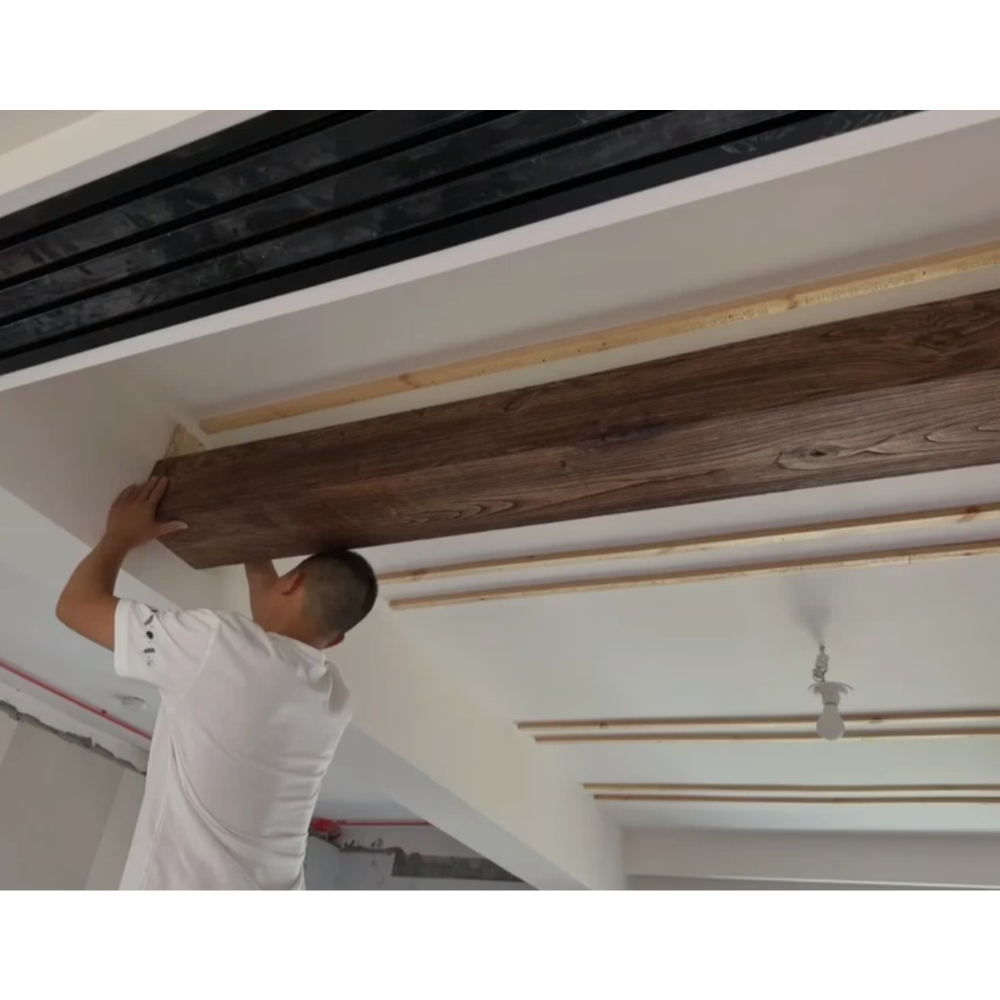
Building Sample Libraries
Experienced designers maintain sample libraries that enable efficient evaluation across multiple projects without repeated ordering delays. Strategic library development creates resources that serve practice needs while managing inventory investment.
Prioritize acquiring samples for commonly specified profiles and finishes that appear repeatedly across project portfolios. These frequently-used items justify investment through repeated application, eliminating evaluation delays when similar projects arise. Track usage patterns to identify high-value additions to library holdings.
Organize samples systematically by profile, finish, and application context to enable efficient retrieval when project needs arise. Label samples clearly with product codes, finish specifications, and acquisition dates that track currency and relevance. Effective organization prevents sample-related delays that undermine professional efficiency.
Rotate sample holdings to maintain current product representation as manufacturers update offerings. Outdated samples lead to specification errors when discontinued products cannot be ordered. Establish review schedules that identify candidates for replacement and update library holdings accordingly.
Technical References
ASTM standards cited in every specification
Test Data
Lab results from internal testing program
Updated 2026
Reviewed against current product specs


