
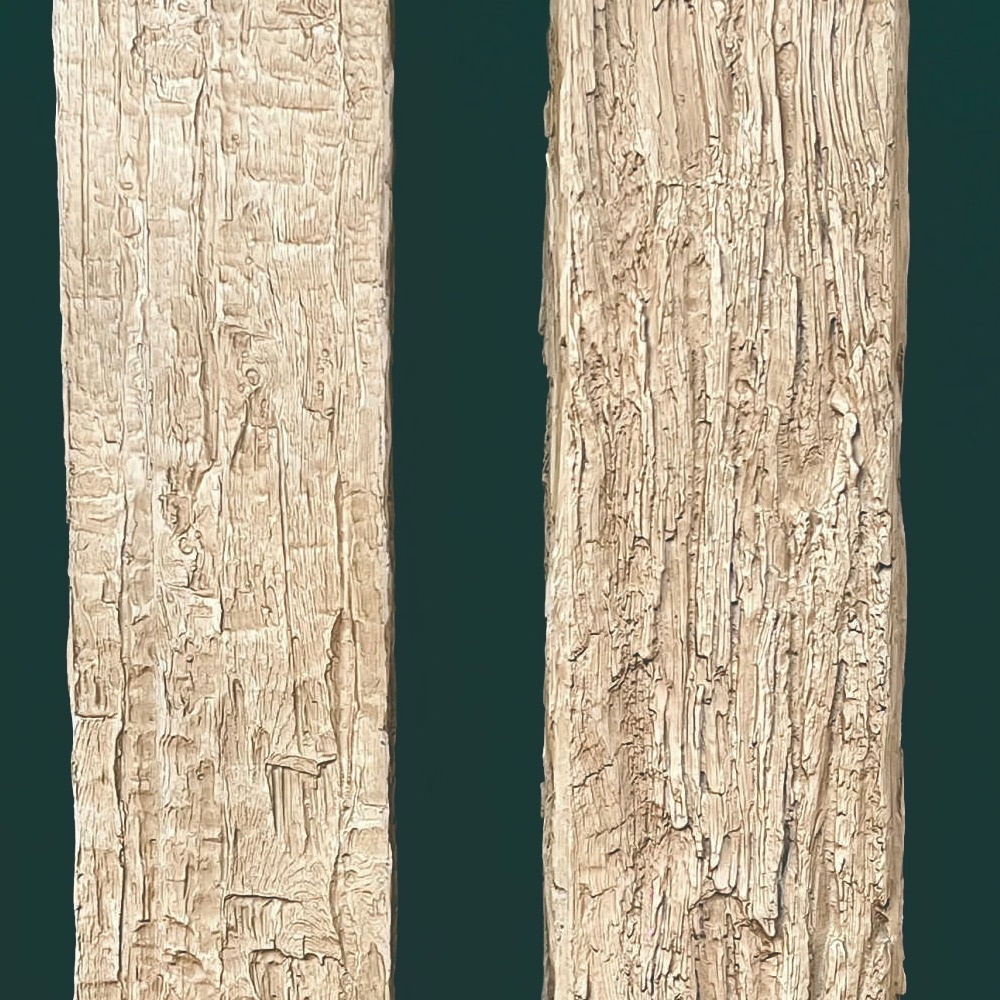
Natural timber exhibits inherent color variation from board to board, with growth patterns, heartwood-sapwood differences, and species characteristics creating the visual richness that makes authentic wood ceilings so appealing. Polyurethane faux beams that fail to acknowledge this natural variation often appear artificial despite impressive surface texturing, because human perception immediately recognizes the uniformity as fundamentally unlike wood. Professional installers understand that embracing controlled variation produces more convincing results than pursuing impossible perfection.
Successful shade management begins with understanding why variation occurs in manufactured products and how strategic installation approaches can leverage these characteristics rather than fighting against them. The goal is not eliminating variation but orchestrating it in ways that read as natural rather than defective.
Sources of Variation in Manufactured Beams
Manufacturing processes introduce subtle variations even within individual production runs, including minor differences in surface coating thickness, texture depth from mold wear, and pigment distribution in colored products. These variations remain within acceptable quality tolerances but become noticeable when adjacent beams display significantly different characteristics. Additionally, different production batches—even with identical formulations—may exhibit shade differences that require attention during installation planning.
Professional installers request beams from single production batches when possible, particularly for projects where color consistency matters critically. When batch mixing becomes necessary, spreading different batch numbers across the installation rather than grouping them avoids creating visible seams where dramatically different shades meet. Maintaining packaging labels until installation completes enables tracking and potential replacement if significant variation becomes apparent.
Strategic Placement Techniques
Viewing distance and lighting direction influence how shade variations register, with closer inspection revealing details that read as uniform from normal viewing distances. Professional installers position beams with the most visible variations in less scrutinized locations—above eye level, in room corners, or beneath light fixtures that cast shadows masking minor differences. Primary focal beams, which receive the most visual attention, should feature the most closely matched products.

Alternating beam orientation during installation can help distribute noticeable variations evenly, preventing the impression of intentional matching attempts that drew attention to differences. When installing beams from multiple batches or with obvious shade differences, distribute the variation rather than clustering similar shades together, which creates artificial uniformity in some areas and obvious variation in others.
Field Finishing for Uniformity
Indoor finishing techniques can unify beam appearances when variations prove too noticeable for acceptable installation quality. Tinted primer application provides opportunity to adjust overall tone and reduce contrast between adjacent beams, with careful blending ensuring transitions remain natural rather than appearing painted. Stain blending techniques involving multiple stain colors applied selectively can match high-variation beams to their neighbors, though this approach requires skilled application to avoid appearing artificial.
Wiping stain application followed by protective topcoat provides additional unifying effect by evening surface sheen and reducing the contrast that makes shade differences apparent. This technique works particularly well when beams receive identical finish treatment after installation rather than relying on factory-applied coatings that cannot account for installation-specific variation patterns.
Client Communication and Expectation Setting
Educating clients about expected shade variation prevents callbacks and complaints that arise from unrealistic expectations. Professional installers show sample beams from actual production batches rather than catalog photographs that cannot represent real product variation, enabling clients to understand what they will receive. Documenting these conversations protects both parties if questions arise about finished appearance.
Warranty and satisfaction guarantees should account for shade variation as acceptable natural variation rather than manufacturing defect, while maintaining reasonable limits beyond which replacement becomes appropriate. Clear communication about what constitutes acceptable variation reduces friction while establishing professional boundaries around product expectations. Clients who understand the design rationale often appreciate shade variation as enhancing authenticity rather than diminishing quality.

Photography and Presentation Considerations
Professional installations often require documentation for portfolios, marketing materials, or client presentations, and shade variation that reads naturally in person may photograph harshly under certain lighting conditions. Professional photographers understand how to light installations that flatter both beams and surroundings, potentially using fill flash or reflectors to soften shadows that exaggerate variation. If documentation reveals variation concerns, selective post-processing can unify appearances for presentation purposes without misrepresenting installation quality.
Technical References
ASTM standards cited in every specification
Test Data
Lab results from internal testing program
Updated 2026
Reviewed against current product specs


