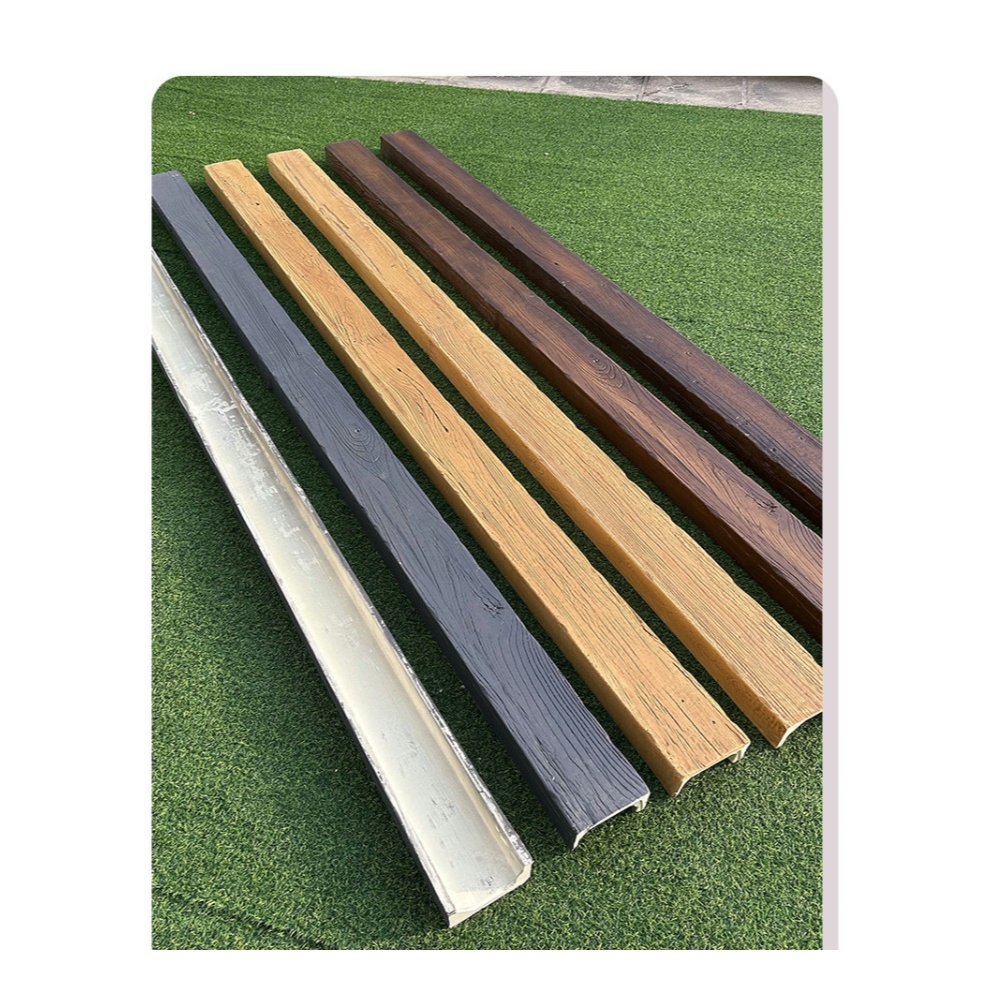
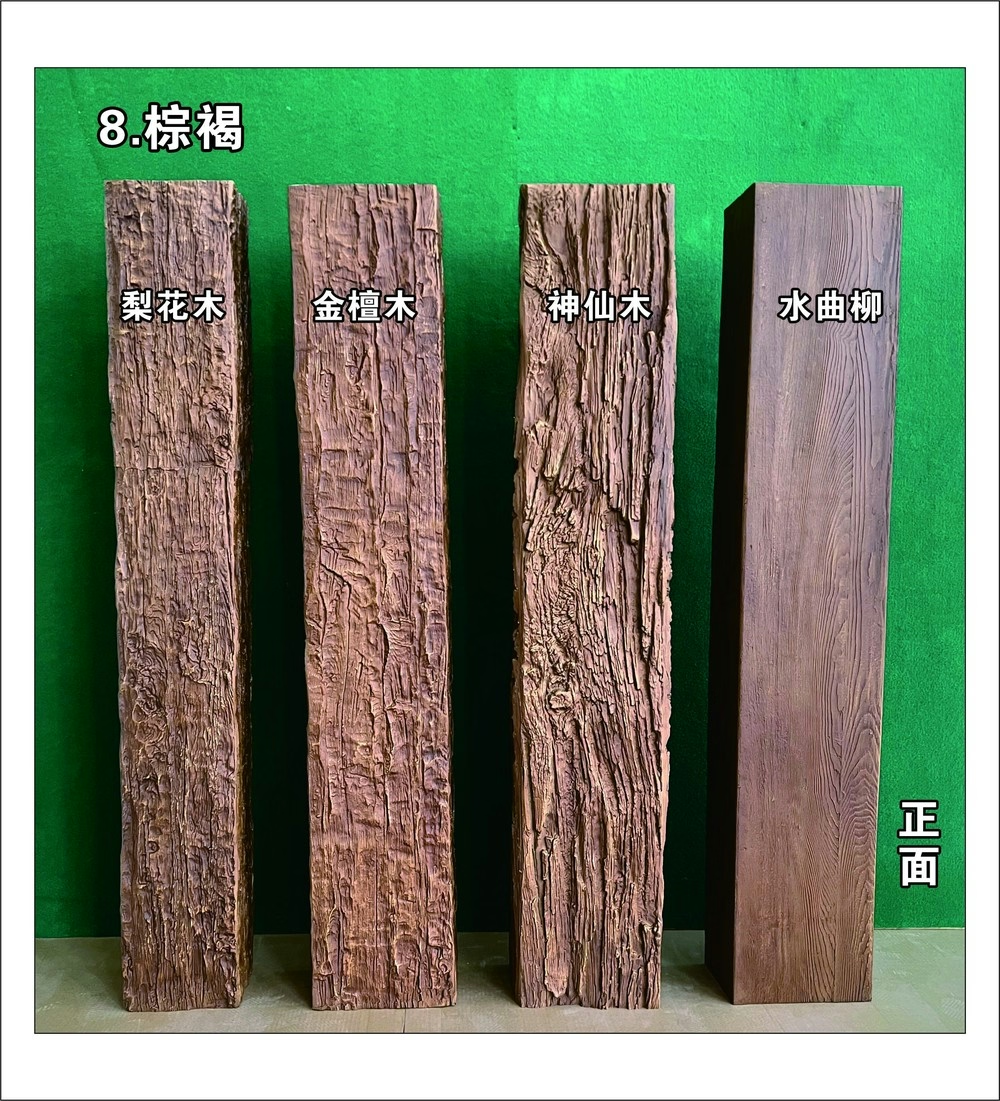
The reduced weight of polyurethane faux beams compared to natural timber creates genuine installation advantages that many installers fail to fully exploit, continuing practices that assume helper-dependent methods remain necessary. A single determined installer equipped with appropriate techniques and simple supporting equipment can successfully complete most faux beam installations that traditionally required two or more workers, dramatically expanding the market for professional installation services while improving job-site efficiency.
These single-person techniques require adapted tool approaches, modified work sequences, and creative problem-solving that acknowledge the inherent challenges of solo overhead work. The investment in learning these methods pays returns across every subsequent project, enabling competitive bidding on jobs where help availability constrains capacity.
Understanding Weight Distribution and Balance Points
Polyurethane beams of typical ceiling dimension range from 2 to 8 kilograms per linear meter depending on profile and density, making individual beam handling manageable for most healthy adults but still requiring attention to balance and control. Identifying beam balance points—locations where the beam naturally balances when supported at a single point—enables positioning strategies that minimize constant support requirements, allowing temporary equilibrium while hands free for fastener installation.
Balance point location depends on profile geometry, typically falling slightly toward heavier sections such as textured surfaces or deeper profiles. Professional installers learn to quickly estimate balance points through observation and practice, developing intuitive feel that replaces measured calculation on actual job sites. When balance point estimation proves uncertain, temporary support blocks at estimated positions allow adjustment before permanent fastening begins.
Support Systems and Temporary Bracing
Temporary support systems free both hands for critical fastening operations, ranging from simple improvisations to engineered solutions depending on ceiling height and installation duration requirements. Adjustable support forks that mount on standard extension ladder tops provide stable V-shaped cradles for beam support, enabling hands-free positioning at ladder-work heights. For platform lift work, dedicated beam supports integrate with guardrail systems for secure temporary positioning.

Adhesive-backed hook-and-loop strips provide temporary retention for positioning checks before permanent fastening, enabling installers to confirm fit and alignment without immediately committing fasteners. This approach proves particularly valuable for complex interlocking profiles or mitered joints where positioning error would waste material or create gaps requiring remedial work. Once alignment is confirmed, temporary supports remain in place during initial fastener installation, with removal following establishment of stable connections.
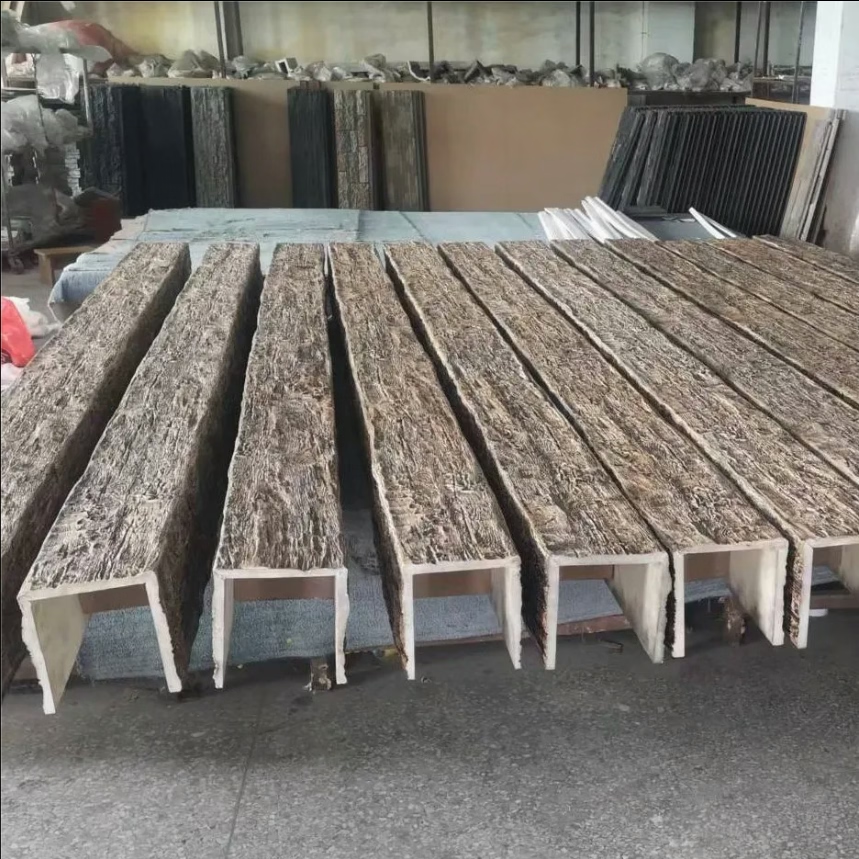
Strategic Beam Orientation and Feeding Techniques
How beams approach their final position significantly affects the difficulty of single-person installation, with forward-facing orientation typically proving easier than awkward angles that require reaching and repositioning. Planning installation sequences that position beams so their final end arrives first enables starting fastener installation at accessible points before the awkward far end demands attention. This sequencing becomes increasingly important for longer beams where in-process positioning challenges intensify.
Ground-level preparation dramatically reduces overhead work complexity, with pre-cutting, pre-drilling, and pre-attaching mounting hardware before beam positioning eliminating fiddly operations at height. Staging prepared beams near their installation locations on elevated platforms or structural elements enables quick pickup and positioning without descent and re-climbing. This preparation investment typically saves more time than it consumes while improving installation quality.
Height-Appropriate Technique Adaptation
Ceiling height fundamentally determines which techniques prove viable, with different strategies appropriate for low, medium, and high ceiling installations. Low ceilings up to approximately 2.7 meters permit step stool or small ladder work with minimal technique modification from normal ground-level procedures. Medium heights between 2.7 and 4 meters require platform ladder techniques with modified body positioning and extended reach tool use.
High ceilings exceeding 4 meters typically necessitate lift equipment regardless of beam weight, making single-person advantages more about efficiency than feasibility. Articulating boom lifts enable one operator to position and fasten beams while remaining securely tied off, with careful attention to platform stability and positioning accuracy compensating for reduced tactile feedback compared to ladder work.
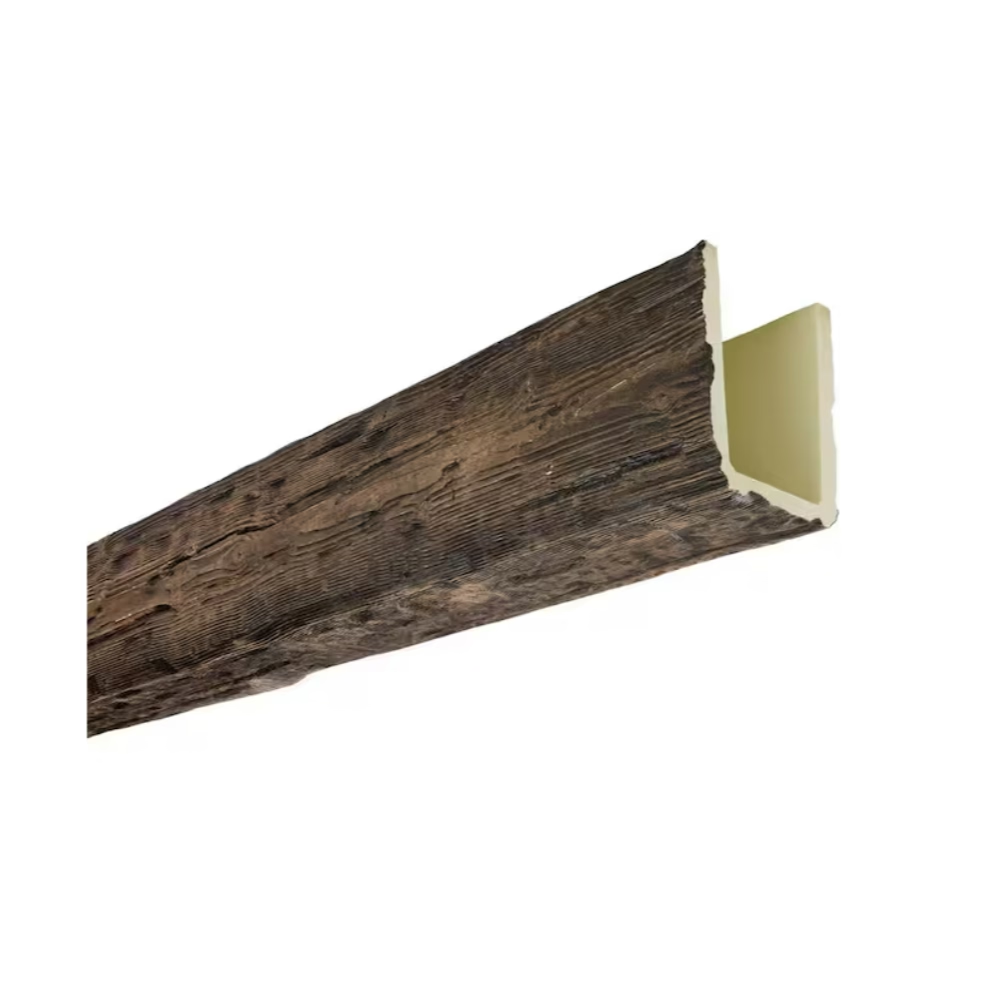
One-Handed Fastening Approaches
Fastening while supporting a beam requires techniques that minimize the time hands must dedicate to fastener installation, beginning with pre-loading fasteners into convenient tools that avoid repeated descent for retrieval. Screw guns with screw-feeding attachments enable rapid sequential fastening without magazine reloading delays, while pneumatic nailers with adequate air line reach provide similar efficiency for bonded fastener applications.
Adhesive attachment methods supplement mechanical fastening in single-person scenarios, with construction adhesive applied to mounting surfaces before beam positioning providing immediate secondary retention as fasteners are installed. This dual-approach ensures that even if fastener installation experiences interruption, the beam remains secured by adhesive contact. Premium polyurethane construction adhesives provide sufficient grab for this purpose while maintaining long-term durability.
Managing Fatigue and Safety Margins
Single-person installation of overhead work inevitably involves greater physical exertion and fatigue accumulation than two-person methods, requiring honest assessment of personal limits and appropriate scheduling to prevent tired-installer incidents. Breaking installation into manageable sessions with adequate rest periods proves more productive than extended continuous work that degrades quality and increases error rates as fatigue compounds.
Maintaining safety margins becomes more important in solo work scenarios where incident response may be delayed by the absence of immediate assistance. Extra attention to ladder stability, platform positioning, and tool security protects against accidents that might prove less consequential with nearby helpers available. Carrying communication devices enables summoning assistance if unexpected situations arise that exceed single-operator capability.
Technical References
ASTM standards cited in every specification
Test Data
Lab results from internal testing program
Updated 2026
Reviewed against current product specs