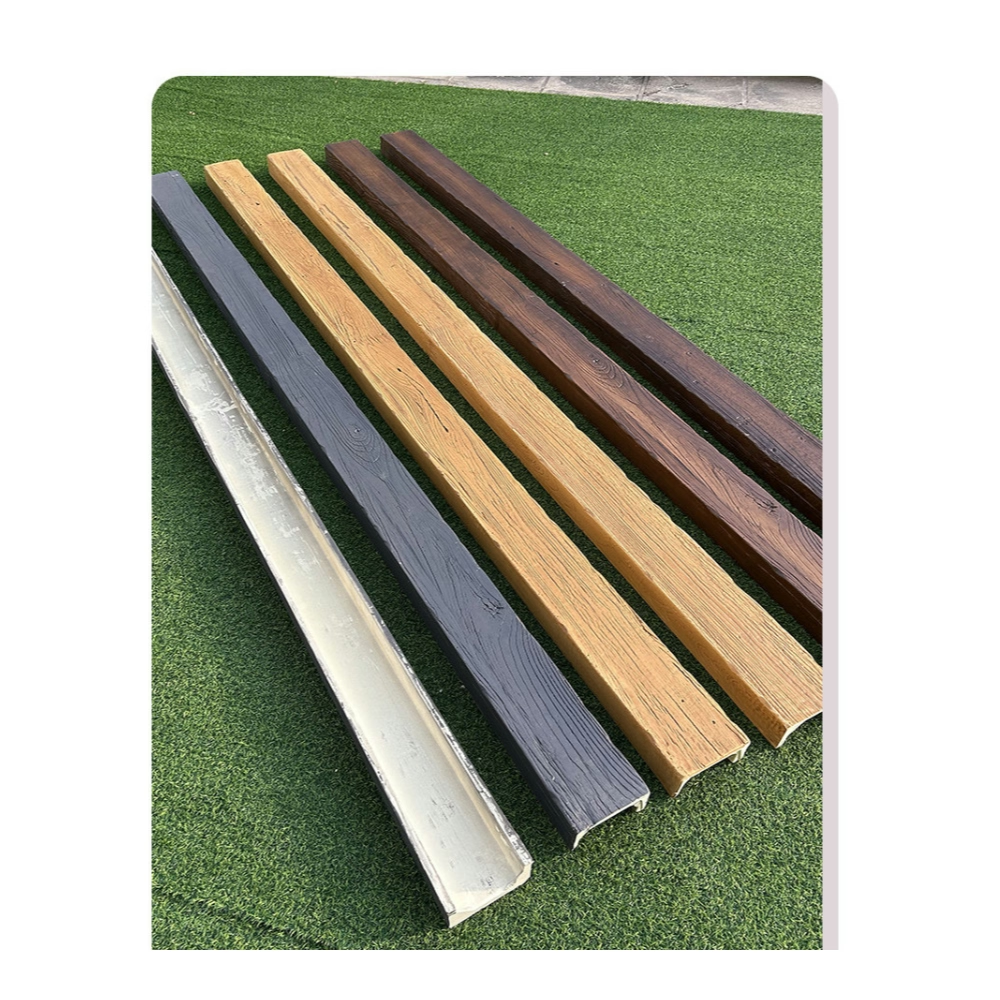
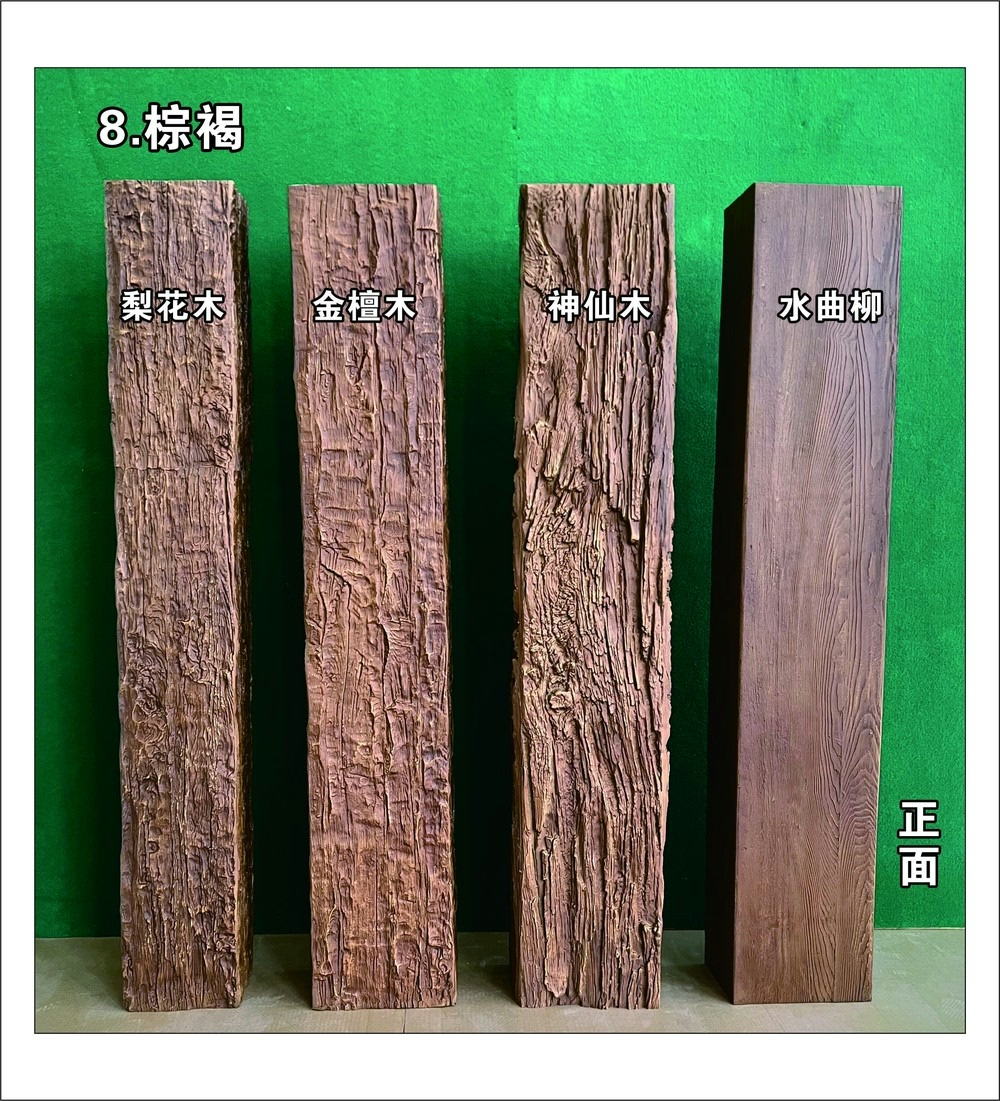
Joint weakness represents the most common failure mode in faux beam installations, occurring where beams meet walls, intersect with each other, or connect at transitional locations. Early intervention prevents progression toward catastrophic failure while preserving appearance that replacement would compromise. Understanding reinforcement options enables appropriate response to joint problems before they worsen.
The Park Avenue condominium association discovered this truth when beam joints throughout their common areas began showing visible gaps and movement that alarmed residents. Initial attempts to conceal problems with caulking provided temporary cosmetic improvement but did nothing for underlying structural issues. Professional assessment identified reinforcement opportunities that restored integrity without the massive disruption and expense that beam replacement would have required.
Identifying Joint Weakness Signs
Effective reinforcement begins with accurate problem identification, distinguishing structural issues from cosmetic concerns that require different responses. Visual and physical examination reveals weakness indicators that guide repair strategy.
Visible gaps between beams and mounting surfaces indicate adhesive failure or insufficient fastener engagement. Gaps may appear intermittently, widening and narrowing with temperature changes or building movement. Even small gaps suggest underlying problems that warrant investigation, as visible separation represents advanced stages of adhesive failure.
Movement under light pressure confirms joint weakness that reinforcement should address. Apply gentle pressure to suspect joints, observing whether beams shift, creak, or flex in ways that suggest inadequate support. Movement during normal conditions—door closing, HVAC cycling, occupancy loading—indicates joints operating beyond their design capability.
Sound anomalies during building operation—creaking, popping, or clicking from beam areas—suggest stress release from joints moving under load. These sounds often precede visible failure signs, providing early warning that enables intervention before appearance suffers. Investigate sounds that persist or intensify over time.
Mechanical Reinforcement Approaches
Mechanical reinforcement adds physical support that bears load independently of original adhesive bonds. These approaches provide immediate strength improvement while allowing time for adhesive systems to fully cure or recover.
Metal bracket installation creates concealed load paths that transfer forces around weakened joints. Select brackets sized appropriately for loads involved, using stainless steel or coated steel that resists corrosion in hidden locations. Position brackets where mounting surfaces provide adequate fastener engagement, typically into ceiling joists or structural backing.
Bolt-through reinforcement uses concealed fasteners that pass completely through beam assemblies into structural framing.countersink bolt heads within beam surfaces where they remain invisible after finishing. This approach provides exceptional strength but requires access to both sides of assemblies, limiting applicability to situations with appropriate access.
Sister beam addition creates parallel support alongside existing beams, providing backup load capacity without disturbing original installations. Position sister beams within beam pockets or alongside existing pieces, securing them independently to structural framing. Connect sisters to original beams using adhesive that prevents relative movement while concealing the relationship between pieces.


Adhesive Enhancement Techniques
Adhesive enhancement restores or improves bonding between beam surfaces and mounting substrates, addressing failures that mechanical reinforcement alone would not resolve. These approaches work alongside mechanical methods for comprehensive strengthening.
Surface preparation for adhesive enhancement requires thorough cleaning that removes contamination preventing proper bond development. Sand bonding surfaces lightly to create mechanical key, then clean thoroughly with appropriate solvents that evaporate completely before adhesive application. Any residue on surfaces compromises new adhesive performance.
Adhesive selection depends on substrates involved and load requirements, with polyurethane construction adhesives providing versatile performance for most beam applications. Epoxy formulations offer superior bonding for demanding situations where maximum strength is critical. Verify adhesive compatibility with both beam materials and mounting surfaces before application.
Injection adhesive systems address hidden joint failures where separation has occurred within assembled structures. Drill small access holes that allow adhesive injection into void spaces, using flexible tubing for deep penetration. This approach restores bonding without disassembly that would damage surrounding finishes.
Prevention Through Proper Initial Installation
The most effective joint reinforcement strategy involves proper initial installation that prevents weakness from developing. Understanding common installation errors guides practices that avoid problems requiring subsequent repair.
Adequate fastener density ensures mechanical support sufficient to carry loads independent of adhesive performance. Adhesive provides convenience and additional strength but should not carry primary structural loads without mechanical backup. Plan fastener spacing that distributes loads appropriately across mounting surfaces.
Appropriate adhesive application ensures adequate coverage without excess that creates mess or interferes with fastener installation. Apply adhesives in continuous beads along mounting surfaces, maintaining gaps that allow adhesive to spread under beam weight during installation. Support beams until adhesives cure sufficiently to carry loads independently.
Structural backing installation during building construction or renovation provides support points that simplify beam installation and ensure adequate attachment capacity. Coordinate beam layout with framing contractors during construction phases, adding backing or supports where needed for intended beam positions.
Professional Assessment Recommendations
Complex joint problems often warrant professional assessment that identifies root causes and recommends comprehensive solutions. Experienced installers recognize patterns that reveal underlying issues while addressing symptoms alone might not resolve.
Structural engineer consultation proves valuable when joint problems suggest building movement, foundation issues, or other structural concerns beyond simple beam installation. These professionals evaluate overall building behavior and recommend remediation that addresses fundamental issues rather than isolated symptoms.
Manufacturer technical support provides product-specific guidance for addressing problems with specific beam products. Manufacturers understand their products' capabilities and limitations, offering recommendations that ensure warranty coverage while resolving installation issues. Contact technical support before implementing modifications that might void warranties.
Insurance and warranty considerations affect repair approach for commercial installations where building codes, insurance requirements, or warranty provisions constrain available options. Verify that proposed repairs satisfy applicable requirements before implementation, particularly for buildings with special inspection or certification requirements.
Technical References
ASTM standards cited in every specification
Test Data
Lab results from internal testing program
Updated 2026
Reviewed against current product specs