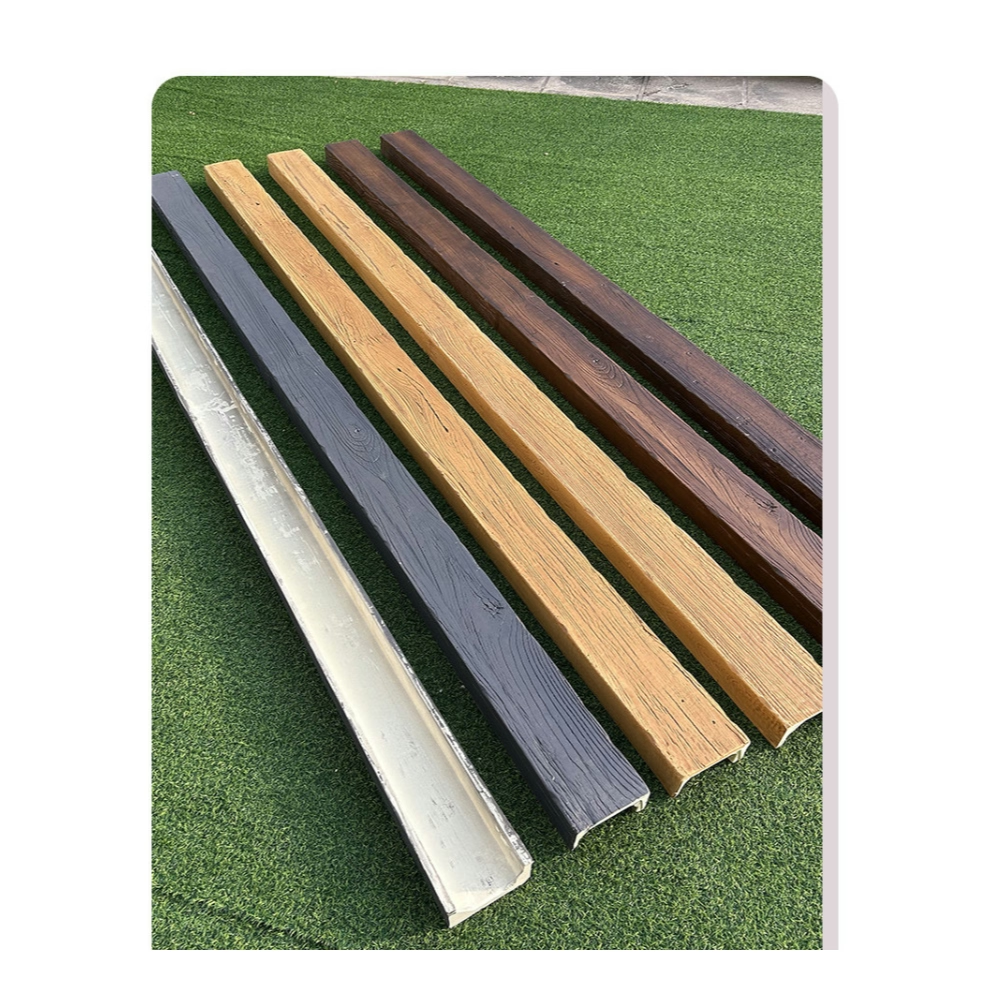
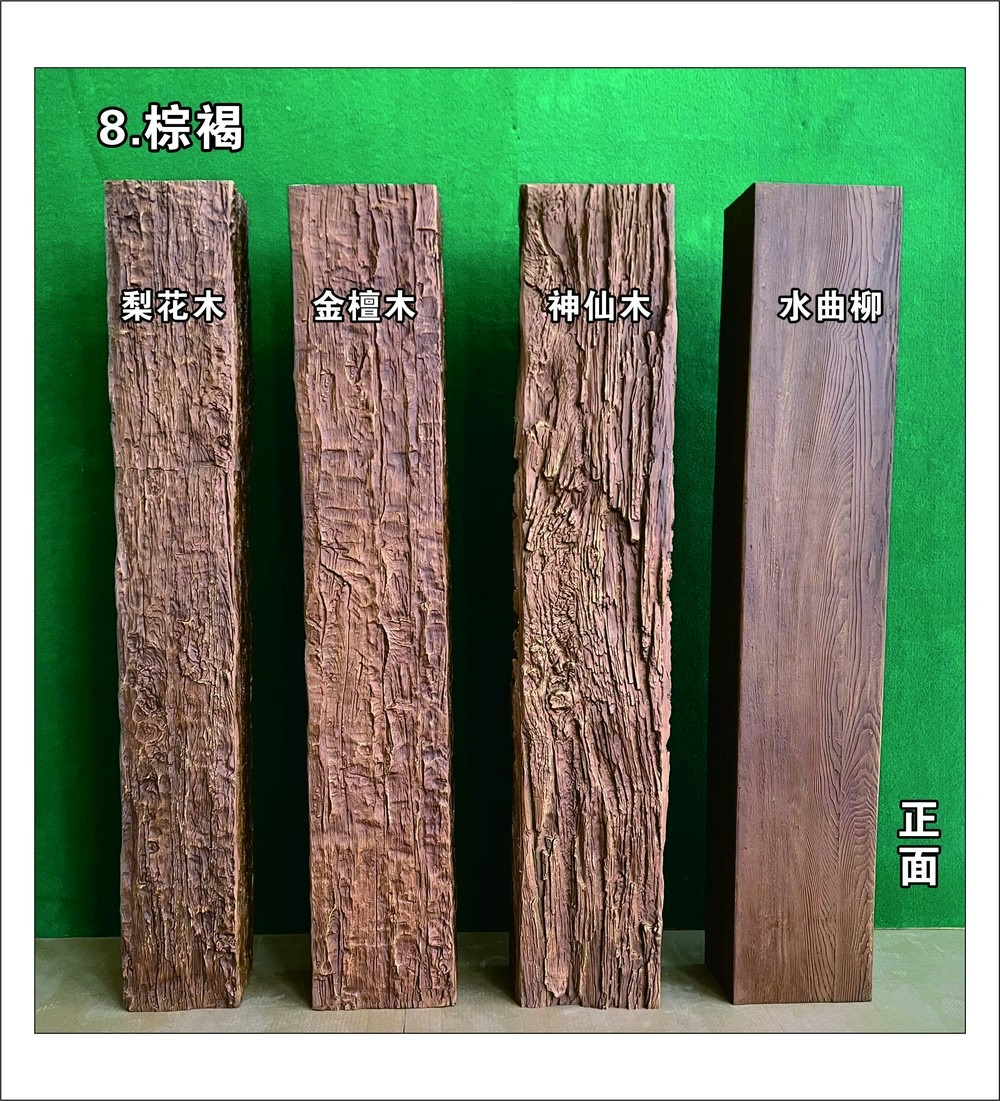
Spray application provides the most uniform finish achievable on complex polyurethane surfaces, delivering even coating distribution that brush or roller methods struggle to replicate on textured profiles. Whether touching up minor finish variations or applying complete color treatments, professional spray technique distinguishes between results that enhance beam authenticity and those that appear artificially coated in ways that betray the material's manufactured nature.
Modern spray equipment ranges from simple aerosol cans through professional airless and HVLP systems, each offering distinct capability and control tradeoffs. Understanding these tradeoffs enables appropriate equipment selection for specific applications, whether touching up individual beams on-site or refinishing complete installations in controlled shop environments.
Equipment Selection for Various Applications
Aerosol spray cans provide convenient touch-up capability for minor color variations and damage repairs, with premium products offering excellent atomization and color consistency. Professional installers maintain selection of commonly needed colors in aerosol format for field repairs, selecting products specifically formulated for plastic substrates rather than general-purpose coatings. Cheap aerosols often produce orange peel texture that stands out against factory-finished surfaces, making product quality investment worthwhile.
HVLP (high-volume low-pressure) systems deliver professional-grade finish quality with reasonable equipment investment, making them the preferred choice for shop-based beam finishing operations. These systems minimize overspray while providing excellent control over application rate and pattern, enabling finish consistency that satisfies demanding clients. Gravity-feed configurations reduce material waste and improve portability compared to siphon-feed alternatives.
Airless spray systems provide fastest coverage rates for large projects but sacrifice the fine control that beam finishing requires, making them more appropriate for opaque coatings over large flat surfaces than for textured beam profiles where even distribution matters. Professional operations may maintain airless capability for specific applications while relying on HVLP for beam finishing work.
Surface Preparation for Spray Application
Proper surface preparation determines spray finish success more than any other factor, with even the best application technique failing to compensate for contaminated or improperly prepared surfaces. Cleaning removes all dust, dirt, body oils from handling, and any contamination that might interfere with coating adhesion. Tack cloth wiping after compressed air or vacuum cleaning ensures particle-free surfaces ready for coating.

Sanding that removes surface contamination also provides mechanical bonding texture for subsequent coatings, with 320-grit or finer sanding appropriate for paint-grade finishes. Higher grit preparation may prove unnecessary depending on existing surface condition and required finish quality. Decontamination with wax-and-grease remover eliminates any oils that might resist standard cleaning approaches, particularly important for beams that have been handled extensively or stored in dusty environments.
Masking protects adjacent surfaces and fixtures from overspray, with quality masking tape and paper preventing finish migration onto unintended areas. Care in masking placement prevents visible lines at masking boundaries, typically achieved by pressing tape edges firmly and ensuring paper coverage extends adequately beyond the protected zone.

Application Technique and Pattern Development
Consistent spray technique produces consistent results, with pattern development requiring practice and attention to fundamental principles. Holding spray guns at consistent distance from surfaces—typically 15-20cm for HVLP systems—maintains proper atomization and coverage without excessive overspray or dry spray from excessive distance. Parallel passes with 50% overlap ensure even coverage without holidays or heavy zones.
Film thickness control prevents runs and sags that require sanding and recoating, with lighter passes building coverage gradually more effective than attempting complete coverage in single applications. Multiple thin coats with appropriate flash time between applications achieve better flow and leveling than single heavy applications, ultimately saving time despite seeming less efficient. Typical finish applications require two to three coats to achieve complete coverage on textured surfaces.
Cross-coating application directions—spraying perpendicular between coats—promotes even coverage across complex profiles, with the second coat filling any holidays left by the first. This technique proves particularly valuable on heavily textured beams where profile shadows might mask incomplete coverage from single-direction application.
Environmental Control and Cure Management
Temperature and humidity significantly affect spray finish quality, with ideal conditions typically between 18-24°C and 40-60% relative humidity. Excessive heat accelerates solvent flash, potentially causing dry spray before proper flow and leveling occur. High humidity retards drying and may cause moisture entrapment that compromises adhesion and clarity. Climate-controlled finishing spaces enable consistent results regardless of external conditions.
Dust control in finishing areas prevents contamination of wet coatings, with air filtration and positive pressure environments protecting freshly sprayed surfaces from airborne particles. Allowing adequate cure time between coats enables proper solvent evaporation without trapping volatiles that might cause blistering or adhesion failure in subsequent coats. Full cure before handling or installation prevents finish damage from premature contact.
Quality Verification and Touch-Up Procedures
Inspection under proper lighting reveals application defects including holidays, orange peel texture, and color variations requiring attention. Strong directional lighting at low angles accentuates surface irregularities invisible under diffuse illumination, enabling identification of issues requiring correction before project completion. Addressing defects immediately rather than hoping they become less noticeable prevents the escalation of small problems into significant quality concerns.
Touch-up application of spray-finished areas requires careful technique to blend with surrounding finish without creating visible patches. Feather-edging repairs into surrounding areas with progressively lighter applications creates gradual transitions rather than distinct boundaries. When touch-up proves impossible to conceal adequately, full refinish of affected panels may prove necessary despite the added expense.
Technical References
ASTM standards cited in every specification
Test Data
Lab results from internal testing program
Updated 2026
Reviewed against current product specs