General contractors manage complex projects where numerous products and systems must come together on schedule and within budget. Faux ceiling beams, while not structurally critical, represent a specification item that requires attention to detail to ensure satisfactory completion. Understanding how to evaluate beams and work effectively with suppliers enables contractors to manage this component efficiently within broader project responsibilities.
The contractor's perspective on beam selection differs from architects or homeowners. Practical considerations like availability, reliability, ease of installation, and supplier responsiveness matter as much as aesthetic qualities. A beautiful beam that cannot be delivered on schedule or requires extensive field adjustment creates problems that outweigh its visual appeal. Balancing quality with practicality defines effective contractor-oriented specification.

Evaluating Supplier Capabilities
Supplier reliability should be assessed before project commitment. Request references from similar projects and contact those references to verify the supplier's performance history. Ask about on-time delivery, order accuracy, quality consistency, and how the supplier handled any problems that arose. Suppliers with strong references provide lower-risk partnerships than unknown sources.
Production capacity matters for projects with significant beam quantities. A supplier capable of producing your project's volume ensures that schedules can be met without artificial delays that benefit the supplier's other customers. Understanding current production loads and lead times enables realistic scheduling that avoids disappointment.
Technical support availability affects how smoothly installation proceeds. Suppliers who provide installation guidance, answer questions promptly, and help troubleshoot problems reduce the contractor's burden when issues arise. This support is particularly valuable for contractors new to beam installation or working with complex layouts.
Specification Alignment and Documentation
Architectural specifications must be translated into procurement documents that communicate requirements clearly to suppliers. Reference specific products or performance criteria that suppliers can verify. Avoid specification language that allows wide interpretation, as this leads to substitution requests and delays during the submittal process.
Submittal requirements should be clearly defined before requesting quotes. Knowing what documentation is required—product data, test reports, samples, calculations—enables suppliers to provide complete packages that satisfy review requirements efficiently. Incomplete submittals extend approval timelines and can create tension with architectural teams.
Change order procedures for beam modifications should be established early. When design changes affect beams, understanding the cost and schedule implications quickly enables informed decision-making. Suppliers who can provide rapid quotes for modifications prevent delays that cascade through project schedules.
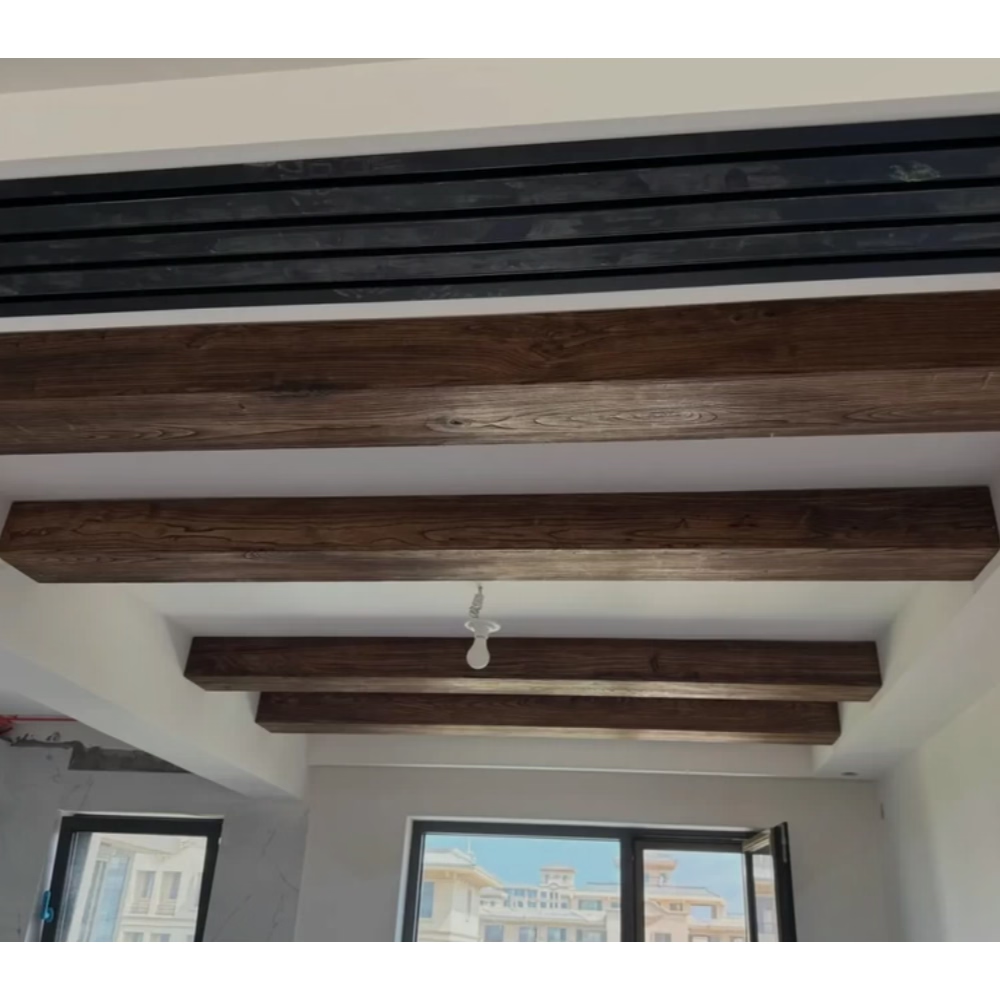
Installation Planning and Coordination

Pre-installation coordination meetings bring together stakeholders to verify conditions before beams ship. These meetings confirm that blocking is in place, dimensions match specifications, and scheduling aligns with installation timelines. Identifying problems early, while corrections are still inexpensive, prevents costly delays during installation.
Installation sequencing should account for beam delivery and handling requirements. Large beams may require equipment or additional labor for positioning. Understanding these requirements enables proper resource planning that prevents installation delays. Crew training before installation begins establishes quality standards and techniques that ensure consistent results.
Inspection points during installation catch problems before they become expensive to correct. Checking beam alignment, joint quality, and attachment security as installation progresses identifies issues while correction remains straightforward. Waiting until completion to inspect may reveal problems that require disassembly to address properly.
Cost Management and Competitive Positioning
Material cost control requires accurate quantity takeoff and competitive pricing. Overestimating quantities wastes budget; underestimating creates emergency reorders that affect schedules. Professional estimation based on complete drawings prevents both scenarios. Multiple competitive quotes ensure pricing reflects current market conditions.
Installation labor estimates should account for beam complexity and site conditions. Simple layouts install faster than complex configurations with multiple angles and penetrations. Ceiling heights, access difficulty, and working conditions affect productivity. Realistic labor estimates enable accurate bidding that avoids cost overruns.
Lifecycle cost considerations may differentiate bids when initial prices appear similar. Beams requiring frequent maintenance or that show early deterioration impose costs beyond initial purchase and installation. Quality beams with good durability records may cost more initially but provide better value over the building's service life.

Quality Control and Closeout
Receiving inspection verifies that delivered materials match orders and arrive in acceptable condition. Checking quantities, verifying dimensions, and inspecting for shipping damage identifies problems while the delivery driver is still present. Documenting any issues immediately protects against claims disputes later.
Punch list management addresses beam-related items during project closeout. Documenting issues clearly with location references and photographs enables efficient resolution. Setting realistic timelines for resolution respects both contractor and supplier capacities while ensuring timely project completion.
Warranty documentation should be collected and organized during closeout. Product warranties, installation guidance, and maintenance recommendations provide building owners with information needed to protect their investment. This documentation represents a final deliverable that completes the professional handoff from construction to occupancy.
Technical References
ASTM standards cited in every specification
Test Data
Lab results from internal testing program
Updated 2026
Reviewed against current product specs


